1951 Kenworth

1951 Kenworth BC 825-C Conventional

Offered by Mecum | East Moline, Illinois | November 11, 2021
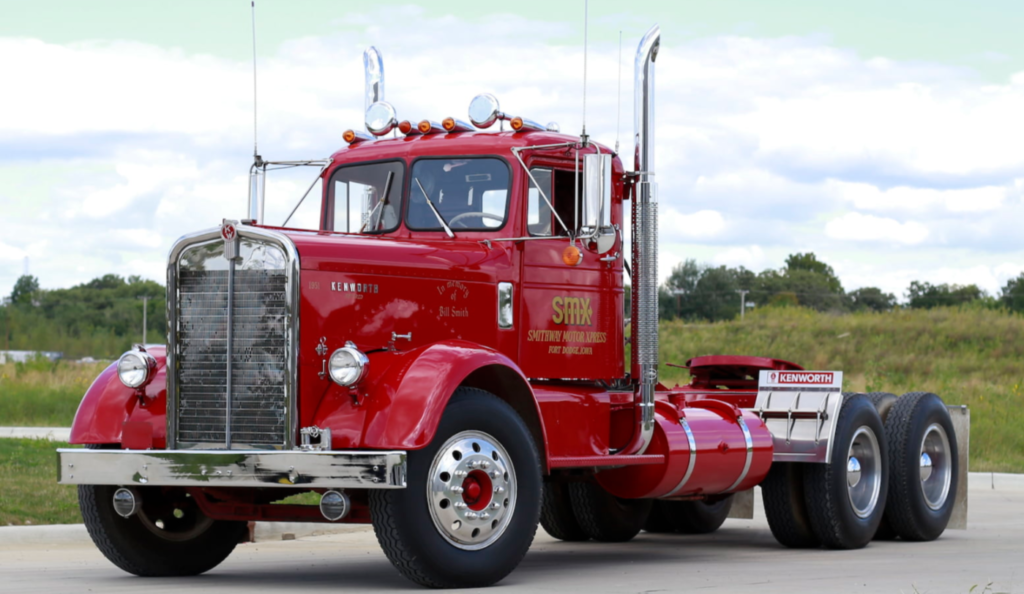
Photo – Mecum

This is a pretty awesome-looking semi. And it’s from 70 years ago, yet it doesn’t look that much different from today’s semis. It’s pretty crazy actually, not to mention the fact that it survived this long, although the restoration certainly helped.

Kirkland, Washington’s Kenworth traces its roots back to a dealership owned by the Gerlinger brothers. They started producing their own truck called the Gersix in 1914. Bankruptcy followed in 1917, and the company’s assets were acquired by E.K. Worthington and Frederick Kent. They combined their last names to form “Kenworth” in 1923.

This truck is powered by a 262-horsepower Cummins diesel. The auction catalog is light on info, but the truck looks pretty sharp and is probably still fairly usable. You can read more about it here and see more from this sale here.

Update: Sold $46,200.
Arrows A11B

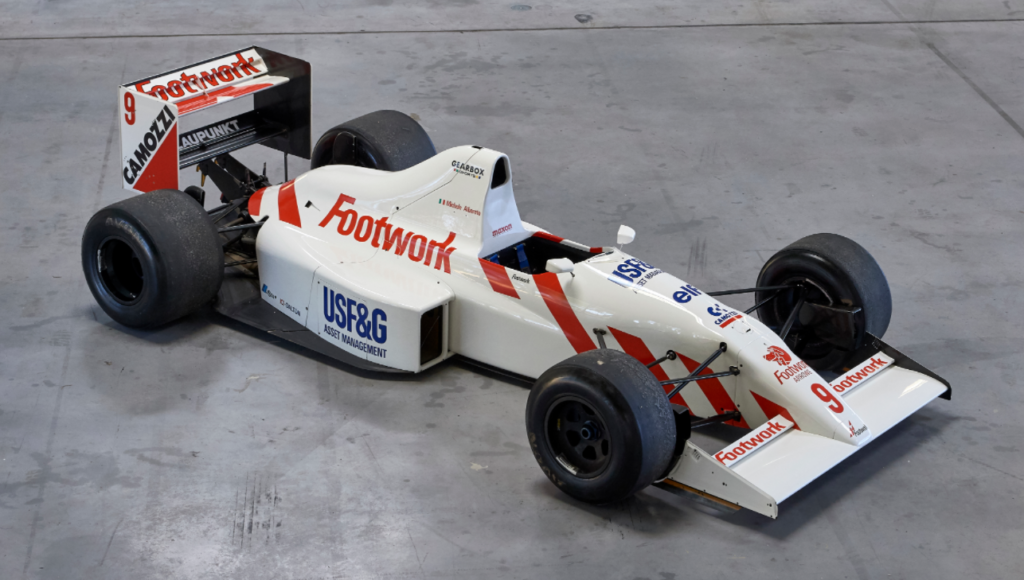
1990 Arrows A11B

Offered by RM Sotheby’s | Le Castellet, France | November 19, 2021

Photo Courtesy of RM Sotheby’s

Arrows was around in F1 for quite a while: from 1978 through 2002, although they were known as Footwork Arrows for five years in the ’90s. The A11, and its derivatives, the A11B and A11C, were the team’s entries for the 1989, 1990, and 1991 seasons.

The A11 was designed by Ross Brawn, and the B variant was largely the same as the earlier car aside from some suspension modifications. The car was originally powered by a 3.5-liter Ford-Cosworth V8, although this chassis is currently engine-less. The competition history for this chassis, A11B03, includes:

  • 1990 San Marino Grand Prix – DNQ
  • 1990 Monaco Grand Prix – DNQ
  • 1990 Canadian Grand Prix -25th, DNF (with Michele Alboreto)
  • 1990 Mexican Grand Prix – 17th (with Alboreto)
  • 1990 French Grand Prix – 10th (with Alboreto)
  • 1990 British Grand Prix – 20th, DNF (with Alboreto)
  • 1990 German Grand Prix – 22nd, DNF (with Alboreto)
  • 1990 Hungarian Grand Prix – 12th (with Alboreto)
  • 1990 Belgian Grand Prix – 13th (with Alboreto)
  • 1990 Italian Grand Prix – 12th (with Alboreto)
  • 1990 Portuguese Grand Prix – 9th (with Alboreto)
  • 1990 Spanish Grand Prix – 10th (with Alboreto)
  • 1990 Japanese Grand Prix – 13th, DNF (with Alboreto)

If you’ve got a spare Cosowrth DFV lying around, this could be a fun project. You can read more about it here and see more from this sale here.

Update: Sold $182,309.

1906 Stuart

1906 Stuart 7HP Two-Seater

Offered by Bonhams | London, U.K. | November 5, 2021

Photo – Bonhams

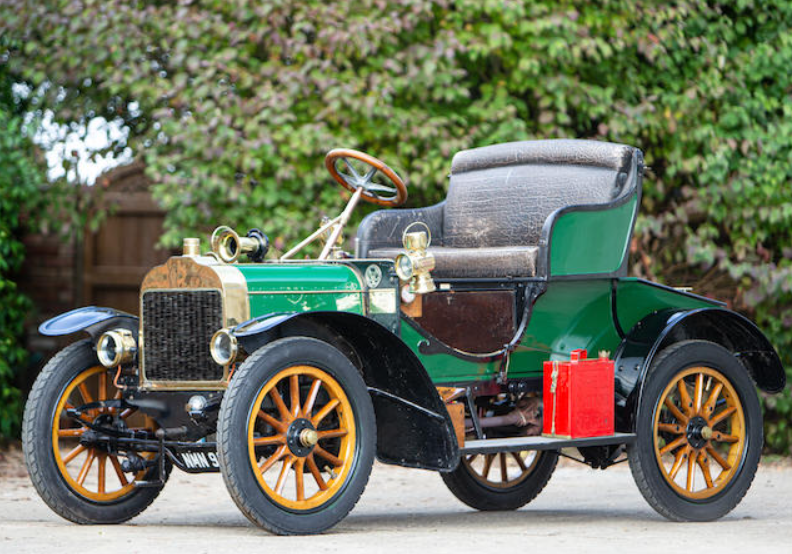
Star was one of Britain’s largest automobile manufacturers prior to WWI. In 1905 they decided to produce a less expensive, entry-level car, and they called it the Starling. The Starling featured chain drive and a De Dion engine.

The shaft-driven version of the Starling, which was sold from 1906 through 1908, was called the Stuart. Both the Starling and Stuart were under the control of the Star Cycle Company, which became Briton in 1909. This Stuart is powered by a 1.4-liter inline-twin rated at seven horsepower.

Both two- and four-seater bodies were offered on the Stuart, while the Starling was two-seater only. This one has ownership history back to the late 1940s and is said to cruise at 28 mph. It should sell for between $21,000-$34,000. Click here for more info and here for more from this sale.

Update: Sold $23,139.

Honker II

1967 Holman-Moody Ford Honker II

Offered by RM Sotheby’s | Le Castellet, France | November 19, 2021

Photo Courtesy of RM Sotheby’s

Ralph Moody was a NASCAR driver who ran 47 races in four seasons between 1956 and 1962. In ’56, he won four races driving for Ford and their chief mechanic, John Holman. When Ford pulled out of NASCAR in 1957, the two teamed up and bought Ford’s former Charlotte workshop, forming Holman-Moody. By the mid-1960s, they were the American racing powerhouse, with cars they built dominating NASCAR.

They also dabbled in sports car racing, entering Sebring in 1962 with a Ford Falcon. They wanted to compete in Can-Am, so the Honker II was built for that purpose. It’s powered by a 6.2-liter V8 with Gurney-Weslake cylinder heads. Paul Newman put up the cash to have the car campaigned in the 1967 Can-Am season with Mario Andretti behind the wheel. In five races, the best result it managed was an 8th position.

Newman later used the car in the film Winning. It sat in the Holman-Moody workshop until the mid-1980s, when the company had it restored in its original Passino Purple. The car sold at a Gooding auction in 2013 for $200,000. I’d think the price has gone up significantly since then. Click here for more info and here for more from this sale.

Update: Sold $285,920.

1909 Cooper

1909 Cooper 22.5HP Torpedo Tourer

Offered by Bonhams | London, U.K. | November 5, 2021

Photo – Bonhams

If your tiny car company built six cars over 110 years ago, you’d think the chances of any of them surviving would be essentially nil. But don’t tell that to the long-deceased Thomas Cooper of the Cooper Steam Digger Company Ltd of Norfolk, England. His company typically built steam traction engines and farm equipment. But in 1909 he designed a two-stroke 3.3-liter inline-four that he debuted in a motorcar at that year’s Olympia Motor Show.

It had a three-speed gearbox and a two-speed rear axle. Only six cars were built, each of them different. This is the only survivor. It was parked in 1921 and re-discovered in 1951, where its history trail picks up.

It was later restored and acquired by its current owner in 1994. Museum duty followed, with the car last driven in 2014. It now carries a pre-sale estimate of $55,000-$83,000. Click here for more info and here for more from this sale.

Update: Sold $44,735.

Prost F1

1999 Prost-Peugeot AP02

Offered by RM Sotheby’s | Le Castellet, France | November 19, 2021

Photo Courtesy of RM Sotheby’s

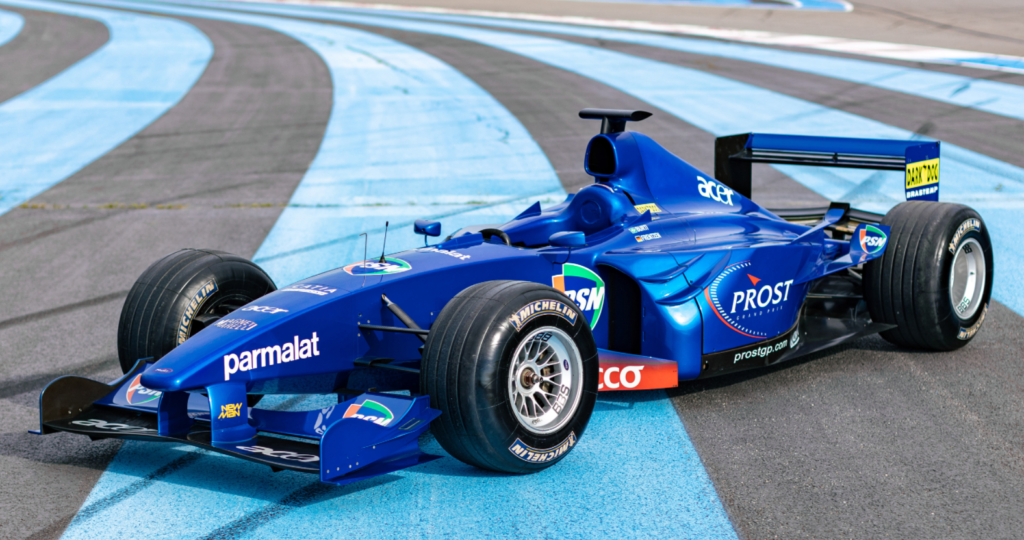
Alain Prost won four Formula One World Championships before tossing his hat into the F1 ownership ring. He purchased the Ligier F1 team in 1997, just before the season started, and rebranded it Prost Grand Prix. The following year, the team secured a deal to be supplied with factory Peugeot engines.

The AP02 was 1999’s car, and it was powered by a 3.0-liter Peugeot V10 making about 785 horsepower and revving to 17,000 rpm (!). The team had a decent 1997 season, a poor 1998 season, and an okay 1999 season. Things went south quickly thereafter, and it was all over after the 2001 season. The assets of Prost (and Arrows engines) were bought by a group called Phoenix Finance, but they never made it to the grid.

The competition for this chassis, 03, included:

  • 1999 Australian Grand Prix – 15th, DNF (with Olivier Panis)
  • 1999 Brazilian Grand Prix – 6th (with Panis)
  • 1999 San Marino Grand Prix – 13th, DNF (with Panis)
  • 1999 Monaco Grand Prix – 13th, DNF (with Panis)

It was used as a test car after that. It now wears the team’s 2000 paint scheme and 2001 sponsor livery. The engine is not currently installed, but is included, along with the gearbox. You can read more about it here and see more from this collection here.

Update: Sold $195,332.

VM180 Zagato

2001 TMI VM180 Zagato

Offered by Bingo/BH Auction | Online | October 25-31, 2021

Photo – Bingo/BH Auction

Guess the base car. If you said “2000-2007 Toyota MR2,” you are correct. This generation of the MR2 isn’t as beloved as earlier versions, but it was popular among the The Fast and the Furious crowd in the early 2000s. It even went Super GT racing.

In 2001, a Zagato-bodied version of the MR2 was shown at the Tokyo Motor Show. It featured the same mid-mounted 1.8-liter inline-four as the standard MR2, but was tuned slightly to make 155 horsepower (up from 138). The styling was by Zagato and is obviously much different than the standard car. It’s got some funky lighting front and rear in addition to some other, uh, not-so-subtle tweaks.

Only 100 were built. They were only sold in Japan through the Toyota Vista dealer network. And the cars were actually branded under the Toyota Modelista International brand, or TMI. It’s a weird one, and not one that pops up often. Click here for more info and here for more from this sale.

Update: Not sold.

Sunbeam-Talbot 4-Litre

1939 Sunbeam-Talbot 4-Litre Sports Saloon

Offered by Brightwells | Leominster, U.K. | October 23-28, 2021

Photo – Brightwells

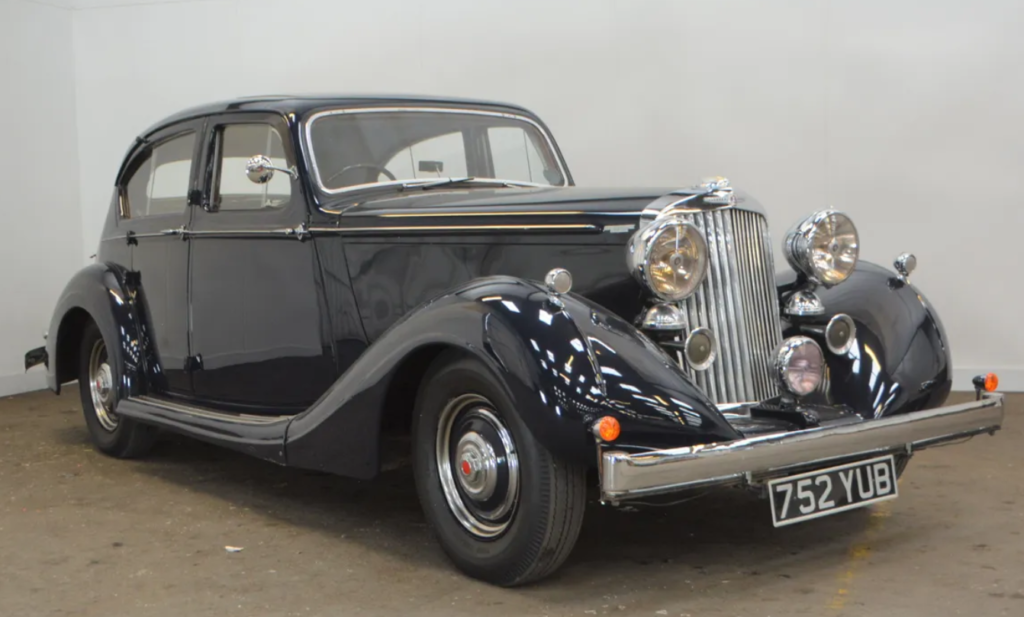
Sunbeam-Talbot was a short-lived marque and part of the myriad of Talbot-branded cars over the decades. The brand came into being in 1935 when Rootes merged Sunbeam and Talbot into a single marque. In 1954, after dealing with confusion in relation to the French Talbots, Rootes dropped the name and Sunbeam soldiered on alone.

The 4-Litre model was introduced in 1939 and was made in very limited numbers into 1940. This was the company’s largest model and was derived from the Humber Super Snipe. It’s powered by a 4.1-liter inline-six that made 100 horsepower. It topped out at 85 mph.

WWII cut short the 4-Litre’s production run, and only 229 were built. Just 44 of those were Sports Saloons. This example was restored in 1991 and is one of two Sports Saloon 4-Litres known to exist. It should sell for between $39,000-$44,000. Click here for more info and here for more from this sale.

Update: Sold $34,671.

1904 Brennan

1904 Brennan 14/18HP Rear-Entrance Tonneau

Offered by Bonhams | London, U.K. | November 5, 2021

Photo – Bonhams

Brennan – or, officially, the Brennan Manufacturer Company – was an engine-building company based in Syracuse, New York. Founded by Patrick Brennan in 1897, the company produced engines for other manufacturers, including Selden. Between 1902 and 1908, Brennan sold their own car. Brennan actually survived as a marine engine outfit until 1972.

Brennan built their cars to suit, which was not very economical. The cars were too expensive despite the engineering behind them. The engines were good though: this car has a flat-twin that made 14 horsepower at 700 rpm and 18 horsepower at 1,000 rpm. Pretty stout for 1904.

This particular example is said to have resided in the Henry Austin Clark Museum before relocating to the U.K. in a sad state in 1990. The restoration was completed in 2005, and the car is a London-to-Brighton veteran. It now carries an estimate of $110,000-$140,000. Click here for more info and here for more from this sale.

Update: Sold $154,260.

AC 2-Litre

1948 AC 2-Litre Saloon

Offered by Brightwells | Leominster, U.K. | October 23, 2021

Photo – Brightwells

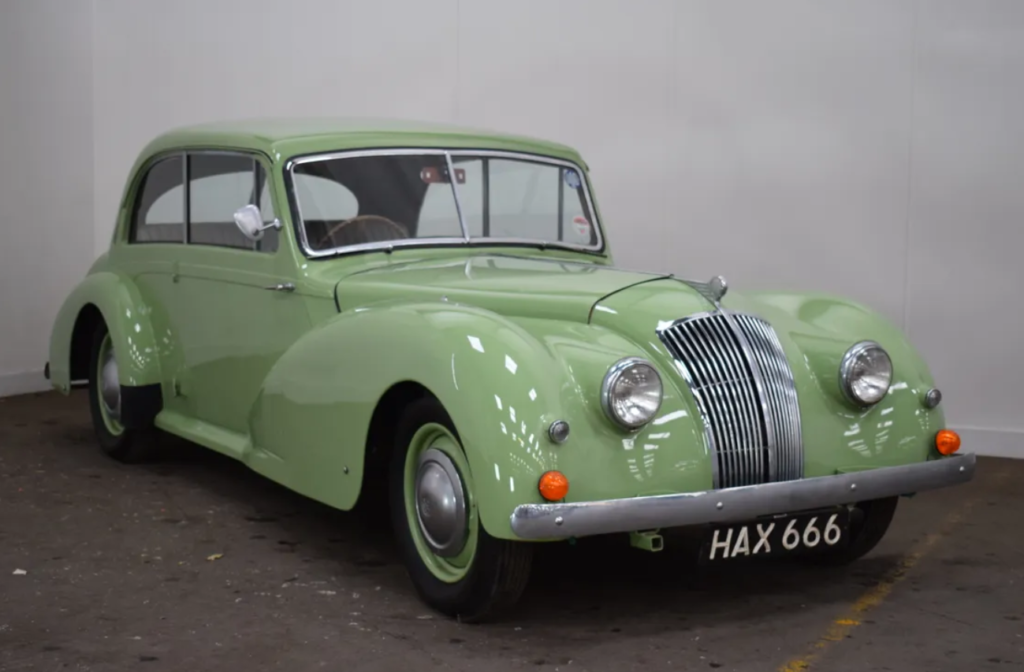
AC’s 2-Litre was their first post-war automobile, and it was really the largest shot at a “mainstream” automobile that they ever took. Pretty much everything after this was pure sports car. The 2-Litre, which was sold from 1947-1956, was available as a two- or four-door sedan. Drophead coupes were also offered. The Buckland was the open roadster variant.

The 2.0-liter inline-six dated to 1922 but was fitted with triple SU carburetors for post-war use and a factory-rated output of 74 horsepower. Top speed was 80 mph. Only 1,284 examples were produced of all types combined.

This car has been in the same family since new and was restored in the 1980s. It now carries an estimate of $8,200-$11,000. Click here for more info and here for more from this sale.

Update: Sold $10,334.