STP Turbine Indy Car

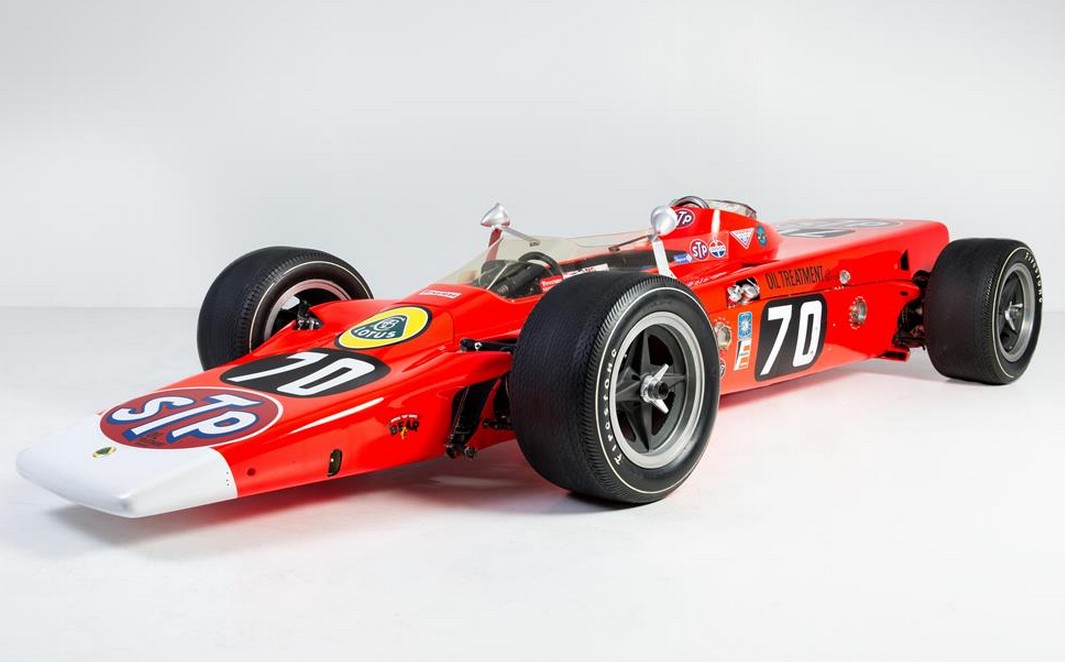
1968 Lotus 56

Offered by Barrett-Jackson | Scottsdale, Arizona | January 17, 2015

Photo - Barrett-Jackson

Photo – Barrett-Jackson

In 1967, Andy Granatelli entered the turbine-powered STP-Paxton Turbocar in the Indianapolis 500. The car nearly won the race at the hands of Parnelli Jones but a transmission bearing failure with eight laps to go ruined those plans.

Team Lotus took note of this impressive performance and they designed the Lotus 56 around a modified version of the Pratt & Whitney ST6B used in the Turbocar. The STN 6/76 made 500 horsepower in the 56. This car also has four-wheel drive.

So it dominated qualifying, with Joe Leonard taking the pole in one of three 56s entered for the race (a fourth was built, but was destroyed in Mike Spence’s fatal crash in testing). This car was raced by Graham Hill in the ’68 500. He crashed in turn two on lap 110, resulting in a 19th place finish. None of the 56s finished the race, but Joe Leonard was leading with nine laps to go when his fuel pump broke.

This car was owned by Richard Petty for many years and it has been restored to working, race-day condition. For the past year, it’s been on display on at the Speedway Museum in Indy. It’s an awesome piece of machinery and Indianapolis 500 history. Click here for more info and here for the rest of Barrett-Jackson’s lineup.

Update: Not sold, high bid of $1,200,000.

Update: Not sold, RM Sotheby’s Monterey 2016.

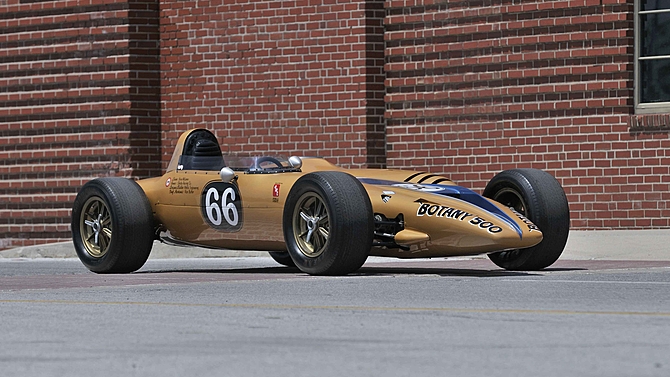
Shelby Turbine Indy Car

1968 Shelby Turbine Indy Car

Offered by Mecum | Monterey, California | August 14-16, 2014

Photo - Mecum

Photo – Mecum

Everyone remembers Andy Granatelli’s STP turbine indy cars from 1967 and 1968 – back in the day when the Indianapolis 500 stood for speed and innovation. The STP-Paxton Turbocars were driven by Parnelli Jones and Joe Leonard and dominated the races but always failed prior to the finish.

Well in 1968, Carroll Shelby also built a similar turbine-powered open-wheel racer and entered it in the Indy 500. The team practiced two cars – this one was driven by Bruce McLaren. USAC changed the rules surrounding turbine cars and while the STP cars were still legal, the Shelby cars were not able to compete and were withdrawn prior to qualifying.

The powerplant here is a General Electric T-58 shaft-drive turbine putting out a crazy 1,325 horsepower. This car is pristine and is currently on display the Indianapolis Motor Speedway Museum in their Turbine Indy Car exhibit. It’s a pretty cool opportunity that should command a pretty princely sum. You can read more here and see more from this sale here.

Update: Not sold, high bid of $450,000.

Lotus Type 49B

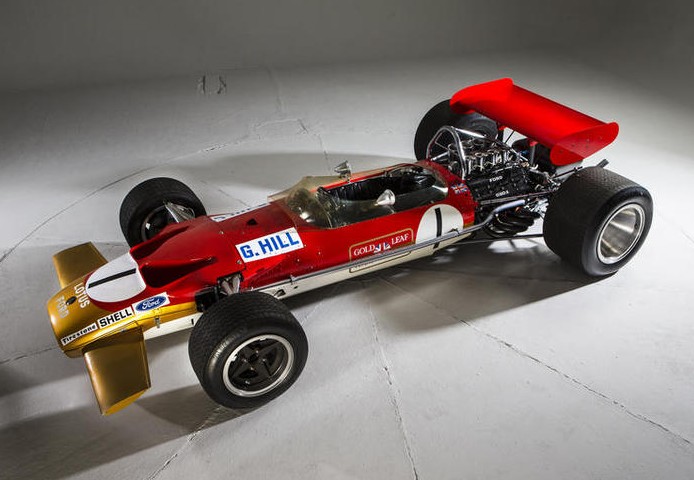
1968 Lotus Type 49B

Offered by Bonhams | London, U.K. | June 27, 2014

Photo - Bonhams

Photo – Bonhams

Remember how bad ass open wheel race cars used to be? Especially in the days before big rear wings when men had to manhandle them around courses. This one is now fitted with a wing, but it wasn’t always.

The Lotus 49 was designed for the 1967 Formula One season by Colin Chapman and Maurice Philippe. From the onset, this car was amazing. It blew everything else away, and Lotus teammates Graham Hill and Jim Clark dominated the opening weekend with this car.

Only nine Lotus 49s were built. Some of them were built as a Type 49 and later rebuilt as a Type 49B or 49C. The engine is a Cosworth DFV V-8 in 3.0-liter form capable of 408 horsepower. It is one of the best racing engines ever manufactured.

Want the competition history? I do – this car competed in the Tasman Series and Formula One:

  • 1969 New Zealand Grand Prix (as a Type 49) – 18th, DNF (with Graham Hill)
  • 1969 Levin International – DNF (with Hill)
  • 1969 Lady Wigram Trophy – 2nd (with Hill)
  • 1969 Teretonga International – 2nd (with Hill)
  • 1969 Australian Grand Prix – 4th (with Hill)
  • 1969 Sandown International 100 – 6th (with Hill)
  • 1969 Monaco Grand Prix (now in 49B configuration) – 4th (with Richard Attwood)
  • 1969 British Grand Prix – 7th (with Hill)
  • 1969 German Grand Prix – 18th, DNF (with Jo Bonnier)
  • 1970 South African Formula One Championship – 1st (with Dave Charlton)
  • 1971 South African Formula One Championship – 1st (with Charlton)

After the 1972 South African F1 season, the car was dismantled and purchased by a renown Australian Lotus collector who had the car restored. It’s been demonstrated and shown and now it can be yours. Only six Type 49s remain. This one has factory-Lotus F1 history and can be yours for between $1,200,000-$1,700,000. Click here for more info and here for more form this sale.

Update: Sold $1,147,135.

Alloy-bodied Bizzarrini

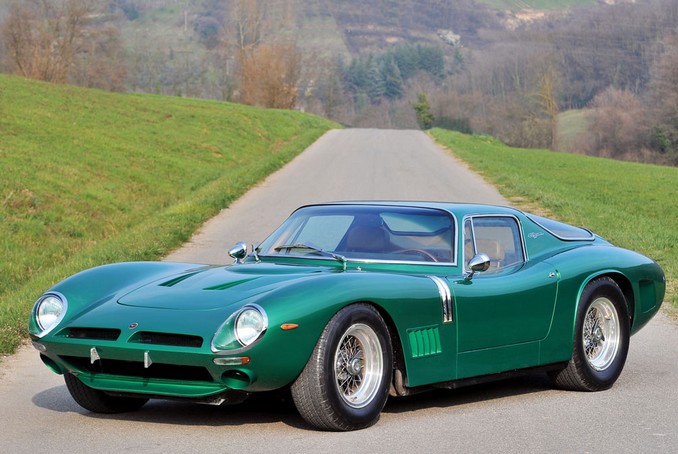
1968 Bizzarrini 5300 GT Strada Alloy

Offered by RM Auctions | Monaco | May 10, 2014

Photo - RM Auctions

Photo – RM Auctions

Bizzarrinis are stunning cars to see in person – especially when they’ve been restored to such magnificence. Giotto Bizzarrini was an engineer at Ferrari where he was responsible for the 250 Testa Rossa and the 250 GTO – two of the most sought-after Ferraris in history. He then moved to ATS and then on to ISO. When he left ISO in 1964, he formed the company that bore his own name.

In 1966, the company began marketing a street-legal version of its race car. This new road car was the 5300 GT Strada. The car here is an aluminium-bodied example and they use a 5.3-liter V-8 (from a Corvette) that makes 355 horsepower. It was – and is – a race car for the road. Top speed eclipsed 160 mph and approached 180, for those daring enough.

Bizzarrini didn’t build many examples of the 5300, but there are a number of them still out there. They have become a very collectible Italian exotic from the 1960s. Bizzarrini ended production in 1969. This car should bring between $625,000-$750,000. Click here for more info and here for more from RM in Monaco.

Update: Sold $755,204.

The Winner of the 1968 24 Hours of Daytona

1968 Porsche 907 Longtail

Offered by Gooding & Company | Amelia Island, Florida | March 7, 2014

Photo - Gooding & Company

Photo – Gooding & Company

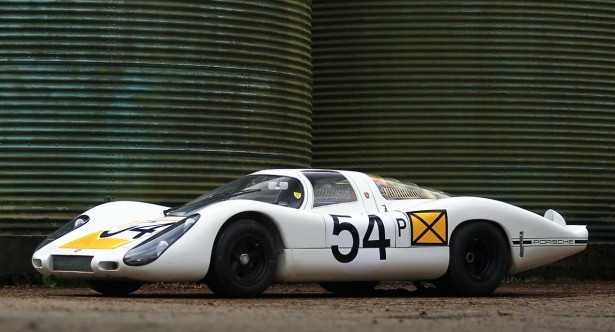
The Porsche 907 was, you guessed it, the successor to the 906 and the predecessor to the 908. (Well okay, the 910 was technically slotted between the 906 and 907, but that doesn’t make any numerical sense, now does it?).

Anyway, in 1967 Porsche introduced the 907 at the 24 Hours of Le Mans gunning for a head start on the rule changes coming for 1968 that mandated smaller engines. The car you see here uses a screaming 278 horsepower 2.2-liter flat-eight. The 907 would bring Porsche it’s first 24 hour endurance victory – setting off a streak unlike any other in motorsports history (although corporate cousin Audi is trying its damnedest to top it).

The competition history for this car includes the following:

  • 1968 24 Hours of Daytona – 1st (with Vic Elford, Jochen Neerpasch, Rolf Stommelen, Jo Siffert, and Hans Herrmann)
  • 1968 1000km Monza – 2nd (with Neerpasch and Stommelen)
  • 1968 24 Hours of Le Mans – 29th, DNF (with Alex Soler-Roig and Rudi Lins)
  • 1969 24 Hours of Daytona – DNF (with Soler-Roig and Lins)
  • 1969 12 Hours of Sebring – 4th (with Soler-Roig and Lins)
  • 1970 1000km Monza – 15th, 1st in class (with Andre Wicky and Mario Cabral)
  • 1970 1000km Nurburgring – 9th, 1st in class (with Wicky and Cabral)
  • 1970 24 Hours of Le Mans – 23rd, DNF (with Wicky and Jean-Pierre Hanrioud)
  • 1971 1000km Monza – DNF (with Wicky and Peter Mattli)
  • 1971 24 Hours of Le Mans – 7th, 1st in class (with Mattli and Walter Brun)
  • 1972 1000km Monza – 4th, 1st in class (with Mattli and Herve Bayard)
  • 1972 24 Hours of Le Mans – 18th, 2nd in class (with Mattli, Brun, and Bayard)

What is most awesome about this car is that a later American owner tried to enter it in the 1998 24 Hours of Daytona because its performance from 1968 was on par with current cars. How cool would that have been?

This car was meticulously restored to 1968 race-ready condition and one of eight 907 Longtails built and one of only two that remain. It’s a very important racing Porsche that can be yours for between $3,500,000-$5,000,000. Click here for more info and here for more from this sale.

S/N: 907-005

Update: Sold $3,630,000.

Vignale Samantha

1968 Fiat 125 Samantha

Offered by Coys | Athens, Greece | June 15, 2013

1968 Fiat 125 Samantha

Photo – Coys

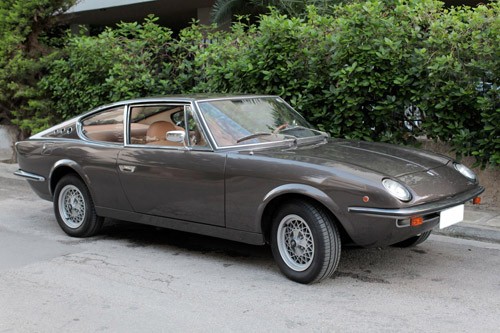
The Fiat 125 was Fiat’s large family car that replaced the 1500 and was introduced for 1967. It was available as a four-door sedan and five-door station wagon. But some Italian coachbuilders got a hold of it and built some two-door variants as well.

Vignale built the “Samantha” – a sporty-looking two-door coupe. It is said that the car was designed for Alfredo Vignale himself – as he wanted a luxurious ride to drive around. Underneath, the engine has been upgraded from the 125’s original 1.6-liter: it’s a 2.0-liter straight-four making around 112 horsepower. Performance is described as “spritely.”

It comes with a set of spares, but it is in fantastic condition. Vignale ended up building a few more – 100 in total, making this a very rare coachbuilt Italian sports car. It is expected to sell for between $23,500-$32,500. Click here for more info and here for more from Coys in Greece.

Update: Sold for about $35,600.

427 Biscayne

1968 Chevrolet Biscayne L72 2-Door Sedan

Offered by Mecum | Indianapolis, Indiana | May 18, 2013

1968 Chevrolet Biscayne L72

The Chevrolet Biscayne was the entry-level full-size model for the Chevrolet line. It was positioned below the Bel Air and Impala throughout its life, which lasted four generations from 1958 through 1975. This is a generation three car – the last generation you could get a two-door hardtop (which was only offered through 1969).

It’s a sleeper, really. Biscaynes were intended for the fleet market – just like the Ford Crown Vic was for the last 15+ years. They were mundane and didn’t really stand out. But you could get them with the L72 option – a Turbo-Jet 427 – a 6.7-liter V8 making 425 horsepower. It also had a Muncie 4-speed with a Hurst shifter. No one would see this car coming at a stoplight in 1968.

Apparently, this car was sold new to a Georgia bootlegger. I’m sure the original purpose was to blend in and to be able to get away when need be. It’s the perfect car for that, offering both anonymity and tire-screeching performance. But the owner ended up in jail before he could use it and the car was hidden before it could be seized. It’s all original in preservation condition. It has just 720 miles on it from new! And it is the only black L72 Biscayne know to exist in the world. What an awesome car. This car could bring anywhere from $30,000-$80,000 – there really isn’t a precedent for an original L72 car like this. Click here for more info and here for more from Mecum in Indy.

Update: Sold $165,000.

Microcar Mondays Part IV

The Bruce Weiner Microcar Collection

Offered by RM Auctions | Madison, Georgia | February 15-16, 2013

____________________________________________________________

1951 Reyonnah

1951 Reyonnah

Reyonnah (which comes from the name of company founder Robert Hannoyer spelled backwards), was a short-lived automaker from Paris. It was only around from 1951 through 1954 and this was the car that they built.

A single-cylinder engine was used, either of the 125cc or 175cc variety. The 175cc put out 8.5 horsepower. It will do 63 mph and can seat two people – the passenger directly behind the driver. You’ll probably notice the weird angle this thing is parked at – that’s because the front had a very wide track compared to the rear – but, when parked, the front wheels could be brought in closer – to make it easier to park. When this happens, it raises the front of the car up into the air. Weird. This should sell for between $75,000-$100,000. Click here for more info.

Update: Sold $184,000.


____________________________________________________________

1985 Sinclair C5

1985 Sinclair C5

Most of the cars from this sale are from the 1940s through the 1960s. Not this one. Designed by Sir Clive Sinclair and built by the Hoover vacuum people, the C5 was built for 1985 only. It had pedals (like a sit-down bicycle) but was also powered by an electric motor making capable of 15 mph. But a street-legal 15 mph tricycle – that could be driven without a driver’s license – was dangerous. And the fact that it was built and marketed primarily in England and had no top, made it unsuitable for the general climate. It was a massive flop, even though 17,000 were sold in 1985. It should sell for between $3,000-$5,000. Click here for more info.

Update: Sold $4,600.


____________________________________________________________

1968 Authi Mini 1275C
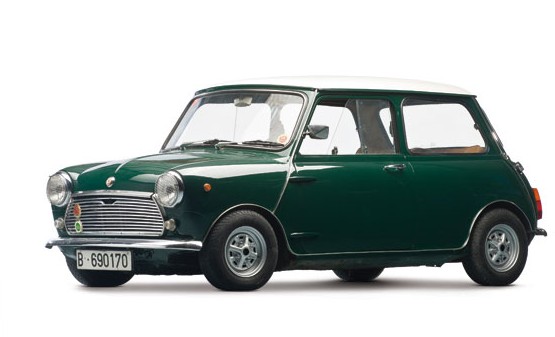
1968 Authi Mini 1275C

Wait, just a plain ol’ Mini Cooper after all these weird cars? Well, kind of. It isn’t a Morris or Austin or even a Mini-badged Cooper. It’s not even British-built. Authi – of Pamplona, Spain, – built the Mini under license from 1968 through 1975. This is from their first year of production and it has the 1275cc Mini engine (1.3 liters) making about 54 horsepower. Authi was an automotive production plant, primarily, and built cars for BMC under the Austin brand. But the Mini they branded themselves. The Authi plant became part of SEAT in 1976. They built about 140,000 Minis with their name on it, but you hardly ever see them. This one should sell for between $20,000-$30,000. Click here for more info.

Update: Sold $28,750


____________________________________________________________

1956 VELAM Isetta

1956 VELAM Isetta

Another Isetta from another brand. In this case, this Isetta was built by VELAM – a French company that built them under license between 1955 and 1958. There were slight variations – the body was more rounded and there is a big, bold “VELAM” script across the front door. It uses a 236cc split-single-cylinder engine making about 9.5 horsepower. It could do 50 mph and only about 5,000 were built. It should bring between $30,000-$40,000. Click here for more info.

Update: Sold $37,375.


____________________________________________________________

1959 Bond Minicar Mk F
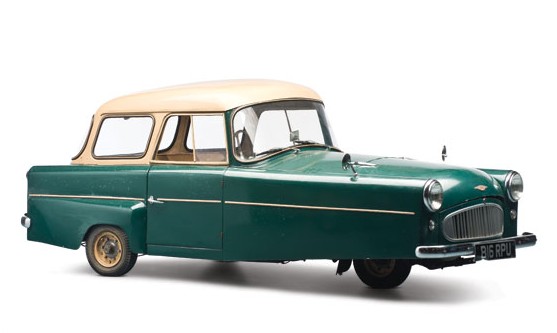
1959 Bond Minicar Mk F

The Mark F iteration of the Bond Minicar was the second-to-last version offered for sale. Built from 1958-1963, the Mk F is differentiated from its immediate predecessor by its  larger engine – a 247cc single-cylinder making 12 horsepower. There were different body styles offered – this is a hardtop. It was capable of 55 mph and there was a four-seat version available (I honestly can’t tell if this has four seats or two). Only 6,493 were made in total. This one, with some of the tiniest looking wheels in comparison to overall car size I’ve ever seen, should sell for somewhere in the range of $15,000-$20,000. Click here for more info.

Update: Sold $11,500.


____________________________________________________________

1959 Frisky Family Three
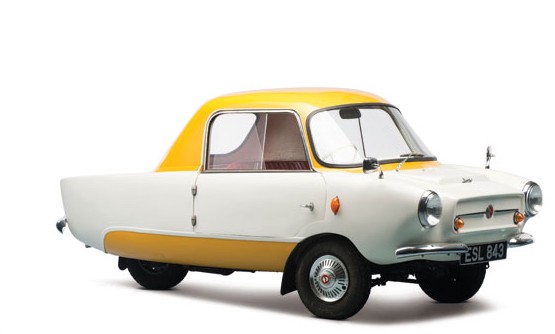
1959 Frisky Family Three

The Frisky was one of those cars that was produced by multiple companies – all of whom couldn’t help but go bankrupt at some point. The second company to use the Frisky trademark was Frisky Cars Ltd and they introduced the Family Three in late 1958. It was essentially a three-wheeled version of the Frisky Coupe that could be driven with a motorcycle license. The company was reorganized the following year (1959) and the model names were changed. This car uses a rear/mid-mounted 197cc single-cylinder making 9.5 horsepower. It could do 50 mph and should sell for between $15,000-$20,000. Click here for more info.

Update: Sold $57,500.


____________________________________________________________

1959 PTV 250

1959 PTV 250

PTV sold their Spanish-built microcars from 1956-1961. Two models were offered, the 250 and the 400. Both were tiny two-door convertibles that differed only in engine size. The 250 used a rear-mounted 247cc single-cylinder making 11 horsepower. Top speed was around 45 mph. Most of the cars were sold in Spain, although same made it to Portugal. Between the two models, a total of around 11,000 were sold. This one will sell again for between $40,000-$50,000. Click here for more info.

Update: Sold $46,000.


____________________________________________________________

1939 New-Map Baby

1939 New-Map Baby

This unrestored pre-war microcar from French motorcycle manufacturer New-Map is very rare. New-Map was founded in 1920 in Lyon and it built its first itty-bitty car in 1938. It was called the Baby and it used a 100cc single-cylinder Sachs engine – the same one from their motorcycles. Only about 1,000 were built. In 1946 they re-introduced the car with a 125cc engine but it only lasted one year. This one should bring between $15,000-$20,000. Click here for more info.

Update: Sold $21,850.


____________________________________________________________

1957 Victoria 250
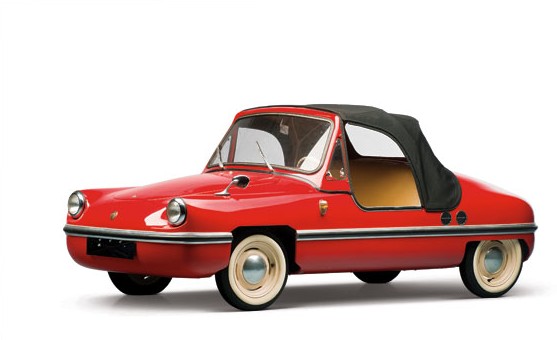
1957 Victoria 250

This little German fiberglass convertible was originally marketed as the Brütsch Spatz. Victoria was a motorcycle manufacturer in Nuremberg and they entered a joint venture with another company to form BAG (Bayerische Autowerke GmbH), to produce these cars under license as the BAG Spatz. But first, they re-engineered the car to make it stronger and safer – and added a fourth wheel from the original three-wheeled design – this got them out of paying licensing fees. Lastly, they pumped the displacement up to 250cc from 200cc. The single-cylinder made 14 horsepower. While BAG produced the Spatz, Victoria produced the car concurrently, from 1956 through 1958 as the Victoria 250. Only 729 of the Victoria-badged cars were sold. This one should sell for between $35,000-$45,000. Click here for more info.

Update: Sold $37,375.


____________________________________________________________

1958 Goggomobil Dart
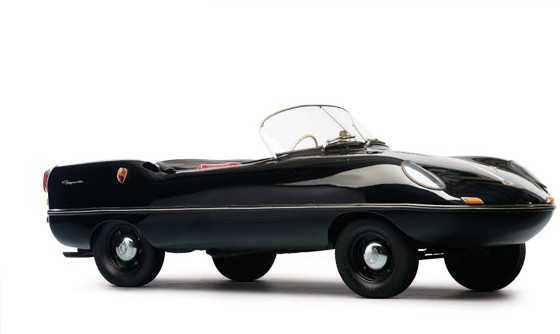
1958 Goggomobil Dart

Goggomobil was a German microcar company, but in 1959, Buckle Motors of Sydney, Australia designed a two-door roadster based on the small Goggomobil Coupe. Somehow, they were able to market the cars under the Goggomobil name and they called it the Dart. It used the same 293cc straight-two making 14 horsepower (with an optional upgrade to 392cc and 18 horsepower). The body was fiberglass and it was produced through 1961. Only about 700 were built. It’s an Australian car with a German name and it could be yours for $35,000-$45,000. Click here for more info.

Update: Sold $54,050.
Authi Mini

1968 Authi Mini 1275C

Offered by RM Auctions | Madison, Georgia | February 15-16, 2013

1968 Authi Mini 1275C

Wait, just a plain ol’ Mini Cooper after all these weird cars? Well, kind of. It isn’t a Morris or Austin or even a Mini-badged Cooper. It’s not even British-built. Authi – of Pamplona, Spain, – built the Mini under license from 1968 through 1975. This is from their first year of production and it has the 1275cc Mini engine (1.3 liters) making about 54 horsepower. Authi was an automotive production plant, primarily, and built cars for BMC under the Austin brand. But the Mini they branded themselves. The Authi plant became part of SEAT in 1976. They built about 140,000 Minis with their name on it, but you hardly ever see them. This one should sell for between $20,000-$30,000. Click here for more info.

Update: Sold $28,750

Shelby “Green Hornet”

1968 Shelby EXP 500

Offered by Barrett-Jackson | Scottsdale, Arizona | January 19, 2013

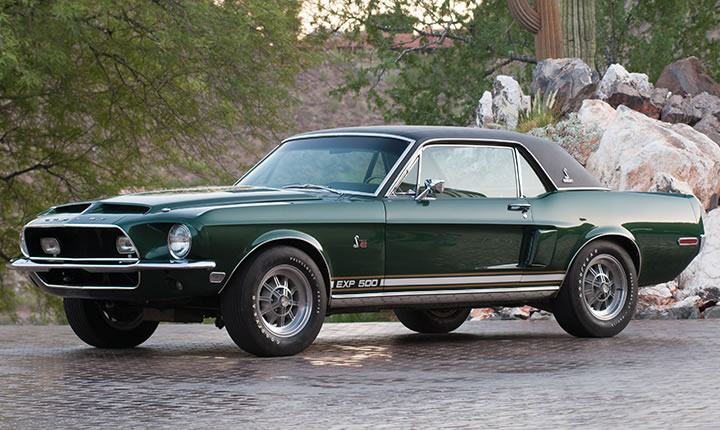
Here’s one Shelby Mustang that even the most seasoned Shelby collectors don’t have. That’s because it’s the only one. Ford built two Mustangs as test beds/prototypes in 1968. This car was originally the factory Ford prototype for the California Special Mustang. When they were done with it, Shelby acquired it and ran it through the gauntlet.

Shelby tried all sorts of new parts and experimental systems out with this car. At one point it had independent rear suspension and an experimental electronic fuel injection system. Both parts left the car before it was finished, although, when it was restored, the independent suspension was recreated and put back on the car. Shelby also used it to test the new Cobra Jet engine. Because of the raw power, they had to use a transmission from an F350 truck. Power is somewhere around 400, although it was never officially published – although they took it to the Ford Proving Grounds and managed a 0-60 sprint of 5.7 seconds and a top speed of 157 mph – both far better than the Shelby GT500KR that this car gave way to.

EXP 500 was given special green paint and dubbed “The Green Hornet.” When it’s life as a test car was over, a Ford executive slipped the car into the Ford Employee Auction and the car, which has a real VIN but was also marked as a Shelby prototype, was sold to the public. It went about it’s life as any old GT500, but was tracked down in 1988 and restored in 1993 back to it’s “Green Hornet” specs. Craig Jackson of Barrett-Jackson acquired the car later on and it is being sold from his collection (as is the Hemi ‘Cuda Convertible we featured). At Barrett-Jackson this is a million dollar car. For more information, click here. And for more form Barrett-Jackson, click here.

Update: Failed to sell.