June Auction Roundup

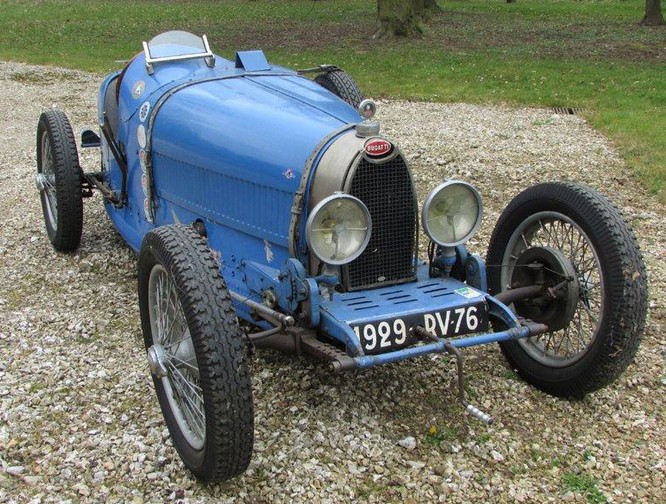
Okay, so June was a busy auction month and this is our final rundown of sales for it. First up was Osenat’s Fontainebleau sale where the highest amount paid for any vehicle (there were some pricey boats) was this 1928 Bugatti Type 37 for $720,500.

1928 Bugatti Type 37

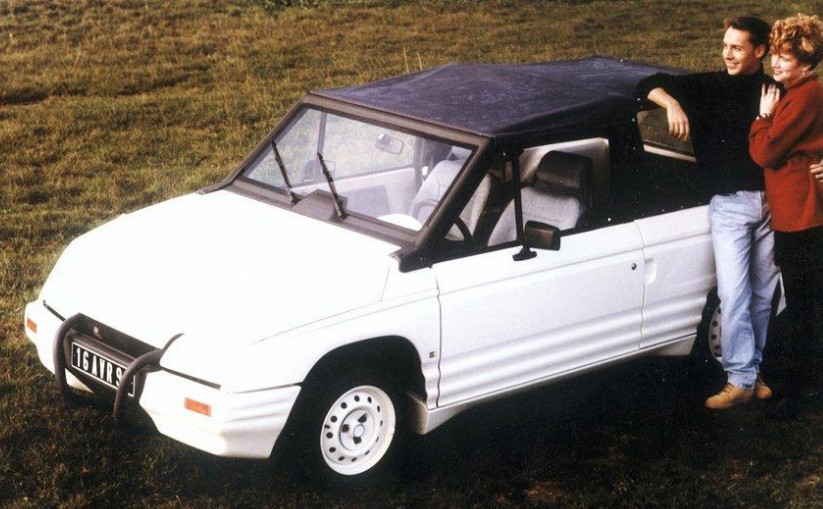
Of our feature cars, the Deutsch-Bonnet race car failed to sell. So did the Fournier-Marcadier Barzoi 2. But the Fournier-Marcadier Barquette did sell – for $32,750. And the B.N.C. Type 53 sold for $104,800. The two most interesting cars also sold were a pair of prototypes. First, this 1986 Citroen Triaxe Prototype sold for $12,445.

1986 Citroen Triaxe Prototype

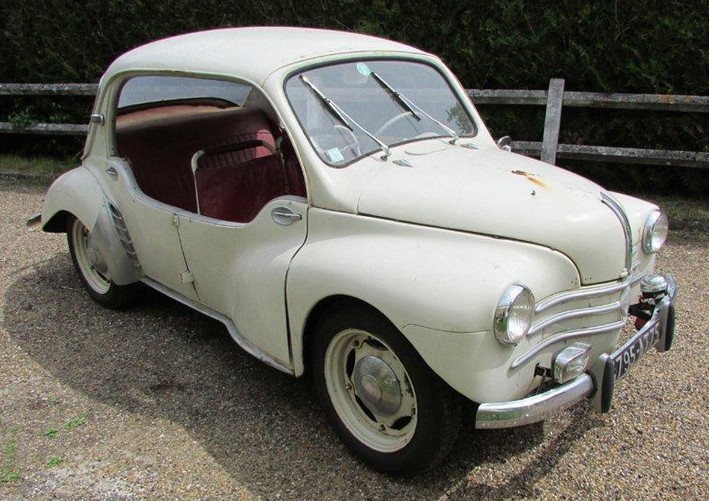
The other prototype was this 1951 Renault 4CV “Pie” Prototype. It sold for $13,100.

1951 Renault 4CV Pie Prototype

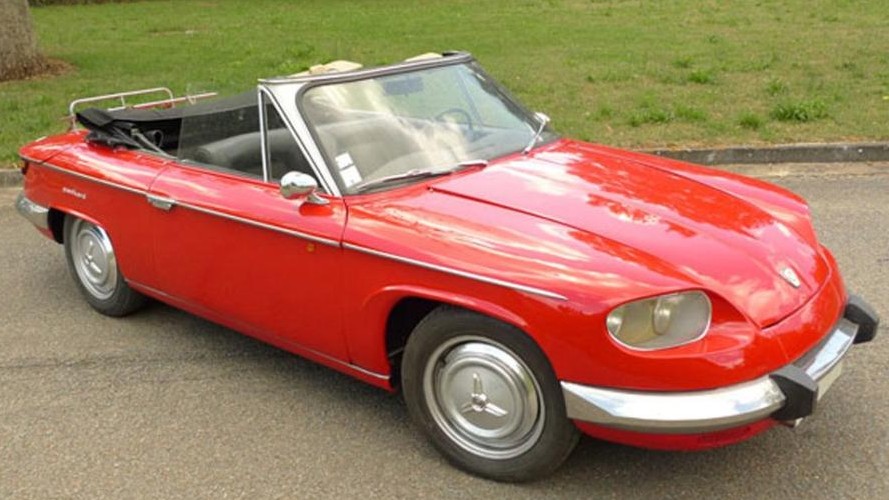
And finally, this attractive 1965 Panhard CT 24 Convertible brought $14,410. Check out full results here.

1965 Panhard CT 24 Convertible

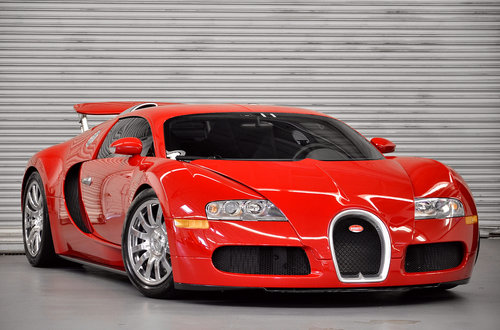
Next up was Russo & Steele’s Newport Beach, California sale. Top sale honors there went to this 2008 Bugatti Veyron for $1,078,000.

2008 Bugatti Veyron

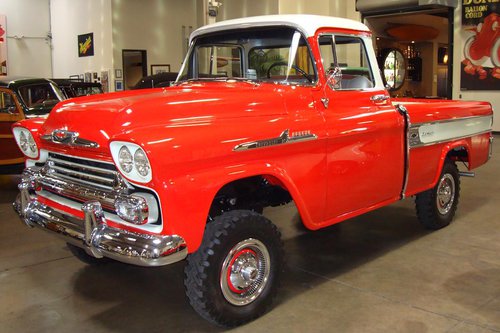
Our featured Tojeiro Barchetta sold for $159,500. Other cool rides that sold included this 1958 Chevrolet Cameo NAPCO 4×4 pickup. It sold for $67,100. Check here for full results.

1958 Chevrolet Cameo NAPCO 4x4

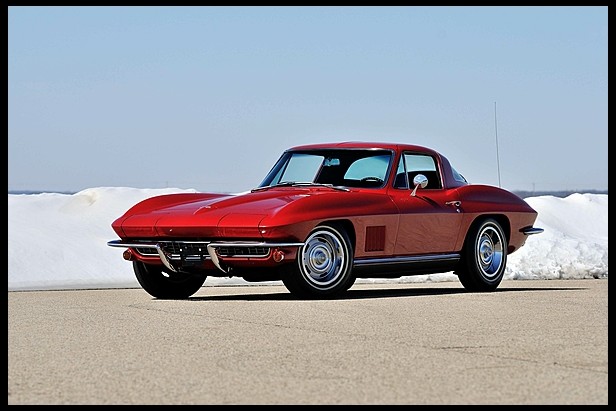
And finally, Mecum’s annual Bloomington Gold sale. It was a small-ish sale this year and the top sale went to this 1967 Chevrolet Corvette 327/350 Coupe for $100,000.

1967 Chevrolet Corvette 327-350 Coupe

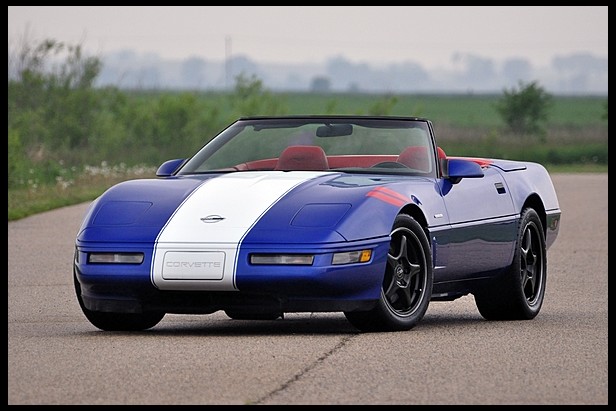
Interesting sale were topped by this 1996 Chevrolet Corvette Grand Sport Convertible – one of 190 built. It sold for $23,500. Our “Entombed Corvette” failed to sell. Check out full results here.

1996 Chevrolet Corvette Grand Sport Convertible

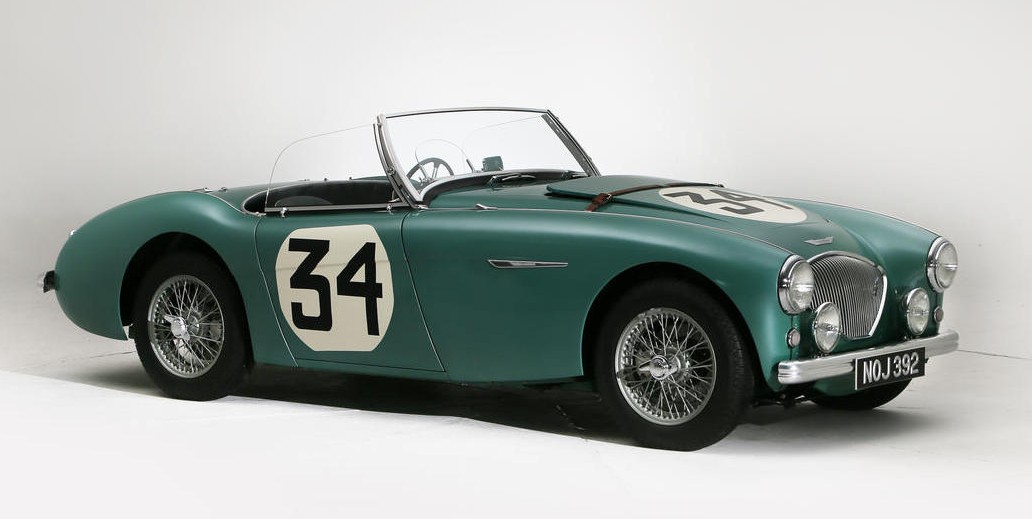
The 6th Austin-Healey Built

1953 Austin-Healey 100 Special Test Car

Offered by Bonhams | Goodwood, U.K. | July 12, 2013

1953 Austin-Healey 100 Special Test Car

You’re looking at one of the first Austin-Healeys built. It was the sixth Austin-Healey built and it was one of several pre-production cars that were to be used “testing” on famous race tracks all over Europe. They are referred to as Special Test Cars and, while they look nearly identical to production cars, they were lighter (thanks to a lot of aluminium) and faster on the track. Only four Special Test Cars were built. The first three were eventually road-registered. This car has always remained in race/testing guise.

The engine began life in Austin’s “experimental shop.” The 2.7-liter straight-four received a special camshaft, a lighter flywheel and spruced up carburetors. Power was more than the production car’s 90 horses – it was rated at 103 for Le Mans. This car also has a significant competition history:

  • 1953 Mille Miglia – 417th (seriously), DNF (with Bert Hadley and Bertie Mercer – yes, two people named Bert shared this car. The 1950s were a different time)
  • 1953 24 Hours of Le Mans – 12th overall, 2nd in class (with Maurice Gatsonides and Johnny Lockett)

After Le Mans, the car had its appearance changed to that of a road car and was used in testing for the media (although they didn’t know they were testing a lightweight racing special all gussied up to look like a road car). Later, it was used to test new braking systems for future Healey models and it was also used as a personal car by the Healey family. The first private owner acquired the car in 1962.

It passed through many owners before it was restored in the mid-1990s in Australia. That restoration was “refreshed” in 2009 and was painted to look like it did at Le Mans in 1953 – and it’s a wonderful color. This is the only Special Test Car that looks anything like it did in 1953 – it has almost all of its original bodywork and parts. It has never been molested, wrecked or altered. It is super rare and very important in the world of Healeys and it should command it in price with an estimate between $780,000-$1,100,000. Click here for more info and here for the rest of Bonhams’ Goodwood sale lineup.

Update: Sold $1,186,763.

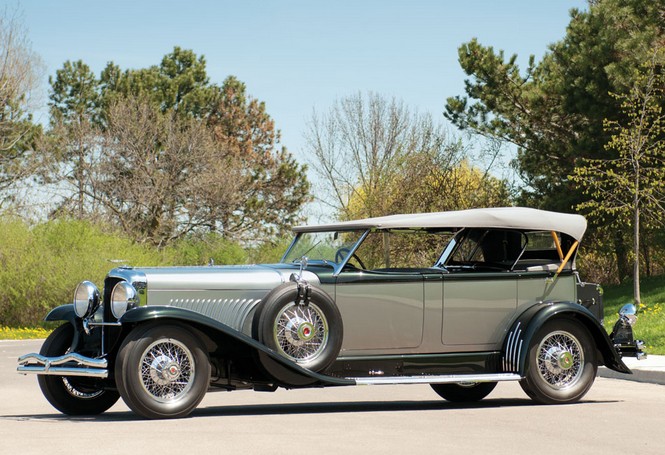
Duesenberg J-183

1929 Duesenberg Model J Dual-Cowl Phaeton

Offered by RM Auctions | Plymouth, Michigan | July 27, 2013

1929 Duesenberg Model J 183

This Model J is an actual Model J but it doesn’t have an original body on it. The original body, which was a Derham Town Car, burned to the ground. At some point more recently, the car was restored and given a Dual-Cowl Phaeton body in the style of Murphy. But between that time is where this car’s interesting history lies.

James Hoe was a mechanic who is more or less responsible for keeping many of the Duesenbergs still around alive and well. He worked on them back in the day, servicing, repairing, etc. Whatever kept them around. Well in 1950, he bought this car for $150 – basically salvaging it. The body was a loss, so he turned it into a custom speedster. Many of the original Duesenberg parts were still on it, engine included (although the transmission was from a White truck).

He raced the car at some SCCA events and hillclimbs. It would do 140 mph. After he sold it, the car was restored to how you see it. A different engine was put in the car, but the bell housing from J-183 was retained and that is the number the engine carries today. It should sell for between $725,000-$900,000. Click here for more info and here for more from RM at St. John’s.

Update: Sold $682,000.

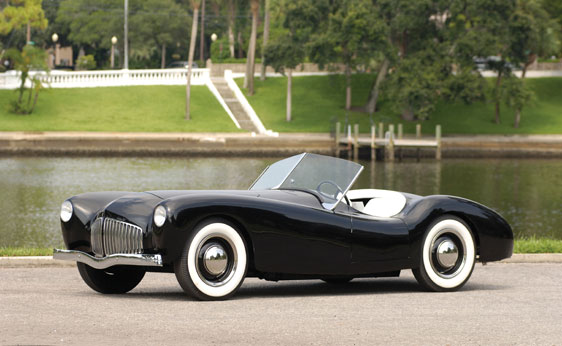
Glasspar G2

1951 Glasspar G2 Roadster

Offered by Auctions America | Burbank, California | August 1-3, 2013

1951 Glasspar G2

1950s low-production fiberglass sports cars are a really interesting sector of collector cars. There were quite a few of these little cars that came out in the early 50s and the Glasspar G2 is one of the more well-known.

Bill Tritt founded Glasspar in 1949 as a fiberglass manufacturer. He built boats and in 1949 he built a sporty body for a friend’s hot rod. Two years later, the Glasspar G2 made its debut. It was available as a coupe or roadster and as a kit or as a complete car. Very few complete cars were sold – most of them were kits. And you see roadsters now and then but rarely ever see a coupe.

The G2 was the first all-fiberglass production car to come to market. It’s an attractive car, really. The rear-3/4 view is a bit Jaguar XK120-ish. The engines available at the time were Ford or Mercury flathead V-8s. This one has a Mercury unit – a 3.7-liter V-8 with Offenhauser aluminium heads. The G2 was made through 1953. This is about a $35,000-$45,000 car. Click here for more info and here for the rest of Auctions America’s Burbank lineup.

Update: Sold $52,800.

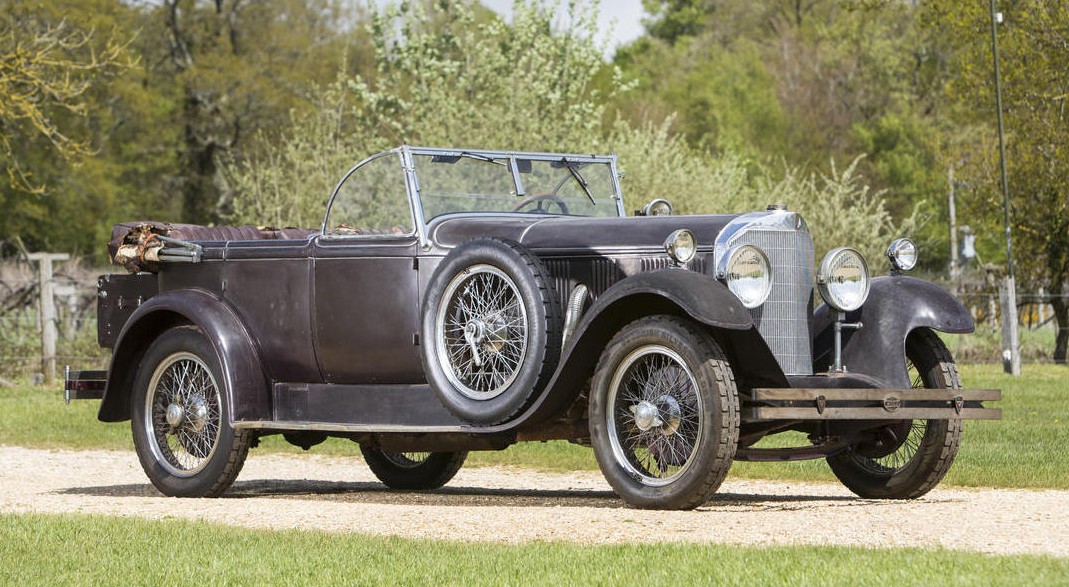
Mercedes-Benz 630K Tourer

1928 Mercedes-Benz 630K Tourer by Erdmann & Rossi

Offered by Bonhams | Goodwood, U.K. | July 12, 2013

1928 Mercedes-Benz 630K Tourer by Erdmann & Rossi

Mercedes became Mercedes-Benz in 1926 when Daimler and Benz merged. What is interesting about the 630K (okay, so there are many things) is that it was originally introduced in 1924 when Mercedes was just Mercedes. The model line was known as the 24/100/140 PS. When the companies merged, the name was changed to Type 630 (although 24/110/160 PS was still used on occasion). 1929 was the final year regardless of whatever you called it.

The model was more or less designed by Dr. Ferdinand Porsche when he arrived at Mercedes to replace the departing Paul Daimler. This model was a follow-up to the 6/25/40 PS model that Mercedes introduced in 1921 as the world’s first supercharged production car. Also: the slashes in the name denote the following: rated (or taxable) horsepower/horsepower without the supercharger/horsepower with the supercharger engaged. You can see that power in the new model was greatly improved. The engine in the 630K is a supercharged 6.3-liter straight-six making 138 horsepower with the supercharger active (and it was activated by flooring the gas pedal).

The “K” variant of the Type 630 was new for 1926 and it stands for “Kurz” and not “Kompressor” as one might think. “Kurz” translates to “short” – as in wheelbase. The K variant was available on other Mercedes-Benz models from 1926 through 1932. They had a 90 mph top speed and only 267 were built. Some had factory Sindelfingen coachwork while this one sports a Tourer body from Erdmann & Rossi. Other coachbuilders were involved as well.

This car was delivered new to Los Angeles with this body on it. It is presented in all-original condition and the color is apparently maroon (I guess). I personally find this car incredible and would love to own it, if I had the means. And means I would need: the pre-sale estimate is $280,000-$390,000. Click here for more info and here for more from Bonhams at Goodwood.

Update: Sold $1,220,606.

Mathilda. A Lagonda LG45 Rapide

1936 Lagonda LG45 Rapide

Offered by Bonhams | Goodwood, U.K. | July 12, 2013

1936 Lagonda LG45 Rapide

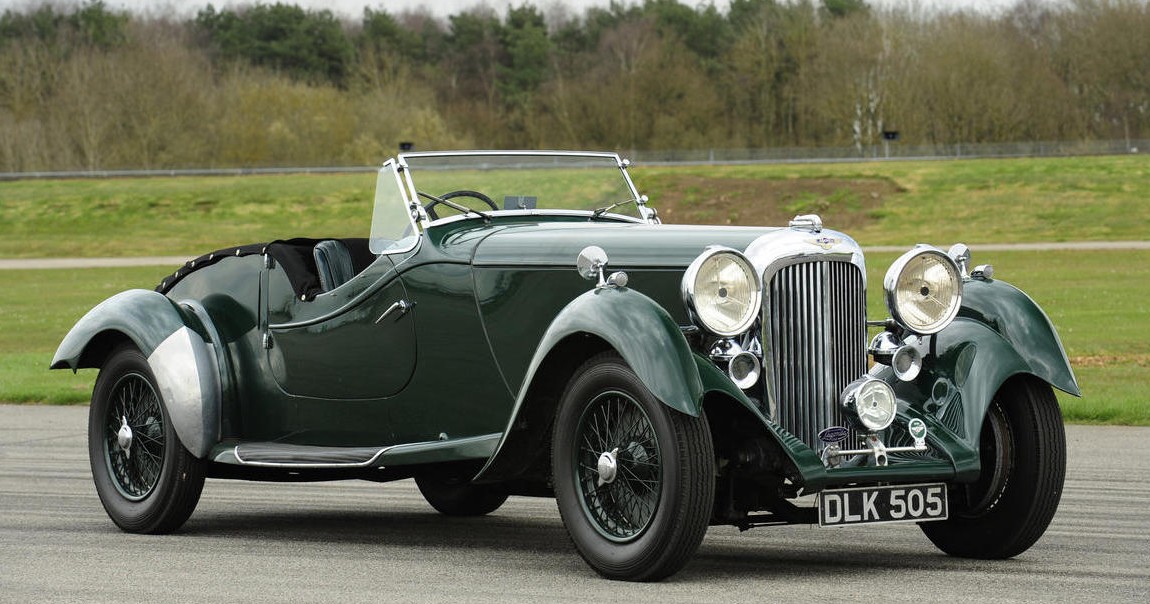
Although it has had a long association with Aston Martin (after being purchased by them in 1947), Lagonda was once an independent manufacturer. Lagonda car construction goes back to 1907, but it wasn’t until the inter-war period where their design and fame really took off.

In 1935, the company was going through hard times. But it was saved and W.O. Bentley was brought aboard to help build some fantastic cars. And in 1936, the LG45 was launched. It uses a 4.5-liter straight-six. The cars were heavy and beautiful but a little removed from sportier Lagondas of earlier days.

And thus the Rapide was conceived – it was to be a four-seat sports car based on the LG45. The car was lighter and featured a “Sanction 3” engine (the motors were available as Sanction 1, 2 or 3 – the higher the number, the more tweaks applied by W.O. Bentley). Total output was about 133 horsepower. The cars were attractive and all shared the same Lagonda-built bodywork. Only 25 were built – 24 remain.

This particular car was owned originally by the chairman of Lagonda at the time, a Mr. Alan P. Good, who nicknamed the car “Mathilda.” He sold it in 1938 and the next owner  after that acquired the car in 1954 and owned it until 1997 in the U.S. It spent the following two years in Canada before the present owner acquired it in 1999. The restoration is at least as old as 1979 and has been well cared for since. The engine was freshly rebuilt in 2009. “Mathilda” is expected to bring between $860,000-$940,000 at auction. Check out more here and more from this sale here.

Update: Sold $932,942.

Maserati 300S

1955 Maserati 300S

Offered by Bonhams | Goodwood, U.K. | July 11, 2013

1955 Maserati 300S

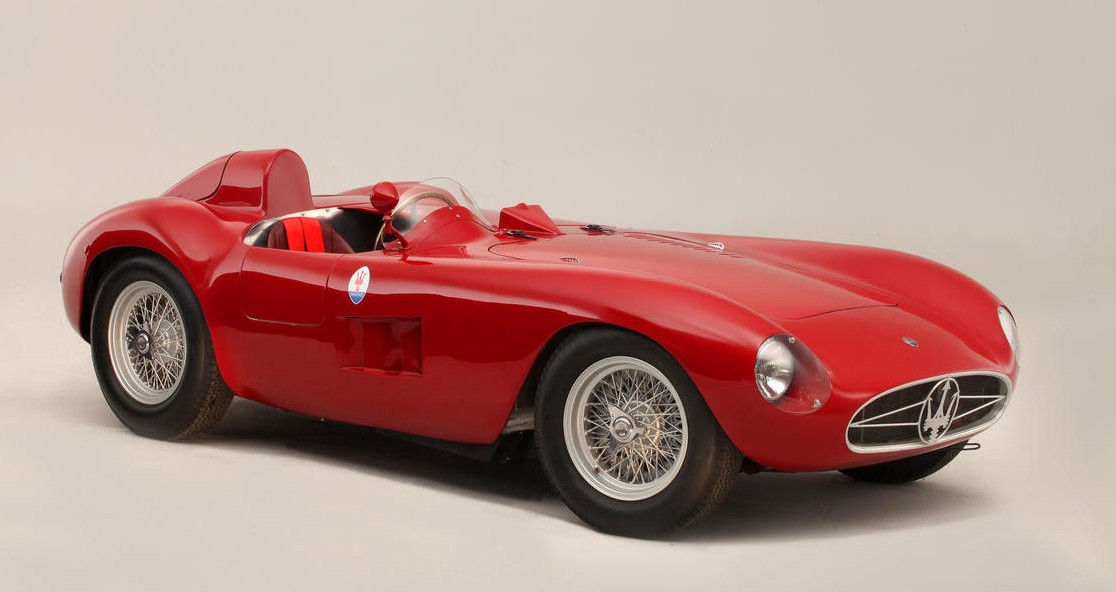
The Maserati 300S was a development of the Maserati 200S – a competent sports racing car in its own right. The 300S was introduced for 1955 and produced through 1958. In all, 28 were constructed.

The cars use a 3.0-liter straight-six making about 245 horsepower. This car was ordered by and delivered new to Briggs Cunningham. He brought it to America so his driver Bill Spear could campaign it. It’s race history includes (but is not limited to) the following:

  • 1955 12 Hours of Sebring – 3rd (with Bill Spear and Sherwood Johnston)
  • 1955 SCCA National Sports Car Championship – 2nd, in Round 4 (with Spear)
  • 1955 SCCA Nationals (Road America) – 5th (with Spear)
  • 1955 Watkins Glen Grand Prix – 2nd (with Spear)

The car left Spear’s ownership at the end of 1955 and the next owner campaigned it at various SCCA events, although less competitively. In the 1970s, it was used in some historic races before being sold to a collector who preserved it. The current owner acquired it around 2006.

The car is offered in “race-prepared” condition. This is one of the premier racing models from the very competitive mid-1950s: the era of Jaguar D-Types, Porsche 550 Spyders, Ferrari Monzas and the like. It’s one of the finest racing cars from some of the golden years of post-war sports car racing. And it’s in all-original condition. It is expected to sell for between $5,500,000-$7,000,000. Click here for more info and here for more from this sale.

Update: Sold $6,093,965.

The Only W196 Mercedes in Private Hands

1954 Mercedes-Benz W196R

Offered by Bonhams | Goodwood, U.K. | July 12, 2013
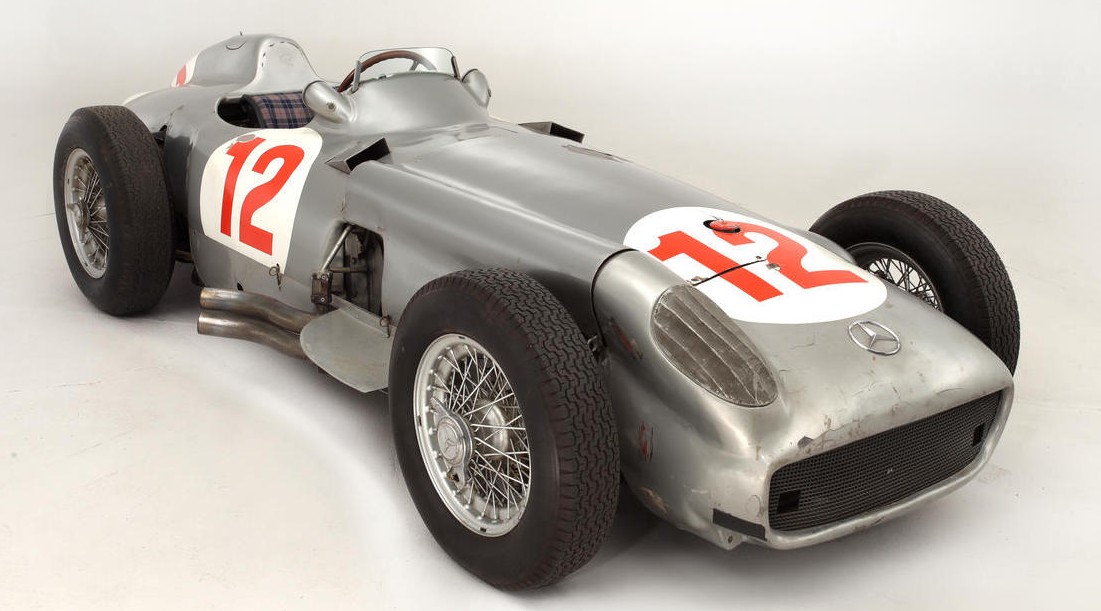
1954 Mercedes-Benz W196R

There’s been a lot of talk about this car and its forthcoming auction held at Bonhams’ sale at the Goodwood Festival of Speed. There’s talk of it breaking all kinds of auction records. It seems every time a car comes with that kind of talk, it mysteriously disappears and is never auctioned because it cannot be authenticated. Well this one can.

The W196 was Mercedes-Benz’s entry for the 1954 and 1955 Formula One seasons. Their drivers included Juan Manuel Fangio and Stirling Moss – two of the biggest names in the history of motorsport. Mercedes withdrew from competition of all kinds in 1955, and they went out on top with this car.

This is the only W196 that is not owned by Mercedes themselves or housed in a mega-museum. It is the only surviving W196 to have won multiple Grands Prix. Fangio clinched his second Drivers’ title driving this car. And it remains in nearly that state today – unrestored, original and complete. Mercedes has inspected the car and said that, with the exception of a few pieces, this is exactly how the car was prepared for its final race in 1955. That’s amazing.

Chassis #00006/54 can be lightly prepped and run in the condition it is in today. No need to restore it (please don’t!). The mechanicals are described as being pretty complex for 1954 and the engine is a naturally-aspirated 2.5-liter straight-eight making about 290 horsepower. It was a beast and its competition history is as follows:

  • 1954 German Grand Prix (Nürburgring) – 1st, from Pole (with Juan Manual Fangio)
  • 1954 Swiss Grand Prix (Bremgarten) – 1st, with Fastest Lap (with Fangio – who clinched his second title by winning this race)
  • 1954 Italian Grand Prix (Monza) – 4th (with Hans Hermann)
  • 1954 Spanish Grand Prix (Pedralbes) – 12th, DNF (with Hermann)
  • 1955 Italian Grand Prix (Monza) – 11th, DNF (with Karl Kling)

After its final race, the car came into the control of Daimler-Benz’s “Exhibition Department,” which showed the car at events around the world. It was then used for testing in the 1970s before Benz swapped it for another car at a museum in England. When the museum wanted to add on to the their building, they sold the car. The new owner sold it a while later to a man who paid a world record (and undisclosed) price for it. In the 1990s, it was acquired by Friedhelm Loh, a German businessman, who ran the car in a few historic races such as the Monaco Historic Grand Prix and the Goodwood Festival of Speed. Then he sold it. Now it can be yours, if you happen to be wealthy in the most villainous of ways.

Obviously, no estimate was provided for this car because anything that has sold for a “world record price” is unlikely to have an estimate attached to it. It should bring an incredible amount – should it actually meet its reserve. I have to say, this is a very exciting car, as cars of this magnitude so rarely come up for sale. And to think, what could end up being the world’s most expensive car could have plaid seats! Only 14 W196s were built and only nine survived until Daimler decided to restore a written-off chassis. Now there are ten of them – and this is the only one you can buy. Daimler owns seven of them and two are in other museums.

Click here for more information and photos and here for more from Bonhams at Goodwood.

Update: Sold $29,614,692.
Duesenberg J-562

1935 Duesenberg Model J Dual-Cowl Phaeton

Offered by Auctions America | Auburn, Indiana | August 29-September 1, 2013

1935 Duesenberg Model J-562 Dual-Cowl Phaeton

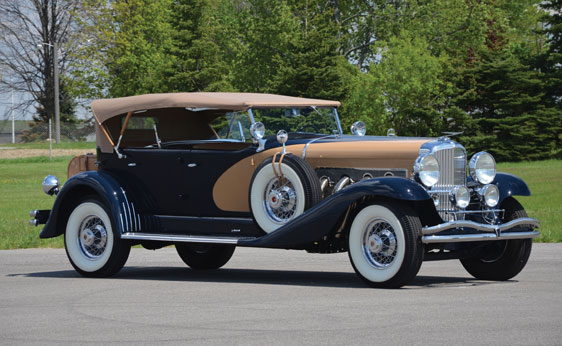
This is an actual Model J Duesenberg but it’s had some work done to it. When new, it was delivered to the Vice-President of the Cord Corporation with a LaGrande Dual-Cowl Phaeton body that looked exactly like the one you see here.

Apparently he used the car for some time before putting a Willoughby Berline body on the car and selling it as a new car (nothing like being the head of an automaker and more or less just making up a car’s “newness” factor because it’s convenient to you). Anyway, it sold and the chassis/engine numbers are both near the very end of Model J production – almost as high as you can go as 1937 was the final year for Duesenberg.

Some time later, the car was re-fitted with the body you see here. It’s an exacting re-creation of the original LaGrande Dual-Cowl Phaeton. It is not original but plays the part very well. It has also had a supercharger added to it to bring the 6.9-liter straight-eight up to “SJ” specification and 320 horsepower. It is not a factory SJ car.

This is a very desirable body style, even though it is not original. But it should still bring a very nice price (in the $600,000-$1,000,000 range). Click here for more info and here for more from Auctions America’s Auburn Fall sale.

Update: Sold $858,000.

Update II: Not sold, Barrett-Jackson Scottsdale 2015, high bid of $700,000.

Update III: Sold, RM Sotheby’s Motor City 2015, $852,500.

Speedwell GT

1960 Austin-Healey Speedwell GT

Offered by Coys | Woodstock, Oxfordshire, U.K. | June 29, 2013

1960 Austin-Healey Speedwell GT

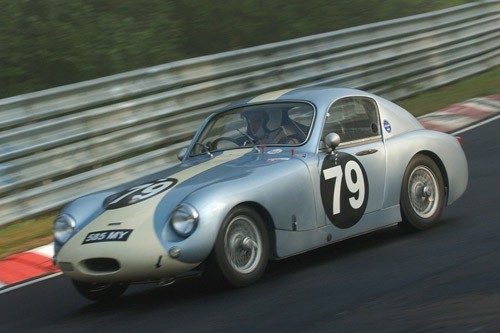
The Speedwell GT was a version of the Austin-Healey Sprite that was intended for racing. It was developed by Speedwell – an outside tuning company – and there were some noticeable differences between the Sprite and the GT.

First of all, the Sprites are commonly referred to as “Bugeye” (or Frogeye) Sprites because of their inset headlights that gave them a unique – if not dorky – look. This car has the lights in a more traditional place and it’s a fixed-top coupe.

Speedwell was founded by John Sprinzel, Len Adams and George Holbert in the late-1950s. The GT was designed by Frank Costin, brother of Cosworth co-founder Mike Costin. This is one of very few factory-built Speedwell GTs and it is based around a 1961 Sprite Mk I. The engine is a 948cc straight-four making 43 horsepower. Many of the new body panels were aluminium to save weight. It’s a quick car for its class.

The car was campaigned in the 1960s. It’s racing history includes:

  • 1966 500 Miles of Brands Hatch – 17th (with Keith Grant and Grahame White)
  • 1966 1000km Nürburgring – 32nd, 2nd in class (with Grant and White)
  • 1966 GP Mugello – Not Classified, 2 laps down (with Grand and White)

In the 1970s, it was raced and then parked and forgotten until it was rediscovered in the late-1980s and restored. It has appeared at the Goodwood Revival three times since and is in race-ready condition. It should sell for between $75,000-$95,000. Click here for more info and here for the rest of Coys’ Blenheim Palace sale.