Citroen Bijou

1962 Citroen Bijou

Offered by Osenat | Fontainebleau, France | March 28, 2022

Photo – Osenat

The Bijou is a small French coupe built by Citroen in England for the British market. It’s actually a 2CV underneath, but the 2CV wasn’t selling well there, so they decided to give it a makeover.

But part of the problem is that it was still a 2CV. The 425cc flat-twin made 12 horsepower. It still had the wonky long-travel suspension. The body is plastic, which kept the weight down (way, or weigh, down). It was actually styled by the same guy who did the Lotus Elite. So you know, sporting cred. But it didn’t work.

Only 209 were built: all right-hand drive. Production also spanned from 1959 through 1964. So they were leaving the factory at quite a leisurely pace. Apparently about 40 are still road-registered in the U.K. This one should fetch between $10,000-$16,000. Click here for more info.

Update: Sold $22,459.

Fiat 1100 Cabriolet

1950 Fiat 1100 Cabriolet by Stabilimenti Farina

Offered by RM Sotheby’s | Fort Lauderdale, Florida | March 25-26, 2022

Photo Courtesy of RM Sotheby’s

Fiat’s 1100 was primarily known as a tiny family sedan (or wagon) that was produced from 1953 through the end of the 1960s. Before that there was another, different 1100. That model offered in a variety of body styles between 1937 and 1953. The car you see here was from the tail end of the earlier model.

This cabriolet we have here is one of more than a few coachbuilt examples and was bodied by Stabilimenti Farina, which was related to Pinin Farina in that it was founded by Battista’s uncle and employed him before he left to launch his own company. The Stabilimenti closed in 1953.

The 1100 was powered by a 1.1-liter inline-four rated at 35 horsepower. It may not look super flashy or ahead-of-its-time, but this was a classy car in Italy in 1950. And it’ll probably get you into quite a few fancy shows today. Click here for more info.

Update: Not sold.

C.T. Electric Truck

1916 C.T. Model F 5-Ton Flatbed

Offered by Mecum | East Moline, Illinois | March 25, 2022

Photo – Mecum

Perhaps the photographer should’ve stepped back 10 feet. C.T. electric trucks were produced by the Commercial Truck Company of America, which was based in Philadelphia. The company built, well, commercial trucks, many of which looked like this, from 1908 through 1928.

Power is from four General Electric electric motors, with one stationed at each wheel. They had a range of 40-50 miles, and this one was one of 20 used by the publisher of the Saturday Evening Post… into the 1960s! I once bid on one of these trucks, but that’s a story for a different day.

There are some of these funky trucks out there (pretty sure NATMUS has one). You can check out more about this one here.

Update: Sold $26,400.

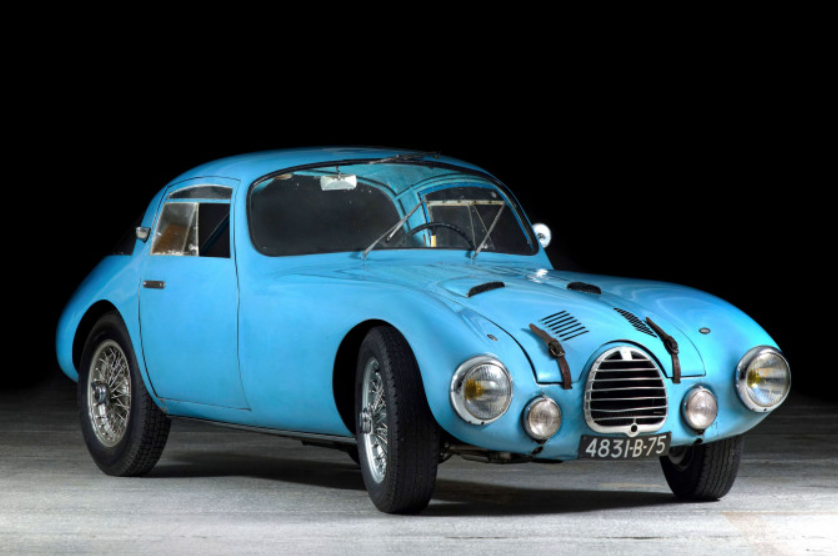
Gordini Type 18S

1950 Gordini Type 18S

Offered by Artcurial | Paris, France | March 18, 2022

Photo – Artcurial

Amedee Gordini started out as a tuner, mostly of Renault products. He eventually got his company into both motorsports (there was a Formula One team at one point) and into sports car production. All of this before Renault acquired the company in 1968.

This Type 18S is one of two produced, and it is powered by the only supercharged Gordini engine, which is a 1.5-liter inline-four. Output was rated somewhere around 175 horsepower. This Simca-based factory race car had the following competition history:

  • 1950 24 Hours of Le Mans – 41st, DNF (with Juan Manuel Fangio and Jose Froilan Gonzalez)

Other famed names to have raced this car in period include Jean Behra and Maurice Trintignant during a competition period that lasted through 1958. The car now has an estimate of $875,000-$1,750,000. Click here for more info.

Update: Sold $1,124,566.

Lagonda 12/24

1925 Lagonda 12/24 Tourer

Offered by H&H Classics | Duxford, U.K. | March 16, 2022

Photo – H&H Classics

Lagonda, which sounds somewhat exotic and high-end, is actually named after a place in… Ohio. The company, which is British, was founded by an Ohioan named Wilbur Gunn. It was taken over by Aston Martin in 1947 and used as a model name on a few Astons over the years.

But this car pre-dates Aston and was offered between 1923 and 1926 alongside the “12”, which carried a slightly lower taxable horsepower rating. Between the two models, approximately 6,000 examples were made, 2,250 of which were the 12/24. Only five are known to exist.

The car features semi-monocoque construction and is powered by a 1.5-liter inline-four that could push the car to 50 mph. Many later Lagondas have swoopy, sporty styling. But this early, more staid example is proof that the company had more humble roots. It has an estimate of $20,000-$22,500. Click here for more info.

Update: Sold $21,666.

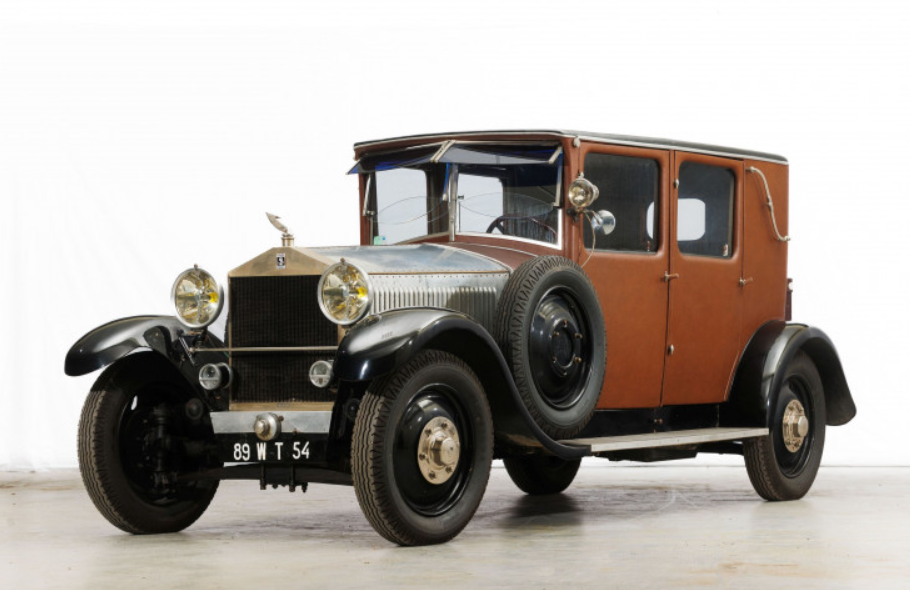
Sizaire Freres

1925 Sizaire Freres 4 RI Berline

Offered by Artcurial | Paris, France | March 18, 2022

Photo – Artcurial

Sizaire-Naudin was a combination of the Sizaire Brothers and family friend Louis Naudin. Their company produced cars from 1903 through 1921, with the Sizaires only remaining with the firm until 1912. The following year they co-founded Sizaire-Berwick with London-based financial investment. By 1920, they had moved onto their own company: Sizaire Freres, which was based solely in France.

The company lasted through 1929 and included models powered by Hotchkiss and Willys-Knight engines. This particular car is powered by a 2.0-liter overhead-cam inline-four that made 50 horsepower. This model was the company’s biggest technical achievement with four-wheel independent suspension, rack-and-pinion steering, and the relatively advanced engine.

The catalog describes the body as “Weymann-type,” which means it’s probably not actually a Weymann body, and the landau bars on the solid rear pillar are an interesting touch. The car hasn’t been driven in a decade and needs mechanical work. Even still, it has a pre-sale estimate of $38,000-$55,000. Click here for more info.

Update: Not sold.

Chrysler Viper

1995 Chrysler Viper RT/10

Offered by Oldtimer Galerie | Toffen, Switzerland | March 26, 2022

Photo – Oldtimer Galerie

The original Dodge Viper was launched for the 1992 model year and it was a pretty wild revelation. The original RT/10 was produced through 1995 and included a lack of exterior door handles, traction control, and ABS. There were no airbags or A/C either, and the windows zipped in. It was not a luxury automobile. But it was fast. And loud.

The engine is an 8.0-liter V10 rated at 400 horsepower, which propelled the car to 60 mph in 4.6 seconds on the way to a 165-mph top end. These early Vipers had leg-scalding side pipes, three-spoke wheels, and an overwhelming sense of 90s-ness. They remain excellent.

But what make this one especially interesting is that it is not a “Dodge.” It’s a Chrysler Viper, which is the brand the cars were sold under for the European market. Brag about that at your next Viper Club meeting or show. Read more about this one here.

Breeding Steam Truck

1916 Breeding 5-Ton Steam Truck

Offered by Mecum | East Moline, Illinois | March 25, 2022

Photo – Mecum

This poorly-photographed truck is too interesting not to feature here, regardless of its 2004-era cell phone photo shoot. Breeding Engineering was based in Cincinnati, Ohio, and they developed a steam-powered commercial chassis leading up to the outbreak of WWI.

WWI killed any hope for the truck, which was backburner-ed and never really completed. The chassis was later found in Sardinia, Ohio, while the engine had been relocated to Kentucky with the original designer’s grandson. The wood cab was built at the time of the restoration.

The steam engine is similar to that of a Stanley, but it’s since been modified to run on compressed air. Check out more about this one-off truck here and dream about what could’ve been in the world of steam-powered heavy commercial vehicles.

Update: Sold $12,100.

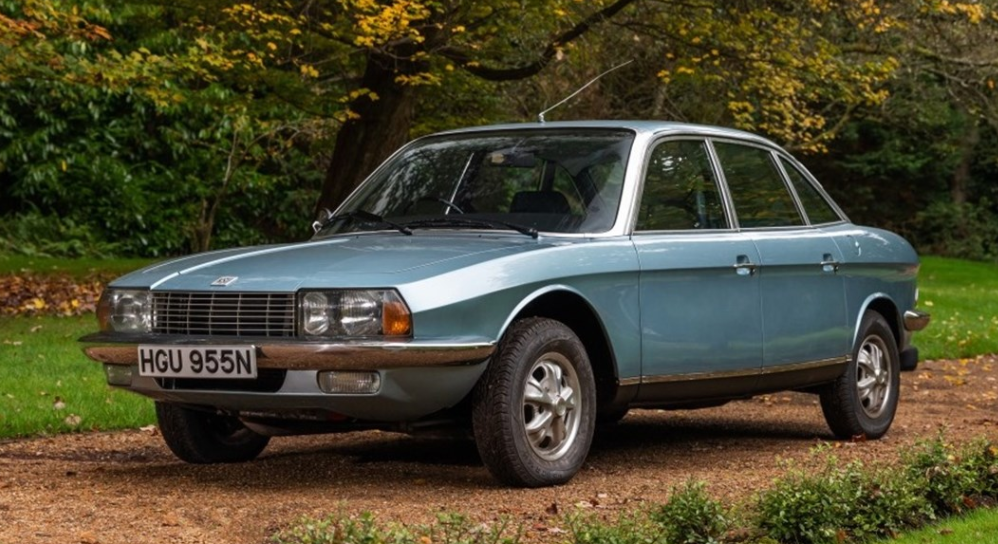
NSU Ro 80

1975 NSU Ro 80

Offered by Historics Auctioneers | Ascot Racecourse, U.K. | March 12, 2022

Photo – Historics Auctioneers

NSU was one of a handful of German automakers that restarted production after WWII. But they really didn’t get going until the late 1950s. In 1967 they introduced this large sedan powered by a Wankel rotary engine. Two years later, the company was acquired by Volkswagen, who eventually merged it into Audi, scrapping the NSU name after 1977.

1977 was also the year the Ro 80 ceased production after a decade and a total of 37,398 examples built. The car was completely out of left field – and in a good way. First, the engine: a 995cc twin-rotor Wankel rotary. It made 113 horsepower and drove the front wheels through a semi-automatic transmission that featured an three speeds and an automatic clutch that worked off of a vacuum system.

The car featured a very low drag coefficient, enabling it to hit 112 mph. The wheels were pushed to the corners, and the interior was appointed with a PVC headliner and carpeted floors. Unfortunately, early cars suffered all kinds of reliability problems that were eventually rectified for later units, but not before the damage was done. Fuel economy was also poor, and all of the warranty claims sucked up NSU’s cash, leading to the VW takeover.

This example is one of 45 registered in the U.K. and has a pre-sale estimate of $17,000-$21,000. Click here for more info.

Update: Sold $10,785.

Liberty Standard Truck

1917 Liberty Class B 3-Ton Flatbed

Offered by Mecum | East Moline, Illinois | March 25, 2022

Photo – Mecum

This is a really fascinating truck, and kind of a weird one categorization-wise. The “Class-B Standardized Military Truck” was actually designed by the U.S. military in a matter of weeks, with the team sitting down for the first time in August 1917 and the first trucks ready in October. Assembly was performed by 15 different companies, with Selden, Graham-Bernstein, Garford, Pierce-Arrow, and Republic being the largest producers.

No marque was assigned to any of the trucks, but “Liberty” was the nickname given to them, thus why it’s labeled as it is here. About 9,400 were built between late 1917 and 1918, and only a few made it into service before the war ended. But that didn’t stop them from being used well after the war ended, with some still in-use by foreign governments up to almost 1940.

The 7.0-liter L-head inline-four was assembled from components from several companies, including Continental, Waukesha, and Hercules. Output was 52 horsepower. Compared to WWI, WWII vehicles seem commonplace. Finding a truck from the Great War, restored to this condition at that, is extremely uncommon. Read more about this one here.

Update: Sold $71,500.