Franklin Model G

1908 Franklin Model G Touring

Offered by RM Sotheby’s | Hershey, Pennsylvania | October 7, 2021

Photo Courtesy of RM Sotheby’s

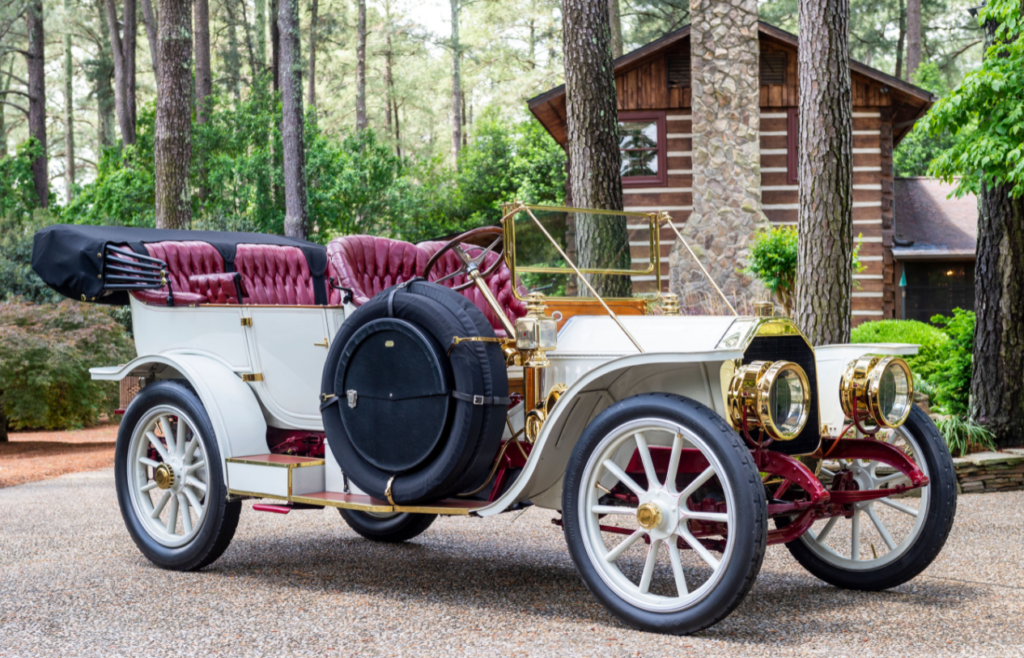
From 1905 through 1910, Franklin cars featured a distinct round grille and “barrel-type” hood to house their air-cooled engines. They are quite attractive cars, in their own way, and this 1908 Model G touring was the second-cheapest Franklin you could buy that year, beaten out only by the Model G runabout.

The 2.3-liter inline-four produced 16 horsepower when new. Franklin offered three models in 1908, and the G was actually produced from 1906 through 1913, although later cars featured Renault-style hoods.

This car is the oldest of four Model G tourers known to exist, and it would’ve run $1,850 when new. It features a 1910-model-year engine (factory-rated output was 18 horsepower that year) and has known history back to the 1950s. It is now expected to sell for between $60,000-$70,000. Click here for more info and here for more from this sale.

Update: Sold $88,000.
1920 Stevens-Duryea

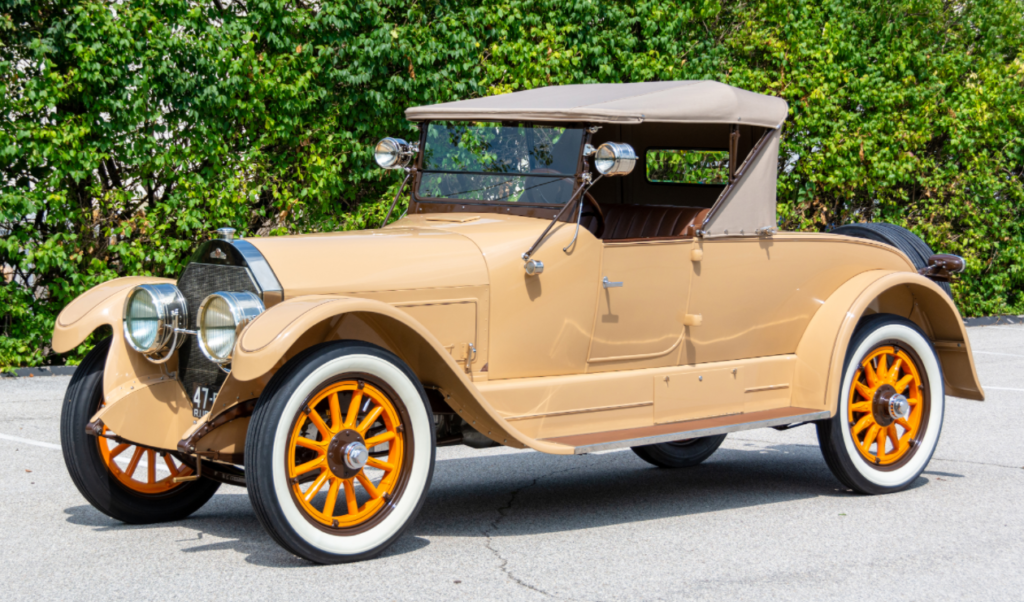
1920 Stevens-Duryea Model E Roadster

Offered by RM Sotheby’s | Hershey, Pennsylvania | October 8, 2021

Photo Courtesy of RM Sotheby’s

With a brand like Stevens-Duryea, you tend to picture large touring cars dating back to before World War I. But quite a few of these companies survived the war and continued building cars into the 1920s. Yet for some reason, these later cars are much more rarely seen. There are various reasons for this.

In the case of Stevens-Duryea, it’s that a new owner bought the brand name in 1919 and set up shop in the old factory. Things just… never took off. The company built only 200 cars in 1920, and the Model E was carried over for ’21. The same 80-horsepower inline-six would continue to power the brand’s offerings until the lights went out in 1927.

This Roadster has been restored and exudes an up-scale aura missing from what you’d get from a contemporary Buick, etc. The pre-sale estimate is $75,000-$90,000. Click here for more info and here for more from this sale.

Update: Sold $71,500.

Martin Ford Special

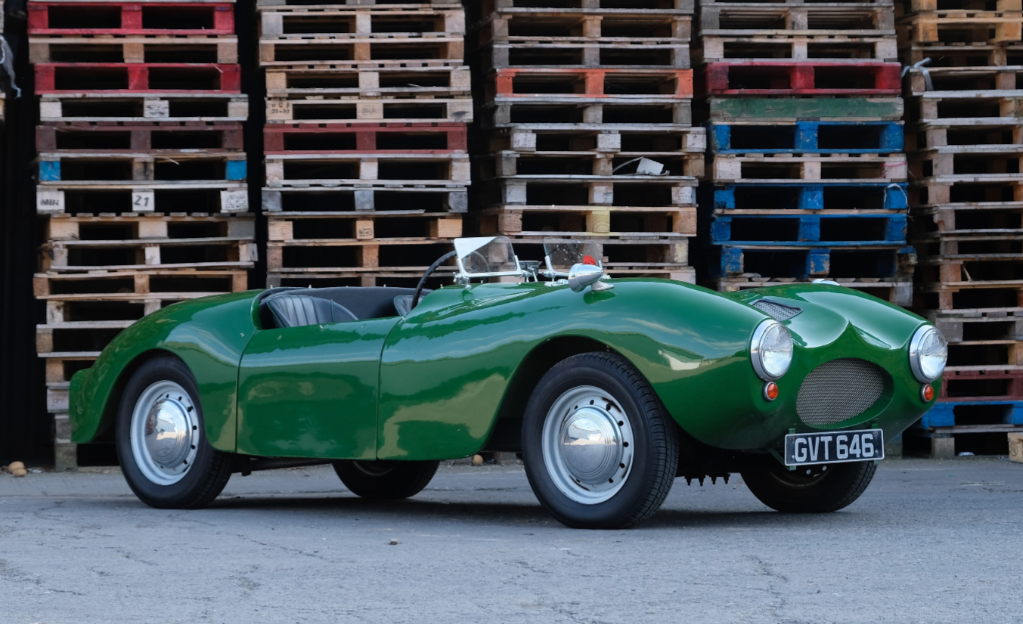
1962 Martin Ford Special

Offered by H&H Classics | Buxton, U.K. | October 6, 2021

Photo – H&H Classics

I had the structure for this post all laid out, and then I went and read the H&H Classics catalog description. And it was pretty much the same thing I planned on writing, which was: the post-war sports car boom rode a pretty strong wave for about 15-20 years. Alongside established manufacturers, there were countless upstarts who were offering various forms of sports cars.

One such form was the kit car, or more appropriately at the time this was built, shells that could be bought and fitted to existing running gear. Basically, re-bodying a common car to make it into a sports car. In this case, Martin Plastics Maidstone Ltd offered their fiberglass shells beginning in 1953.

This particular one was purchased as a bare body in 1956 and was fitted to a 1939 Ford Prefect. The completed car was registered in 1962, hence the date listed. Power is from a 1.2-liter Ford inline-four, and the car was restored around 2016. About 500 Martin shells were sold, and only five are known to exist. This one is expected to go cheap with an estimate of $8,000-$11,000. Click here for more info and here for more from this sale.

Update: Sold $8,010.

1909 Peerless

1909 Peerless Model 19 Touring

Offered by RM Sotheby’s | Hershey, Pennsylvania | October 8, 2021

Photo Courtesy of RM Sotheby’s

By 1909 Peerless was pretty much just that – without peers. They built some of the highest-quality cars money could buy in America before WWI. The company’s 1909 range consisted of the four-cylinder Model 19 and the six-cylinder Model 25.

This is one of two 1909 Model 19s known to exist and is powered by a 30-(or 40?)-horsepower, T-head inline-four. An array of body styles were offered by the factory, but you really couldn’t go wrong with a seven-passenger touring car like this one. A then-astronomical $4,300 was required to take one home in 1909.

This car has known ownership history back to the 1950s, and it was restored for the first time around 1960. It was refinished again in 1991 and is an accomplished historic tourer. The catalog estimate is $100,000-$150,000. Click here for more info and here for more from this sale.

Update: Sold $286,000.

Baldi Frog

1975 Baldi Frog

Offered by Oldtimer Galerie Toffen | Toffen, Switzerland | October 16, 2021

Photo – Oldtimer Galerie Toffen

The Baldi Frog was a microcar based on the Fiat 500 that was produced between 1973 and 1975 by Carrozziere G.A.M.C. Baldi of San Remo, Italy. The cars could be registered as quadricycles, which made them more appealing to city buyers who didn’t want the tax burden of a larger vehicle.

The cars actually used a shortened version of the Fiat 500 chassis, and this one is powered by a 500cc inline-twin that was rated at 18 horsepower when new. Two other engine choices were offered, including a 125cc unit from a Lambretta scooter. There was also a larger 595cc engine from the Fiat 500R.

It also has a folding fabric sunroof. Only 300 Baldi Frogs were built, and this one is expected to sell for between $16,000-$22,000. Click here for more info and here for more from this sale.

1905 Buick Model C

1905 Buick Model C Touring

Offered by RM Sotheby’s | Hershey, Pennsylvania | October 8, 2021

Photo Courtesy of RM Sotheby’s

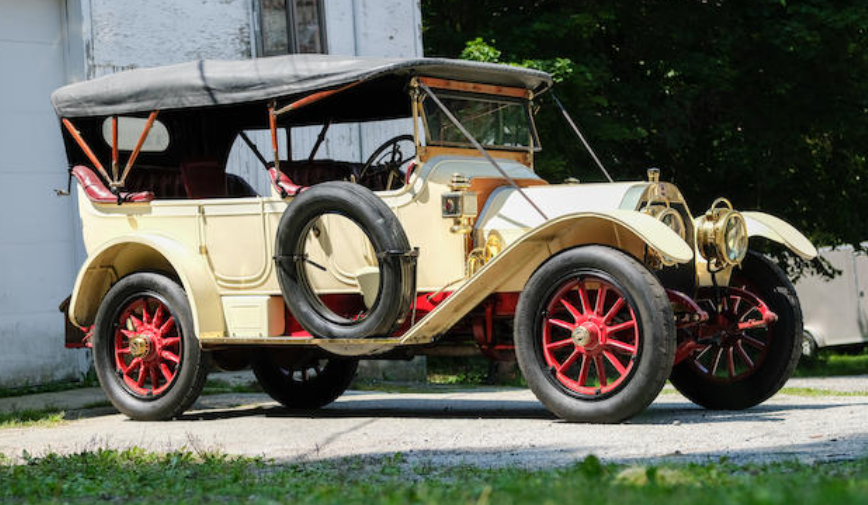
David Dunbar Buick‘s first cars were sold in 1904. That year’s Model B gave way to 1905’s Model C, which was only offered as a five-passenger touring car. In total, 750 were built, which is more than the 37 churned out the year prior.

Power is from a 2.6-liter inline-twin that made 22 horsepower when new. The major differences between the B and C was the color. The C was delivered in royal blue with cream wheels – just as this one has been restored.

This particular car is the fifth-oldest Buick known to exist. No Model Bs survive, and there are 14 Model Cs still around. The expected price range is $40,000-$60,000. It cost $1,200 when new. Click here for more info and here for more from this sale.

Update: Sold $88,000.
Alco Tourer

1912 Alco 40HP Tourer

Offered by Bonhams | Newport, Rhode Island | October 1, 2021

Photo – Bonhams

The American Locomotive Company (ALCO) was founded in 1901 when seven smaller companies merged together. Based in Schenectady, New York, the company branched out into automobiles in 1909 and remained in the space through 1913. In that time they built some very high-quality automobiles out of their Providence, Rhode Island, factory. Walter Chrysler was the plant manager. Early cars were French Berliets produced under license.

Early on, Alco boasted that 19 months were required to churn out a car. The 40HP was produced between 1909 and 1912, and it’s powered by a 454! Well, it is 454 cubic inches – or 7.4 liters – but it’s an inline-four, not a V8. So the engine is, in a word, gigantic. It produced about 60 horsepower.

This example has had two owners since 1966. Alco built about 5,000 cars and lost money on each of them, thus the company’s short existence. This one is expected to bring between $350,000-$450,000. Click here for more info and here for more from this sale.

Update: Sold $373,500.

Duesenberg J-434

1931 Duesenberg Model J Roadster by Packard

Offered by RM Sotheby’s | Hershey, Pennsylvania | October 8, 2021

Photo Courtesy of RM Sotheby’s

This is kind of an odd combination, a Packard-built body on a Duesenberg. Sure, many old cars had their bodies swapped around. It was usually sedans being rebodied as more desirable convertibles once they became objects of pleasure instead of daily transportation.

But in this case, this Model J was fitted with a period Packard roadster body… in period. By Duesenberg. The story is that a Duesenberg branch purchased a brand new roadster body from Packard before it could be installed on one of their cars and fitted it to a J chassis in 1931. It’s said to be one of very few true roadsters on a Model J chassis. And probably the only Packard-bodied car.

The engine is a 265-horsepower 6.9-liter straight-eight, and this particular engine was fitted in this chassis in 1989. The pre-sale estimate is $1,400,000-$1,800,000. Click here for more info and here for more from this sale.

Update: Sold $1,650,000.

The Last Ol’ Yaller

1963 Ol’ Yaller Mark IX

Offered by Bonhams | Newport, Rhode Island | October 1, 2021

Photo – Bonhams

Max Balchowsky opened a shop in Hollywood in the late 1940s and soon found himself modifying European cars with big American V8s. In the early 1950s he was on track in SCCA events. In the mid-to-late ’50s, he built two Old Yeller race cars that were mostly junkyard specials. Disney told him to change the name, so all following cars were called “Ol’ Yaller”s.

This car, number nine, was the final such special built. It features a custom tubular steel space frame and a 6.6-liter Buick V8 rated at 310 horsepower. It was apparently raced by Ronnie Bucknum at some point, and was later crashed.

It was subsequently restored to its original spec. One of the Ol’ Yallers appeared in the Elvis movie Viva Las Vegas (which has some pretty excellent 1950s car spotting scenes). These really never change hands – and this one is being offered out of the Petersen Museum collection. It is expected to fetch $150,000-$250,000. Click here for more info and here for more from this sale.

Update: Sold $162,500.

Excalibur Sedan

1988 Excalibur Series V Sedan

Offered by Historics Auctioneers | Ascot Racecourse, U.K. | September 25, 2021

Photo – Historics Auctioneers

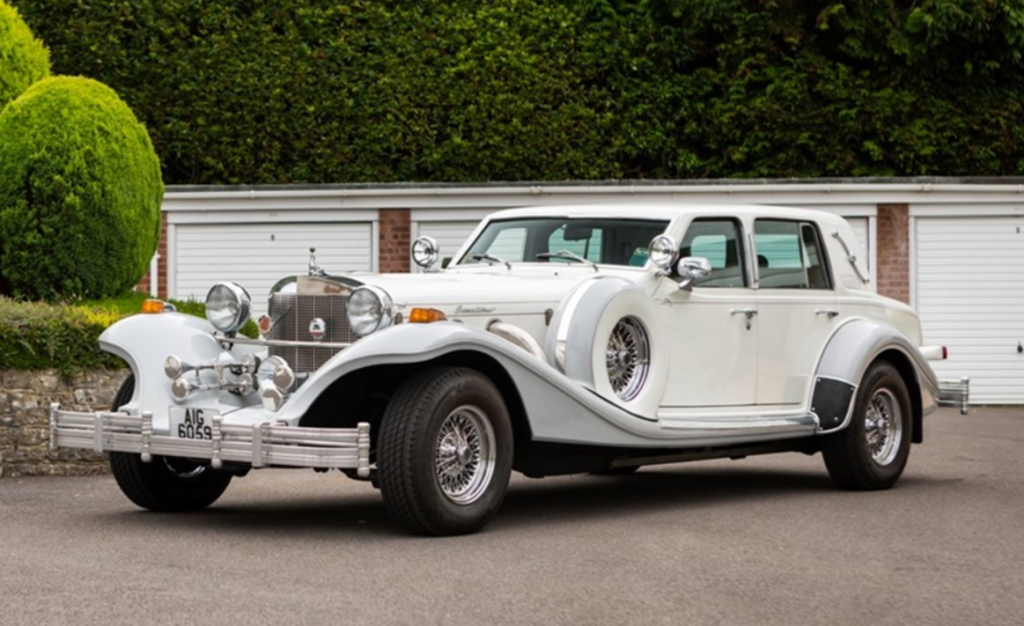
Excalibur sort of invented the neo classic. The first Excaliburs were actually produced in 1952 and looked nothing like this. They were sports cars based on a Henry J chassis. The whole endeavor was a series of false starts. The ones we all know first went on sale in the mid-1960s, and they remained in production under a few different corporate umbrellas up until about 1990. They spawned countless look-a-likes, such as Zimmer, Clenet, Tiffany, and more.

Styling was originally reminiscent of the Mercedes-Benz SSK and was penned by Brooks Stevens for Studebaker. Studebaker went out of business, so SS Automobiles was set up in Milwaukee in 1965. That company gave way to Excalibur Automobile Corporation in 1986 after a bankruptcy. It was owned by the Stevens family, and that’s where the Series V came from. It was offered as a sedan and limousine.

This car is powered by a V8, likely from Ford. Excaliburs aren’t something you see everyday, but the sedan versions are especially uncommon. This one is expected to sell for between $25,000-$30,000. Click here for more info and here for more from this sale.

Update: Sold $26,880.