Early Four-Wheel-Drive Truck

1918 FWD Model B 3-Ton Truck

Offered by Mecum | Kissimmee, Florida | January 22, 2014
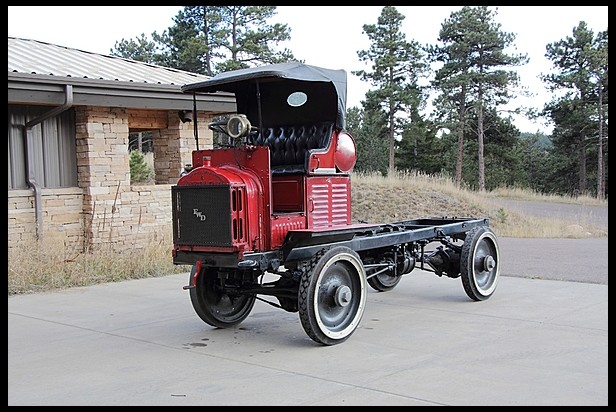
FWD Model B 3-Ton Truck

In 1908, Otto Zachow and William Besserdich built a four-wheel drive car they called the “Battleship.” This led to the more-or-less immediate founding of their Badger Four-Wheel Drive Auto Company. In 1909 they began producing cars under the FWD (for “Four-Wheel Drive”) marque. They dropped “Badger” from the company name in 1910.

The military loved four-wheel drive trucks so the company, sensing a huge opportunity (and perhaps an oncoming war) switched to just truck manufacture. They introduced two prototypes as war started raging in Europe. The U.S. didn’t place any orders, so FWD demo’d the truck for the U.K. where they did get an order. By 1916 the U.S. had come around and placed huge orders for a company that, up to this point, had only built about two dozen vehicles.

The Model B was one of the workhorses of the Allied powers during WWI. Production was about 3,000 for the U.K., 82 for Russia, and 14,473 for the U.S. They are powered by a 36 horsepower, straight-four engine. On the correct solid rubber tires on which this example rides, the truck could reach speeds of 16 mph.

After the war, many of these trucks were sold as surplus and entered service doing just about everything else in the civilian realm. That’s how awesome examples like this managed to survive. You can read more here and check out more from Mecum here.

Update: Sold $23,000.
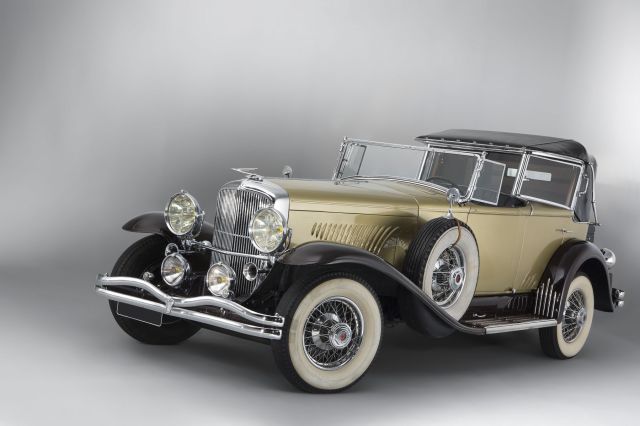
Duesenberg J-148

1929 Duesenberg Model J Special Torpedo Scaphandrier by Kellner

Offered by Artcurial | Paris, France | February 7, 2014

1929 Duesenberg Model J (148) Special Torpedo Scaphandrier by Kellner

It’s kind of odd seeing a Duesenberg Model J in a European auction from a European auction house. This is America’s great coachbuilt wonder and European auctions are usually full of European cars. North American auction houses tend to save Model J’s for American auctions where they have the biggest following.

But the thing with this Model J is that it seems very European. I think it’s the separate convertible portions of the car on this very European body. The rear top will pop up and enclose the passengers while the driver is left to withstand the elements (although a more temporary top is available for him or her).

This car uses the 49th Model J chassis built and maintains its original engine (J-148). The body has undergone significant transformations since new, having initially been fitted with a LeBaron Torpedo. That body was swapped out in the mid-1930s for a Graber Cabriolet (which the auction catalog describes as “not particularly elegant”). In 1959, this car was acquired by the president of the Duesenberg Club in the U.S. and he found this authentic Kellner Torpedo Scaphandrier body and had it fitted to J-148.

It passed through a few owners before being imported to Belgium in 1980. The car was restored, keeping this fantastic Kellner body, later that year. This is the only known Kellner Scaphandrier body in existence (on any type of car) and the entire package is estimated to bring between $815,000-$1,080,000. Click here for more info and here for more from Artcurial.

Update: Not sold.

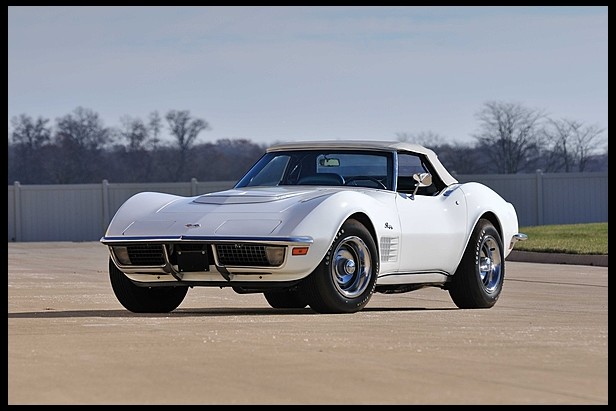
1970 Corvette ZR1 Convertible

1970 Chevrolet Corvette ZR1 Convertible

Offered by Mecum | Kissimmee, Florida | January 25, 2014

1970 Chevrolet Corvette ZR1 Convertible

We featured an ultra-rare ZR2 Corvette a few weeks ago and here we have its cousin, the ZR1. The ZR1 name is common today as two more ZR1 models have been produced since (in the early 90s and late 2000s). The original ZR1 is the most valuable as very few were made.

The ZR1 option package was available for 1970, 1971, and 1972 only. It was essentially a small block version of the L88. The engine is a 5.7-liter V-8 rated at 370 horsepower (the most powerful small block Corvette you could buy in those years). It also came with heavy duty brakes, transmission, and suspension. Because the car was sold as “race ready,” you could not get air conditioning, power windows, power steering or a radio (among other things).

Restored in 2011, this ZR1 is one of those very rare muscle cars that bring so much money. Only 53 ZR1s were built in total, 25 of them in 1970. And only a mere handful were drop-tops. This is an easy $100,000-$125,000 car. Click here for more info and here for the rest of Mecum’s Kissimmee lineup.

Update: Sold $130,000.

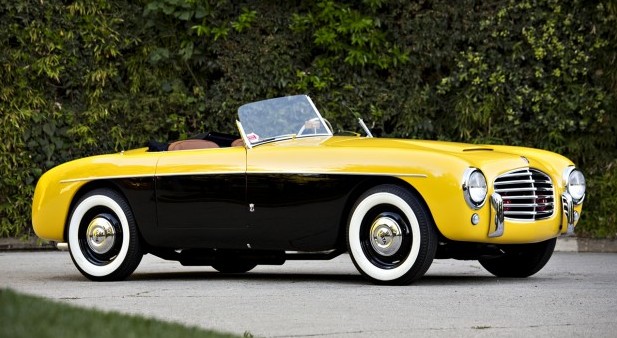
Siata Daina

1951 Siata Daina 1400 Gran Sport

Offered by Gooding & Company | Scottsdale, Arizona | January 17, 2014

1951 Siata Daina 1400 Gran Sport

The Daina was Siata’s third road car, having been introduced in 1950. Production would run through about 1958. Siata is one of those smaller sports car companies where record keeping came second to building cars and many figures contain qualifiers like “about” or “estimated.”

The Gran Sport bodystyle (by Stabilimenti Farina) that you see here was the most successful Daina model and the one that is best remembered. Depending on who you ask, between 50 and 100 Gran Sports were built. The chassis is a modified version of the Fiat 1400 and it also uses a modified version of that cars engine: a 1.4-liter straight-four making about 65 horsepower.

These were popular in SCCA events in the 1950s having been cut out of the rule books in Europe shortly after their introduction. The history of this car really isn’t known prior to the last 25 years, when all that is known is that it was a restoration project that never got started. An actual restoration was completed in 2012 and it looks spectacular. This is a rare car that is fresh as if it just left the factory. It is the earliest Daina Gran Sport known and should sell for between $250,000-$325,000. Click here for more info and here for the rest of Gooding & Company’s Arizona lineup.

Update: Sold $247,500.

Hispano-Suiza K6 by Chapron

1937 Hispano-Suiza K6 Coupe by Chapron

Offered by Gooding & Company | Scottsdale, Arizona | January 17, 2014

1937 Hispano-Suiza K6 Coupe by Chapron

The K6 was the final new model introduced by Hispano-Suiza and, like most later models, it was built by the French arm of the company. It was the baby Hispano-Suiza even though it was still a massive automobile.

The engine is a 5.2-liter straight-six making 135 horsepower. Top speed was about 87 mph and this particular chassis was bought new by famous French pilot Marcel Doret. He had the car bodied by Henri Chapron – one of the leaders of French style in the coachbuilding arena in the 1920s through the 1950s. This clean but stylish coupe was a one-off design by Chapron.

Doret used the car to travel between aerobatic performances, towing his plane with this car along the way. It had a couple of owners and was parked in 1960 before being rediscovered again in 2006. The restoration was completed in 2009 and is said to be a delight to drive.

The K6 was a rare model – having only been produced from 1934-1937. This is the final short-wheelbase K6 built and is one of only about 70 total constructed. Very few remain today. This one can be yours for between $550,000-$750,000. Click here for more details and here for more from Gooding & Company.

Update: Sold $621,500.

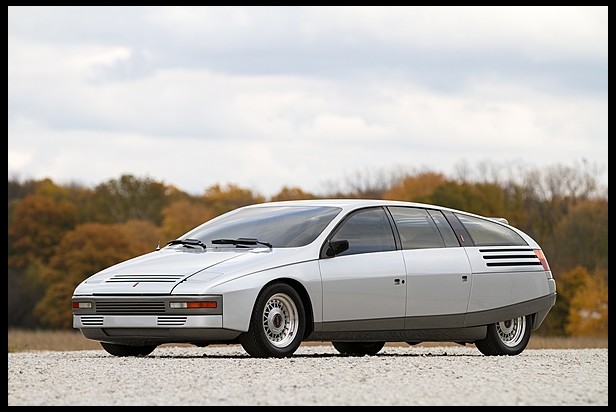
Lincoln Quicksilver

1983 Lincoln Quicksilver Concept by Ghia

Offered by Mecum | Kissimmee, Florida | January 23, 2013

1983 Lincoln Quicksilver Concept by Ghia

So what in the world do we have here? Actually, this car has shown up on this site before – it was sold at Auctions America’s 2013 Auburn Spring auction earlier this year, where it brought $9,570. And it’s set to cross the block again.

The Quicksilver was actually built by Ghia in Turin at Ford’s request. Ford debuted the futuristic (minivan? crossover? wagon?) at the 1983 Geneva Auto Show. The car was a hit and Ford toured the thing all over the world, hitting auto shows until 1986.

The car sits on a stretched version of an AC 3000 ME (a very rare British sports car from the era) chassis and uses a mid-mounted 2.8-liter V-6. It seats five and is fully functional, albeit not road-legal. It would be a most-amusing car to own and weird out everyone in town. Absolutely no one would be able to guess what it is. And it can be yours for somewhere in the neighborhood of ten grand. Click here for more info and here for more from Mecum’s sale.

Update: Sold $27,000.

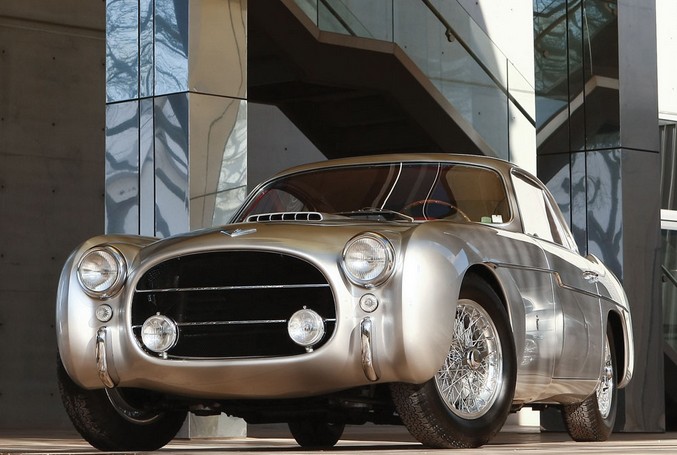
Fiat 8V by Ghia

1953 Fiat 8V Coupe by Ghia

Offered by RM Auctions | Phoenix, Arizona | January 16-17, 2014

1953 Fiat 8V Coupe by Ghia

The Fiat 8V was a short-lived sports car built by Fiat in the early-1950s. It was the first purpose-built sports car by the company and very few were made. Many of the cars had custom bodywork from Zagato, Vignale, and Ghia. Only about 1/3 of the cars had Fiat-designed bodies on them.

The car gets its name from the V-8 engine underhood. Ford had copyrighted the “V8” name, so Fiat just put the digit in front of the letter and called it a day. The engine is a 2.0-liter making 115 horsepower and that power took the 8V to competition victories in the 2-liter class all over Europe. Even though the cars were only built from 1952-1954, the 8V would win the Italian 2-liter GT championship every year through 1959.

This car was actually sold new to Ghia so they could build a body for it. Ghia has a strong association with the 8V as they were responsible for the eight legendary “Supersonic” cars with remarkable jet age bodies. The car you see here is the only non-Supersonic 8V bodied by Ghia. The car came stateside in 1957 and was restored in the 1990s.

It has competed in the biggest concours around the world including Pebble Beach and Ville D’Este. It is one of only 114 8Vs built and the only Ghia-bodied car without Supersonic coachwork. It is expected to sell for between $800,000-$950,000. Click here for more info and here for the rest of RM’s Arizona lineup.

Update: Sold $946,000.

Here’s video of this actual car:

Callaway Sledgehammer

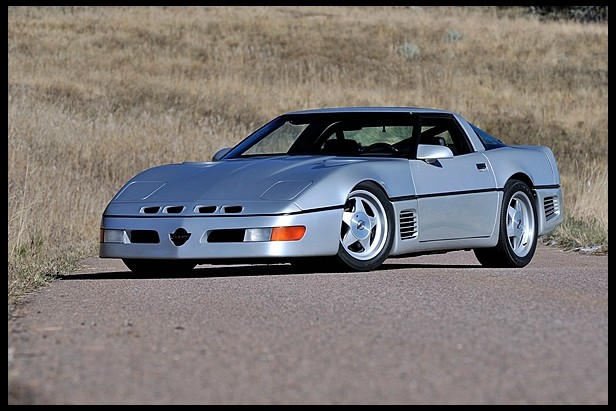
1988 Chevrolet Corvette Callaway Sledgehammer

Offered by Mecum | Kissimmee, Florida | January 24, 2013

1988 Chevrolet Corvette Callaway Sledgehammer

Super cars aren’t always high-end exotics. In the late 1980s, super cars as we know them began springing up rather rapidly. The Porsche 959, the Ferrari F40 – and the Lamborghini Diablo and Jaguar XJ220 (just to name a few) were right around the corner. What do all of those cars have in common? They are slower than this Corvette.

Reeves Callaway drove a Twin Turbo Corvette to 231 mph. He wanted to take it to 250. So he hired Paul Deutschman to design a stable, aerodynamic body kit for the C4 Corvette. Then they inserted a handbuilt Callaway 5.7-liter V-8 and strapped two turbochargers on for a total of 898 horsepower.

Legendary Corvetter John Lingenfelter drove the car to a record 254 mph. The car was entirely street legal and still had power windows, locks and A/C (but it did have a roll cage added). It remained the fastest street-legal car until 1999. Callaway wanted a world-beater – so he built it.

This remains the only Sledgehammer Corvette ever built and it is a very famous car. It was the fastest Corvette built and it was constructed in 1988. This should bring an interesting amount of money. You can read more here and check out more from Mecum here.

Update: Not Sold, High bid of $600,000.

Cunningham C-3

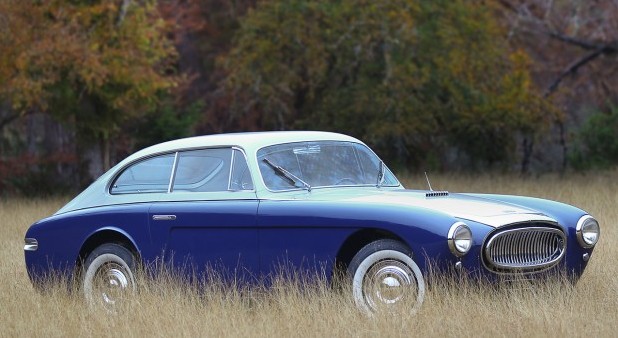
1952 Cunningham C-3 Coupe by Vignale

Offered by Gooding & Company | Scottsdale, Arizona | January 17, 2014

1952 Cunningham C-3 Coupe

If there was some sort of “All Time Car Guys” All-Star team, Briggs Cunningham would be on the starting roster. He was lucky – he was born rich (in 1907) and found his calling as a sportsman and car guy (and collector – he once owned a Bugatti Royale). His friends founded what would become the SCCA and that’s where Cunningham got his start in the 1930s.

By 1950 he was competing in the 24 Hours of Le Mans where he finished in the top 10 in a Cadillac Coupe DeVille (no, seriously). Later that year he ran an Aston Martin at Sebring. He also owned the cars he raced, and fielded cars for other drivers too.

In 1952 he started building cars of his own design in the Cunningham factory in West Palm Beach, Florida (not exactly the industrial heart of America). The C-3, as it was called, used a 5.4-liter Chrysler Hemi V-8 making 220 horsepower. He shipped the engine and chassis combo to Vignale in Italy to have the bodies installed. This particular chassis (#5210) was the factory demonstrator.

This car was restored in 2004 and is one of 19 C-3 Coupes built and one of a total of only 24 Cunningham C-3s built in total. Briggs Cunningham continued funding his racing team into the 1960s but stopped building cars in the mid-1950s. The C-3 was the only road car the company ever made. This one should sell for between $450,000-$550,000. Click here for more info and here for more from Gooding in Arizona.

Update: Sold $550,000.

Porsche RS 61

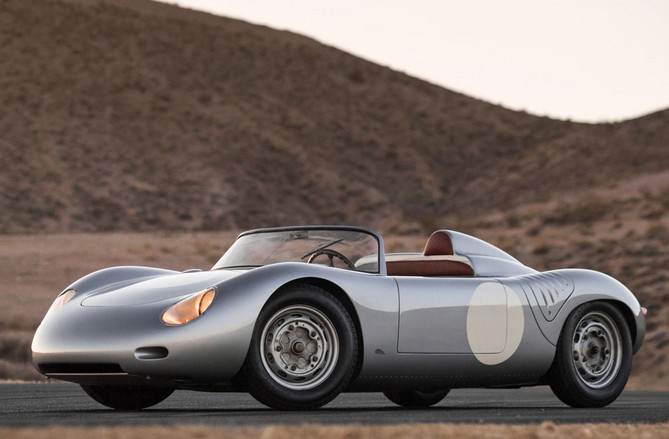
1961 Porsche RS 61

Offered by RM Auctions | Phoenix, Arizona | January 16-17, 2014

1961 Porsche RS 61

We’ve featured a Porsche RS60 on this site before – so why am I featuring an RS 61, knowing full well that they are nearly identical cars? Because they are different, even if it is only in name. And they are both very, very rare.

The RS 61 began as the 718/RSK race car in 1957. For 1960 that car was crafted into the RS60. And for 1961, the name was changed to reflect the new year, and the RS 61 was born. The engine is a 1.6-liter flat-four making 178 horsepower. Also: it weighs practically nothing so it scoots along rather well. The competition history for this car includes:

  • 1961 12 Hours of Sebring – 7th, 2nd in class (with Bob Donner, Don Sesslar and Ernie Erickson)

The RS61 would be the final iteration of the 718 as the 904 would replace it the following year. Porsche only built 14 of these little race cars making them exceptionally rare and valuable. The pre-sale estimate on this car is $2,800,000-$3,200,000. Click here for more info and here for more from RM in Arizona.

Update: Sold $2,750,000.