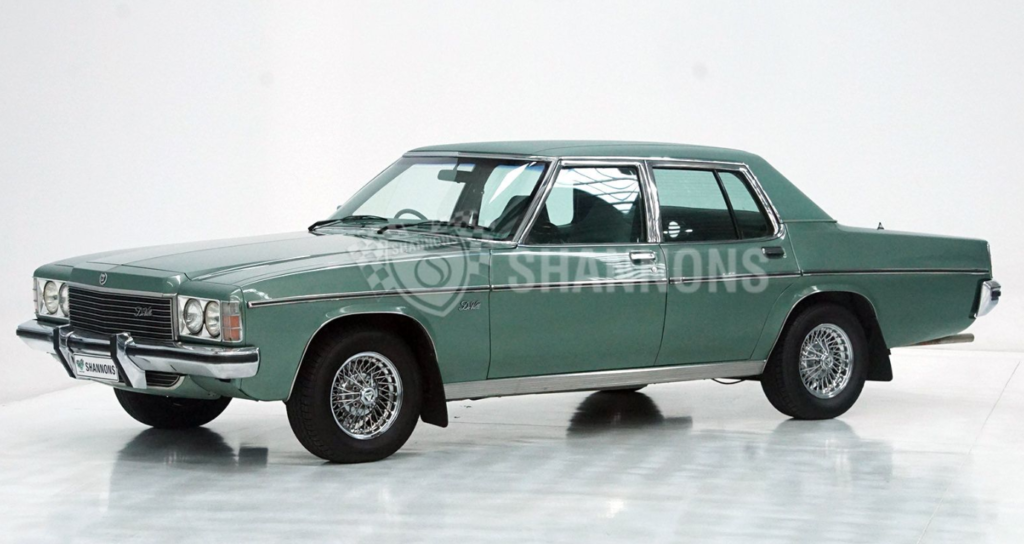
Statesman was actually a standalone brand offered by General Motors in Australia. They were available from 1971 through 1984 and were sold through Holden dealerships. Statesmans (Statesmen?) were big cars that were better appointed than their Holden counterparts.
This is an HZ Statesman, which is the fourth generation. It was introduced in 1977 and was replaced in 1980. Two models were offered during this generation: DeVille and the Caprice. The car is powered by a 5.0-liter V8.
Equipment includes four-wheel disc brakes, a crushed velour interior, and a Radial Tuned Suspension. Statesmans are rarely seen outside of Australia, making this a great chance to grab one and export it. This car is expected to bring between $13,000-$17,000. Click here for more info and here for more from this sale.
Offered by Bonhams | Los Angles, California | August 14, 2020
Photo – Bonhams
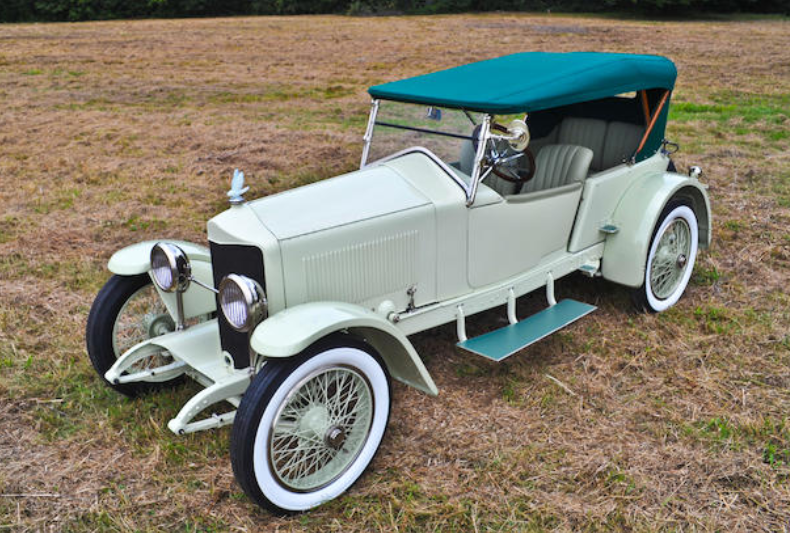
It’s rare when an American car from this era exists, while at the same time, practically zero information about it exists. The Mason Tourist King was produced in Newark, New Jersey, sometime between 1918 and 1920.
The car was produced as a prototype to show the U.S. government that it would make a great staff car. Features included to prove this point included a funky passenger seat that was attached to the door. This allowed for a flat sleeping area in the car.
Power is from a 55-horsepower, 4.6-liter Continental inline-six. Unfortunately, the car was produced right at the end of WWI, and no one was interested. It was saved long ago and was restored between 2010 and 2017 at a cost of over $500,000. It’s an interesting car and one that likely belongs in a museum (unfortunately). You can read more about it here and see more from this sale here.
Offered by Silverstone Auctions | Online | July 31-August 2, 2020
Photo – Silverstone Auctions
So no, this isn’t an Auto Union Grand Prix car, despite its looks. In fact, it was built a full 20 years after those cars dominated the European Grand Prix circuit. The “RA” cars were racing specials built by Hector Green and Jack Brewer in New Zealand between the end of WWII and the mid-1950s. Their first car kept evolving, and in 1951 they decided to replace it.
The RA4 Vanguard was the replacement, and its design and construction were heavily influenced by the pre-war Auto Unions. That’s because its builders consulted a then-declassified British intelligence document that investigated the construction of the German Grand Prix cars of the 1930s. Intriguing stuff.
Power is from a rear-mounted 2.1-liter inline-four from a Standard Vanguard that was supercharged and fitted with dual SU carburetors. Horsepower, when the car was running on methanol, was approximately 200. Wow.
The car competed regularly in New Zealand beginning in 1951 through about 1954. It’s been invited to the Goodwood Revival and has been owned by its current caretakers since 2017. Only five or six RA specials were built. You can read more about this one here and see more from this sale here.
Offered by Silverstone Auctions | Online | July 31-August 1, 2020
Photo – Silverstone Auctions
Zenos Cars was founded in 2012 by Ansar Ali and Mark Edwards in Norfolk in the United Kingdom. They announced their first car, the E10, in 2013, and it was a lightweight mid-engine sports car. Production started in 2015, but the following year the company had some financial problems and everything stopped by 2017.
There was a base E10, the turbocharged S model, and the even-more-powerful R model. This is an example of the latter, and it is powered by a turbocharged 2.3-liter Ford EcoBoost inline-four that was rated at 350 horsepower. That engine went into a car that weighed about 1,600 pounds dry. That combo was good for a sprint to 60 mph in about three seconds, and it topped out around 150 mph.
Silverstone is offered two Zenos cars at this sale: this car and a base roadster. Neither car has ever been registered, and they are essentially brand new. Due to the company’s financial problems, I sort of want to think that these were two leftovers or demonstrators that are being liquidated. But that’s just conjecture. What is cool is that Zenos built over 100 examples of the E10, making it a legitimate production sports car. Here’s your chance to get one of the last new examples. It will sell at no reserve. Click here for more info and here for more from this sale.
Offered by RM Sotheby’s | Auburn, Indiana | September 3-6, 2020
Photo Courtesy of RM Sotheby’s
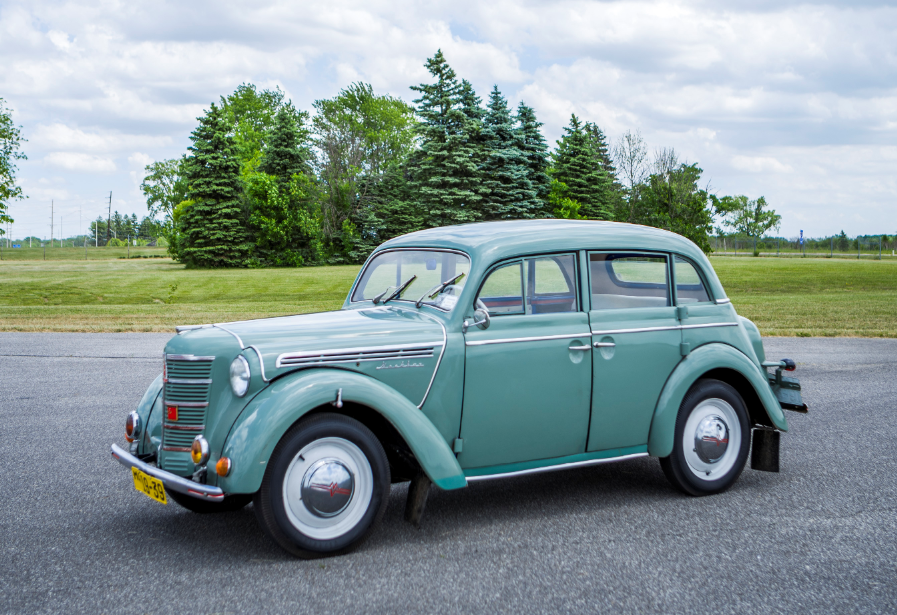
Moskvitch was a brand of automobile produced by the Soviet Union beginning in 1946. The first cars were actually built at a former Opel plant in East Germany. Production continued until the collapse of the Soviet Union in 1991, and afterward under a privately-owned company until 2002. Somehow, Volkswagen currently owns the brand name.
The cars were reliable and low-cost by Soviet standards, although they were not always easy to get. The 400 was based on the pre-war Opel Kadett and went on sale in December 1946. The “400” meant that the car was powered by a 23-horsepower 1.1-liter inline-four, and the “420” meant that it was a sedan.
Other body styles were offered, and the model was ultimately succeeded by the short-lived 401 in 1954. Between the 400 and 401, 247,439 examples were produced. I have no particular history on this car, as this post is being written well in advance of RM’s catalog going online. But, these are rarely seen in the U.S. (or even Western Europe), and this one is selling at no reserve. Click here for more info and here for more from this sale.
Offered by RM Sotheby’s | Online | July 23-30, 2020
Photo Courtesy of RM Sotheby’s
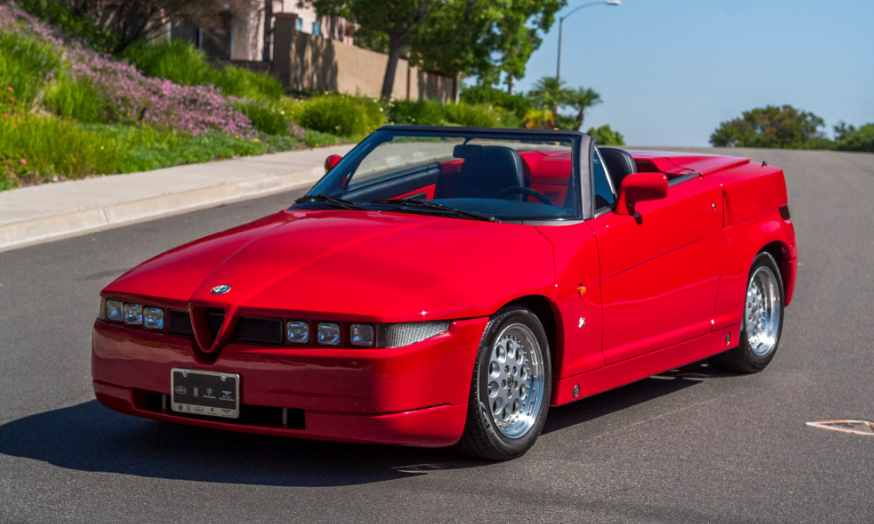
It’s always fun when a manufacturer rolls out an unnecessary, limited-edition specialty car. Think of things like the Lancia Hyena, the Alfa SZ/RZ, and even the Chevy SSR (I like them, leave me alone). They just make life more interesting.
The Alfa Romeo SZ, or Sprint Zagato, was built between 1989 and 1991. It was a hardtop coupe and 1,036 were built. The RZ, or Roadster Zagato, was offered from 1992 through 1994 and only 278 were built. It’s boxy, distinctive, and the suspension is based on the Alfa 75 IMSA car. It is apparently quite the driver’s car.
Power is from a 3.0-liter V6 rated at 207 horsepower. The roadster could hit 60 in 7.5 seconds, which doesn’t sound all that quick, but hey, it’s only got 207 horsepower. It’s a momentum machine, capable of great gobs of grip. This example is a rare sight in the U.S. and will sell at no reserve. Click here for more info and here for more from this sale.
Offered by Silverstone Auctions | Online | July 31-August 1, 2020
Photo – Silverstone Auctions
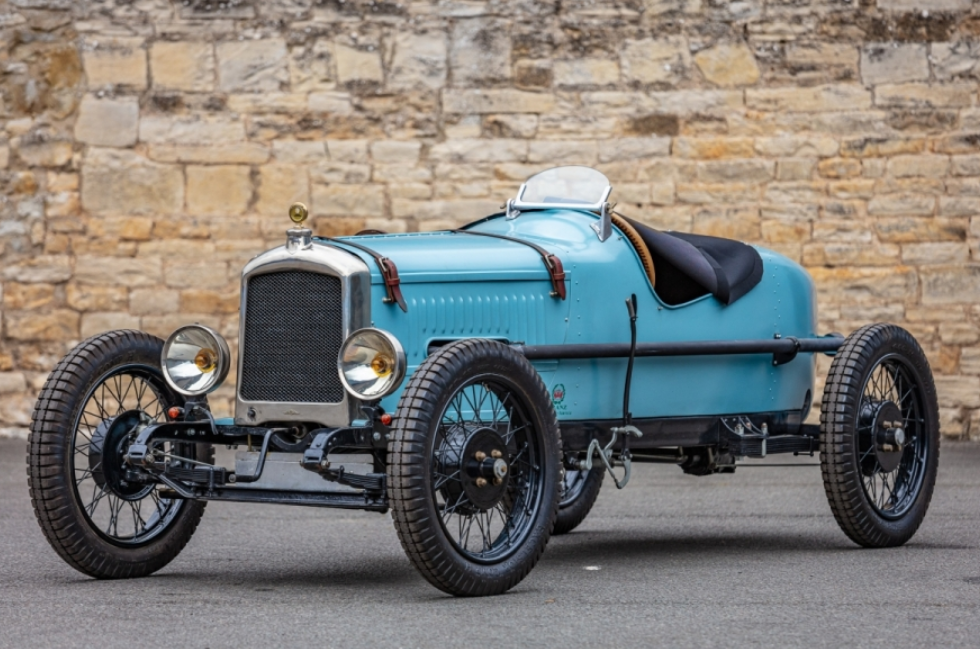
Benjamin was a car company founded in 1921 by Maurice Jeanson not far from Paris. They specialized in cyclecars, or light cars with small engines and cycle-type wheels. In 1927, the company opened a second factory and rebranded from Benjamin to Benova, which supposedly meant “New Benjamin.”
Anyway, the new company lasted through 1929. At least 300 examples of the B3 were built between 1927 and 1929 and they were powered by a 945cc Chapuis-Dornier inline-four. Factory bodies included a coupe and two torpedos.
This car is quite sporty, wearing a racing-style body dressed in French Grand Prix Car blue (not a real paint color name). It almost looks like a cross between a period Indy car and an Amilcar. But it’ll be cheaper than either of those with an estimate between $19,000-$22,500. Click here for more info and here for more from this sale.
Auctions have been pretty few and far between for the last few months, and some traditional tent auctions have turned to offering cars online. One such sale was RM’s Essen sale, which was originally scheduled for late March and shifted to online-only in June. No-sales included the Puch G-Wagen.
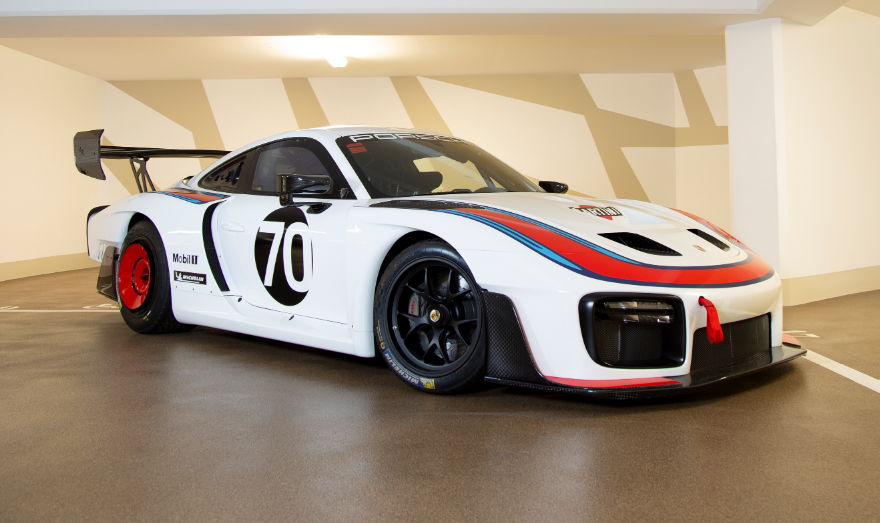
The overall top sale was this brand-new 2020 Porsche 935 Martini that brought approximately $1,480,782.
Finally, on the affordable side of things, the Ginetta G20 could’ve been had for $10,180, the Panther Lima for $8,329, and the Arkley SS for a paltry $1,357. Click here for final results.
Mecum held a sale in North Carolina to liquidate a private collection. At least I think it was in North Carolina. There was some weird online bidding stuff too. Pretty confusing. At any rate, this 1969 Dodge Daytona was the top seller at $231,000.
Photo – Mecum
All of our feature cars sold (everything sold), including the Buick GSX for $140,800. The Grand Sport Corvettes brought $68,750 for the convertible and $74,250 for the coupe. Complete results are provided here.
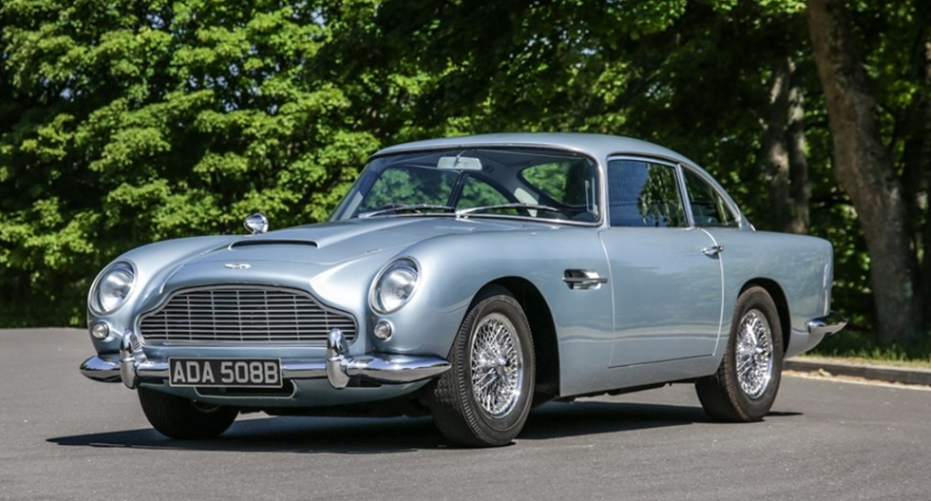
Finally, Historics’ Windsorview Lakes sale, where the awesome Spyker LM85 we featured sold for $281,472. The top sale was this 1964 Aston Martin DB5 for $703,682.
Photo – Historics Auctioneers
Our two other feature cars both sold, with the Humber bringing $27,443 and the Brooke Double R $24,648. More results can be found here.
Offered by Bonhams | Bicester, U.K. | July 25, 2020
Photo – Bonhams
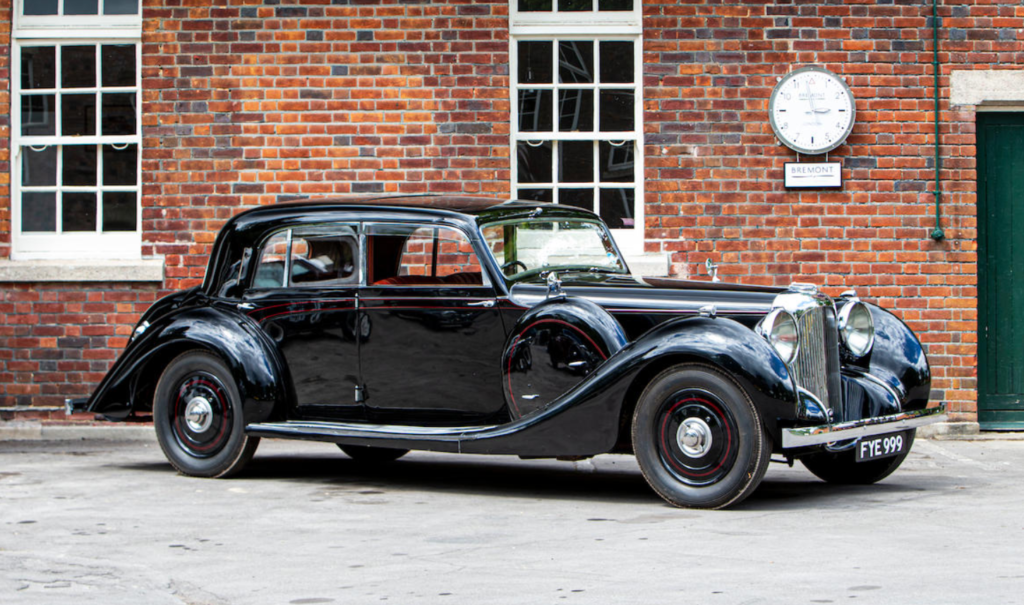
Someone shopping for a large British luxury car in the late 1930s had some solid choices. There was of course Bentley and Rolls-Royce, but you could also choose from the likes of SS, Alvis, Brough Superior, Railton, and Lagonda.
In 1936, Lagonda introduced the V12, which featured a 4.5-liter V12 designed by W.O. Bentley and rated at 180 horsepower. It was the company’s first car to feature more than six cylinders. Production started in 1938 and ended at the outbreak of war in 1940.
Just 189 examples were produced. Lagondas have always been very exclusive cars, but the V12 is exclusive even by Lagonda standards. This one is largely original and is one of the final examples built. Its stately four-door sedan body will hold back the value a bit when compared to sportier body styles and open cars, but it should still command between $75,000-$100,000. Click here for more info and here for more from this sale.
Update: Not sold.
Update: Sold, Bonhams, London, October 2020, $80,004.
Offered by Bonhams | Bicester, U.K | July 25, 2020
Photo – Bonhams
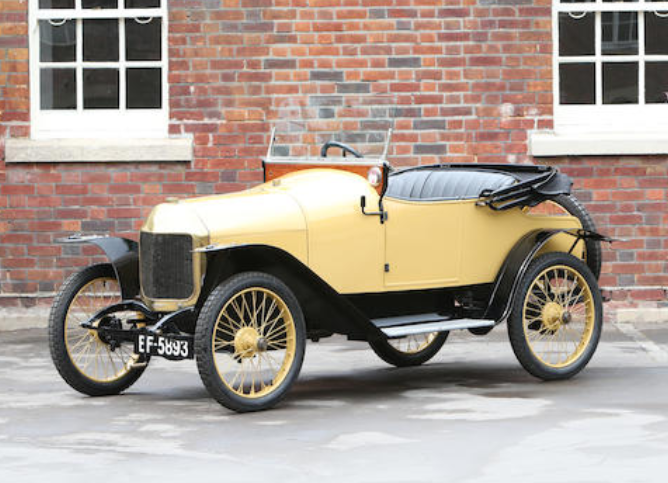
Julius Solomon and Jacques Bizet met while working at Georges Richard and left to start their own company, Le Zebre. They launched their first car in 1909, the Type A. It was followed by the Type B and C in 1912.
The six-horsepower Type C would last through 1918, a year longer than the B. The replacement sub-one-liter inline-four in this car has been fitted with an electric starter and has been drained of fluids. This Type C will require a little work before it gets back on the road.
Le Zebre lasted through 1931, and their relatively diminutive cars do come up for sale here and there. But they are by no means common. This one should bring between $15,000-$17,000. Click here for more info and here for more from this sale.