’67 L88 Convertible

1967 Chevrolet Corvette L88 Convertible

Offered by Mecum | Indianapolis, Indiana | June 23-28, 2020
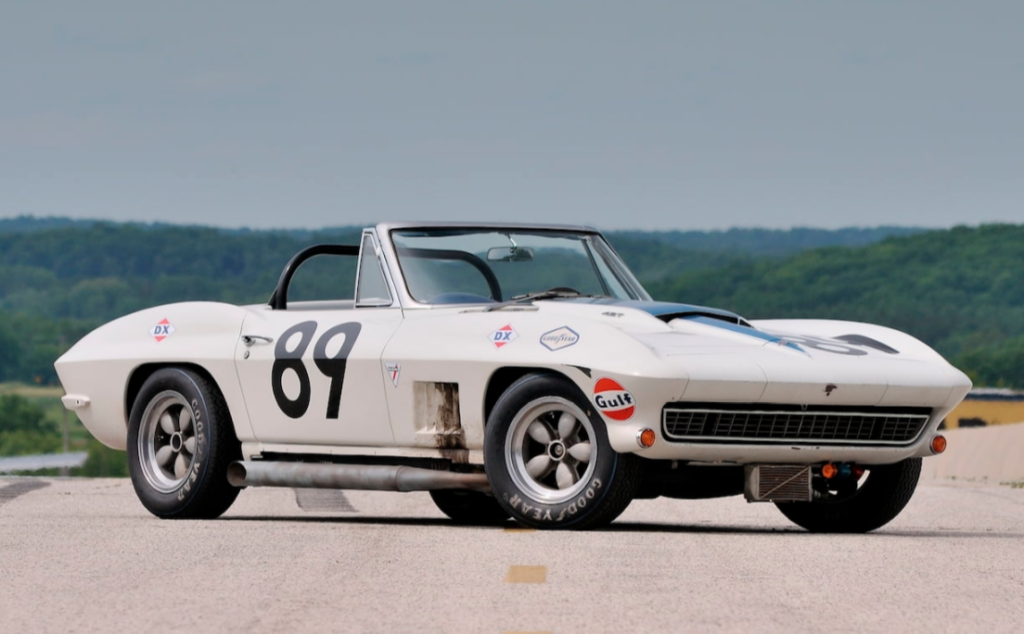
Photo – Mecum

The legendary L88 Corvette was available from 1967 through 1969. That spanned two different generations of the Corvette, which means that 1967 was the only year you could have Chevy’s monstrous V8 in a C2 Corvette. Only 20 were sold that year, and I have no idea about the breakdown between coupes and convertibles.

The high-compression, 7.0-liter V8 was rated at 430 horsepower, even though the actual output was probably over 550. Unfortunately, the car was very expensive and required 103-octane fuel, which wasn’t all that easy to come by at your local service station in 1967. Of the 20 built for the model year, quite a few went direct to racing teams. After all, the car was essentially a race car that happened to be street legal. This one was raced, including at the:

  • 1970 24 Hours of Daytona – 11th, 2nd in class (with Cliff Gottlob and Dave Dooley)

The car competed for eight years, apparently winning 150 races. It was purchased by Dana Mecum in 2013, and he’s now letting it go, assuming it hits what is sure to be a stratospheric reserve (c’mon Mecum, have a little faith in your own event and go no reserve!). Click here for more info and here for more from this sale.

Update: Not sold, high bid of $3,200,000.

Shelby GT350 Convertible

1966 Shelby GT350 Convertible

Offered by Mecum | Indianapolis, Indiana | June 23-28, 2020

Photo – Mecum

The first Shelby Mustang was the 1965 GT350. It was also the best Shelby Mustang. It has those classic first-gen looks and isn’t as bulky looking as later models. Plus, they had racing pedigree. But most of those cars were hardtops.

Not this one. Yes, they built convertibles, but just a few of them. Only four were produced for 1966, and this was the first one. It’s an ex-factory test car, and the other three were more-or-less prototypes as well. It was apparently the only first-gen GT350 with gold stripes that wasn’t a Hertz car.

The GT350 is powered by a 4.7-liter V8 rated at 271 horsepower. This one wears an older restoration and will be going under the hammer at Mecum’s Indy sale, which is currently scheduled for June. Click here for more info and here for more from this sale.

Update: Sold $1,100,000.

D-Type Continuation

1955 Jaguar D-Type Continuation

Offered by RM Sotheby’s | Elkhart, Indiana | October 23-24, 2020

Photo Courtesy of RM Sotheby’s

This time last week we were talking about Jaguar’s XKSS continuation series of cars. This week, it’s time to talk D-Types. This is, perhaps, the most legendary Jag. The D-Type won Le Mans three straight years: 1955, 1956, and 1957. The company managed to get 71 built, though they planned on building 100.

Which leads us to this. A couple of years ago Jaguar announced that they would finish off the 25 cars to get them to the 100 they initially wanted (though the 25 they didn’t build were intended to be XKSS examples, and nine of those never got built due to a fire… the math works, trust me).

These continuation cars were built by Jaguar using the same processes they used in 1955. Power is from a 3.4-liter inline-six. You could get them in short or long-nose form, and this is an example of the former. It’s covered less than 200 miles with its first owner.

The D-Type we featured in 2013 failed to sell with a high bid of $6.2 million. This one, supposedly built the same way, should bring significantly less. Click here for more info and here for more from this sale.

Update: Sold $1,325,000.

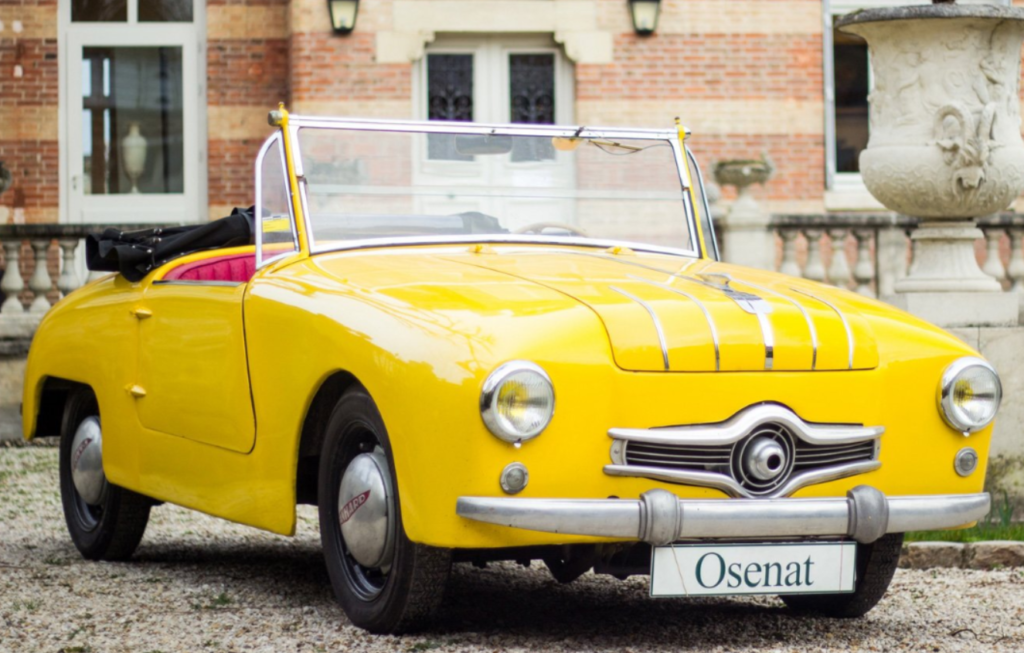
Dyna Junior X86

1952 Panhard Dyna Junior X86

Offered by Osenat | Fontainebleau, France | TBD…

Photo – Osenat

Business can be a fickle thing. Panhard et Levassor was one of the first automotive giants and is one of the most important car companies from the early days of the industry. Panhard’s post-war fortunes weren’t great. Their later years found them grasping at straws, unable to compete with Renault, Citroen, and Peugeot.

The Dyna Junior was a small sports car introduced in 1952. It borrowed the chassis and drivetrain from the larger Dyna X. It’s a front-wheel-drive little drop-top, and in X86 form it was powered by a 745cc flat-twin rated at 32 horsepower. This was the least-powerful variant built.

But it’s an early car. The factory prototypes were built by a coachbuilder called Di Rosa, who would eventually go out of business after Panhard yanked production duties away from them. The very early Dyna Juniors were built there. Including this one. And it has some unique features not found on other cars, like a unique windshield and trunk.

Only 4,707 examples of the Dyna Junior were built between 1952 and 1956. In 1953, it was Panhard’s biggest-seller, having moved less than 3,000 of them. That’s how far their fortunes had fallen. This seemingly one-off X86 Junior should bring between $21,750-$27,000. Click here for more info and here for more from this sale.

Update: Not sold.

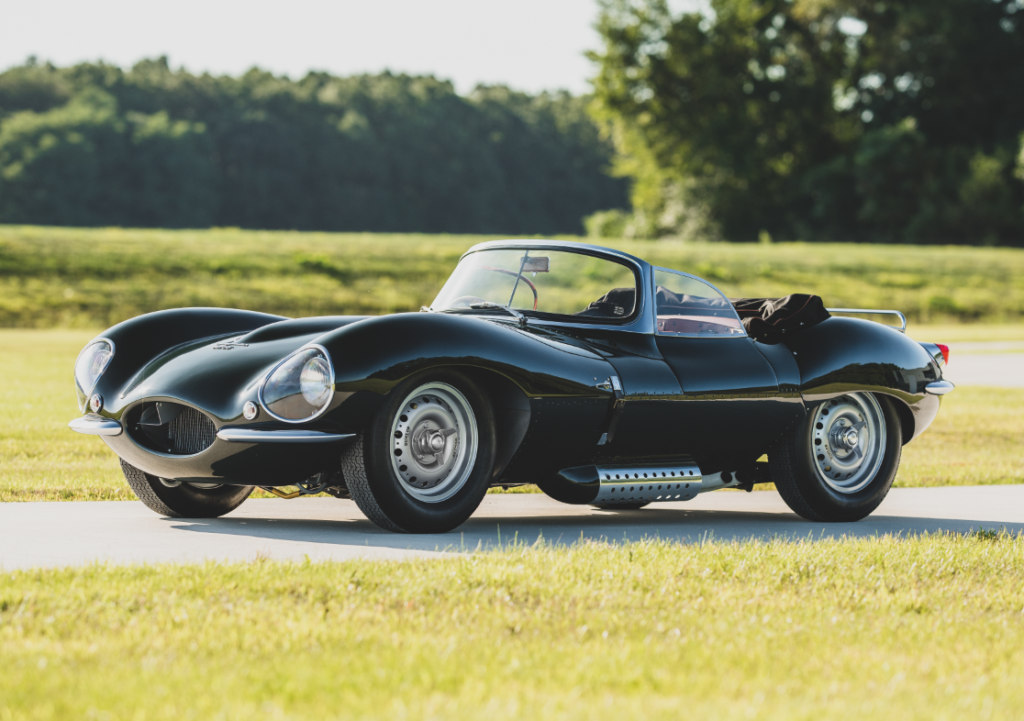
XKSS Continuation

1957 Jaguar XKSS Continuation

Offered by RM Sotheby’s | Elkhart, Indiana | October 23-24, 2020

Photo Courtesy of RM Sotheby’s

The XKSS was the road-going version of the Jaguar D-Type racing car. Basically, Jaguar had unsold D-Types that they converted to sell to Americans who wanted a high-performance sports car. They planned to build 25 of them, but a fire broke out at the factory in February 1957 after only 16 were sold.

So in 2016, Jaguar decided they would build the other nine that never got completed back in the day. From scratch. They digitally scanned a few surviving XKSS cars and built the new ones using the same construction methods from the 1950s. Major changes include a modern fuel cell and redesigned seats. Power is from a 3.4-liter inline-six that Jaguar rated at 250 horsepower in 1957.

So what do we have here exactly? Well, it depends on how much of an asshole you want to be (pardon my French). Whoever edited the Wikipedia article for these referred to them as “replicas” (presumably the page was edited by an actual XKSS owner or some Jag purist). At the same time, this is a factory-built XKSS. It wasn’t built by Tempero or some other actual “replica” builder. True, it might not be an “actual” XKSS from 1957, but it’s still a Jaguar product. It’s almost certainly more authentic than any “continuation” Cobra out there.

When Jaguar announced this program, they noted that they were going to charge over $1 million for them. And they sold. But this is the first time one of the “new” ones has come up for sale. An XKSS from the ’50s will run you over $10 million. This one, which was built in 2017 and has 51 miles on it, will sell without reserve. So we’re all about to find out its real value. Click here for more info and here for more from this sale.

Update: Sold $1,985,000.

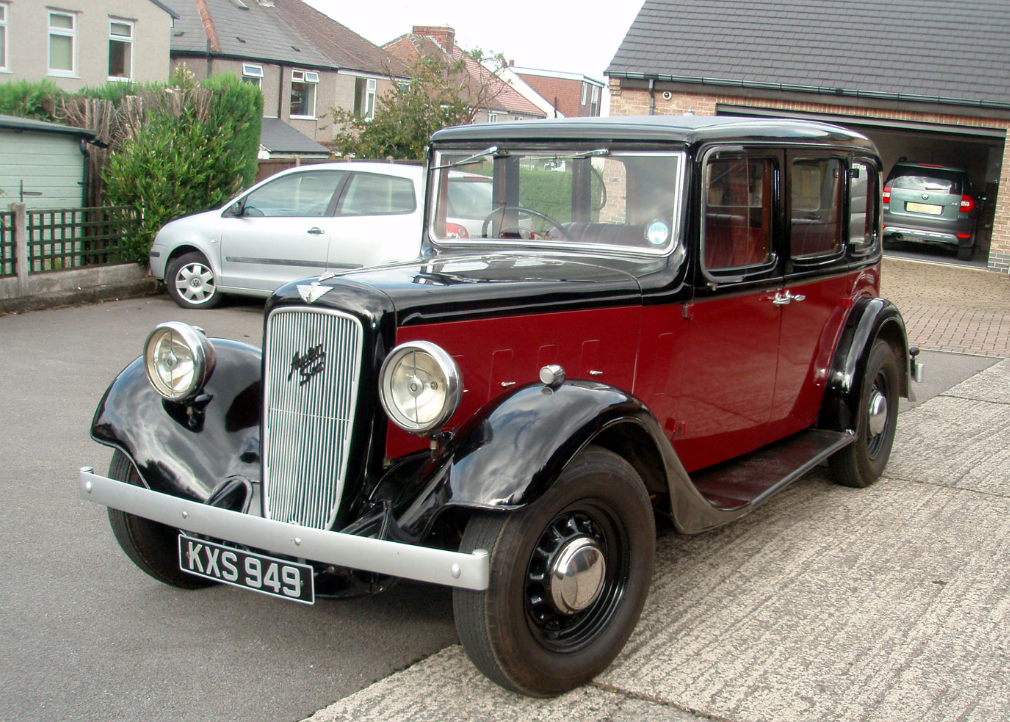
Austin Hertford

1935 Austin 16/6 Hertford Saloon

Offered by H&H Auctioneers | Online Only | April 29, 2020

Photo – H&H Auctioneers

The Austin 16 was introduced in 1927 and evolved fairly significantly over a decade of production. This car, from near the end of the line, looks much different from the earlier cars. Dubbed the Sixteen Light Six, the cars were powered by a 2.2-liter inline-six that made 36 horsepower.

1935 models featured upgrades over preview years and could be had in one of four models. This five-passenger Hertford saloon was the least-expensive option. New features included a second gear synchro and a body-color radiator surround.

This car benefits from recent freshening and shows very well. Austin built 12,731 examples of the 16 between 1935 and 1937, and survivors aren’t all that common. This one should bring between $11,000-$13,500. Click here for more info and here for more from this sale.

Update: Sold $10,949.

Iso Grifo GL

1968 Iso Grifo GL Series I

Offered by RM Sotheby’s | Elkhart, Indiana | October 23-24, 2020

Photo – Courtesy of RM Sotheby’s

The Grifo GL is a Bertone-styled Italian muscle car. It was designed by Giotto Bizzarrini and styled by Giorgetto Giugiaro. It was introduced in 1963, and a racing variant, the Grifo A3/C, debuted alongside

The grand touring Grifo was slightly restyled before entering production as the Grifo GL. Meanwhile, Bizzarrini got irritated, took the A3/C, and went and produced it as the Bizzarrini 5300 GT.

The Grifo GL road car soldiered on under the Iso marque. Early examples were powered by 5.4-liter V8 from a 327 Corvette that made 350 horsepower. That’s what this car originally had. But later Grifos received a 7.0-liter Corvette 427 V8 advertised at 435 horsepower. It’s what this car currently has under that mean hood with a very serious-looking vent.

This car received a six-digit restoration in 2005 and is now offered at no reserve. Check out more about it here and more from RM here.

Update: Sold $500,000.

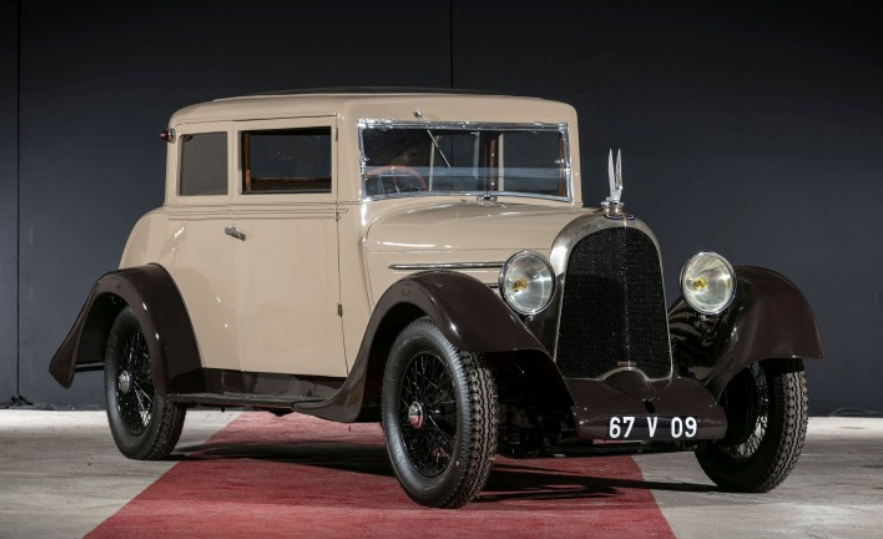
Voisin C4 S

1926 Voisin C4 S Two-Door Sedan

Offered by Artcurial | Gibel, France | TBD…

Voisin C4 S
Photo – Artcurial

Voisin built some fantastic luxury cars during its existence. At some point, Gabriel Voisin realized that he would have to build some volume models in order to survive. In 1921, he launched a small sedan called the C4.

It evolved into the C4 S in 1924, and that model lasted through 1926. It is powered by a 1.3-liter sleeve-valve inline-four that made 33 horsepower. This car is said to wear unique bodywork that is quite squared off at the front and more aerodynamic out back.

The car has been in this collection since 1968 and has not been used in recent years. It probably needs a little re-commissioning, but it’ll make for a cheap entry into Voisin ownership with a pre-sale estimate of $28,000-$39,000. Click here for more info and here for more from this sale.

Update: Sold $37,108.

Amphicar

1966 Amphicar 770

Offered by RM Sotheby’s | Elkhart, Indiana | October 23-24, 2020

Photo Courtesy of RM Sotheby’s

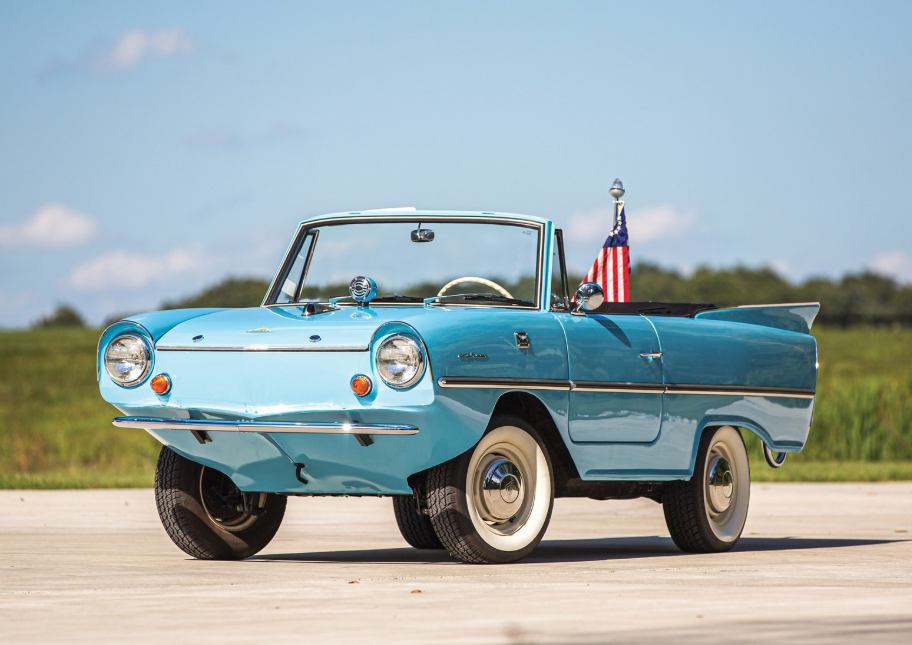
Here’s one I can’t believe we haven’t covered yet. The Amphicar was designed by Hans Trippel and produced by the Quandt Group in Germany between 1960 and 1965. The model was dubbed the “770” because it would do seven knots on the water and 70 mph on land.

A few different engines were used throughout production. This car is powered by a 1.5-liter Triumph inline-four that was capable of up to 75 horsepower. The same engine drives the car on land or water, and once you splash down, the engine drives a pair of reversible propellers. The car could even drive itself back out of the water.

Amphicars are remarkably usable. They can be found in waterways throughout the world every year (I once saw one on the back of a large private boat in Paris. It’s the ultimate dinghy). And I think their continued use is a wonderful sign of how well made they were. Only 3,878 were produced in total, and it seems like there’s always a few for sale somewhere. This one is selling at no reserve in Indiana. Click here for more info and here for more from this sale.

Update: Sold $128,800.

Subaru 360

1969 Subaru 360 Deluxe

Offered by RM Sotheby’s | Elkhart, Indiana | October 23-24, 2020

Photo Courtesy of RM Sotheby’s

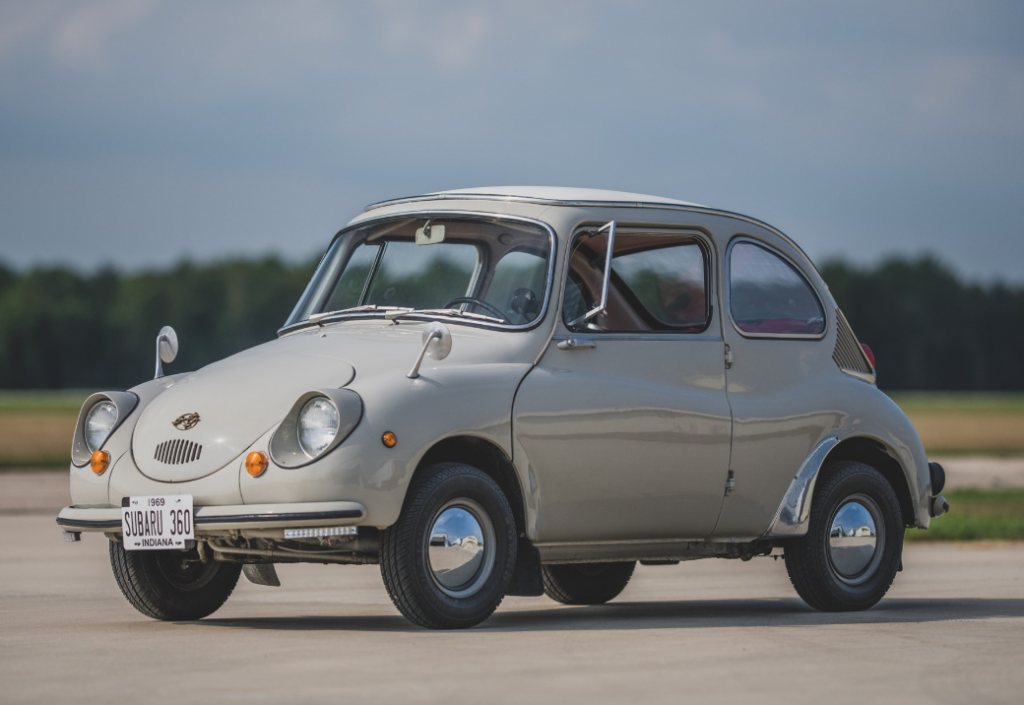
The 360 was Subaru’s first production car. From this came the WRX, the Outback, and every other Subaru passenger vehicle. It was built from 1958 through 1971, and there were convertible and station wagon variants.

Power is from a 356cc inline-twin, and the model’s “360” name is also derived from the engine’s displacement. Horsepower at the end of production was a healthy 25, and the price when new in the U.S. was $1,297.

Subaru built 392,000 of them, about 10,000 of which were sold new in the U.S. This one was on eBay long ago, and that is perhaps where the current collection acquired it. It will now sell at no reserve. Click here for more info and here for more from this sale.

Update: Sold $30,240.