Offered by RM Sotheby’s | Elkhart, Indiana | October 23-24, 2020
Photo Courtesy of RM Sotheby’s
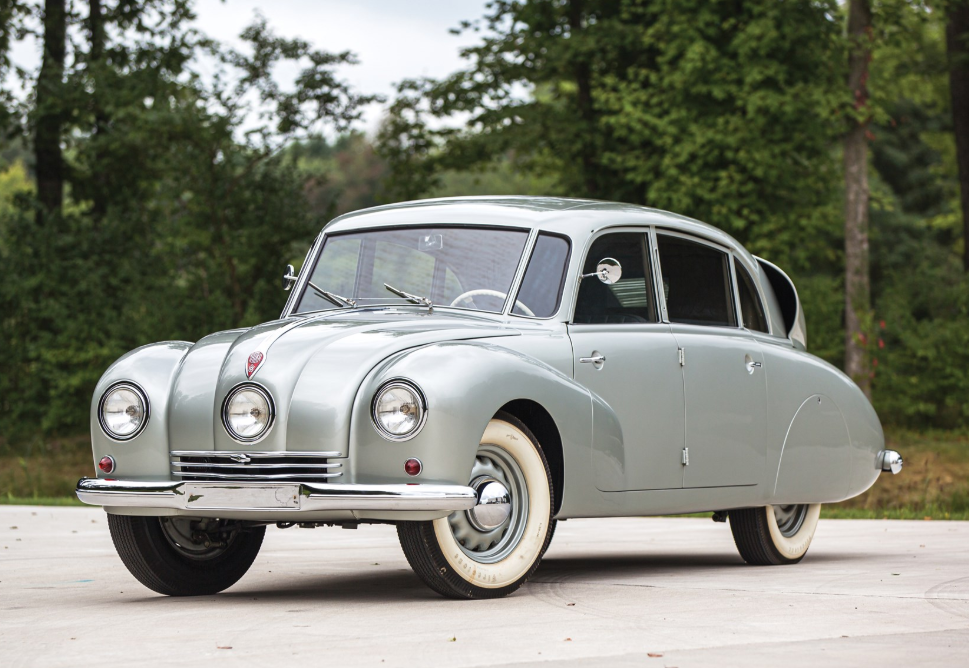
The Tatra T87 is a special car. Designed by Hans Ledwinka and Erich Ubelacker, it was based on the earlier T77, which was a very low-production car from the mid-1930s. The T87 went on sale in 1936 and lasted through 1950… you know, with an interruption for the war.
It had a streamlined body, a rear-mounted 3.0-liter V8, and suicide front doors. Horsepower was a modest 85, but the car had an incredibly low drag coefficient and could hit 100 mph. After production ceased, Tatra retrofitted some of the T87s with the 2.5-liter V8 from the 603. This is one of those cars.
Not a cheap car in its day, the T87 was produced in limited numbers with just 3,056 examples completed. It’s a beautiful, streamlined masterpiece, with design elements lifted from the German zeppelins of the era. It’s one of the coolest cars in this sale, and, like the others, it will sell at no reserve. Click here for more info and here for more from RM.
Offered by RM Sotheby’s | Elkhart, Indiana | October 23-24, 2020
Photo Courtesy of RM Sotheby’s
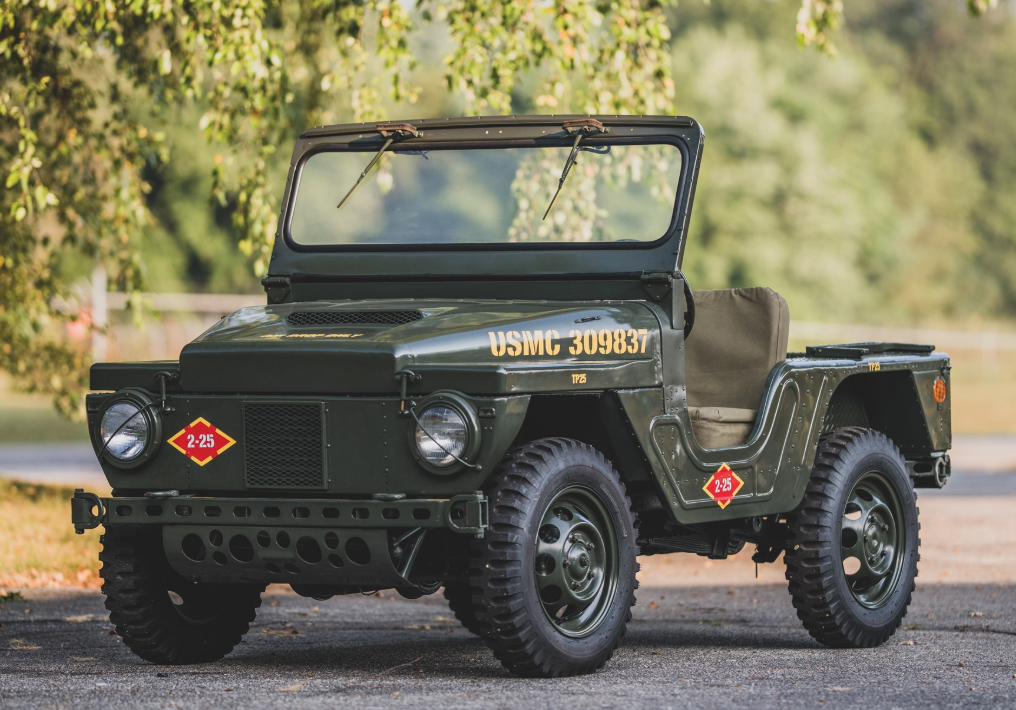
A couple of companies have built Jeeps or Jeep-like vehicles. It started with American Bantam, then there was Willys, Ford, Jeep (of course), and more. American Motors produced the prototype for this tactical truck in 1946, and it was further refined by some of the engineers from the original Bantam Jeep project.
The 1/4-ton “Mighty Mite” was produced for the Marine Corps between 1959 and about 1962. It is powered by a 55 horsepower 1.8-liter V4. It has four-wheel drive and tops out at about 62 mph. This is the “long wheelbase” version, as the M422 variant was six inches shorter.
Just 2,672 examples of the M422A1 were produced. When compared to WWII-era Jeeps, that’s just a tiny, tiny percentage. This well-restored example is going to sell at no reserve. Click here for more info and here for more from this sale.
Offered by RM Sotheby’s | Elkhart, Indiana | October 23-24, 2020
Photo Courtesy of RM Sotheby’s
RM has rescheduled the sale of this monster Indiana collection for late October instead of the beginning of May. But that’s not going to stop us from talking about some of these great cars now! That is partially because this is more or less the only auction catalog available anywhere on the internet at the moment.
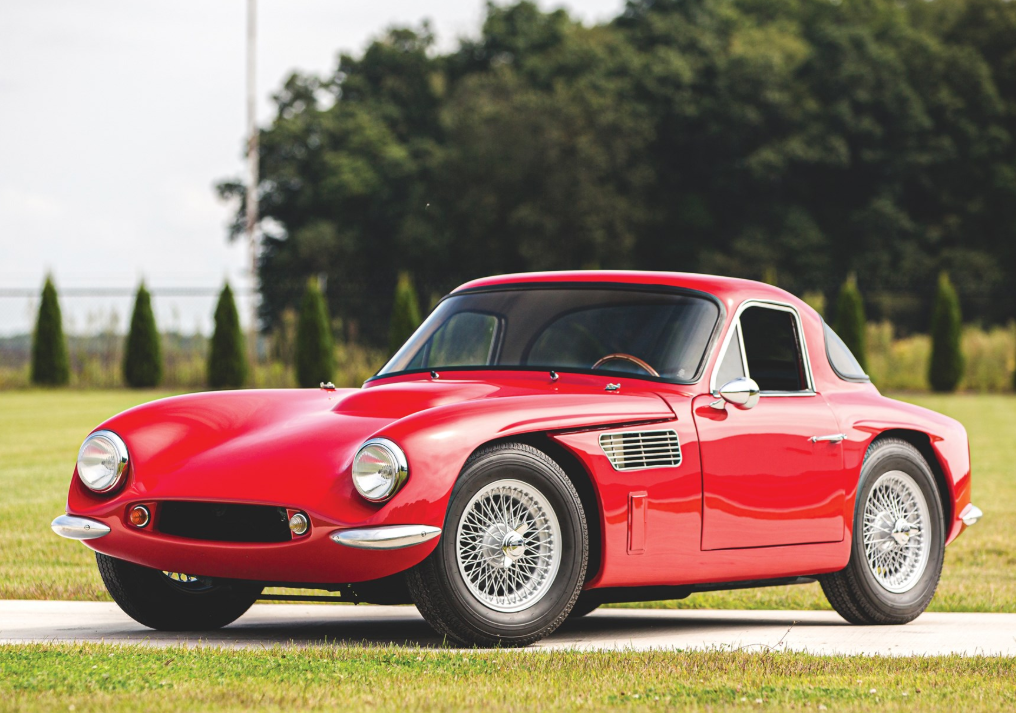
The Griffith is an awesome little beast. They have a short wheelbase, a lot of power, and are notoriously difficult to drive at the limit. It’s kind of like a Shelby Cobra – a British sports car (in this case, a TVR Grantura) with a big Ford V8 stuffed under the hood marketed by an American company. Jack Griffith was a TVR repair guru in the U.S., and he initially tried to shove a Cobra’s V8 into a Grantura.
Eventually, he figured it out and started selling 289-powered Griffiths. This car is actually the only one ever built with a 260ci (4.3-liter) Ford V8. Only 261 examples were ever built, 192 of which were supposed to be U.S.-market cars. The rest were branded as TVRs in the U.K. Click here for more info and here for more from this sale.
Offered by RM Sotheby’s | Elkhart, Indiana | May 1-2, 2020
Photo Courtesy of RM Sotheby’s
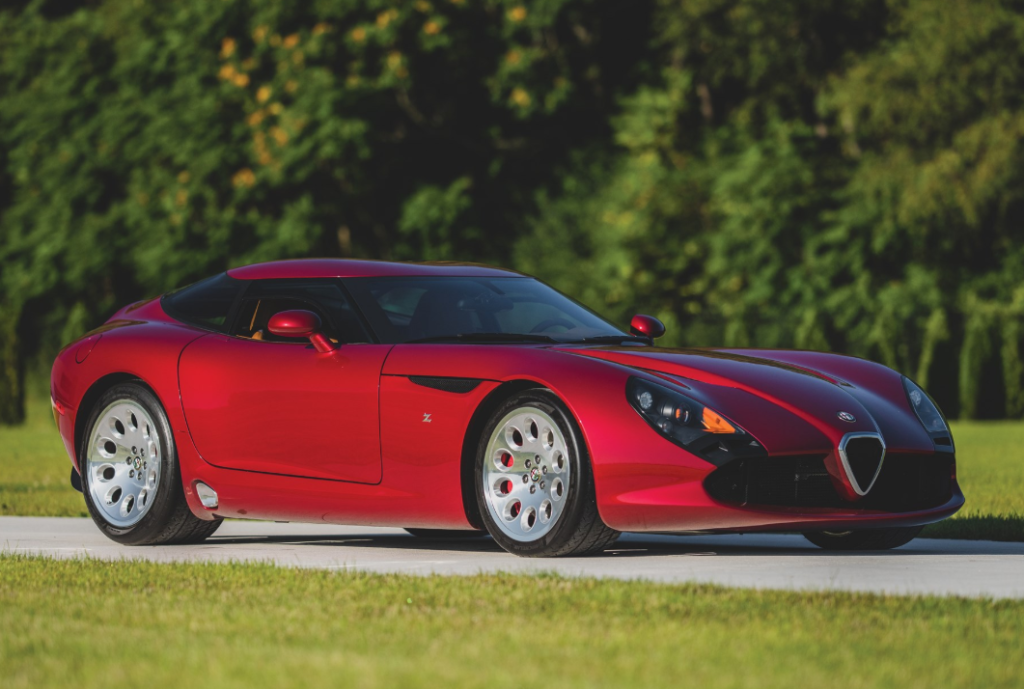
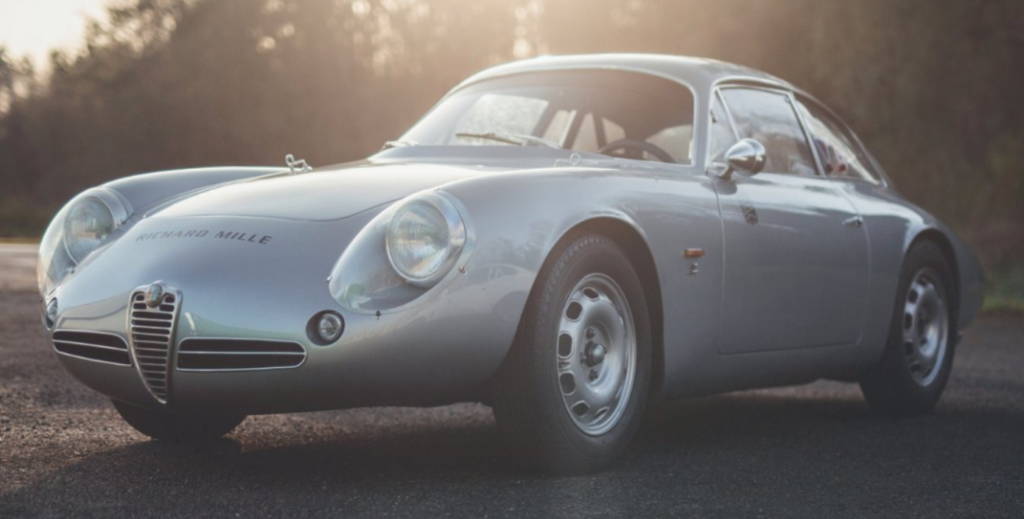
Here’s a rare one. The TZ and TZ2 were classic Alfa Romeo sports racing cars of the 1960s. They are quite sought after and very valuable. In 2010, Alfa Romeo introduced a “TZ3” to celebrate 100 years of the marque.
Based upon its newly-adopted corporate cousin, the Dodge Viper SRT-10, the TZ3 features unique bodywork by Zagato and is powered the Viper’s 8.4-liter V10 that, in this car, makes 600 horsepower.
Only nine road-going versions were built, along with one Corsa racing variant that was actually powered by a V8. The cost when new was over a million dollars, and they were sold behind closed doors directly to collectors. This one has only covered 201 miles since new. Click here for more info and here for more from this sale.
The 1907 Renault Vanderbilt Racer was another big sale, bringing $3,332,500. Two old German cars sold, but the final sales prices were not listed, presumably because the new buyer is weird. They were the Opel Phaeton and the Demarest Benz. The other Benz failed to sell, as did a previously-featured Boyer and Knox.
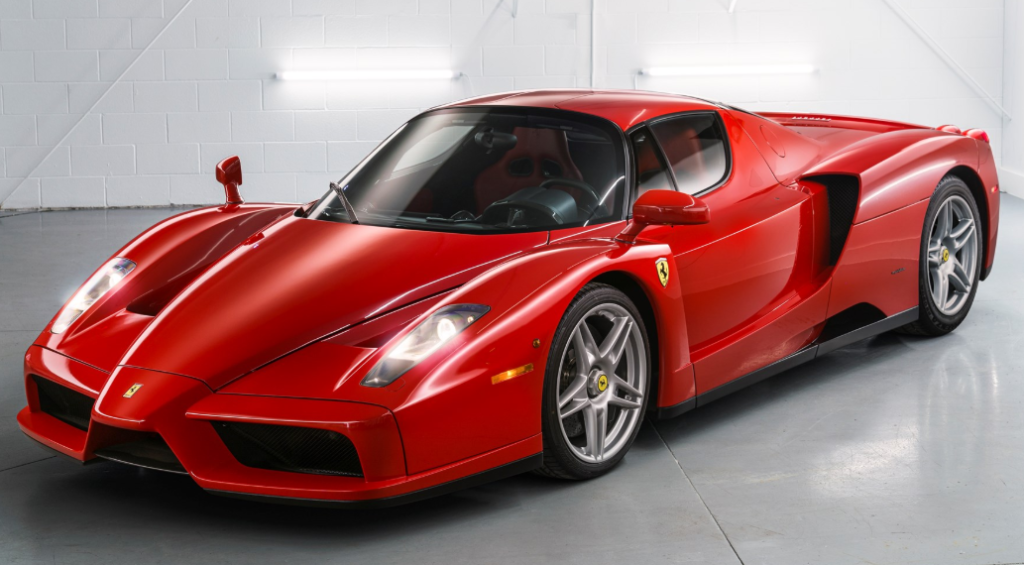
RM’s Amelia sale boringly saw this 2003 Ferrari Enzo sell for the most money (there were so many cool classics here, so a late model Ferrari is kind of a bummer). It sold for $2,782,500.
Photo Courtesy of RM Sotheby’s
All of our feature cars sold, led by two Duesenbergs. The Stationary Victoria sold for $1,325,000, and the Convertible Coupe brought $1,132,500. Cars that crossed the $100k mark included the Talbot-Lago at $250,000 and the Muntz Jet at $117,600.
Aguttes’ March sale might just be the last one we get to recap for while, considering that most sales in late March and heading into April and May have been either canceled or postponed until later in the year. You know, pandemic and all.
1952 Ferrari 225 S Berlinetta ‘Tuboscocca’ by Vignale
Offered by RM Sotheby’s | Elkhart, Indiana | May 1-2, 2020
Photo Courtesy of RM Sotheby’s
Well if you’re wondering what the biggest dollar car from RM’s Elkhart Collection sale is, you’re looking at it. Selling at no reserve, this car is one of just 21 examples of the 225 S produced by Ferrari in 1952.
The 225 S could be had with two different chassis types: a spaceframe or a tubular semi-monocoque, aka the Tuboscocca. This car has the latter and is one of just four Berlinettas produced on that chassis (of 12 total Tuboscocca cars). It is the fifth of the 21 cars produced, and power is from a 210 horsepower, 2.7-liter V12.
Because the Tuboscocca was a competition-geared chassis, it’s no surprise that this car has some racing history, including:
1952 Mille Miglia – 10th, 2nd in class (with Franco Bordoni-Bisleri and a Mr. Geronimo)
1952 12 Hours of Casablanca – 2nd (with Jean Lucas and Jacques Peron)
There were some other successes before the car was repaired by Ferrari and sold to an SCCA privateer in Ohio through Luigi Chinetti Motors. The current owner purchased it in 2012 and has used it extensively in historic events. You can see more about the car here and see more from this sale here.
Offered by RM Sotheby’s | Elkhart, Indiana | May 1-2, 2020
Photo Courtesy of RM Sotheby’s
“He who is not afraid of death, drives a Lloyd.” That’s the sticker I saw on a Lloyd once, and it stuck with me. Lloyds were built under the Hansa marque early on, and the Lloyd marque really appeared in 1950 and disappeared with the rest of the Borgward group in 1963.
The 600 was a range of Lloyd models produced between 1955 and 1961. A two-door sedan and convertible were offered, along with a panel van and a station wagon Kombi. Power is from a 596cc twin making a little less than 20 horsepower.
This tiny shuttle van has three rows of seats and wears Pan-Am branding on the outside. I’m not sure where the luggage was supposed to go, or if this was even a real thing Pan-Am did. In any event, it will sell at no reserve. Click here for more info and here for more from this collection.
Offered by Artcurial | Gibel, France | May 2, 2020
Photo – Artcurial
Jean-Marie Corre began building cars under his own name in 1901. Early in the company’s history, the cars became successful in competition, and one of their drivers used a crest with a unicorn on it. So they adopted the name La Licorne (or unicorn, in French).
So from about 1908 until production ceased in 1939, the cars carried the La Licorne name. When the non-French think of French cars of the 1930s, they usually picture Delahayes and the like, but there were other popular brands churning out cars for the masses that didn’t survive the war. La Licorne was one of them.
The L760 was produced between 1931 and 1935 and is powered by a 1.5-liter inline-four. This “S” model featured a lower suspension. The car was restored many years ago and has been in a museum since 1972. It should now bring between $4,300-6,500. Click here for more info and here for more from this sale.
Offered by Mecum | Houston, Texas | April 2-4, 2020
Photo – Mecum
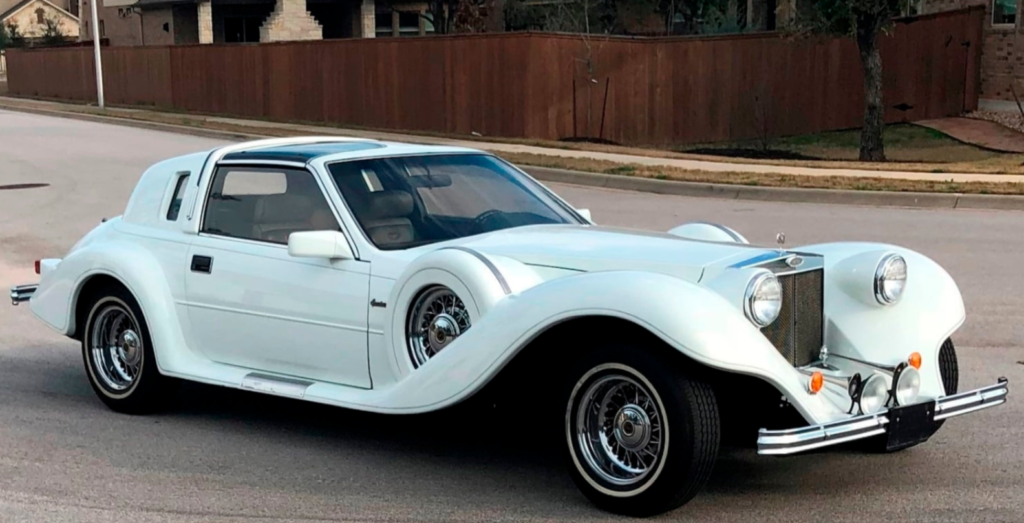
The Spartan was initially produced by Spartan Motors of Santa Ana, California, in about 1983. They later relocated to San Marcos, California, and became the Spartan Motorcar Company. In 1998 – yes the company was still around in 1998 – production was shifted to the Table Mountain Rancheria, an Indian reservation in Friant, California. They wanted to keep building them. It is unknown if they were successful.
While the initial Spartan was based on the Datsun 280ZX (and could be purchased at Datsun dealers, which is insane), the Spartan II was based on the Z31 Nissan 300ZX. It features a 3.0-liter V6 that made 160 horsepower when new.
It’s a polarizing car, I know. But these are one of the more common neo-classics. They were liked enough when new that this company was around for nearly 15 years. Go out and get you one! Click here for more info and here for more from this sale.
Offered by RM Sotheby’s | Elkhart, Indiana | May 1-2, 2020
Photo Courtesy of RM Sotheby’s
The Elcar was a descendant of Pratt-Elkhart and went on sale in 1916. It was built in Elkhart, Indiana, where this collection is being sold out of. The brand actually continued on through 1930, making them both a victim of the stock market crash and one of a fairly limited number of companies that actually lasted as long as they did. Remember, most of the brands that outlived Elcar are household names today.
In 1928, Elcar offered four models, with the 8-91 being the cream of the crop. It’s powered by a 115 horsepower Lycoming straight-eight. The Roadster was the least expensive variant of the 8-91, priced at $1,995 when new.
This car actually reminds me of the 1930 Willys-Knight Great Six, a six-cylinder roadster that played in a similar pricing bracket as the car you see here. This Elcar is selling at no reserve, and you can check out more about it here. See more from RM here.