Offered by Artcurial | Paris, France | February 8, 2019
Photo – Artcurial
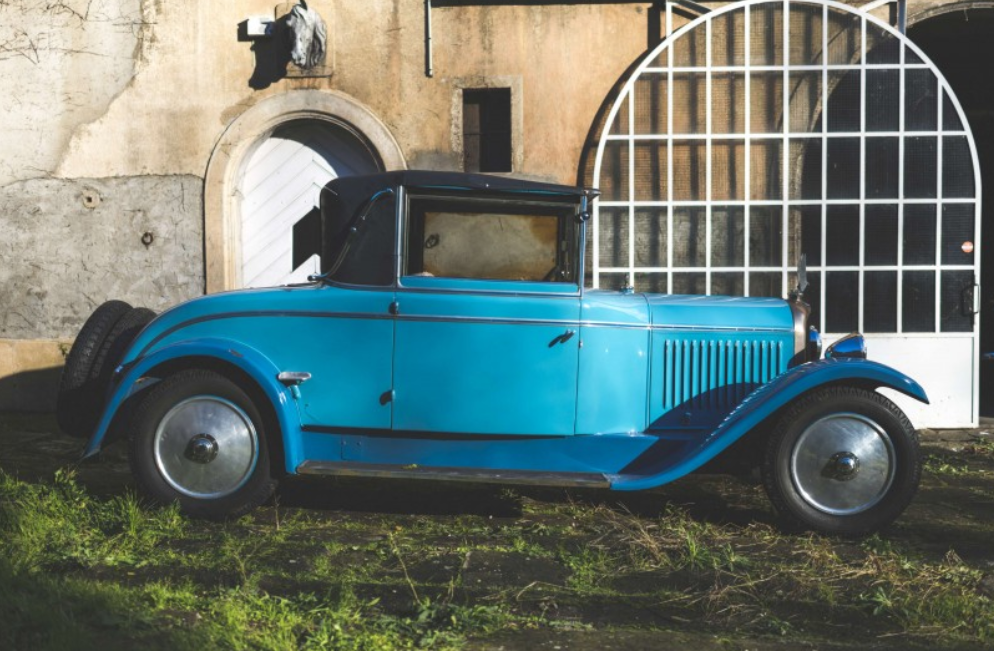
The C11 was Voisin’s best selling-model and was offered between 1926 and 1929. What is neat about this particular car is that it is a two-door convertible with a rumble seat. So many Voisins received sedan or streamlined coachwork that it’s almost weird to see a “sporty” looking variant.
Power is from a 2.3-liter sleeve-valve straight-six, and this car is said to be heavily optioned with mechanical equipment from the factory. The body is a one-off from Lyon-based Simon Pralavorio. It should bring between $105,000-$150,000. Click here for more info.
Offered by Artcurial | Paris, France | February 8, 2019
1929 Voisin C16 Berline by Ottin
Photo – Artcurial
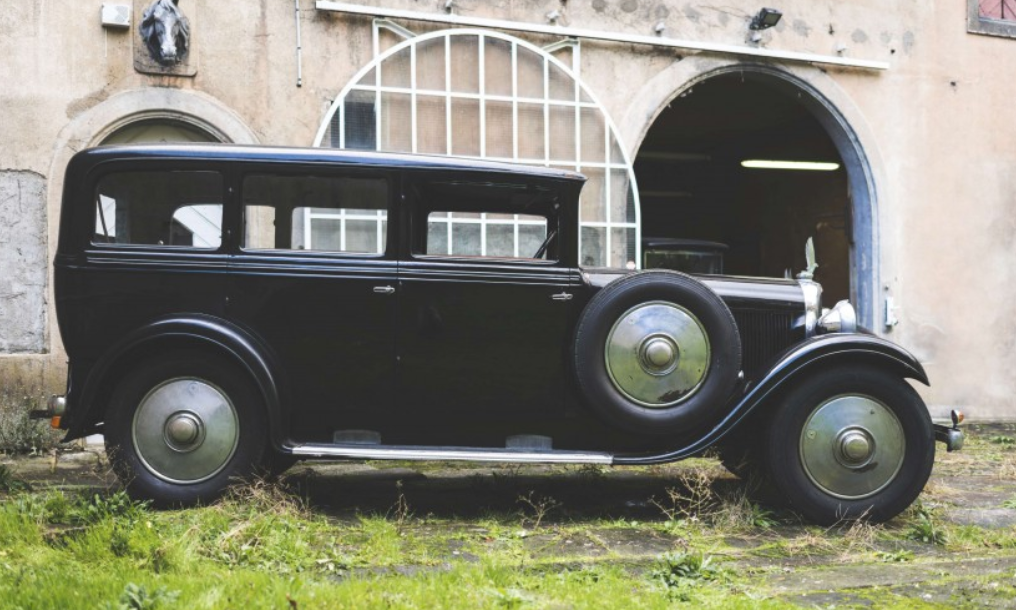
The C16 was a model produced by Voisin between 1929 and 1932. However this car left the factory, the current body was added by Ottin of Lyon in 1932 and it’s a four-door sedan. The style is somewhat sedate by Voisin standards, but then again the wildest designs always came from in-house.
This car is powered by a 5.8-liter sleeve-valve straight-six and it was expensive when new, costing three times as much as the 2.3-liter variant. That said, this is the only known 5.8-liter C16 known to exist. It is listed as the “flagship” of the collection from which it is being sold – a family that has owned a handful of Voisin cars since new. Fun fact, this car (as are the others we’ll feature from this collection) are listed as national French monuments and as such, are unable to leave the country. This one should bring between $100,000-$150,000. Click here for more info.
Update: Sold $128,471.
1928 Voisin C11 Cabriolet by Simon Pralavorio
Photo – Artcurial
The C11 was Voisin’s best selling-model and was offered between 1926 and 1929. What is neat about this particular car is that it is a two-door convertible with a rumble seat. So many Voisins received sedan or streamlined coachwork that it’s almost weird to see a “sporty” looking variant.
Power is from a 2.3-liter sleeve-valve straight-six, and this car is said to be heavily optioned with mechanical equipment from the factory. The body is a one-off from Lyon-based Simon Pralavorio. It should bring between $105,000-$150,000. Click here for more info.
Update: Not sold.
1926 Voisin C3L Berline by Simon Pralavorio
Photo – Artcurial
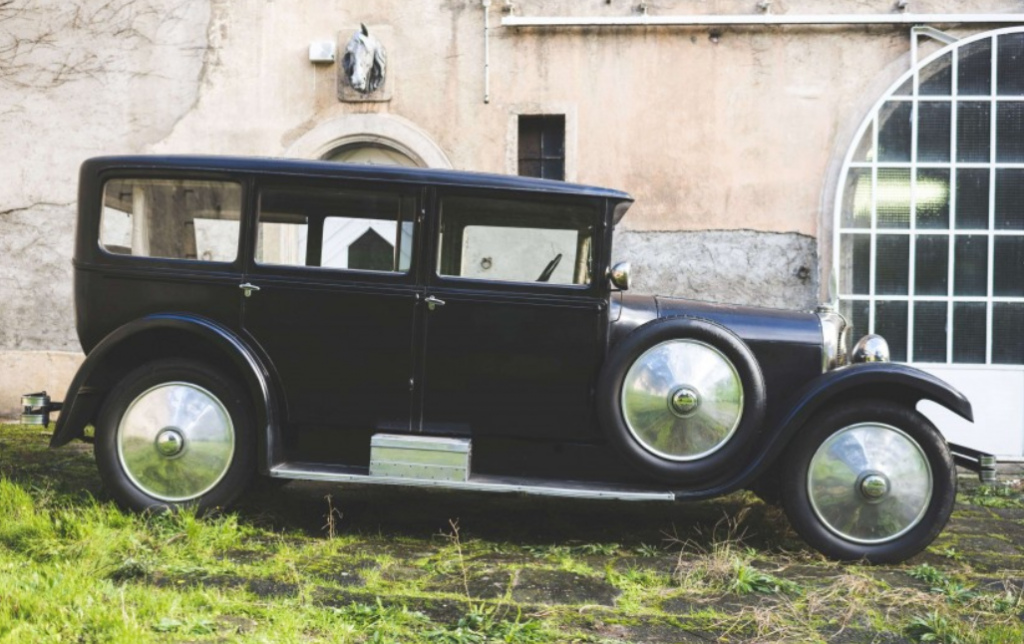
The C3L, which is different from the C3C (though I’m not exactly sure how), was offered by Voisin between 1922 and 1928. It is described by the auction catalog as the “car used by Presidents” which I guess means these were quite stately in their day.
They are powered by a 4.0-liter sleeve-valve straight-six and were capable of speeds over 75 mph. This car was also bodied by Palavorio and is said to have been the family’s favorite of all of their Voisin cars. It has a chauffeur’s compartment and an all-original interior. The price should be in the neighborhood of $80,000-$115,000. Click here for more info and here for more from this sale, including more Voisins.
Offered by Aguttes | Lyon, France | November 10, 2018
Photo – Aguttes
When you think “coachbuilt” Delahaye, images of windswept cars from the 1930s or 1940s are probably what you imagine. But the company actually survived into the 1950s – 1954 to be exact when rival Hotchkiss acquired them and phased out the name.
Shortly before that, however, Delahaye introduced the 235. It was built between 1951 and 1954 and it actually looked like a modern car (for comparison, check out this 1951 Delahaye legacy model that just looks live an evolution of the earlier coachbuilt stuff). Anyway, the 235 is powered by a 3.6-liter straight-six that made 152 horsepower. Top speed was over 100 mph, and the factory cars carried bodies from Chapron.
Only 85 examples of the 235 were built (they were expensive). Antem bodied 14 of them. Only one was a convertible, this one. It should sell for somewhere in the neighborhood of $230,000-$355,000. Click here for more info and here for more from this sale.
Offered by Historics at Brooklands | September 22, 2018
Photo – Historics at Brooklands
There is more than one way to skin a cat, which is a disturbing send-your-child-to-a-psychologist-because-they-might-be-a-sociopath sort of way to say there are multiple ways to solve a problem. And the problem Rinspeed set out to solve in the early 80s was this: Porsche didn’t sell a Turbo Cabriolet (they wouldn’t until 1986). Also, it didn’t have enough side strakes.
So what do you think they did? A) take a Turbo and cut the roof off or B) take a Cabriolet and shove a turbo engine in the back of it? Sorry ASC fans, the answer is B. Other modifications included a 928-style front and rear end and, of course, side strakes (which would only magnify in intensity as the decade wore on).
The 930 Turbo engine – a 3.3-liter turbocharged flat-six – is largely unmodified so it still puts out about 296 horsepower. The chassis was reinforced to handle this uptick in power. And about the R39 name: it was originally “939” but Porsche owned that for some reason, so they lopped off the first 9 and added an R for Rinspeed. 939 was decided upon because 11 + 28 = 39 (get it? like 911 + 928 = 939).
Anyway, these are super rare examples of 80s decadence and questionable taste. And I love it. It should bring between $90,000-$110,000. Click here for more info and here for more from this sale.
1935 Plymouth Deluxe Model PJ Cabriolet by Tüscher
Offered by Oldtimer Galerie | Zurich, Switzerland | June 16, 2018
Photo – Oldtimer Galerie
When you think coachbuilt classics of the 1930s, Plymouth is likely not the first brand that comes to mind. When Chrysler introduced the Plymouth brand in 1928, it was a budget brand – the entry point into the marketplace for the Chrysler Corporation.
The 1935 line was called the Model PJ and it was available in three trims: the Standard Six, the Business Six, and the Deluxe. There were nine body styles offered on the Deluxe trim. Some of them were quite common, and others quite rare. But for the day, they were all inexpensive.
This particular car found its way to Switzerland where it was bodied by Tüscher in Zurich (they’re still around, building bus bodies). This was not the only 1930s Plymouth that they turned into an opulent convertible, either. You have to admit, this car looks downright diplomatic. I don’t have the exact history of its use or ownership, but the catalog listing does say it was very expensive when new, so it probably went to someone special.
It’s powered by a 3.3-liter straight-six that makes 82 horsepower. The restoration looks fantastic and is 10 years old. It should bring between $86,000-$96,000. Click here for more info and here for more from this sale.
Offered by RM Sotheby’s | Hampton, New Hampshire | June 23-24, 2018
Photo Courtesy of RM Sotheby’s
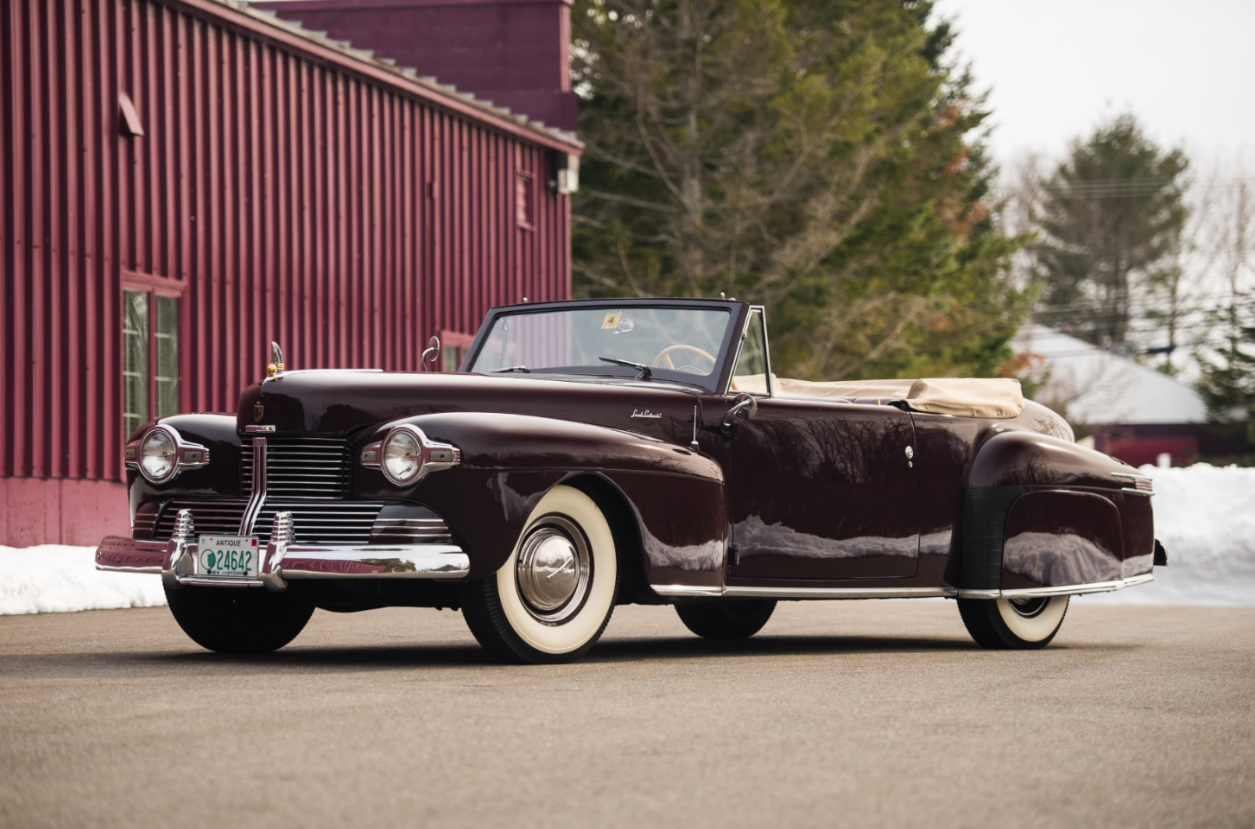
It all changed for Lincoln in 1940. They were among the first to really move into the “modern” era of automobiles. The Model K that dated to 1931 was out of production and the Lincoln-Zephyr and Continental were on sale. These were clean, modern-looking designs and the Continental was just stellar.
In December of 1941, everything changed. America was at war and automobile production was about be put on hold for years. Very few 1942 model year cars were built in the U.S. The 1942 Continental was the rarest of the pre-war Continentals with just 136 Cabriolets and 200 Coupes built.
All were powered by a 4.8-liter V-12 that made 130 horsepower. The restoration on this car is described as “older” but “well-preserved.” It’s known to have been part of quite a few collections over the years and comes out of the Dingman Collection after only about 18 months as a part of it. See more about this car here and more about this collection here.
For sale at Galantica Collection | Crans-Montana, Switzerland
Photo – Galantica Collection
American cars of the late-1970s weren’t great. There were some that were okay, but why Peter Monteverdi chose the Plymouth Valiant as a base for his new boutique luxury car, the Sierra, I’m not really sure. He must’ve gotten a hell of a deal.
The Sierra was sold primarily as a sedan and somewhere between 20 and 50 of those were built. He also built a very limited Cabriolet – so limited that only two were built. These were based on the Dodge Diplomat of the era. The cabriolet has a 178 horsepower, 5.9-liter V-8. Styling was by Fissore and it helped turn the dud of a Dodge into something resembling a nice Fiat.
Monteverdis are rare cars, but being one of just two, this Sierra Cabriolet is rarer than most. This one is for sale in its native Switzerland for $207,500. Click here for more information.
Offered by Artcurial | Paris, France | April 8, 2018
Photo – Artcurial
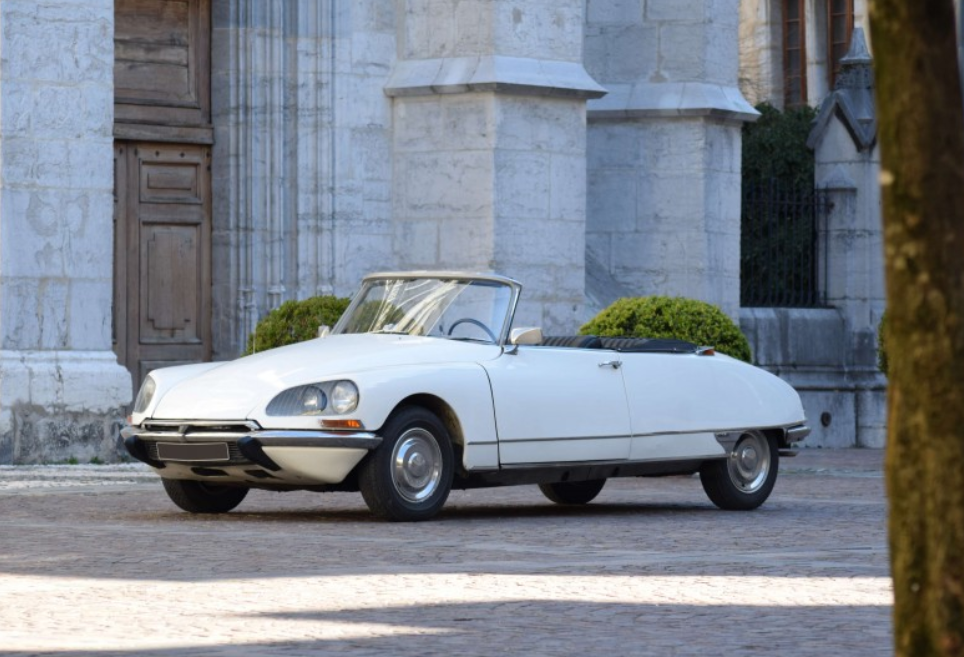
The Citroen DS is one of the classic French cars. In production for 20 years (from 1955 through 1975) it was offered in a variety of submodels and body styles. The DS 21 was introduced for the 1965 model year and featured a few improvements over the original DS 19 models, namely it offered electronic fuel injection – one of the first mass market cars to do so.
The DS 21 also had a larger engine: a 2.2-liter straight-four making 109 horsepower. It would later be one-upped in 1973 by the 141 horsepower DS 23. The DS is also famous for its hydropneumatic suspension: there aren’t springs at each wheel but rather, a hydraulic accumulator. The effect was akin to floating down the road. For extra weirdness, the DS came with a single spoke steering wheel. Why not?
Most DS models were sedans, but Citroen did offer a factory convertible (or “Cabriolet d’Usine”) which was actually bodied by Henri Chapron. It was only sold between 1958 through 1973 and in very limited numbers – just 1,365 factory convertibles were built. and this is one of only 95 built in 1968. Chapron bodied some other DS convertibles outside of these “factory” cars and they are even more expensive.
The consignor has owned this car since 2000 and it was restored since that acquisition. DS Cabriolets are some of the most common-looking big money French cars out there. This one is estimated to bring between $160,000-$250,000. Click here for more info and here for more from this sale.
Offered by Gooding & Company | Amelia Island, Florida | March 9, 2018
Photo – Gooding & Company
The 212 Europa was actually a series of 212 Inter cars that had an “EU” suffix on their chassis and engine numbers. The 212 Inter was introduced in 1951 and lasted through 1952. In all, just 78 examples were made and only the last 29 of those were identified as Europas. It was sort of a stepping stone to the 250 Europa that burst on the scene in 1953.
This car has wonderful style. Bodied by Ghia, it appeared on the 1952 Geneva and Turin Auto Show stands. It was one of two cars like this they built but the cars differ slightly as they were different colors and had minor trim differences. The rear fender skirts make this thing look amazing. It’s powered by a 2.6-liter V-12 making 170 horsepower.
This car has a pretty amazing history. It was in the Detroit area in the 1960s and in 1972 it was found at a swap meet (it had a Corvette engine in it at that point) and traded hands for $600. Ferrari hunter Tom Shaughnessy was able to rescue it in 2011 and it was restored over a six year period thereafter by its next owner. It’s a classic Ferrari with great 1950s styling and it should bring between $1,800,000-$2,200,000. Click here for more info and here for more from this sale.
1930 Duesenberg Model J Imperial Cabriolet by Hibbard & Darrin
Offered by RM Sotheby’s | Amelia Island, Florida | March 10, 2018
Photo Courtesy of RM Sotheby’s
This is a wonderful Model J Duesenberg. The profile view of this car screams “stately, high-quality automobile.” Introduced in 1929, the Model J was the crowning achievement of American motorcars up to that time (and for decades afterward).
It’s powered by a 6.9-liter straight-eight engine that puts out 265 horsepower. Every Model J’s body was custom built, and this car was bodied by Parisian coachbuilders Hibbard & Darrin. It’s a big, opulently-appointed car with an over-sized trunk out back to carry the luggage of the original owners: William Randolph Hearst and Marion Davies. They carted this car all over the world with them on their travels.
This car has known ownership history more or less going back to when it was new. It’s been owned by famed members of the Auburn Cord Duesenberg Club and was restored by a master Model J restorer. It was freshened after 2003 and hasn’t really been shown since. It’s a well-known Model J that has one of the most-famous first owners imaginable. You can find out more here and see more from RM here.