American Underslung Scout

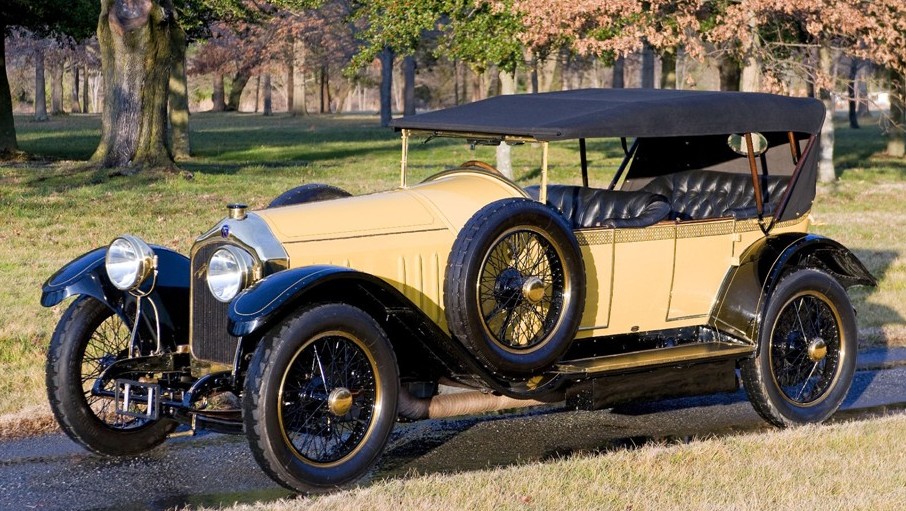
1913 American Underslung Model 22-B Scout

For Sale at Hyman Ltd | St. Louis, Missouri
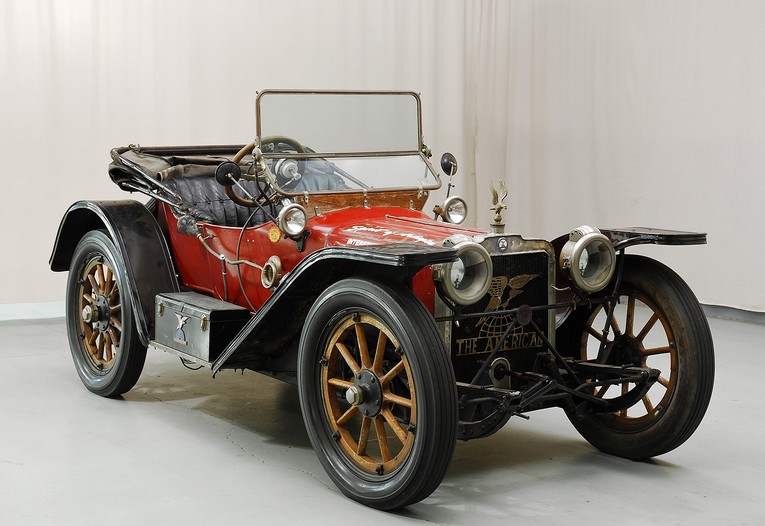
Photo - Hyman Ltd.

Photo – Hyman Ltd.

The American Motor Car Company of Indianapolis, Indiana built some of the coolest pre-WWI cars in America. The Underslung model line – which was new for 1909 – featured a, well, low-slung chassis that make the cars look incredible sporty.

The Scout was the two-passenger roadster. Larger cars were also offered. The Model 22 was offered for 1912 and 1913 only and 1914 was the final model year for the American Underslung. It uses a 4.1-liter straight-four making about 25 horsepower.

This car was restored in the 1980s and has been used heavily since. The listing on Hyman Ltd’s website says it better than I can, so read more about it there. In summary, it says that this car has more character than just about anything else you could drive – and they’re right. It’s an amazing old car that can be used and driven. You could have a lot of fun in this car. It is priced right too, for what it is (in the $100,000 range). Check out more cars for sale by them here.

Here’s video of a similar car:
Marmon “Pace Car” Speedster

1923 Marmon Model 34B Speedster

Offered by H&H Auctions | Duxford, U.K. | April 24, 2014

Photo - H&H Auctions

Photo – H&H Auctions

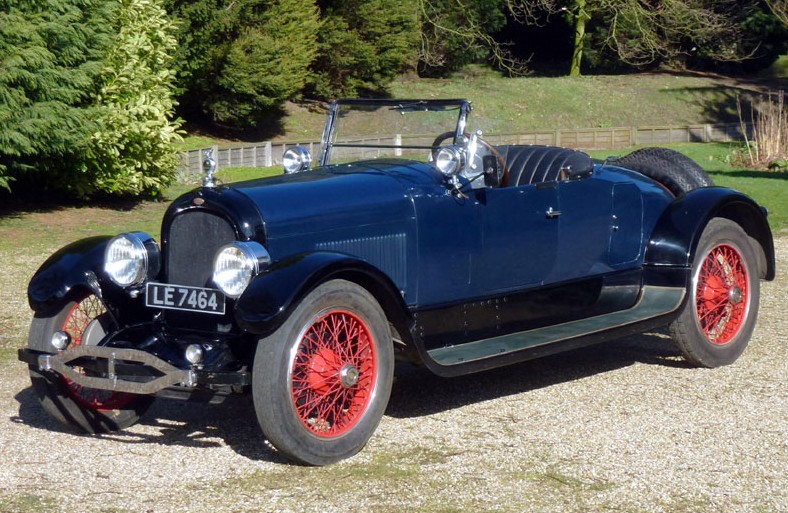
Marmon is one of the great pre-war American automobile marques. Their association with the Indianapolis 500 alone makes them legendary, having won the inaugural race. The company was actually based in Indianapolis as well.

The Model 34 was introduced in 1916 – amidst the looming backdrop of world war. The model would last through 1923 – making the Speedster you see here from the last year of manufacture. The car uses a 34 horsepower 5.5-liter straight-six. The body was modeled after the Barney Oldfield-driven 1920 Indy 500 pace car. A Model 34 was also driven coast-to-coast by Erwin “Cannonball” Baker as a publicity stunt.

This car presents well as an older restoration and was used in two different British television series. It actually looks like something that would be fun to drive – not to mention it would surprise people that it is something as rare as a Marmon. It should sell for between $46,500-$58,000. Click here for more info and here for more from H&H Auctions.

Update: Sold $90,300.

Here’s video of a similar car:
MG Magna F1

1932 MG F-Type F1 Coupe

Offered by Coys | Essen, Germany | March 29, 2014

Photo - Coys

Photo – Coys

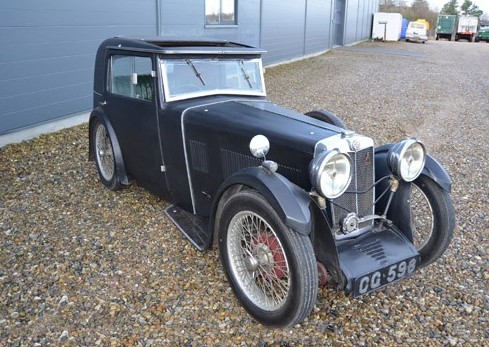
The MG F-Type – also known as the Magna – was introduced in 1931 and became available in three types: the F1, F2, and F3. The F2 was only available as a two-seat roadster while the F1 and F3 was a four-seat tourer or four-seat coupe. Production ended after 1932, with the F1 being available both years.

It uses a 1.3-liter straight-six making 47 horsepower. It can do 70 mph (if you dare – those are practically bicycle tires). This car is basically all-original and cost £286 when new. The F-Type Magna was replaced by the L-Type for 1933.

In total, 1,250 F-Types were built – I’m unsure of how many F1 “Foursome” Coupes were built – but it is believed that only three remain. This very nice unrestored example should sell for between $55,000-$70,000. Click here for more info and here for the rest of Coys’ Techno Classic lineup.

Update: Sold $76,700.

ex-Scuderia Ferrari Alfa 6C 1500 SS

1930 Alfa Romeo 6C 1500 Super Sport by Zagato

Offered by Coys | Essen, Germany | March 29, 2014

Photo - Coys

Photo – Coys

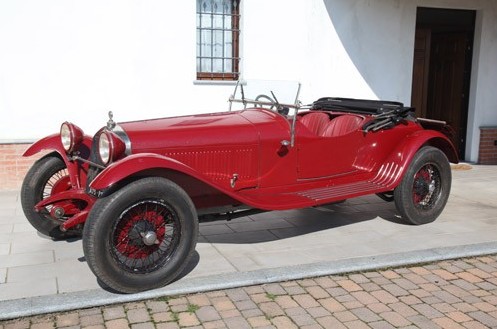
The Alfa Romeo 6C 1500 was the first of Alfa’s legendary 6C/8C models. It was a lightweight, low-slung sports car – especially when compared to the big touring car it replaced. And with bodies from the likes of Zagato, their sportiness would never be questioned.

New for 1925, the 6C 1500 used a 1.5-liter straght-six and in blown Super Sport trim, this car wears a supercharger that pushes output to 76 horsepower. Top speed was 87 mph. It was more powerful than many of the 6C 1750 models that were introduced as this car’s replacement in 1929.

This 1930 model is one of the last 6C 1500s built and it was delivered new to Scuderia Ferrari in April of 1930 – Ferrari sold it three months later. It has period competition history as follows:

  • 1933 Mille Miglia – 16th, 2nd in class (with Giuseppe Mignini)
  • 1937 Mille Miglia – 10th, 1st in class (with Pasquale Contini and Salvadori)
  • 1938 Mille Miglia – 21st, 1st in class (with Felice Bellandri and Vegelli)

The car was restored in 1980 and has been in current ownership for 30 years. It is obviously eligible for the historic running of the Mille Miglia. About 3,000 6C 1500s were built but only 12 of those were supercharged Super Sports like this one. I don’t even want to guess how many came through Scuderia Ferrari. This is a big time, big money car. Read more here and see more from Coys here.

Update: Not sold.

Edsel Bermuda

1958 Edsel Bermuda

Offered by Mecum | Houston, Texas | April 11, 2014

Photo - Mecum

Photo – Mecum

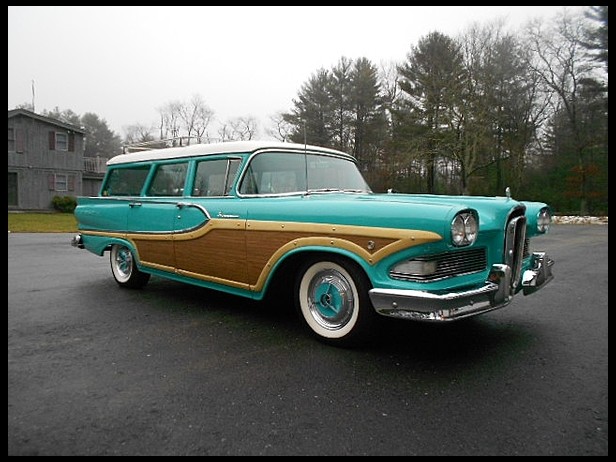
I love Edsels. I also love station wagons. Guess what I think of this car. That’s right – I love it. One great thing is the color combination. Woodies (even though this is fake wood on the side) look great when accented with certain colors – maroon, black, and teal being the chief among them.

The Edsel range was only in production for three model years: 1958, 1959, and 1960. The Bermuda was only built in 1958. It’s a four-door wagon that was available in six or nine-passenger variants. All are powered by a potent 5.9-liter V-8 making 303 horsepower. It was priced at $3,155.

Being a one-model-year-only car, only 2,235 Bermudas were built – and only 1,456 were the six-passenger version. Considering its production numbers, this wagon is probably more affordable than you’d think. You can read more here and check out the rest of Mecum’s Houston lineup here.

Update: Sold $55,000.

Moynet LM75

1975 Moynet LM75

For Sale by Atelier 46 | Courbevoie, Paris, France

Photo - Atelier 46

Photo – Atelier 46

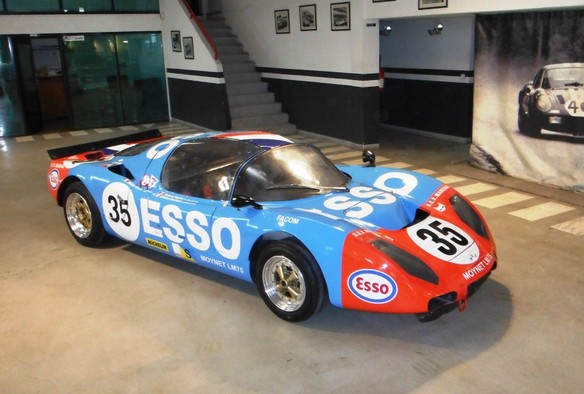
Andre Moynet was a French war hero. He flew 115 wartime missions during World War II and dabbled in politics and sport after it was over. He was later a test pilot and worked for Matra. When he found some spare time, he built this sports prototype for the 24 Hours Le Mans (after he took Matra there in 1968).

This sleek prototype is powered by a Chrysler/Simca 2.0-liter straight-four making 190 horsepower. The Esso colors are what it wore in the 1975 24 Hours of Le Mans – the only race in which this car competed. It was driven by three women: Christine Dacremont, Michele Mouton, and Marianne Hoepfner. They finished 21st and won their class.

The car sat for three decades before being completely restored and competing in the Le Mans Classic in 2010. Price is not available but it is the only Moynet automobile ever built (under his own name – he designed Matra’s Le Mans car too). Click here for more info or to purchase this piece of history.

A Sporty Turcat-Mery

1913 Turcat-Mery Model MJ Boulogne Roadster

For Sale by Fiskens | London, England

Photo - Fiskens

Photo – Fiskens

Turcat-Mery was a French automobile manufacturer that was actually around for a decent amount of time, but hardly anyone has heard of them. Their cars certainly don’t come up for sale often today – which is why, when I saw this one for sale at Fiskens (one of the world’s premier collector car dealers), I had to feature it.

The company was founded when two Mery brothers – and their brother-in-law, Leon Turcat – wanted to improve upon the Panhard et Levassor. Their first car went on sale in 1899. The company started competing in races in 1903 and won the inaugural Monte Carlo Rally in 1911.

Financial problems arose in 1921 and the company shut its doors in 1928. This gorgeous, sporty pre-war roadster uses a 6.1-liter straight-four. It is one of only a handful of models from this company left and is possibly the only MJ Roadster in existence. You can find out more (or buy it) here.

GT40 Prototype

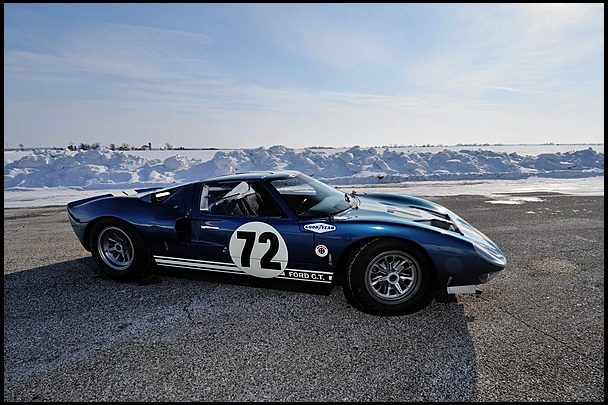
1964 Ford GT40 Prototype

Offered by Mecum | Houston, Texas | April 12, 2014

Photo - Mecum

Photo – Mecum

Everyone knows the story of how the Ford GT40 came into existence – the Ford vs. Enzo Ferrari showdown that led Ford to dominate the 24 Hours of Le Mans for the latter part of the 1960s. The first GT40 made its world debut at the New York Auto Show in April 1964.

The first two GT40 prototypes were wrecked in Le Mans testing. Chassis #2 was repaired and found its way into the 1000km of the Nurburgring. But Ford needed more cars, so two more prototype were built. This was the second of those additional prototypes. This one was the first one built with a lighter steel chassis. It was also among the first group of GT40s to actually compete at the 24 Hours of Le Mans

The competition history of this car includes:

  • 1964 24 Hours of Le Mans – 44th, DNF (with Richie Ginther and Masten Gregory)
  • 1964 Nassau Speed Week – DNF
  • 1965 Daytona 2000km – 3rd (with Ginther and Bob Bondurant)
  • 1965 12 Hours of Sebring – DNF (with Ginther, Phil Hill & Ken Miles)

The car was retired from competition prior to the 1965 24 Hours of Le Mans. Ford restored the car and sent it on a promotional tour of the auto show circuit. In 1971, it was sold to its first owner. A restoration to race condition began in 1973 and wasn’t completed until after 2010.

This is one of two Shelby American-prepared GT40s that raced and it’s one of only four Ford 289-powered GT40 prototypes. That engine, the 4.7-liter V-8, also called the Cobra home. This is the second-oldest GT40 in existence. and it is a big money car. Read more here and check out more from Mecum here.

Update: Sold $7,000,000.

Lister-Jaguar “Knobbly”

1958 Lister-Jaguar “Knobbly” Prototype

Offered by RM Auctions | Monaco | May 10, 2014

Photo - RM Auctions

Photo – RM Auctions

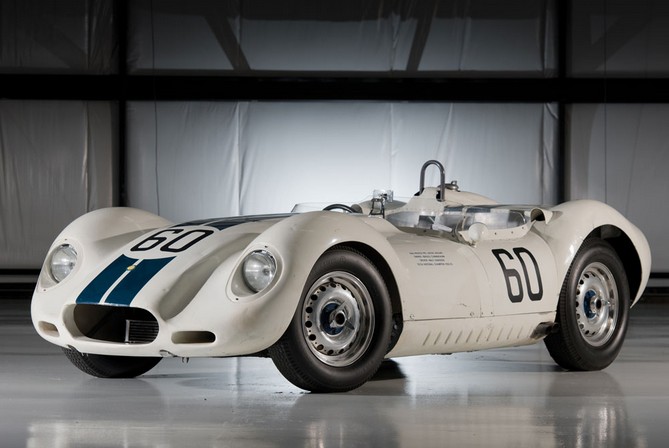
These cars are often referred to as “Knobbly”s because of their curvy shape. In all honesty, I didn’t know that was the reason (really, how many people do?) but every time I saw one of these I assumed that was the case. They are kind of knobby-looking cars. And I’m not sure if that’s a compliment or not.

Lister built Bristol-powered racers between 1954 and 1957. In 1957, they reworked the car to house a Jaguar straight-six (from the all-conquering D-Type). This car has the 265 horsepower 3.8-liter straight-six from Jaguar. The “Knobbly” debuted in 1958 and this was the first one built. It was originally conceived as a one-off racer but it’s popularity led them to realize they could make money selling these and 11 were built in total.

This car was originally supposed to go to the famed Ecurie Ecosse team, but Briggs Cunningham finagled his way into owning it (and another one). The racing history for this car includes:

  • 1958 12 Hours of Sebring – DNF (with Archie Scott-Brown and Walt Hansgen)
  • 1958 SCCA National Champion – 1st (with Walt Hansgen – he won a lot of races this season in this car)
  • 1959 12 Hours of Sebring – 12th (with Hansgen & Dick Thompson)

Briggs Cunningham owned the car into the mid-1960s before selling it. It has had a few owners since and was most recently sold at RM’s Monterey event in 2013. The pre-sale estimate is not available right now, but it sold about 6 months ago for $1,980,000. You can check out more here and see more from RM’s Monaco sale here.

S/N: BHL EE 101

Update: Sold $1,618,294.

Ache Freres

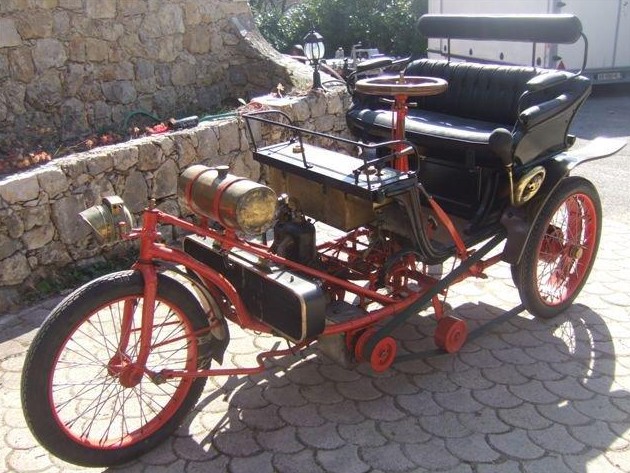
1902 Ache Freres Type TM

Offered by Osenat | Fountainebleau, France | March 16, 2014

Photo - Osenat

Photo – Osenat

This is one of those early motorized vehicles where not much is known about it because only a handful were built in a shop somewhere. Well we know where the shop was: Agen, France. We know who built them: the Ache Brothers. Well sort of. The company could have also been called something else.

The engine is a 669cc single-cylinder De Dion – and at least one other example of these is powered by an Aster engine. As you can see, the layout of this three-wheeler is bizarre compared to modern vehicles. Similar trikes were constructed by companies like La Nef.

The Ache was built from 1902 to 1904 and between 15 and 20 were built in total. This is one of two or three known to survive. It should sell for between $83,000-$110,000. Click here for more info and here for the rest of Osenat’s lineup.

Update: Not sold.