Figoni et Falaschi Bentley

1947 Bentley Mark IV Coupe by Figoni et Falaschi

Offered by Bonhams | Scottsdale, Arizona | January 16, 2014
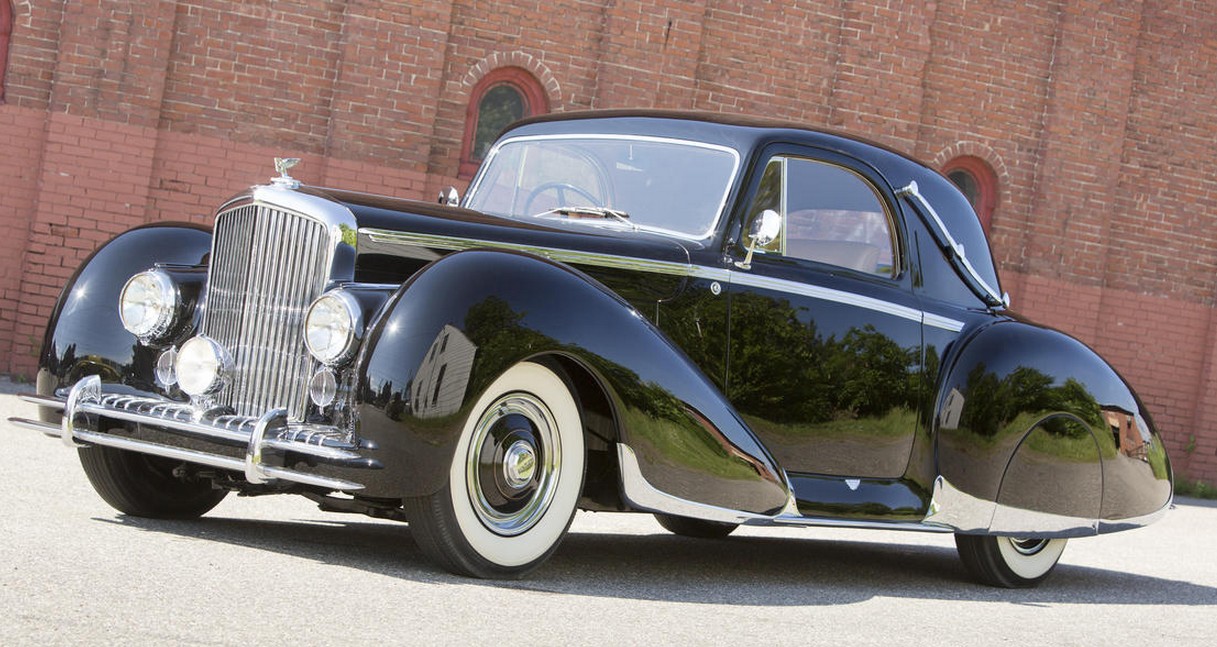
1947 Bentley Mk IV Coupe by Figoni et Falaschi

There’s nothing too remarkable about the Bentley Mark VI. It’s not a car that stands out to me as brilliant or beautiful or anything special other than it being an old, post-war luxury sedan. That is, until you have one of the most prestigious coachbuilders in history slap one of their windswept bodies onto it.

The Mark VI was introduced in 1946 and lasted through 1952. This car uses the 4.25-liter straight-six making about 132 (or “adequate”) horsepower. In total, 5,208 were built in various bodystyles.

This car was built for a Parisian who used it to commute to Monaco. It was originally dark gray and it came to America in 1964 – where it has been since. It was restored in 1990 – and painted red – when it showed up and won Best in Class at Pebble Beach. In 2012 it was repainted black – which is a much better color than red for this car.

According to Bonhams (and Joseph Figoni’s son Claude), this is the only “true” (not sure what that means) post-war Bentley bodied by Figoni et Falaschi. It’s certainly striking and it’s certainly the only one like it in the world. It should sell for between $500,000-$650,000. Click here for more info and here for the rest of Bonhams’ auction lineup.

Update: Sold $605,000.
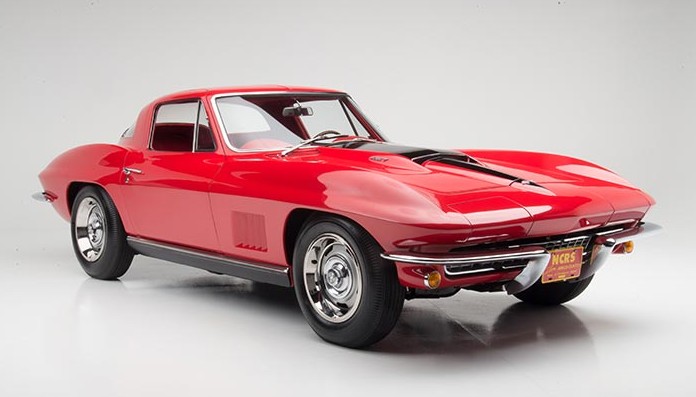
L88 Corvette

1967 Chevrolet Corvette L88 Coupe

Offered by Barrett-Jackson | Scottsdale, Arizona | January 18, 2013

1967 Chevrolet Corvette L88 Coupe

The L88 Corvette is one of the most sought after Corvettes. It was only offered for three years (1967-1969) and 1967 was the only year for the second-generation bodystyle to receive this monstrous engine.

The L88 was a 427 cubic inch (7.0-liter) V-8 that was all aluminium. You could get other 427 Corvettes, but this package had lightweight everything and a really high compression ratio which required 103 octane (!) fuel. Chevrolet tacked on some additional required goodies like Positraction, heavy-duty suspension and brakes, and they graciously deleted the radio and air conditioner (so people would be less tempted to drive it on the road – it was supposed to be a street-legal race car).

All of these extras (or deletions) tacked on about an extra 35% to the purchase price. Which might explain why only 20 were sold in 1967. That makes this one of 20 C2 Corvettes with this outrageous engine and option package. Horsepower was rated at 430 but dyno’d at 560. 1968 and 1969 L88 models trade for about $500,000. 1967 models are significantly more expensive and this one should bring around $1 million. Click here for more info and here for more from Barrett-Jackson in Arizona.

Update: Sold $3,850,000.

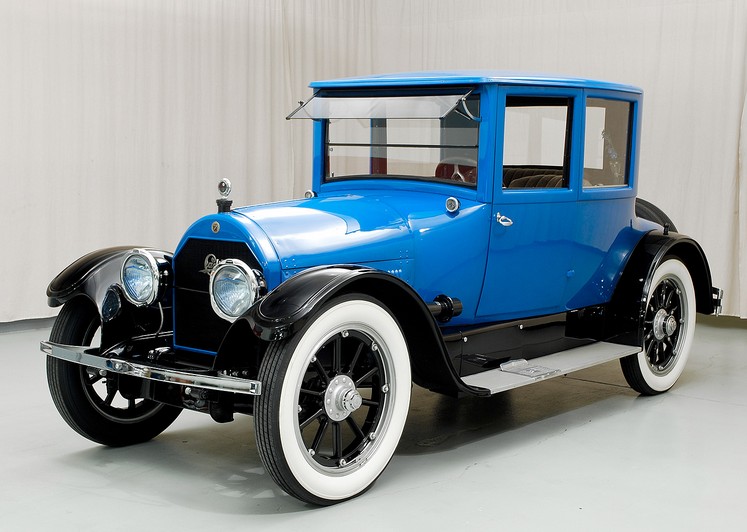
1918 Cadillac Coupe

1918 Cadillac Type 57 Victoria Coupe

Offered by Mecum | Kansas City, Missouri | December 7, 2013

1918 Cadillac Type 57 Coupe

I think this is a very good-looking car. Cadillac has long touted that they are the “Standard of the World” and it’s early cars like this that make you believe it. Yes, they produced cars with twice as many cylinders, but this was one of the first big-engined road cars you could buy.

Cadillac’s L-Head V-8 engine was introduced in 1914 and became the first mass-produced V-8 engine in Cadillac’s 1915 models. It featured 5.2-liters of capacity and made 70 horsepower. The Type 51 was the first model to carry this motor and it evolved over the years, with the Type 61 ending the model’s run in 1923.

The Type 57 was available in the late Teens and this Victoria Coupe was an attractive, if not restrained design that offered a lot of power for those who wanted luxury without all the flash. I’m estimating that this car sells for between $40,000-$50,000. Click here for more from Mecum and here for more on this car.

Update: Sold $29,000.

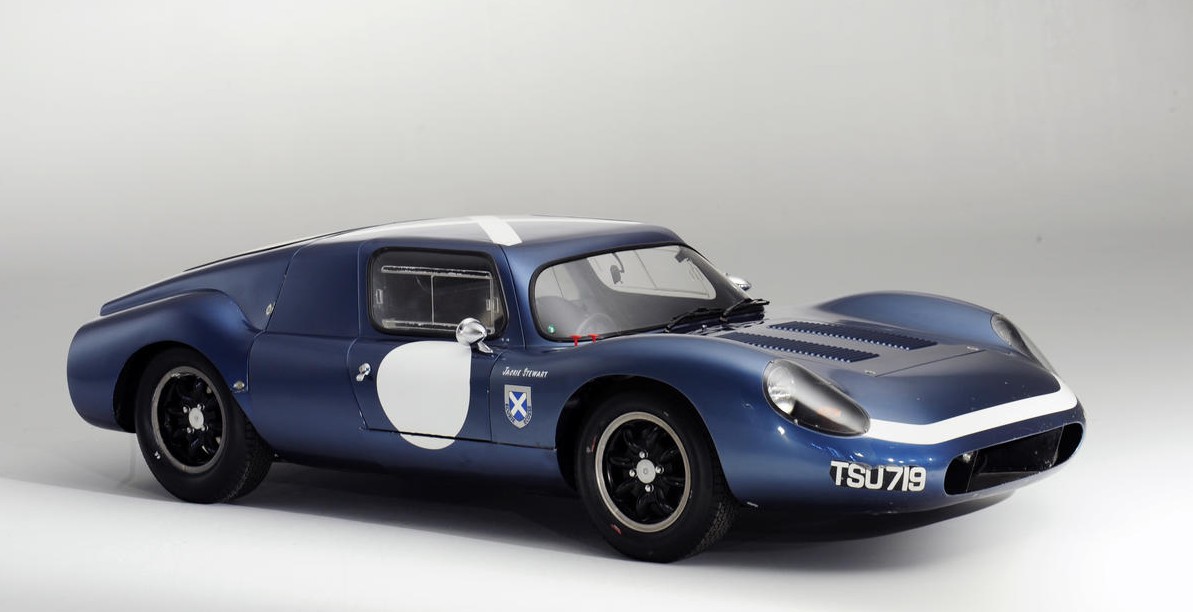
Tojeiro EE

1962 Tojeiro EE Buick Coupe

Offered by Bonhams | London, U.K. | December 1, 2013

1962 Tojeiro EE-Buick Coupe

Bonhams 2013 London sale has something amazing going for it: seven Ecuri Ecosse team cars and their famous team transporter are all being offered for sale. Let’s start with the team’s story…

Ecurie Ecosse – which is French for “Team Scotland” – was a Scottish racing team whose cars were always painted in this dark “Flag Blue Metallic” paint. The team was founded in 1952 by David Murray and Wilkie Wilkinson. They competed in Formula One, Formula Two and the 24 Hours of Le Mans – which they won, twice. The original team disbanded in the 1960s but their roster of former drivers is illustrious to say the least: Innes Ireland, Masten Gregory, Roy Salvadori, John Tojeiro and Jackie Stewart.

The last two have something in common: this car. The team had raced Jaguar D-Types in the 1950s and by 1962, they needed something new. So Murray met with Tojeiro, who had been designing his own sports racers for a few years, and had him build the team a new race car. The Tojeiro EE (for Ecurie Ecosse) was the result.

It was ready, literally, just in time for the 1962 24 Hours of Le Mans. It was Climax-powered for that race where it finished 38th (a DNF) with drivers Jack Fairman and Tom Dickson. For the 1963 British national sports car season, the team fitted a new aluminium-block 3.5-liter Buick V-8 making around 230 horesepower and hired a young man named Jackie Stewart to drive the car. He managed to win one race with it.

This car has been at Goodwood a few times in the past decade and is coming from an amazing Ecurie Ecosse collection. Only two of these cars were built (the other had a Ford V-8 the last time it was raced). This one should sell for between $290,000-$370,000. Click here for more info and here for more from this awesome sale.

Update: Sold $350,265.

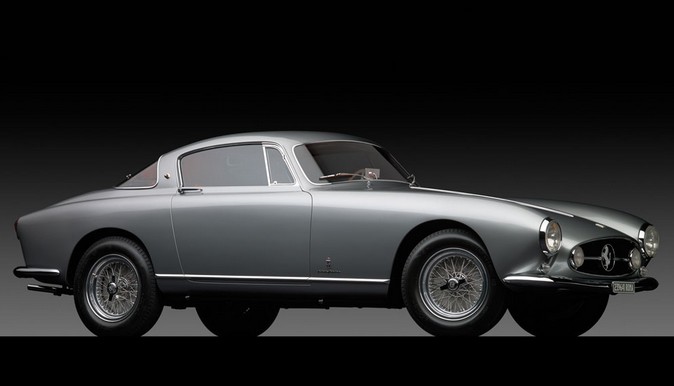
Custom-Bodied 250 Europa GT

1955 Ferrari 250 Europa GT Coupe by Pinin Farina

Offered by RM Auctions | New York, New York | November 21, 2013

1955 Ferrari 250 Europa GT Coupe by Pinin Farina

The 250 is one of Ferrari’s best-known classic model lines and also one of the longest lasting. The 250 started as a race car in 1952. A road-going version came a year later and the famous 250 GT series of cars started with the 250 Europa GT in 1954.

The Europa GT was the first road car to use the 3.0-liter Colombo V-12 engine. It made 217 horsepower in its introductory form. This model was also (for the most part) the last of the coachbuilt 250 GT cars. After this, nearly every 250 GT shared more of a standardized design, based on which model it was, of course.

This is number six of eight custom-bodied Europa GTs. It is definitely unique with that long sloping nose and a very alien looking grille with the big prancing horse in the center. The interior is orange (why not?) and was tailored by Parisian luxury designer Hermès.

Sold new in Rome, this car soon found its way to Seattle where it raced competitively (only once, although it did win its class). The restoration was completed in 2006 and it has won awards at the Cavallino Classic and Amelia Island Concours. This is the 26th Europa GT built of a total of 43 and it is the only one with this custom Pinin Farina coachwork. It is expected to sell for between $2,250,000-$2,750,000. Click here for more info and here for the rest of RM’s lineup.

Update: Sold $2,420,000.

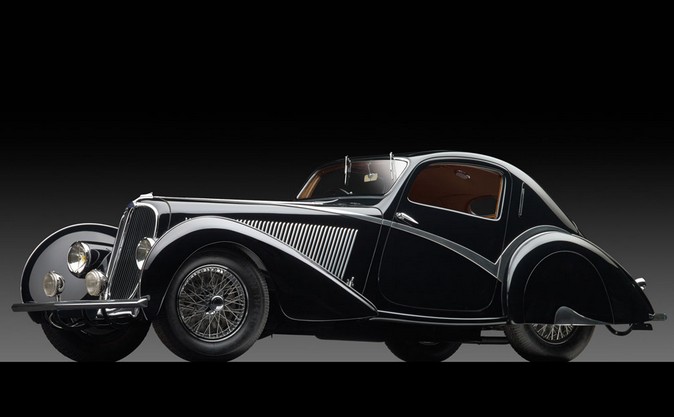
Figoni & Falaschi Teardrop Delahaye

1936 Delahaye Type 135 Competition Court Teardrop Coupe by Figoni et Falaschi

Offered by RM Auctions | New York, New York | November 21, 2013

1936 Delahaye Type 135 Competition Court Teardrop Coupe by Figoni et Falaschi

This car is gorgeous. Elegant, French, swoopy lines wrapped around what was then a sporty chassis and engine combination. This car was the 1936 equivalent of – there is no modern equivalent to compare it to. Today’s car companies don’t wrap art around their race cars. It’s all about function. Style like this is, unfortunately, a thing of the past.

The Type 135 was introduced by Delahaye in 1935. There were other models in the line including the 135M and 135MS. This is the base model, which used a 3.2-liter straight-six making up to 110 horsepower. The Type 135 stayed in production until 1940 and did not go back into production after the war like the other two models.

This Competition model (which features bits and pieces from Delahayes race cars, like a shorter chassis and a very rare four-speed manual transmission) was bodied by Figoni & Falaschi by special order. It was the last of six Type 135 Coupes built by the coachbuilder and it is different from the other five: the headlights, for example, are fared into the fenders. This car was also a Delahaye factory demonstrator before being hidden during WWII.

Ownership history is known from the early-1950s (it was likely owned by Delahaye up to that point). It sat parked in Italy for 40 years until being uncovered in the late-90s and restored by its new American owner. It has been displayed here and there, winning awards wherever it goes. Coachbuilt French Teardrops have been popular for a long time and because they are art-in-motion (just like Joseph Figoni intended) they will likely remain so.

This is one of three short-chassis Figoni coupes that still survives. It is estimated to bring between $3,000,000-$4,000,000. Click here for more info and here for more from RM in New York.

Update: $2,420,000.

A British Star

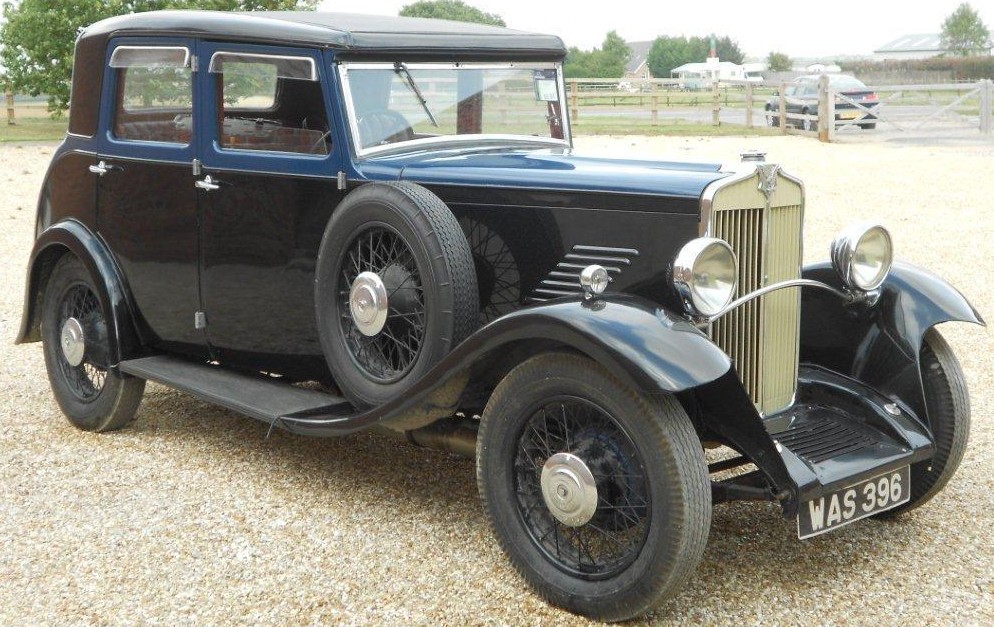
1931 Star Comet Fourteen Coupe

Offered by Bonhams | Harrogate, U.K. | November 13, 2013

1931 Star Comet Fourteen Coupe

This is not to be confused with the American car company also called Star that operated between 1922 and 1928 (there were other as well, but this was the biggest) and was part of Billy Durant’s little empire. This Star was actually founded in 1898 in Wolverhampton by Edward Lisle and William Sharratt who owned the Star Cycle Company since the 1870s.

Cars were sold under the Star, Starling, and Stuart brand names over the years. Star found new owners around 1932 but the economy was tanking and the company, which had become known for their well-appointed and well-made cars, didn’t have a model in the entry-level segment. The Comet Fourteen was introduced near the end of 1931 and it was luxurious and too expensive to make – and even harder to sell in tough economic times. Star folded in 1932 and their leftover cars were sold through 1935.

The Comet Fourteen used a 2.1-liter straight-six making 14 horsepower. Very few were made and even fewer survive. They were available with two or four doors and even though this one has four, Bonhams still lists it as a “coupe.” I don’t know. Anyway, it should sell for between $13,000-$16,000. Click here for more info and here for more from Bonhams’ Harrogate sale.

Update: Sold $12,857.

Matra Djet V

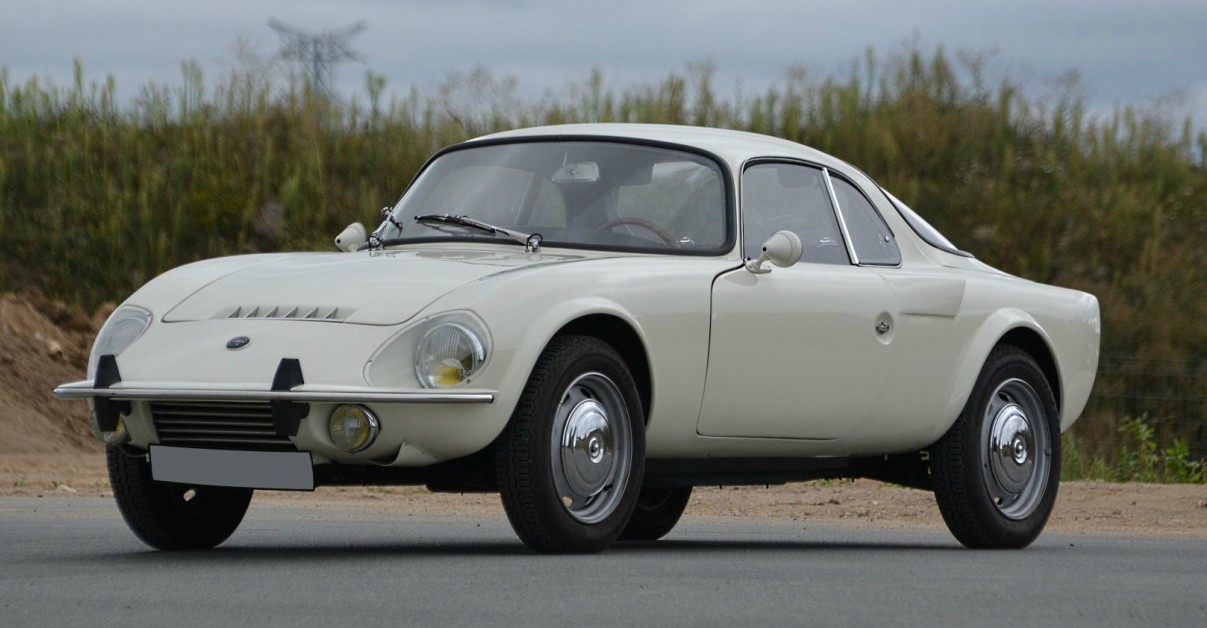
1966 Matra Djet V Luxe

Offered by Artcurial | Paris, France | October 20, 2013

1966 Matra Djet V Luxe

The Matra Djet (which is pronounced “Jet”) was a sports car built by French Matra – who built sports cars, racing cars of all varieties and all kinds of weaponry and aeronautic equipment. Matra stopped producing cars in the mid-1980s, but soldiered on producing cars for other manufacturers until 2003.

The Djet was originally known as the Rene Bonnet Djet beginning in 1962. Near the end of 1964, Rene Bonnet was in financial trouble and Matra bailed them out (and basically took over the company). The Djet was slightly redesigned and put back into production by Matra in 1965 – and it lasted through 1967.

This is a Djet V model, which means it uses a mid-mounted 1.1-liter Renault straight-four making 70 horsepower. It’s a sporty little car that can attain 106 mph. This example has been professionally restored, has been in the same family since new and has only covered 26,000 miles in its life. Only 1,495 Matra Djets were built. It should sell for between $40,000-$55,000. Click here for more info and here for the rest of Artcurial’s auction lineup.

Update: Sold $67,432.

Invicta S1

2009 Invicta S1

Offered by Bonhams | Chichester, U.K. | September 14, 2013

2009 Invicta S1

There are a bunch of people with money out there that think it is their duty to build the world’s greatest supercar. Newsflash: it isn’t. I’m not saying that’s the case with this car – because it was more of a “let’s revive a revered and dead company and build what they would be building had they never gone out of business in the first place” sort of thing.

The Invicta car company shut off the lights back in 1950 (for the second time – the original company closed in 1935 before returning in 1946). In 2002, some investors produced a concept of a new sports car called the S1. Deliveries started in 2003 (I think they were 2004 models) and the company built this lone model through about 2011 (they closed down in 2012).

The body is carbon fiber and the most of the components come from other road cars – including the engine, which, in this car, is a 320 horsepower version of Ford’s SVT 4.6-liter V-8 (a 5.0 could be had with almost twice the power). Top speed is about 170 mph and the car cost upwards of $150,000 when new.

You might be wondering why I’m featuring this car, and here’s my answer: so many of these little car companies pop up with a concept car and then no one ever knows if the thing actually goes into production or not. I was always unsure about this one (I’ve never seen one – have you?) but now I have proof that Invicta S1s were actually produced (I just don’t know how many). But you never see them for sale.

This one should sell for between $93,000-$120,000. Oh, and yes, those are the actual headlights and body-colored wheels, they aren’t aftermarket add-ons. You can find out more here and see more from this sale here.

Update: Not sold.

S/N: 006

Duesenberg J-331

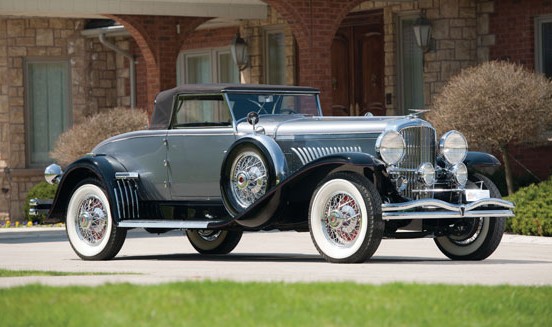
1930 Duesenberg Model J Convertible Coupe by Murphy

Offered by Auctions America | Auburn, Indiana | August 29-September 1, 2013

1930 Duesenberg Model J-331 Convertible Coupe by Murphy

The Convertible Coupe bodystyle by the Walter M. Murphy Company of Pasadena, California, is one of the most-popular bodystyles on Duesenberg Model Js. It’s on the shorter of the two Model J wheelbases, so the proportions are fantastic.

All Model Js had their bodies outsourced to coachbuilders, but there was a factory catalog for customers who purchased the bare chassis and wanted some idea as to where to go for a body. This was the cheapest body in the catalog – at $13,500. About 60 of them were built.

This car was originally built for a member of the du Pont family and delivered new to New York City. It passed through quite a number of owners over the years, having spent a good deal of time recently in a Chicago collection – until now. The restoration is nice but older and it could a “minor freshening.” Look for a price around $900,000. Click here for more info and here for more from Auctions America’s fall Auburn sale.

Update: Sold $1,540,000.