Roamer Roadster

1916 Roamer Six Roadster

Offered by Osenat | Obenheim, France | May 1, 2017
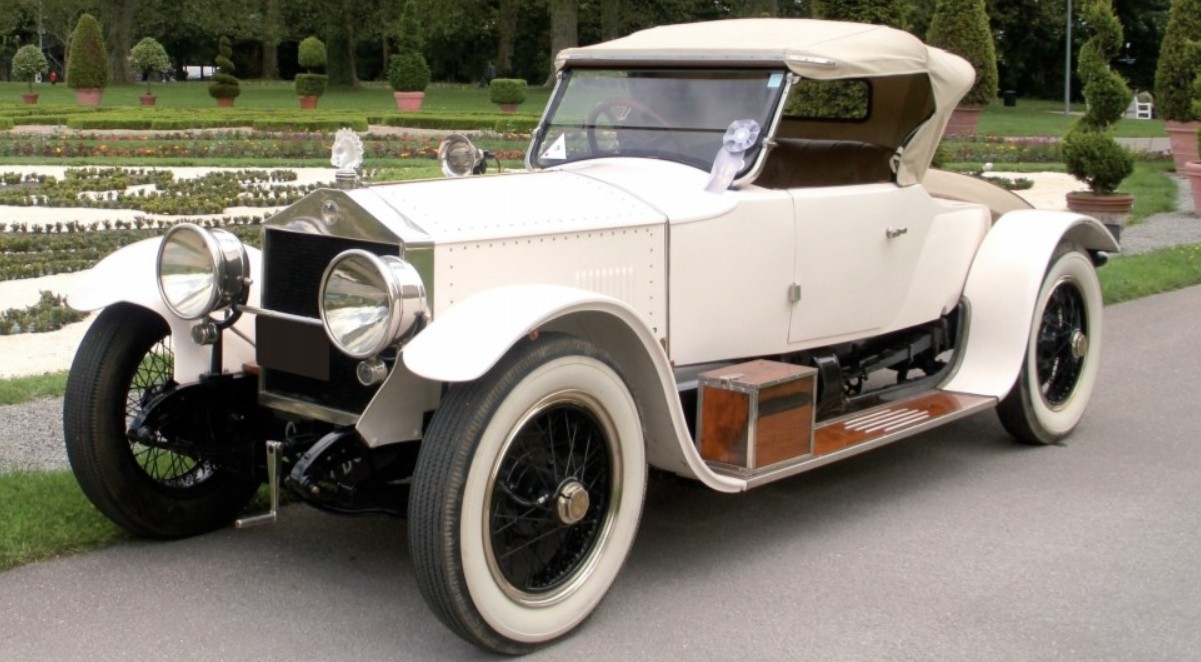
Photo – Osenat

Roamer has an interesting backstory. The New York distributor of the Rauch & Lang electric car (Cloyd Kenworthy) wanted a gasoline car to sell because electrics weren’t as popular as they had once been. He teamed up with a designer (Karl Martin) and Albert Barley, the owner of the Halladay marque. They called their new car “Roamer,” named after a popular race horse. On a related note, “Seabiscuit” is not a great name for a car.

Roamers went on sale in 1916 – making this a launch-year model (though I can’t find a record of a two-door Roadster being available that year). It’s powered by a 23 horsepower, 5.0-liter Continental straight-six. It’s looks are sportier than its actual performance. Some people referred to them as the “Poor Man’s Rolls-Royce.” They certainly looked the part, but were just a lot cheaper. I like Roamers – they are very Gatsby-esque.

This car has done a lot of travelling, as it was delivered new to Australia, later imported to Uruguay, and then to Italy. Not to mention it was built in Kalamazoo, Michigan. The final Roamers were sold in 1930 and they aren’t particularly well-remembered today, though their designs have held up well. This one should bring between $58,000-$80,000. Click here for more info.

Update: Not sold.
1928 Willys-Knight

1928 Willys-Knight Model 70A Saloon

Offered by Brightwells | Leominster, U.K. | May 17, 2017

Photo – Brightwells

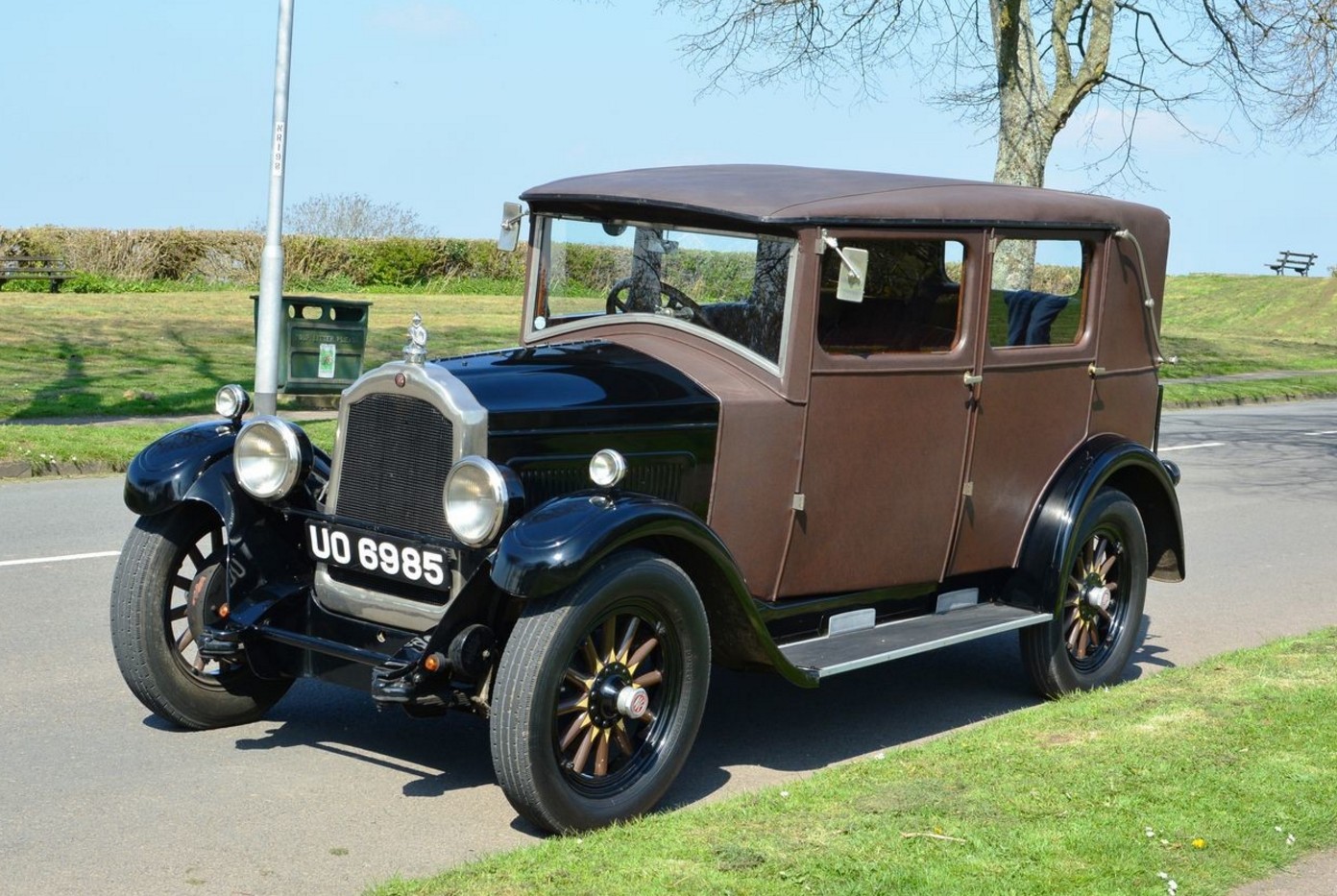
Willys-Knight was a sub-brand of the Willys-Overland company. John North Willys’ little empire started when he purchased Overland in 1907. Many marques followed and his legacy lives on today in the form of Jeep. The Willys-Knight was available from 1914 through 1933.

As was the case with every “-Knight” suffixed automobile marque, the Willys-Knight is powered by a Knight sleeve-valve engine. In this case, it’s a 3.0-liter straight-six making 53 horsepower. The Model 70 was introduced in 1926 and could be had through 1930. Seven body styles were offered in 1928 with this, the sedan, being the most expensive, costing $1,495 when new.

This example was sold new in the U.K. and has remained there its entire life. The current owner acquired it in 2011 and has used it regularly. The body is fabric, which looks very nice and it sports four-wheel brakes. It’s a driver and should bring between $16,275-$18,775. Click here for more info.

Update: Not sold.
Update II: Sold, Brightwells Bicester June 2017, $11,645.

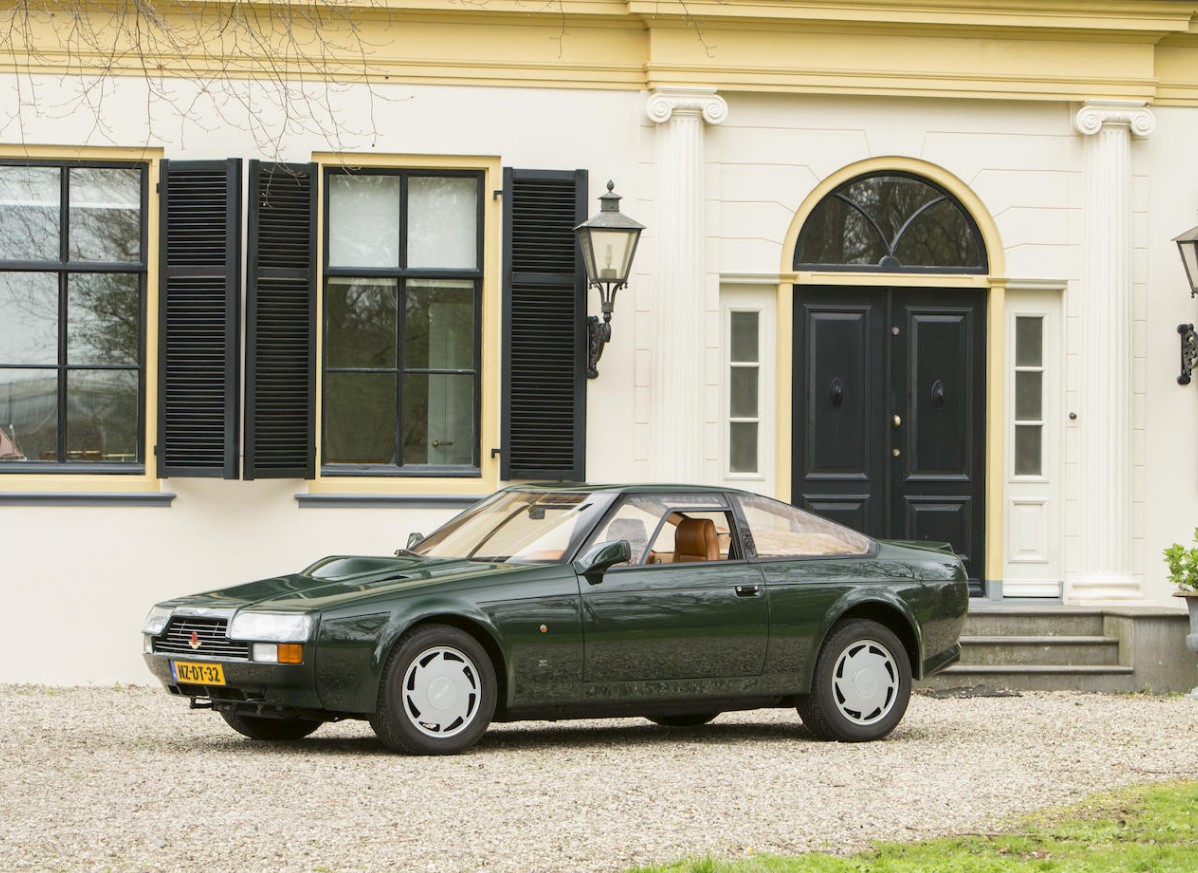
V8 Vantage Zagato

1987 Aston Martin V8 Vantage Zagato Coupe

Offered by Bonhams | Newport Pagnell, U.K. | May 13, 2017

Photo – Bonhams

In the mid-to-late 1980s (and through the early 1990s), Aston Martin was just barely getting by. Like, they were producing cars by the handful before Ford got involved. Take this for instance, the V8 Vantage Zagato, which was built between 1986 and 1990 and resulted in just 89 cars completed.

Aston Martin and Zagato have a long history together and this car reignited the flame. The “V8 Vantage” nameplate has been a popular model name over the years and this V8 Vantage was based on the aging Aston Martin V8 that dated back to 1969. It shares the same, old (Bonhams calls it “proven”) 5.3-liter V-8 spec’d to 432 horsepower, which was pretty serious for 1987. It was quick, too: 60 mph arrived in 4.8 seconds.

Only 52 coupes were built and they were expensive, costing $156,600 when new. But because they came out at the height of the supercar craze, prices skyrocketed and a few years after their introduction they were selling for nearly half a million dollars. This one should bring between $370,000-$500,000. Aston built a further 37 convertibles which are even more sought after. Click here for more info and here for more from this sale.

Update: Not sold.

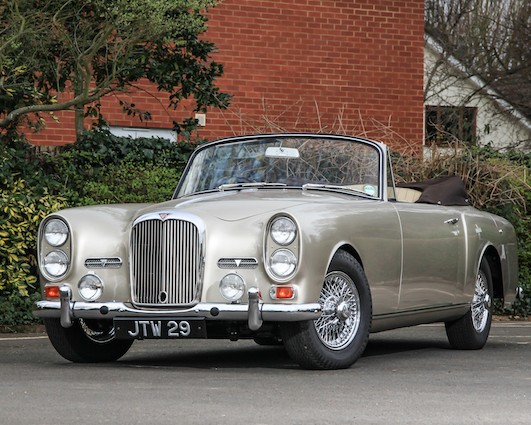
Alvis TE 21

1964 Alvis TE 21 Drophead Coupe by Park Ward

Offered by Historics at Brooklands | May 20, 2017

Photo – Historics at Brooklands

The TE 21 was the penultimate Alvis motorcar ever built. Introduced in 1963, the TE 21 would be offered as a coupe or convertible (er, Drophead Coupe) through 1966. Production on the next model, the TF 21, would wind up in 1967 and Alvis pretty much just became a defense contractor after that.

The TE 21 is powered by a 3.0-liter straight-six making 130 horsepower. These luxurious two-doors were sporty as well, with a top speed of about 110 mph. The body was based on a design by Graber of Switzerland but was massaged and built by Mulliner Park Ward of London. It’s a very attractive car.

This early example was ordered off the 1964 London Motor Show stand and was used regularly through 1975 when it was parked. Rediscovered in 2008 by its current owner, this car was extensively restored and shows beautifully. Showing just over 40,000 miles, this is one of just 352 TE 21s built – and less than 100 of those were drop tops. It should bring between $93,000-$105,000. Click here for more info and here for more from this sale.

Update: Sold $203,761.

Sbarro SB2 Tornado

2005 Sbarro SB2 Tornado

Offered by Oldtimer Galerie Toffen | Toffen, Switzerland | April 29, 2017

Photo – Oldtimer Galerie Toffen

Franco Sbarro founded the car company that bears his name in 1971. Over the years they’ve alternated between building replicas of other cars and wild designs of their own. This car definitely falls under the latter category.

In 2004, Sbarro showed a car called the SB1 – a two-seat roadster based on a Ferrari 550 Maranello. The next year they showed this, the SB2 Tornado, again based on the 550 Maranello. In fact, it still has Ferrari badging around the car, though the catalog lists it as a “1994,” which was long before 550 production began.

It’s powered by the Ferrari 5.5-liter V-12 making 485 horsepower. This is the only example built and I have to say, it’s really not that bad looking. It looks sporty, racy, and like something Ferrari might have built themselves as a concept car. No estimate is available but you can read more about it here and see more from this sale here.

Stellite

1914 Stellite 8/10HP

Offered by Mecum | Indianapolis, Indiana | May 16-21, 2017

Photo – Mecum

Wolseley, which finally went out of business in 1975, was founded in 1901 by Vickers, the former British armaments manufacturer. Early on, they were known for their luxury cars. So when Wolseley designed a light car, Vickers decided to have it produced by another company under their umbrella: the Electric & Ordnance Accessories Co. And it would be a separate marque, Stellite, to preserve the Wolseley brand.

The Stellite was powered by a 1.1-liter straight-four rated at nine horsepower. Cruising speed was a comfortable 30 mph and at launch only two-seater convertibles were offered. The car was introduced for 1914 and went out of production once WWI started. It reappeared briefly after the armistice but was quickly replaced by the 1920 Wolseley Ten.

Stellite was a short-lived British marque that was directly related to one of its oldest. Even Mecum’s catalog lists this as a “Wolseley.” They’re very rare, but not unheard of and this one should probably sell in the $15,000-$30,000 range. Click here for more info and here for more from this sale.

Update: Not sold, high bid $10,000.

Update: Sold, Mecum Chicago 2017, $3,500.

Update: Sold, Mecum Kansas City 2017, $3,750.

NOTE: Dear owner, I’ve $$$ (more than you’re getting at auction) right now for this car. Just email me.

Lotus Excel

1989 Lotus Excel

Offered by Brightwells | Leominster, U.K. | April 20, 2017

Photo – Brightwells

Introduced in 1982, the Excel was a sort of evolution of the earlier Lotus Eclat. It was born out of the limited partnership between Lotus and Toyota when the latter’s Supra was in development.

This later Excel is powered by a 2.2-liter straight-four making 160 horsepower, which was the same engine used in Esprits of the era. There were a few special editions that made more power, but all cars more or less looked identical.

Production lasted 10 years and ended in 1992. It’s a little confusing trying to figure out how many were built because numbers vary everywhere you look. Somewhere between 1,400 and 2,500 were actually built, and about 10% of them are still registered in the U.K. A Lotus is an exotic car, and this is one of the best ways to get an exotic for a reasonable price. Figure $7,500-$8,750. Just hope you don’t suffer any crazy issues. Click here for more info.

Update: Sold $7,818.

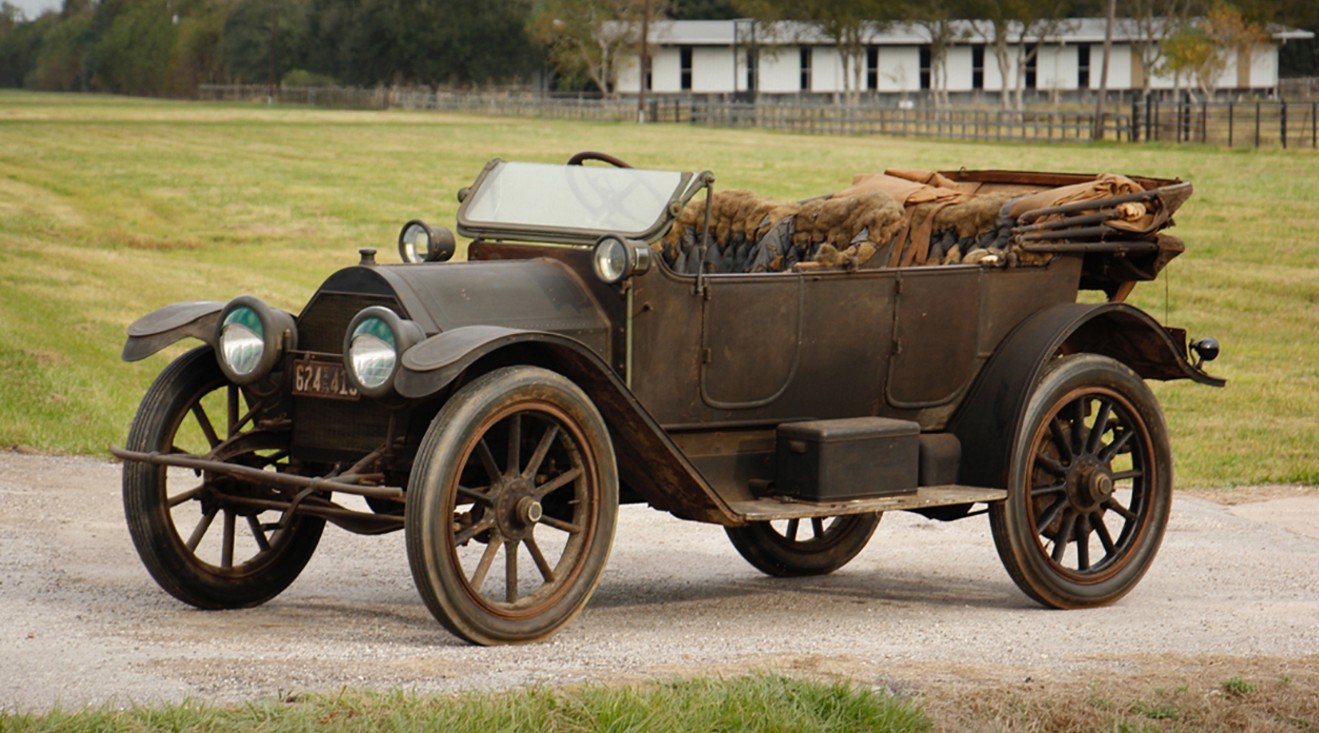
1912 Cadillac

1912 Cadillac Model 30 Four-Passenger Touring

Offered by Worldwide Auctioneers | Arlington, Texas | April 21, 2017

Photo – Worldwide Auctioneers

The Model 30 was introduced by Cadillac in 1909 and it was the first model that really pushed Cadillac to the top of the heap among American automakers. The model underwent slight changes (and engine enlargements) year after year until it was ultimately replaced for 1915.

Over the years, a variety of body styles were offered and this car sports a Four-Door Touring body which was the entry-level style offered in 1912. The price would’ve been $1,800. It’s powered by a 4.7-liter straight-four making more than 40 horsepower. That engine, famously, has a built-in starter. No crank required! If only modern IndyCars could figure out how to use that same, 100-year-old technology.

Let’s talk appearance: this car has a wonderful patina and is all-original. We’ll call it “time warp condition.” And it has an amazing story: last used on the road in 1923, a man bought it from a used car dealer in 1935 for $10! It’s amazing and will sell without reserve. If you have the know-how (or resources) to get this back to roadworthy condition, it’s a must-buy. Click here for more info and here for the rest of Worldwide’s lineup.

Update: Sold $36,300.

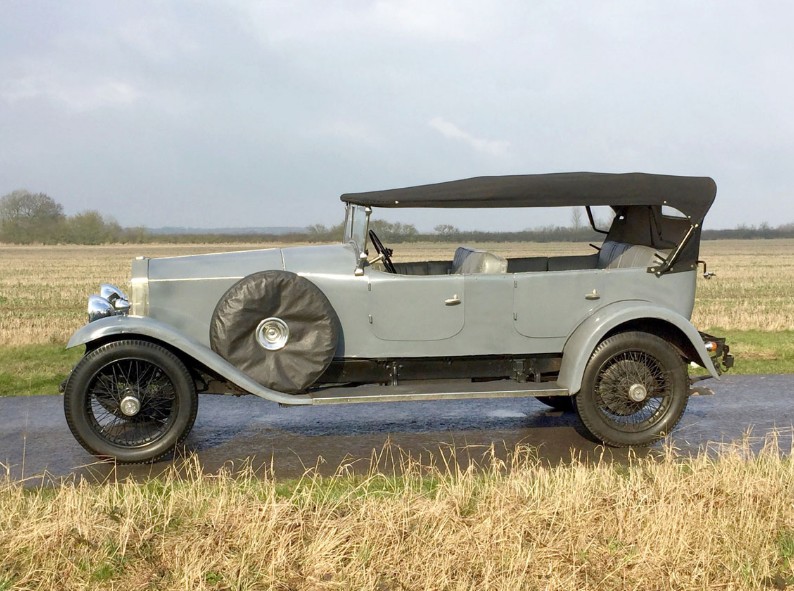
Australian-Bodied Rolls

1923 Rolls-Royce Twenty Open Tourer by Smith & Waddington

Offered by Coys | London, U.K. | April 12, 2017

Photo – Coys

The Rolls-Royce Twenty was introduced in 1922 and it was Rolls-Royce’s “small car” – if you can consider something that is as large as this as “small.” In its early years, Rolls-Royce built gigantic cars, so really, anything less than gargantuan could be considered small. It was their first new model since 1907.

The Twenty is powered by a 3.1-liter straight-six making, presumably, 20 horsepower. With the correct (read: lightweight) body work, the car could attain 60 mph. The simple yet sporty body on this car was constructed by Smith & Waddington of Sydney, Australia.

That’s right, this British-built Rolls was sent as a bare chassis to Australia where its first owner chose to have it bodied locally. Smith & Waddington were the premier Australian coachbuilder for Rolls-Royces. At one point, they were building bodies for 85% of the Rolls-Royces coming into Australia. This car came back to the U.K. in 2013 and has covered 13,000 miles since the engine was rebuilt in 1990.

When production ended in 1929, only 2,940 Rolls-Royce Twenty models had been produced. This one should bring between $56,500-$69,000. Click here for more info and here for more from this sale.

Update: Sold, approximately $56,250.

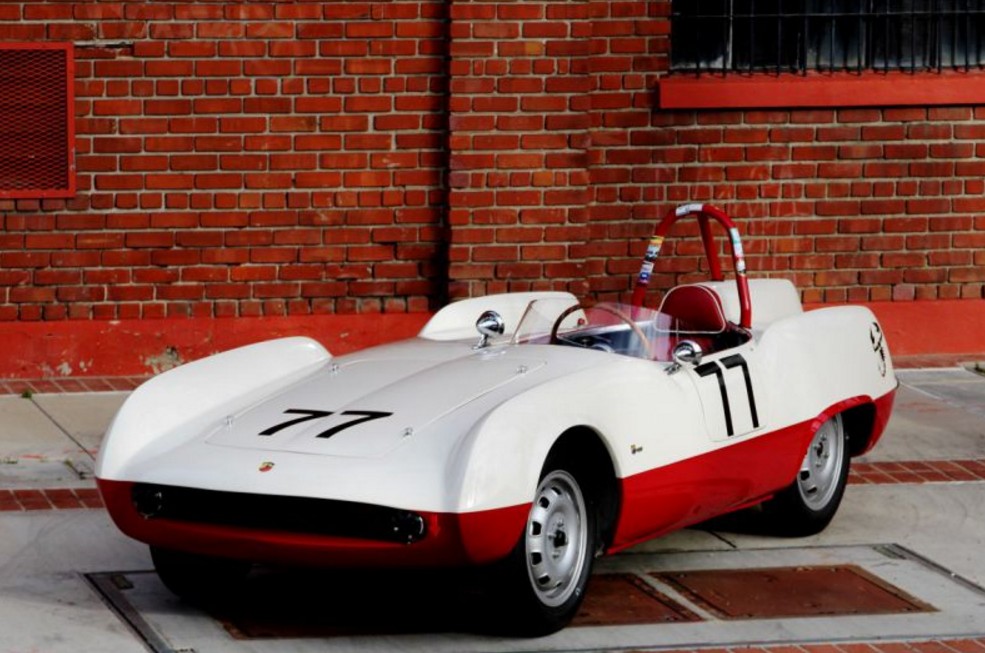
Abarth 207/A

1955 Abarth 207/A by Boano

For sale at Fantasy Junction | Emeryville, California

Photo – Fantasy Junction

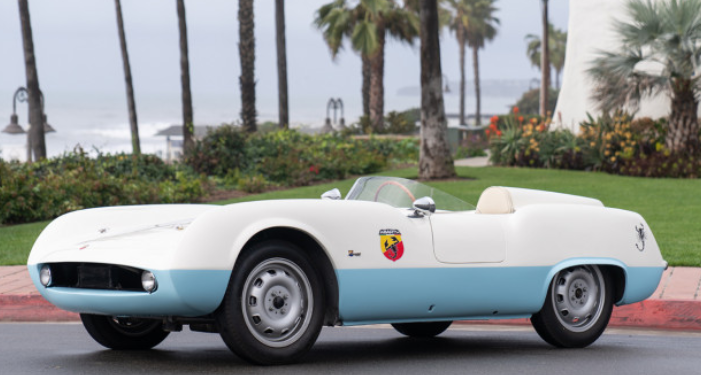
Carlo Abarth’s little company first put its name on cars at the tail end of the 1940s. In the following decades they were responsible for many “Fiat-Abarth” cars and even some original designs of their own. While a lot of these originals were prototype race cars, there were some very obscure cars that could’ve been used on the street too (it would take some creative talking at your local DMV to get a license plate on this one, however).

The 207/A was built in 1955 and it’s a sports racing car built at the request of an importer in the U.S. The 207/A, with sporty body by Boano, was powered by a 1.1-liter straight-four from the Fiat 1100. Of course, Abarth had their way with the engine and it’s more powerful than it would’ve been in any Fiat.

This particular example is the first 207/A built and its period racing history includes:

  • 1955 12 Hours of Sebring – DQ’d, with John Bentley and Jim McGee

It continued to race through 1957 and didn’t see the track again until it entered the historic circuit in 1986. It’s been restored and is fully prepped and ready for the track. Only 10 were built and they do not change hands often. Get your hands on the very first one for $275,000. Click here for more info.

Update, Gooding & Company Amelia Island 2019:

Photo – Gooding & Company

Sold $362,500.