Crouch Steam Car

1899 Crouch Steam Runabout

Offered by RM Auctions | Hershey, Pennsylvania | October 9, 2014
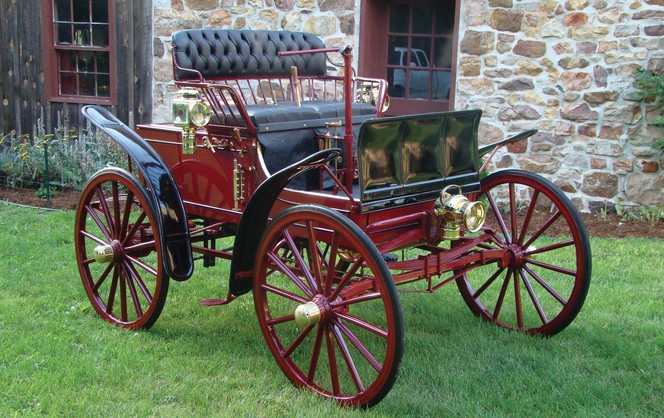
Photo - RM Auctions

Photo – RM Auctions

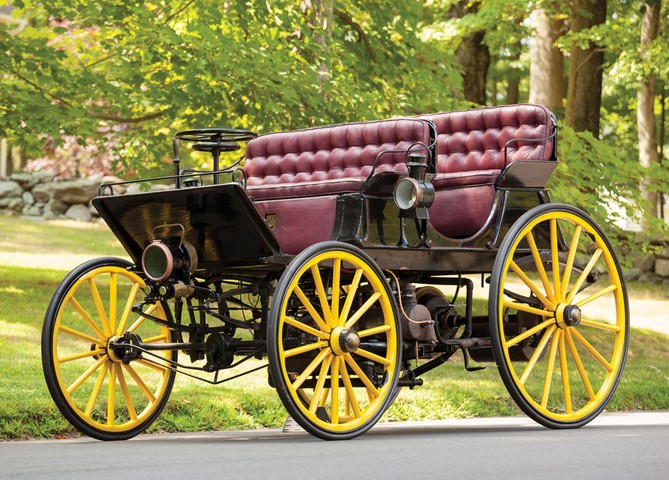
It’s incredible that cars like this survive. W. Lee Crouch began in a machine shop in New Brighton, Pennsylvania in 1895 when he built a gasoline-powered automobile. In 1896, he tried again, finishing the car and entering it in a race (where it did not finish). A few years later he was back at it, this time with steam.

It is thought that Crouch only built three cars – the last two being steamers and this one being both the only survivor, and the only one built by the Crouch Automobile Manufacturing & Transportation Company in Baltimore. It is also thought that all of his previous creations were cannibalized for parts for this car, which uses a twin-cylinder steam engine that puts out eight horsepower (that was probably adapted for an automobile from some sort of marine engine).

It features tiller steering and runs and drives great. It’s a usable, pre-1900 steam car. The story is that this car was discovered in the basement of the original Baltimore Crouch factory during WWII, long after Mr. Crouch had moved on (he was in Ohio by 1914 trying to get a cyclecar company off the ground). It was sold to scrappers, who saved it. Stuff like that just doesn’t happen anymore.

Anyway, this is the only Crouch in existence and it should cost between $60,000-$90,000. You can read more about it here and see more from RM here.

Update: Sold $93,500.
September 2014 Auction Highlights, Pt. II

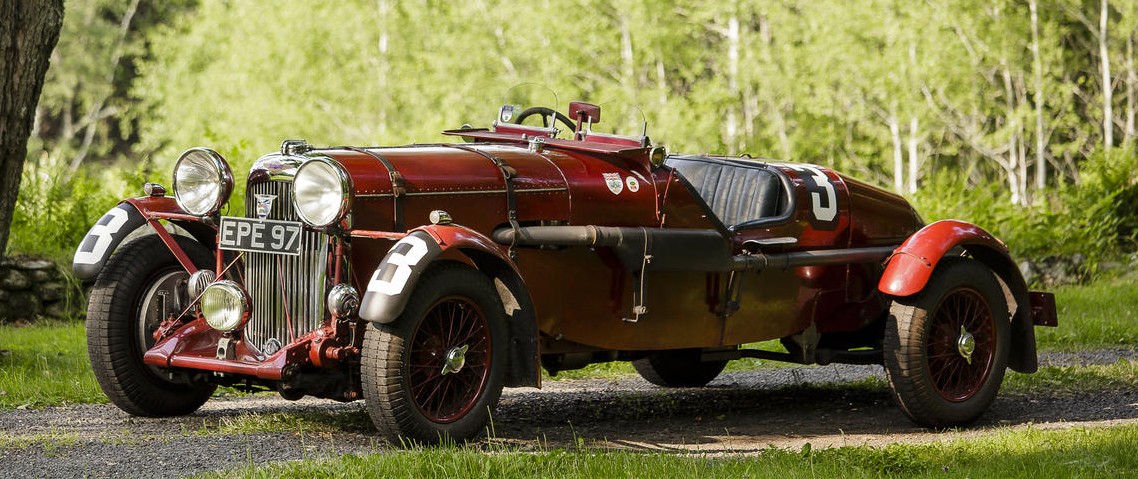
Our next five auction results and highlights start with Bonhams Goodwood Revival sale, where the ex-Fox & Nicholl team car 1936 Lagonda LG45R Rapide race car broke a record for the marque, bringing $2,564,680.

Photo - Bonhams

Photo – Bonhams

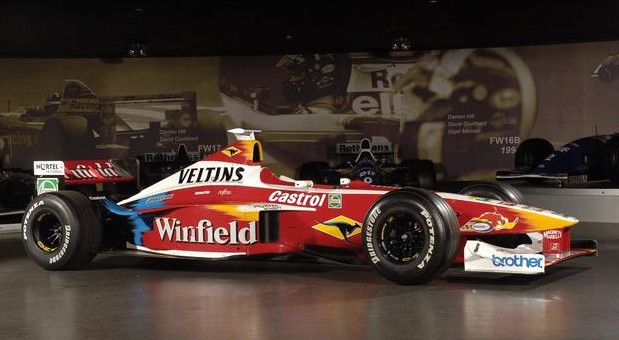
Our featured OM Superba wasn’t far behind at $2,038,669. The pre-war Maserati Grand Prix car brought $984,190. Of the two Abarths we featured, the 2000 Sport Spider brought more, selling for $302,415 while the 1000 Sport Tubolare “only” managed $198,786. Interesting sales were topped by this ex-Alex Zanardi 1999 Williams-Supertec Renault FW21 for $148,864.

Photo - Bonhams

Photo – Bonhams

Our other feature car, the Chenard et Walcker, sold for $56,002. Check out full results here. Next up is Mecum’s Dallas sale, where this 1969 Chevrolet Corvette L88 Convertible was the top sale at $680,000.

Photo - Mecum

Photo – Mecum

Our featured Vector disappeared from the auction catalog (and not for the first time). A previously featured Locomobile failed to sell (and not for the first time either). Interesting cars were topped by the strong money put up for this 1935 Reo Speedwagon Pickup: $93,000.

Photo - Mecum

Photo – Mecum

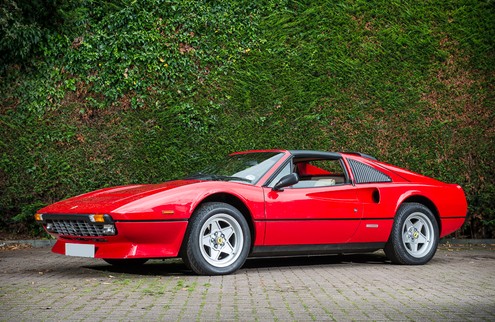
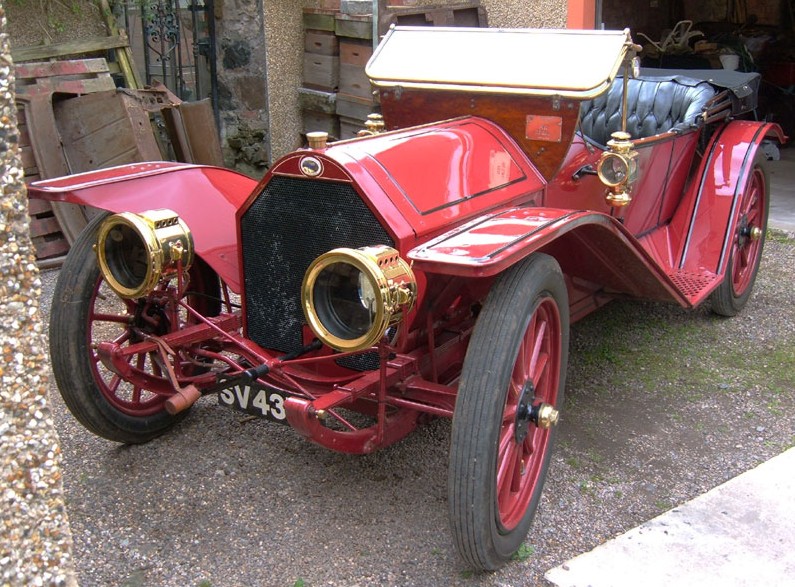
Our featured Maxwell sold for $13,500 – a steal for a 100+ year old car. Check out full results here. Our third auction this go-round was Silverstone’ Autumn sale. This 1985 Ferrari 308 GTS bagged top honors, selling for $144,330.

Photo - Silverstone Auctions

Photo – Silverstone Auctions

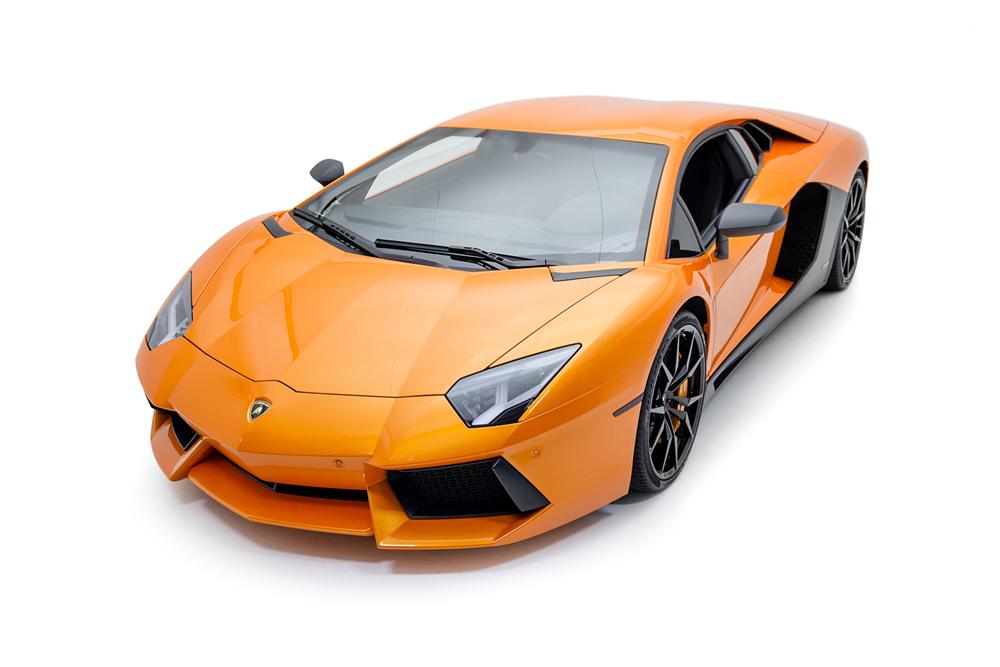
Our feature cars both sold. The Lynx Eventer brought $46,863 and the Ginetta G15 $21,557. Check out full results here. We featured one car from Barrett-Jackson’s Las Vegas sale, the ’69 Mustang Boss 302. It sold for $88,000. The top sale was actually sold for charity, so the next top actual sale was this 2013 Lamborghini Aventador for $440,000. Click here for full results.

Photo - Barrett-Jackson

Photo – Barrett-Jackson

Finally, Coys’ Nurburgring sale, where our featured Shadow F1 car was the top sale for $582,900. Check out full results here.

Regal Underslung

1911 Regal Model N Underslung

Offered by H&H Auctions | Duxford, U.K. | October 8, 2014

Photo - H&H Auctions

Photo – H&H Auctions

Underslung is a word most commonly associated with the American Motor Car Company. The term denotes a chassis design that was a novel idea at the time: hang the chassis below the axles. It provides for a sportier ride from a lower center of gravity. But American wasn’t the only company to take advantage of this. For example, there was also the Regal Motor Car Company. Despite its, um, regal, name, the cars were actually produced in Detroit.

Founded in 1907, the company introduced its Underslung model in 1910. The Model N was the base model in 1911 and it uses a 20 horsepower straight-four. It was only offered in two-passenger Runabout form. Two larger models were also sold. The Model N would stick around through 1914 and Regal would close its doors in 1918 due to material shortages during the Great War.

This car shows nice and is a, perhaps, more interesting alternative to the seemingly more common American Underslung. And at a much easier entry point, price-wise. This one will set you back between $40,500-$48,500. Click here for more info and here for the rest of H&H’s lineup.

Update: Sold about $39,477.

G.N. Cyclecar

1914 G.N. Cyclecar

Offered by RM Auctions | Hershey, Pennsylvania | October 9, 2014

Photo - RM Auctions

Photo – RM Auctions

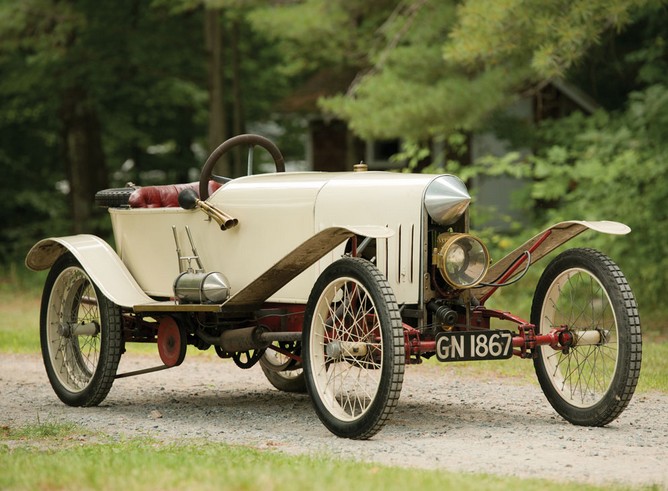
The G.N. company was founded by two men who would later produce sports cars independently of each other: H.R. Godfrey and Archibald Frazer-Nash (later of H.R.G. and Frazer-Nash, respectively). G.N. operated out of London between 1910 and 1923. The car came about at the perfect time as 1910 was about the year that the cyclecar craze really took off.

Cyclecars are all about being tiny, light vehicles that used wheels not much bigger than those on your penny-farthing. Because of their tiny engines, they could be registered as motorcycles – thus they were cheap to purchase and own. The engine here is a front-mounted 1.1-liter twin making 10 horsepower. I don’t know how much it weighs, but I would estimate “not much.”

The body work is simple and it’s technically a two-seater, if both driver and passenger are relatively minuscule. The interior was redone long ago and the paint is fresher than that – but otherwise this car is believed to be original. It should bring between $40,000-$60,000 and offer a lot of fun at that price. Click here for more info and here for more from this sale.

Update: Sold $110,000.

A Late Stanley Steamer

1925 Stanley Model SV 252A Touring

Offered by Bonhams | Philadelphia, Pennsylvania | October 6, 2014

Photo - Bonhams

Photo – Bonhams

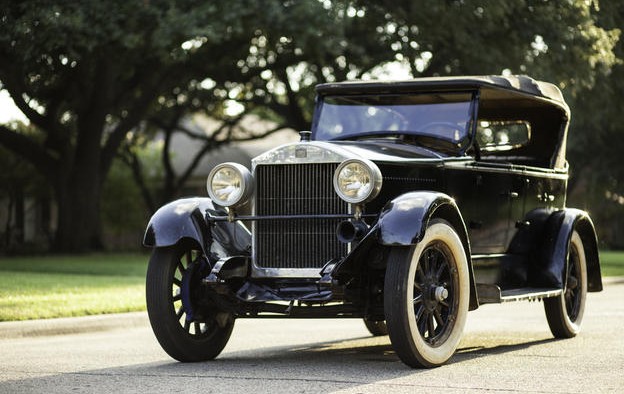
The Stanley Steamer is one of the most beloved American automobiles of all time. Beginning in 1897, the Stanley brothers (who were actually twins) began producing steam automobiles in Watertown, Massachusetts. They were the #1 American automobile manufacturer in terms of production through 1899. The sold the early company to Locomobile and moved on to build the coffin-nose Stanleys everyone recognizes leading up to WWI.

Steam-powered cars didn’t do so well after about 1910, but Stanley soldiered on, sticking with the propulsion that got them that far. In 1923, bankruptcy came calling and the company was reorganized as the Steam Vehicle Corporation of America (SVCA). In 1925, they introduced the Model SV which uses a 20 horsepower, two-cylinder steam engine.

SVCA only built five Model SV Sedans and 48 Touring models in 1925. The car here is the only surviving unrestored 1925 Touring car. There are a couple restored cars out there and only one of those approaches factory-correct. This is thought to be the SV prototype that was built in 1924 before being re-bodied and sold to the public a year later.

It is unrestored, original, and running. Stanley only completed a handful of cars in 1926 and 1927 models may or may not have actually been built (if you have proof, we’d love to see it). At any rate, this car should sell for between $70,000-$90,000, which seems like a bargain. Read more here and see more from this sale here.

Update: Not sold.

1909 Staver

1909 Staver Model ER Roadster

Offered by RM Auctions | Hershey, Pennsylvania | October 9, 2014

Photo - RM Auctions

Photo – RM Auctions

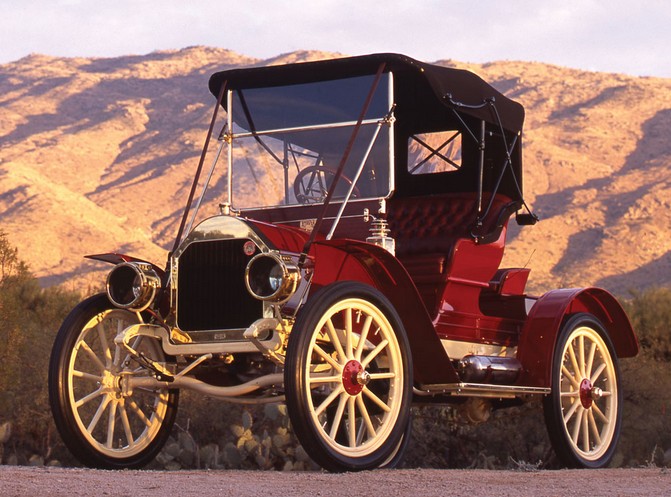
The Staver Carriage Company was founded in Chicago in 1907. They started by building highwheelers – and theirs were one of the largest and priciest around. In 1909, they started building more traditional four-cylinder cars. And the one you see here is the oldest known in existence.

The engine is a 3.3-liter straight-four making 25 horsepower. Staver only built one model for 1909, and this is the best example there is. Staver only lasted until 1914 before they went under. This car was purchased around 1930 by the Waukesha Motor Company in Wisconsin (they were the company that built the engine for it, and it has one of the earliest Waukesha engines known).

The company kindly gifted it to their President in 1935 and it bounced between a few company employees until the current owner acquired it in 1975. It is one of only five Stavers that are known to survive with a four-cylinder engine and it is the oldest of those. Only one highwheeler is known to be older. This car can be yours for between $50,000-$75,000. Click here for more info and here for more from this sale.

Update: Sold $132,000.

An Early Taxi

1923 Yellow Cab Model A-2 Brougham Taxi

Offered by RM Auctions | Hershey, Pennsylvania | October 9, 2014

Photo - RM Auctions

Photo – RM Auctions

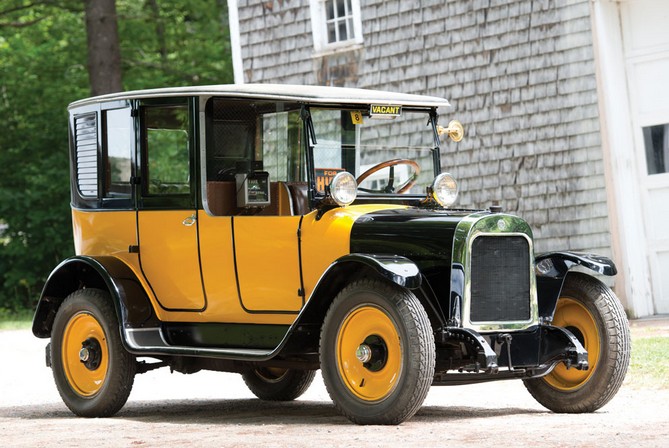
Here’s a car I’ve always wanted to feature, but I was starting to wonder, “Just how many are left?” Not a whole lot, as it turns out, but some are still around – thankfully. What I love about these cars is what they represent. Ever watched some black and white video clip of New York City during the Roaring 20s? A video shot at night, among the brightly lit theater facades of Broadway? There are quite a few little cabs like this running around those streets at a sped-up frame rate.

It’s a time period that’s always fascinated me and this is among the best examples – and among the least seen – of everyday urban life in the 20s. Anyway, the Yellow Cab Manufacturing Company was founded by John D. Hertz (yes, of that Hertz fame). It was founded in 1920 to build taxis for his Yellow Cab Company in Chicago. In 1925, it was acquired by GM and the brand name disappeared after 1929.

The engine is a 2.9-liter Continental straight-four making 18 horsepower. Yellow built mostly taxis – but not all of them left yellow and some may have been used as passenger cars. This example is ex-Harrah and ex-Imperial Palace and is wonderful. It should sell for between $40,000-$60,000. Quite a few were built, but very few remain. Check out more here and see more from this sale here.

Update: Sold $33,000.

National Highway Six

1918 National Highway Six Touring

Offered by Bonhams | Philadelphia, Pennsylvania | October 6, 2014

Photo - Bonhams

Photo – Bonhams

Nowadays when companies choose their names they have to think about thinks like “search engine optimization.” Obviously, back in 1900, SEO wasn’t a thing – otherwise the National Automobile & Electric Company may have chosen a different brand name to take to market, as “National” is pretty generic and doesn’t produce great Google results.

But anyway, I am a big fan of cars from about 1916 through the early 1920s. They more or less all look the same: four door tourers with wooden spoke wheels and a nice big radiator cap and MotoMeter out front. National built cars in Indianapolis between 1901 and 1924. The Highway Six was built between 1916 and 1920 and used a 5.0-liter straight-six making 41 horsepower.

This car is mostly original and has been restored “as-needed.” Bonhams sale at the Simeone Foundation in Philadelphia has been an awesome source of unrestored old cars for a few years now. This is a nice find. It should bring between $30,000-$50,000. Click here for more info and here for the rest of this sale’s lineup.

Update: Sold $28,050.

1896 Armstrong Phaeton

1896 Armstrong Phaeton

Offered by RM Auctions | Hershey, Pennsylvania | October 9, 2014

Photo - RM Auctions

Photo – RM Auctions

This is one of the oldest cars we’ve ever featured and it’s apparently the only car ever built by the Armstrong Manufacturing Company of Bridgeport, Connecticut. This car was completed in 1896 but was likely built between 1894 and 1895. It’s huge – a literal horseless carriage. And frankly, it’s kind of scary looking. But I love it.

The engine is a 6.0-liter twin and the car features a number of ingenious features that wouldn’t be found on cars for at least another 20 years – such as a silent, electromagnetic starter. It’s fascinating. It competed in a race shortly after completion and was placed on sale in New York City after the race. It didn’t sell, and Armstrong took it back to Connecticut.

Armstrong built products until 1950 when it was purchased by Capewell Manufacturing. The car was moved and in 1963 found its way into a Capewell employee’s garage. In 1995, it was discovered by the outside public and has had a few owners since. It’s a remarkable automobile that has been sorted and works. It should bring between $550,000-$700,000 and it’s worth every penny of that. Click here for more info and here for more from RM in Hershey.

Update: Not sold, high bid of $375,000.

Update II: Sold, Bonhams Amelia Island 2016, $483,400.

Cunningham V-6

1925 Cunningham Series V-6 Phaeton

Offered by Bonhams | Philadelphia, Pennsylvania | October 6, 2014

Photo - Bonhams

Photo – Bonhams

Cunninghams were exclusive cars built in Rochester, New York, between 1911 and 1930 by James Cunningham, Son & Company. Their target audience were wealthy individuals who cared for quality – something Cunningham could deliver.

The company built mainly four and eight-cylinder models, and despite its name, the Series V-6 was actually an eight-cylinder car. Makes perfect sense, right? The Series V-6 was built for 1925, 1926 and 1927 and all used a 7.2-liter straight-eight engine originally rated at 90 horsepower, but now estimated to be around 100. The bodies were always built in-house by Cunningham.

The car has known history back to prior to WWII and has only had three owners since the 1930s. It has under 40,000 original miles and has been repainted, although it was never completely restored. Cunninghams don’t come up for sale often, and this one should bring between $135,000-$160,000. Click here for more info and here for more from this sale.

Update: Sold $162,250.