Offered by Mecum | Chicago, Illinois | October 24-26, 2019
Photo – Mecum
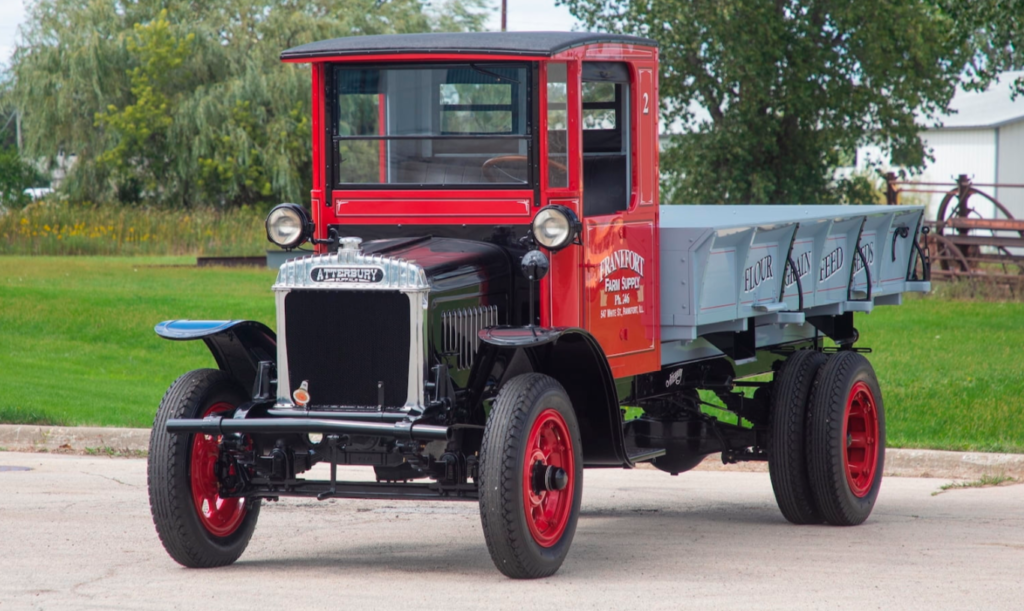
Autocar has been a player in the heavy truck industry since 1908, and during some of that time, they were building passenger cars. Meanwhile, the Auto-Car Equipment Company was founded in 1904 in Buffalo, New York. When Autocar (of Pennsylvania) got into the truck business in ’08, Auto-Car, of Buffalo, whose sole business was trucks, changed their name to Buffalo.
And in 1910, they reformed again as the Atterbury Motor Car Company. By 1911 they were offering four different capacities of trucks, with the 5-ton example being the largest. This particular truck features a large pickup-style body and is powered by an inline-four engine.
Atterbury introduced new models in 1931, which they continued to produce through 1935 when they closed down. The company never really got huge, selling just 141 trucks in 1929, many to Canada. This one carries a pre-sale estimate of $40,000-$50,000. Click here for more info and here for more from this sale.
Offered by RM Sotheby’s | Hershey, Pennsylvania | October 10-11, 2019
Photo Courtesy of RM Sotheby’s
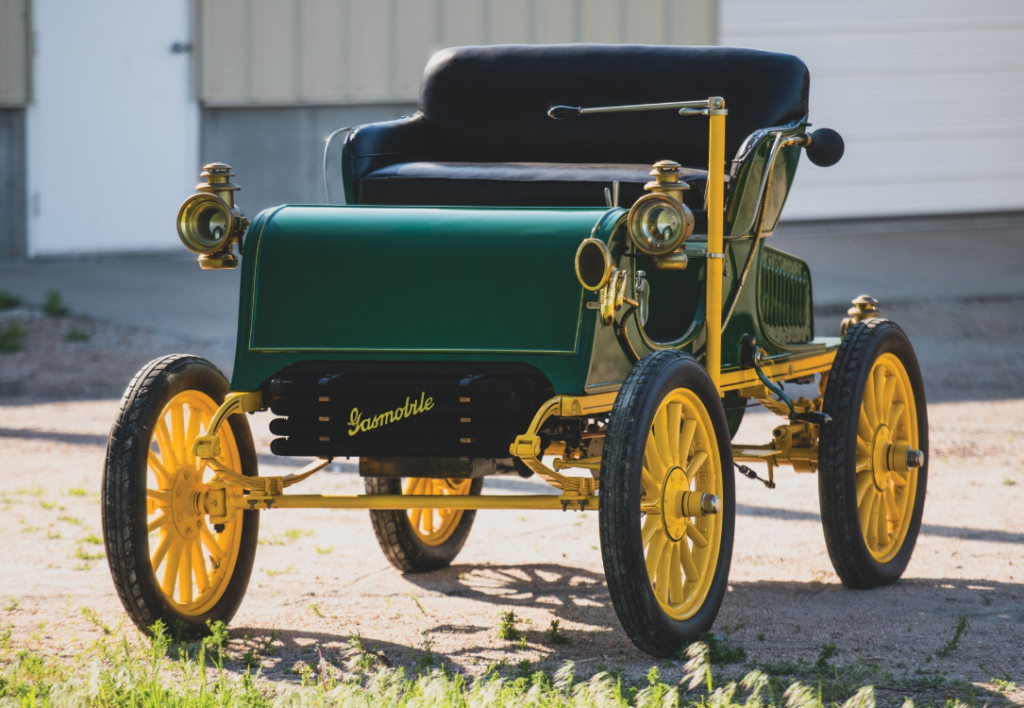
Before becoming Gasmobile, cars produced by the Automobile Company of America were called American. But that was just in 1899, and Gasmobile-branded cars of one, three, four, and six-cylinders were sold during various parts of 1900 through 1902.
1902 was when they really went wild with a diversified product lineup, which was part of the cause of their financial undoing. Four different body styles were offered on the three-cylinder chassis, including the $2,000 Stanhope. Power is from a nine horsepower inline-three.
This Gasmobile was formerly part of the Auburn-Cord-Duesenberg museum. The restoration dates to the late 1970s, and it completed the London-to-Brighton run in 1983. It is now selling at no reserve with an estimate of $40,000-$50,000. Click here for more info and here for more from RM in Hershey.
Offered by Bonhams | Knokke-Heist, Belgium | October 11, 2019
Photo – Bonhams
The first Ferrari “supercar” was the 288 GTO. But let’s be honest, it looks like a 308 GTB. The F40 is truly the first balls-to-the-wall Ferrari supercar. And it’s about time we featured one.
Only 1,311 examples were produced between 1987 and 1992, and it was one of the final cars approved by Enzo himself, which is part of the reason it is so special. As time has gone on, these cars have become more appreciated, more expensive, and sadly, much less used.
Some of that is due to it being a not super-friendly road car. Power is from a rear/mid-mounted twin-turbocharged 2.9-liter V8 rated at 471 horsepower. The Pininfarina-designed body is made of composite materials and aluminum. It’s light. Sixty arrived in about four and a half seconds, and the car topped out just shy of 200 mph at 197. Unlike many of its F-car supercar brethren, there were racing versions.
This Italian-delivery example should bring between $870,000-$1,100,000 at auction. Click here for more info and here for more from this sale.
Offered by RM Sotheby’s | Hershey, Pennsylvania | October 10-11, 2019
1906 White Model F Touring
Photo Courtesy of RM Sotheby’s
Thomas White‘s sewing machine business gave way to steam cars in 1900. The company was a pioneer in their field, but they ultimately saw the light and phased out steam cars in favor of gas-powered vehicles in 1912.
This 1906 Model F Touring was the second-cheapest car White offered in 1906 after the Model F Runabout. At $2,800, it wasn’t cheap. But the White was one of the more popular – and more well-built – steam cars of their day. This one looks great but would look better with a convertible top. It should bring between $40,000-$60,000. Click here for more info.
Update: Sold $96,250.
1917 Chandler Type 17 Seven-Passenger Touring
Photo Courtesy of RM Sotheby’s
Frederic Chandler worked for Lozier before he jumped ship in 1913 with a few of his fellow employees to form his own company. The Chandler was a hit and lasted through 1929, when it was acquired by Hupmobile and quickly phased out.
There were a lot of cars “in the middle” of the American market in the 1910s and 20s. Chandler was one of the better ones in that class. This 1917 model is powered by a 27 horsepower 4.4-liter inline-six. Five body styles were offered, and the seven-passenger touring sold new for $1,395. This time around it should bring between $20,000-$30,000. Click here for more info.
Update: Sold $18,700.
1923 Gardner Model 5 Five-Passenger Sedan
Photo Courtesy of RM Sotheby’s
The most interesting thing about this Gardner sedan, to me, is thinking about who purchased it in 1923. No one in 1923 knew that GM, Chrysler, and Ford would still be around 100 years later. But surely someone assumed Gardner would’ve been. After all, it was a well-regarded company from St. Louis that built a fair number of cars. It’s just hard to imagine someone wandering down to their local Gardner dealer and plunking down the cash.
Gardners were built from 1920 through 1931, and the company sort of inched upmarket each year, with their final offerings bordering on luxury cars. Kind of like Chrysler. But back in ’23, they were just another middle-class marque. The Model 5 could be had in a few styles, the sedan selling for $1,365. It kind of looks like a taxi and is powered by a 43 horsepower inline-four. It is expected to bring between $20,000-$30,000. But I bet it goes cheaper than that. Click here for more info.
Update: Sold $13,200.
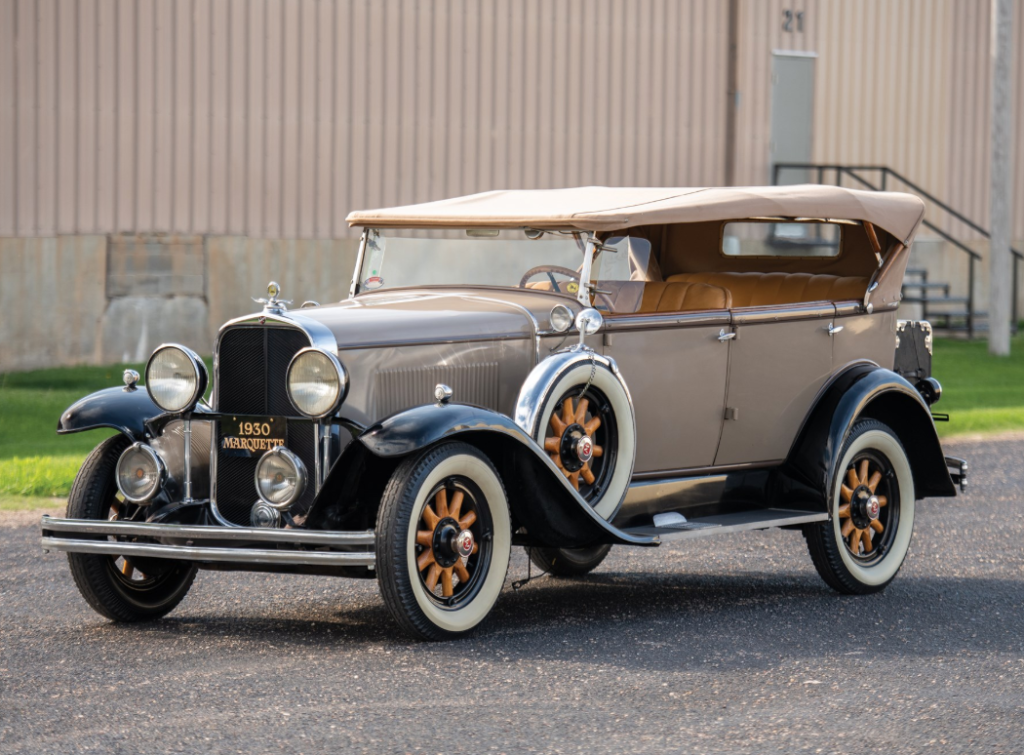
1930 Marquette Model 35 Five-Passenger Phaeton
Photo Courtesy of RM Sotheby’s
GM’s “companion make” philosophy in the 1920s and 1930s gave us Pontiac and LaSalle. Both of which were relatively successful. In fact, Pontiac was so successful that GM killed off the brand that spawned it, Oakland. So they figured they’d give Buick a companion. And they did: Marquette.
It only lasted for a single model year. Six models were offered, all priced right at about $1,000. All Marquettes are powered by a 3.5-liter inline-six good for 67 horsepower. The Model 35 Phaeton sold for $1,020, and this is one of 889 such cars built.
In all, Marquette production totaled 35,007 before GM killed it off. This rare survivor should bring between $15,000-$25,000, which seems like a steal. Click here for more info.
Update: Sold $15,950.
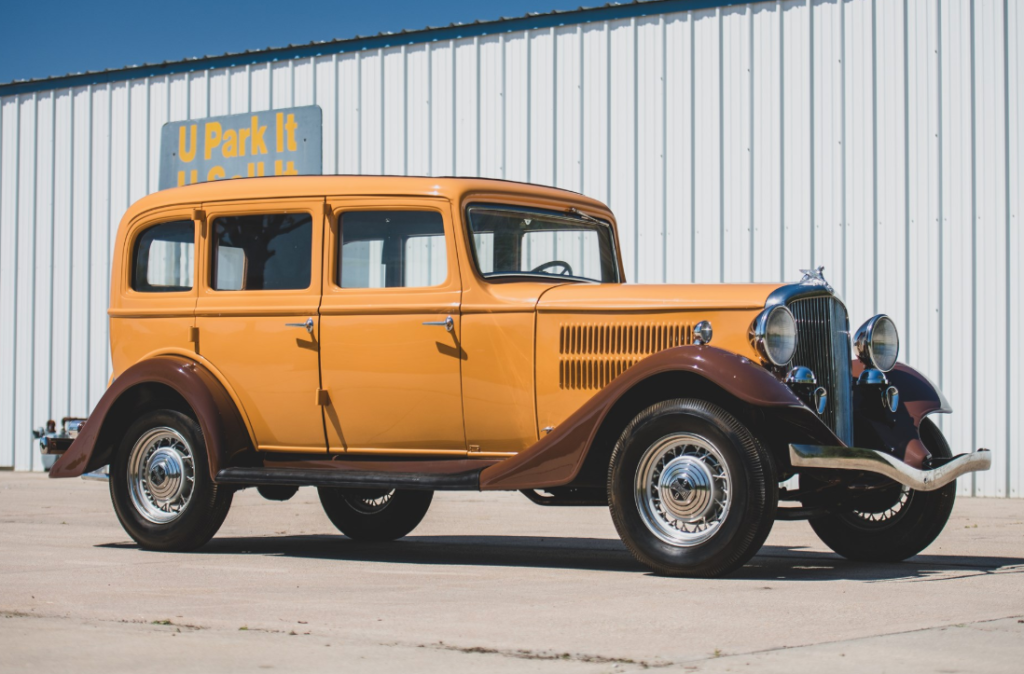
1933 Terraplane Deluxe Six Model KU Sedan
Photo Courtesy of RM Sotheby’s
I was excited to feature an Essex. But I forgot that Hudson killed off the Essex marque in favor of Terraplane beginning in 1933. So instead of featuring a final-year example from Essex, we’re featuring a launch-year example of the Terraplane.
Terraplane offered six and eight-cylinder cars in 1933 that were essentially down-market Hudsons. A slew of body styles were offered, and the sedan cost $655 when new. A 3.2-liter inline-six good for 70 horsepower provided the oomph. This is a handsome car in good colors. It’s well-trimmed, with chrome bumpers and four suicide doors. The best part is it is usable and is expected to fetch only $15,000-$25,000. Click here for more info and here for more from this sale.
Offered by RM Sotheby’s | Hershey, Pennsylvania | October 10-11, 2019
Photo Courtesy of RM Sotheby’s
Frederic Chandler worked for Lozier before he jumped ship in 1913 with a few of his fellow employees to form his own company. The Chandler was a hit and lasted through 1929, when it was acquired by Hupmobile and quickly phased out.
There were a lot of cars “in the middle” of the American market in the 1910s and 20s. Chandler was one of the better ones in that class. This 1917 model is powered by a 27 horsepower 4.4-liter inline-six. Five body styles were offered, and the seven-passenger touring sold new for $1,395. This time around it should bring between $20,000-$30,000. Click here for more info.
Offered by RM Sotheby’s | Hershey, Pennsylvania | October 10-11, 2019
Photo Courtesy of RM Sotheby’s
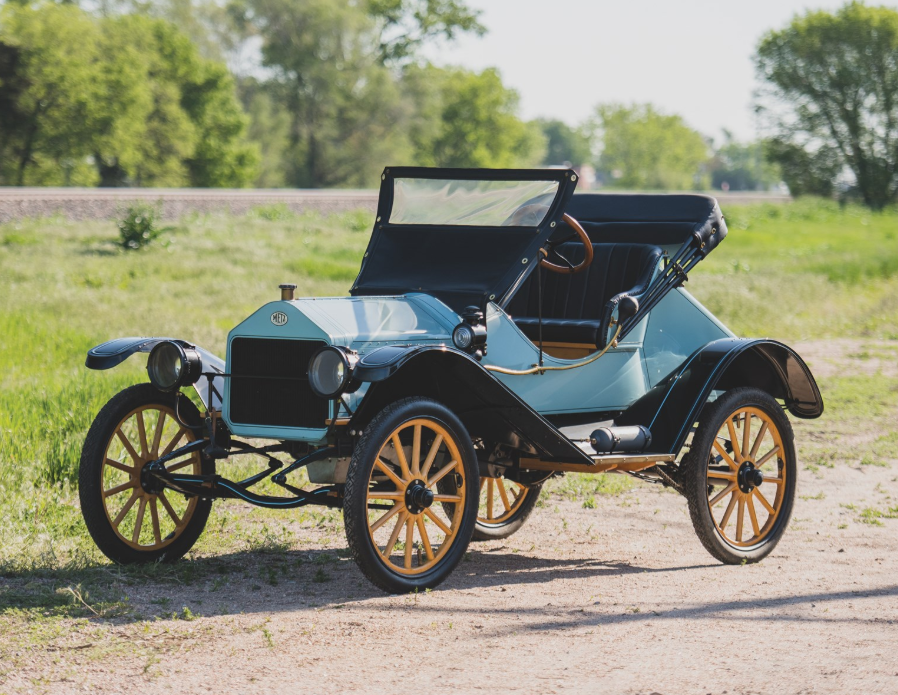
Charles Metz originally founded the Waltham Manufacturing Company, producer of the Orient Buckboard. He left it in 1901 and returned in 1908 when it was financially destroyed. Essentially what was left was a huge pile of debt and a huge pile of parts. So he started selling the parts for $25 a pack. Fourteen “packs” later and you’d have an entire car, unbuilt, at your home.
But if you spaced it out right, the next pack would arrive just as the prior one was put together. It was like buying a car on an installment plan. But you had to build it yourself. It was one of the first kit cars. Mail-order at that.
After the “Metz Plan” paid off Waltham’s debts, Metz reorganized as the Metz Company in 1909 and upped the price a bit. It was a popular car and lasted through 1921.
The Model 22 was the only model offered in 1914 and could be had as a Roadster, Speedster, or Torpedo. This Roadster cost $475 and is powered by a 22 horsepower inline-four. It features a friction transmission and chain drive.
It’s kind of weird to think someone assembled this car in their garage. Over 100 years ago. And yet here it is, ready to go. It should sell for between $20,000-$30,000. Click here for more info and here for more from this sale.
Offered by RM Sotheby’s | Hershey, Pennsylvania | October 10, 2019
Photo Courtesy of RM Sotheby’s
Autocar remains the oldest surviving vehicle brand in the United States, but they haven’t built a passenger car in over 100 years. It’s been heavy trucks for most of that time. Well, since 1907 to be exact.
This stake-bed truck is powered by a two-cylinder engine and has solid 35″ rubber tires, no weather protection, and a giant ship-like headlight. It’s basic. But that’s exactly what trucks were in 1910. They served a purpose – and it’s amazing that this one is still around. Look for a price between $20,000-$25,000 next week. Click here for more info.
Offered by RM Sotheby’s | Hershey, Pennsylvania | October 10, 2019
Photo Courtesy of RM Sotheby’s
Autocar remains the oldest surviving vehicle brand in the United States, but they haven’t built a passenger car in over 100 years. It’s been heavy trucks for most of that time. Well, since 1907 to be exact.
This stake-bed truck is powered by a two-cylinder engine and has solid 35″ rubber tires, no weather protection, and a giant ship-like headlight. It’s basic. But that’s exactly what trucks were in 1910. They served a purpose – and it’s amazing that this one is still around. Look for a price between $20,000-$25,000 next week. Click here for more info.
Update: Sold $33,000.
1912 International Model AW Auto Wagon
Offered by RM Sotheby’s | Hershey, Pennsylvania | October 10, 2019
Photo Courtesy of RM Sotheby’s
It’s hard to really draw a line in the sand as to when International switched from cars to trucks, as all of their high-wheeled cars were sort of truck-like from the start. In a way, 1911 was the last official year for passenger cars, as their 1912 announcement centered on delivery wagons (though you could get car-like appointments by request on their smallest commercial chassis for years afterward).
These “Auto Wagons” were available in two models for a few years: the AW and the MW. They evolved through 1915, but in 1916 IHC moved to a more modern style and things just kept going from there. With the rear bench seats, I like to think of this as an early SUV, a territory that IHC would dabble in all the way through the early 1980s.
The difference between the AW and MW was their cooling systems. This is where it gets weird. The AW was the air-cooled car, and the MW was water-cooled. The red car above is listed as an AW in RM’s catalog and is clearly water-cooled. The blue car below is listed as a 1913 Model MW. But it is air-cooled. Something is wrong here, or these cars got their running gear swapped at some point.
Both engines were 3.2-liter flat-twins, but the air-cooled version was good for 18 horsepower, three more than its water-cooled sibling.
Regardless, both cars are expected to fetch between $20,000-$30,000 each. So pick one and then rename it. More info on the red car is available here, and you can see the blue one here. Check out more from this sale here.
Photo Courtesy of RM Sotheby’s
Update: Sold (red one): $33,000. (Blue one): $28,600.
Offered by RM Sotheby’s | Hershey, Pennsylvania | October 10, 2019
Photo Courtesy of RM Sotheby’s
It’s hard to really draw a line in the sand as to when International switched from cars to trucks, as all of their high-wheeled cars were sort of truck-like from the start. In a way, 1911 was the last official year for passenger cars, as their 1912 announcement centered on delivery wagons (though you could get car-like appointments by request on their smallest commercial chassis for years afterward).
These “Auto Wagons” were available in two models for a few years: the AW and the MW. They evolved through 1915, but in 1916 IHC moved to a more modern style and things just kept going from there. With the rear bench seats, I like to think of this as an early SUV, a territory that IHC would dabble in all the way through the early 1980s.
The difference between the AW and MW was their cooling systems. This is where it gets weird. The AW was the air-cooled car, and the MW was water-cooled. The red car above is listed as an AW in RM’s catalog and is clearly water-cooled. The blue car below is listed as a 1913 Model MW. But it is air-cooled. Something is wrong here, or these cars got their running gear swapped at some point.
Both engines were 3.2-liter flat-twins, but the air-cooled version was good for 18 horsepower, three more than its water-cooled sibling.
Regardless, both cars are expected to fetch between $20,000-$30,000 each. So pick one and then rename it. More info on the red car is available here, and you can see the blue one here. Check out more from this sale here.
Photo Courtesy of RM Sotheby’s
Update: Sold (red one): $33,000. (Blue one): $28,600.
Offered by Bonhams | Philadelphia, Pennsylvania | October 7, 2019
Photo – Bonhams
Small Fiats were the basis for many Italian sports cars after WWII. What quite a few enterprising individuals did was take a Fiat 500, bore it out to 750cc, replace some other internals, and go racing.
Daniela built five or six cars powered by 750cc Fiat engines. This car’s original engine went missing, and it’s now powered by a 105 horsepower, 1.1-liter Fiat inline-four. It hasn’t really been used much since the 1990s and is begging for restoration.
A previous owner had the car from 1958 through 1990, during which time it was raced in Nassau, Watkins Glen, Bridgehampton, and Lime Rock. It’s a pretty cool little thing and should sell for between $35,000-$45,000. Click here for more info and here for more from this sale.