Zagato Tour de France

1957 Ferrari 250 GT LWB Berlinetta Tour de France by Zagato

Offered by RM Sotheby’s | Monterey, California | August 2023

Photo Courtesy of RM Sotheby’s

Well here is a big-boy Ferrari. So big in fact that RM will not even run it across their block in Monterey this year. Instead they are going to the “Sotheby’s Sealed” format, which, I guess, just takes the fun out of watching people bid.

The long-wheelbase 250 GT started out with the 250 Europa, and the “Long Wheelbase Berlinetta” debuted in 1956 and acquired the nickname “Tour de France” after the cars competed in the 10-day Tour de France race. Just 77 were built through 1959, most of which were bodied by Scaglietti based on a Pinin Farina design.

But five of them escaped off to Zagato, and this car is the third of those. It has the signature double-bubble Zagato roof and is the only such example with covered headlights. It also has a 3.0-liter Colombo V12 that made somewhere around 250 horsepower. This car has period competition history, too, including:

  • 1957 Mille Miglia – 6th (with Camillo Luglio and Umberto Carli)

It was restored in the early 2000s and has been with its current owner since 1999. It’s been shown at Pebble Beach three times since, winning its class in 2009. You can read more about it here.

Update: Withdrawn.

Lorraine-Dietrich Grand Prix

1909 Lorraine-Dietrich 16.4-Liter Grand Prix

Offered by Bonhams | Carmel, California | August 18, 2023

Photo – Bonhams

Well, there’s no replacement for displacement. Back in the early days of competition motoring, companies just put bigger and bigger engines on their relatively simple chassis and hoped for the best. The crazy part is they rarely ever added cylinders. They just made them bigger. Coffee cans that you can count rev.

But! This car is not from 1909. Maybe a few of the components are, but this car was assembled much more recently. It started as a rolling 1909 Lorraine-Dietrich chassis that was fitted with an actual chain-driven Lorraine-Dietrich gearbox and a custom-built giant motor.

It’s a 16.4-liter inline-four that develops 200 horsepower and a crazy 850 lb-ft of torque, the latter at 1,500 rpm. Here’s an old car that can easily keep up with modern traffic. It has a pre-sale estimate of $600,000-$800,000. Click here for more info.

Update: Sold $1,270,000.

Lanchester Straight Eight

1929 Lanchester 30HP Straight Eight Landaulette

Offered by Silverstone Auctions | Broadway, U.K. | August 4, 2023

Photo – Silverstone Auctions

After World War One, Lanchester decided to focus on building one great model at a time. Their cars were expensive and cross-shopped against the likes of Rolls-Royce. In 1928 they introduced the 30HP Straight Eight, the last car designed by company co-founder George Lanchester.

It was powered by a 4.4-liter inline-eight rated at 30 horsepower. This car is bodied as a landaulette, with a rear convertible portion for the passengers. The timing of this grand car was not great, and the economic downturn spoiled the party. Just 126 were produced before Lanchester was sold to Daimler in 1930.

Restored years ago, this car represents an opportunity to acquire a car that is rarely seen. And it’s already ready to use. The estimate is $36,000-$44,000. Click here for more info.

Update: Not sold.

Porsche 550 Coupe

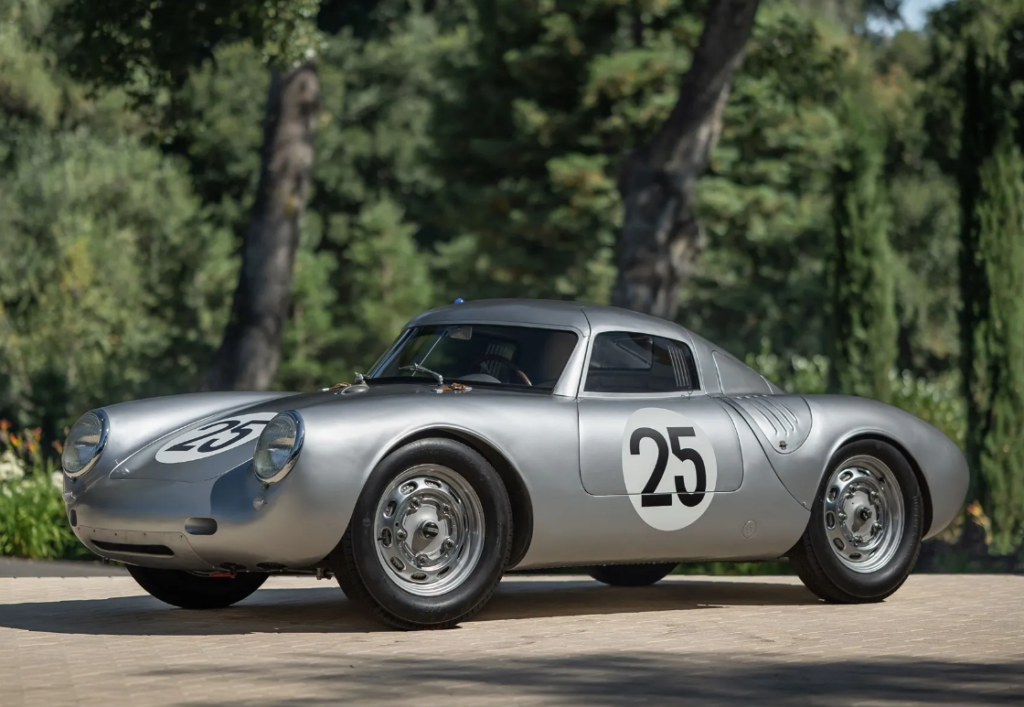
1956 Porsche 550A Coupe Prototype

Offered by RM Sotheby’s | Monterey, California | August 17-19, 2023

Photo Courtesy of RM Sotheby’s

RM throws out every superlative they can think of in the description for this car. It’s a little much, but the point is taken: this is an important and likely unrepeatable opportunity. Porsche’s 550 Spyder is already a legendary car, for reasons good and bad, and they command seven figures every day.

Porsche built four coupe prototypes of the 550. It’s got a slick fastback profile and is powered by a 1.5-liter flat-four. These were fully prepared race cars developed as a replacement for the 550 RS. The competition history for this chassis, 550A-0104, includes:

  • 1956 24 Hours of Le Mans – 5th, 1st in class (with Wolfgang von Trips and Richard von Frankenburg)
  • 1957 12 Hours of Sebring – 9th (with Ken Miles and Jean-Pierre Kunstle)

It also ran in SCCA races around the U.S. before being tracked down and restored by a Porsche collector in the 2000s. Since then, it’s been shown here and there. It’s got a pre-sale estimate of $5,500,000-$7,500,000, which seems low considering with 550 Spyders go for and the race history this car has. Anyway, you can found out more about it here.

Update: Not sold.

Duesenberg J-318

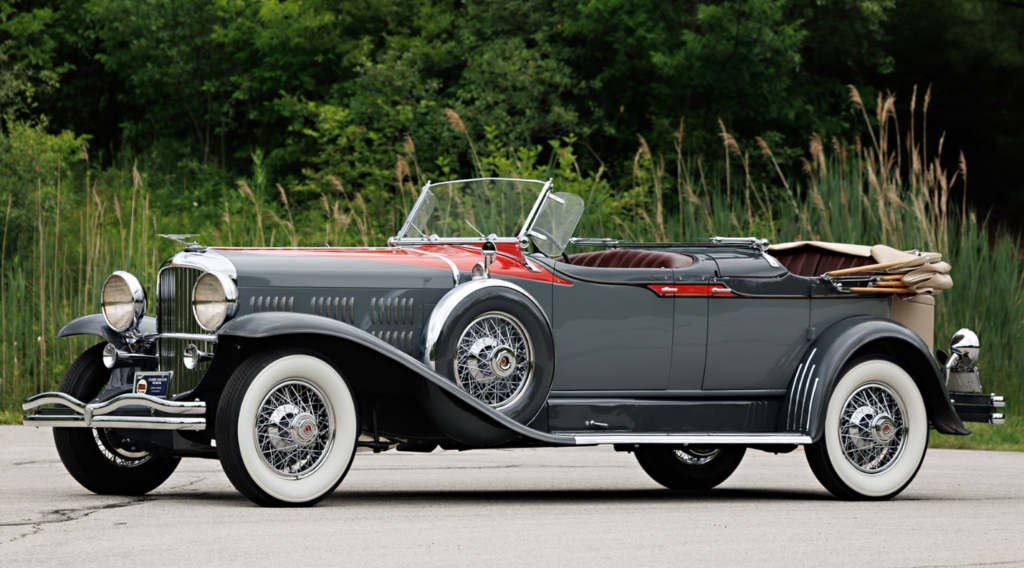
1930 Duesenberg Model J Dual Cowl Barrelside Phaeton by LeBaron

Offered by Gooding & Company | Pebble Beach, California | August 18-19, 2023

Photo – Gooding & Company

Great color combo here, gray with red accents and maroon upholstery. Not sure there’s really a bad two-tone Duesenberg though (this one was originally two-tone beige and brown). This is a LeBaron-bodied Model J, and it’s a dual cowl phaeton with a “barrelside” body, meaning the sides of the body had a slight curve, tapering inward at the top and bottom.

Just seven Model Js were bodied by LeBaron in this style. And this is the only one on a long-wheelbase chassis. The car is powered by a 6.9-liter inline-eight that made 265 horsepower.

This car was purchased new by a tobacco heir and was delivered new to its American owner in Paris. It was restored in the early 1980s and looks fresh. The estimate here is a healthy $3,000,000-$4,000,000. Click here for more info.

Update: Sold $2,975,000.

Delage D6 Grand Prix

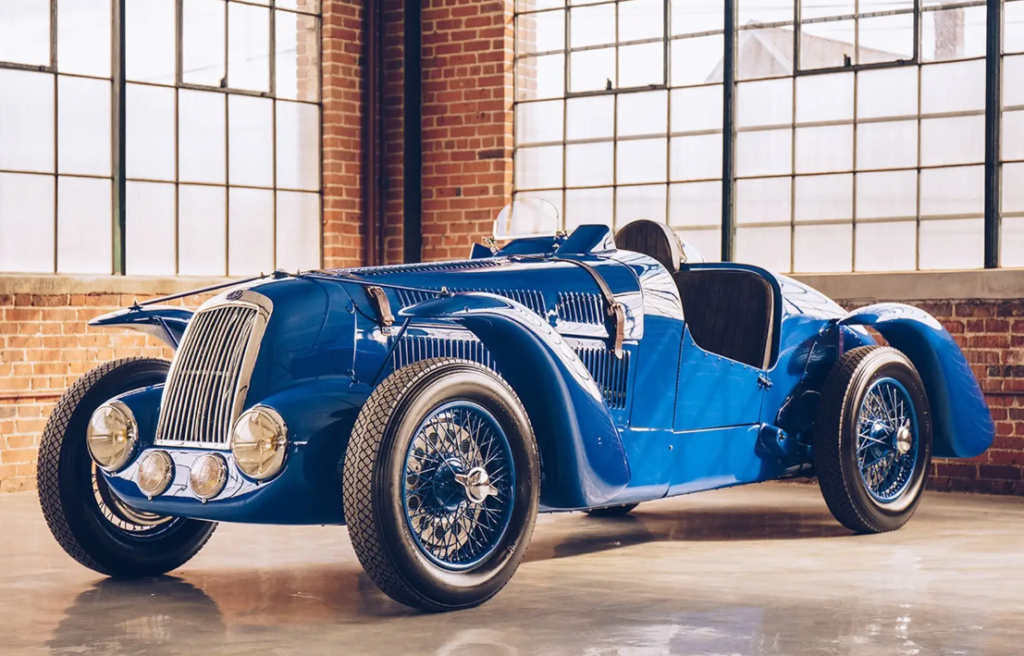
1939 Delage D6 3-Litre Grand Prix

Offered by RM Sotheby’s | Monterey, California | August 17-19, 2023

Photo Courtesy of RM Sotheby’s

The D6 was a long-lived line of Delage cars that started in 1930, took a break during the war, and returned to production afterward and on through 1953 or 1954. The D6 3-Litre road model went on sale in 1946 and lasted until the end of D6 production. It was powered by a… 3-liter inline-six. But so were other, earlier D6s.

This pre-war grand prix car is one of two constructed in preparation for the 1939 season. It’s got a 150-horsepower, 3.0-liter inline-six and was campaigned in the following:

  • 1939 24 Hours of Le Mans – 2nd (with Louis Gerard and Georges Monneret)
  • 1940 Mille Miglia – DNF (with Gianfranco Comotti and Archimede Rosa)

This car was damaged during the race and was left behind in Italy. The disassembled chassis later found its way into the reserve collection of the horrible Schlumpf brothers, remaining there until 1966. The car was returned to the state you see here by a later owner in the 1990s.

It’s now got an estimate of $600,000-$750,000. Click here for more info.

Update: Not sold.

Brush Model D

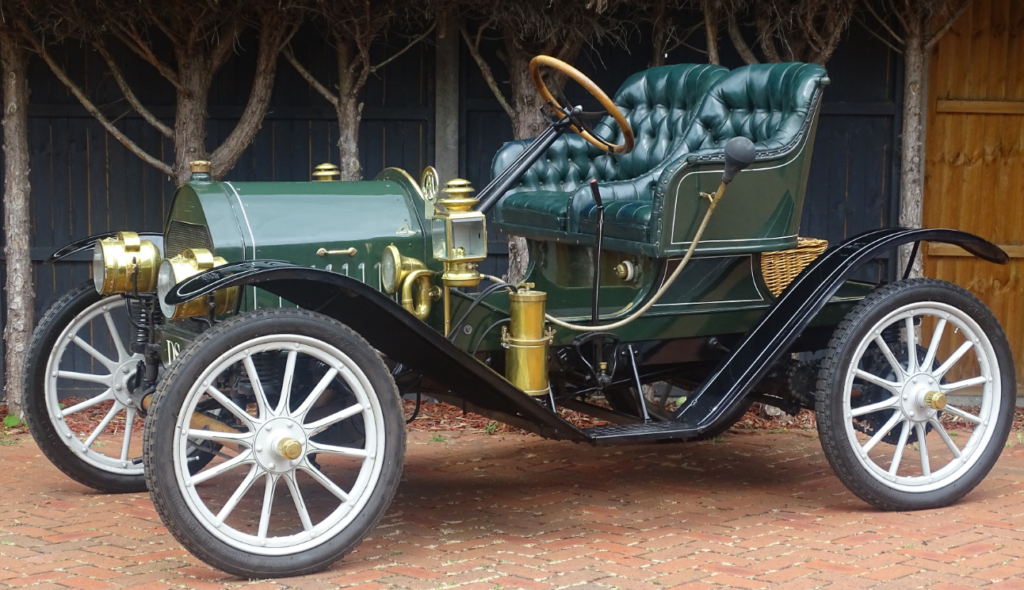
1910 Brush Model D Runabout

Offered by H&H Classics | Buxton, U.K. | July 26, 2023

Photo – H&H Classics

Detroit’s Brush Runabout Company was founded in 1907 by Alanson P. Brush, who previously helped design the first Cadillac in 1902. Brush was eventually absorbed into Benjamin Briscoe’s United States Motor Company before going out business in 1912.

In 1910, the company offered one product: the Model D, which was actually available in five bodystyles, including three different runabouts. This two-seater was the cheapest available option at $485 when new. It’s powered by a 10-horsepower, 1.0-liter single.

This car won awards at car shows in the U.S. in the 1970s before being imported to the U.K. in 1991. It’s been with the consignor since 2004 and was restored about 30 years ago. It has an estimate of $32,000-$40,000. Click here for more info.

Update: Sold $23,867.

1996 Champ Car

1996 Reynard 96I

Offered by Mecum | Monterey, California | August 17-29, 2023

Photo – Mecum

This is what race cars are supposed to look like. Team Rahal Reynards. The main chassis producers for the 1996 Champ Car season were Reynard and Lola. Team Rahal ran Reynard 96Is for Bobby Rahal and Bryan Herta, the latter of whom drove the Shell-liveried car you see here.

Back in the day, these were powered by a Mercedes/Ilmor 2.7-liter V8. This one is currently engineless. Unfortunately no competition history is provided for this chassis, but the catalog insinuates (a bit disingenuously) that this was the car involved in “The Pass” by Alex Zanardi at Laguna Seca.

Anyway, even without an engine this remains a fine example of the glory days of Champ Car. It has an estimate of $50,000-$80,000, and you can find out more about it here.

La Dawri Sebring

1957 La Dawri Sebring

Offered by Bring a Trailer Auctions | July 2023

Photo – Bring a Trailer

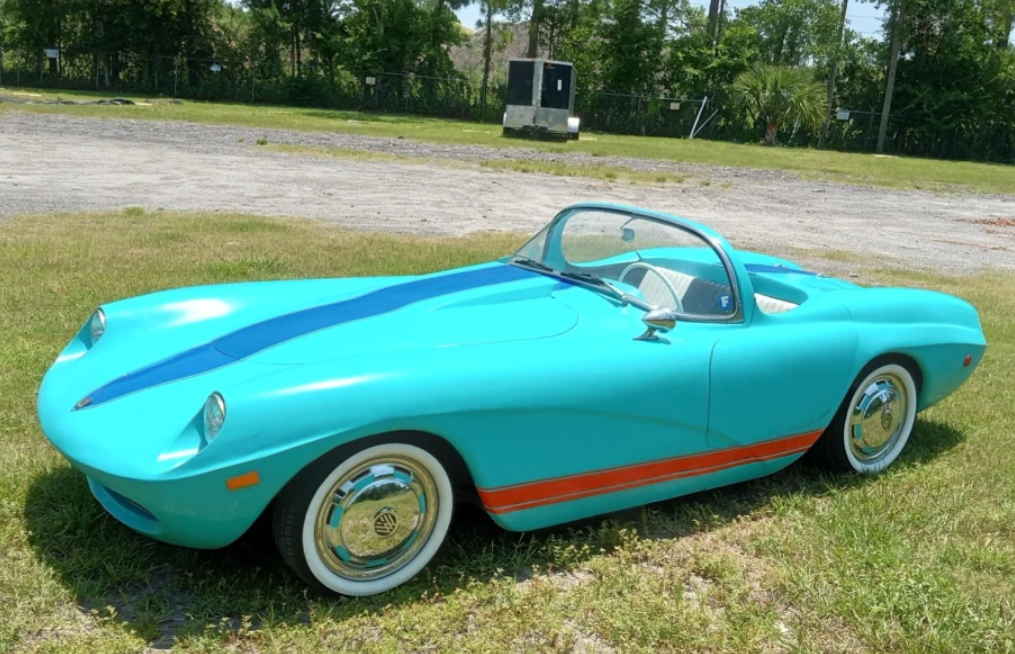
Okay, so “1957” probably isn’t the year here. No year is listed on the auction page, but what it does tell you about years is surprising. Unlike many fiberglass specials of the 1950s, this one is rear-engined. And it is powered by the 1.3-liter flat-four of its donor 1957 Volkswagen Beetle.

Can we take a moment to really appreciate how great this wild paint scheme is? This is the automotive equivalent of a surfboard. The windshield frame is a real highlight. La Dawri was only around a short time: founded in Canada in 1956 before moving to California the following year. They offered fiberglass sports car bodies until 1963.

Still, in that time, they produced no less than seven or eight different models. This Sebring screams “1950s sports car” but looks completely unlike almost anything else you could get at the time. It’s like some sports car special you would’ve seen in the background of an Elvis movie. This is a car that would be a lot of fun at the right price – and draw a lot of attention wherever it goes. Check out the auction here.

Update: Not sold, high bid of $7,500.

Wolseley-Siddeley

1906 Wolseley-Siddeley 15HP Tourer

Offered by Historics Auctioneers | Datchet, U.K. | July 22, 2023

Photo – Historics Auctioneers

Wolseley Motors was founded by Vickers – the armaments company – with engineer Herbert Austin on board to help design the cars. The first Wolseleys were sold to the public in 1901. Meanwhile, John Siddeley founded the Siddeley Automobile Company in 1902. Wolseley bought Siddeley in 1905, bringing the latter’s namesake into the fold.

Shortly after, Austin left to form his own company, and Siddeley was put in charge. He then promptly added his own name to the cars, thus forming Wolseley-Siddeley. In 1909, Siddeley left, and his name was then removed. So the car you see here is from a marque that only advertised from 1906 through 1909.

Power is from a 3.3-liter inline-four that was rated at about 15 horsepower. Not many of these survive, despite Wolseley being a dominant force in the U.K. car market around this time (interestingly enough, another auction house has another Wolseley-Siddeley in their catalog for not long after this car crosses the block). It’s been in the same family since 1956 and now has an estimate of $54,000-$68,000. More info can be found here.

Update: Sold, but the auction house won’t tell us for how much.