Isdera Spyder

1989 Isdera Spyder 036i

Offered by RM Sotheby’s | Monaco | May 14, 2022
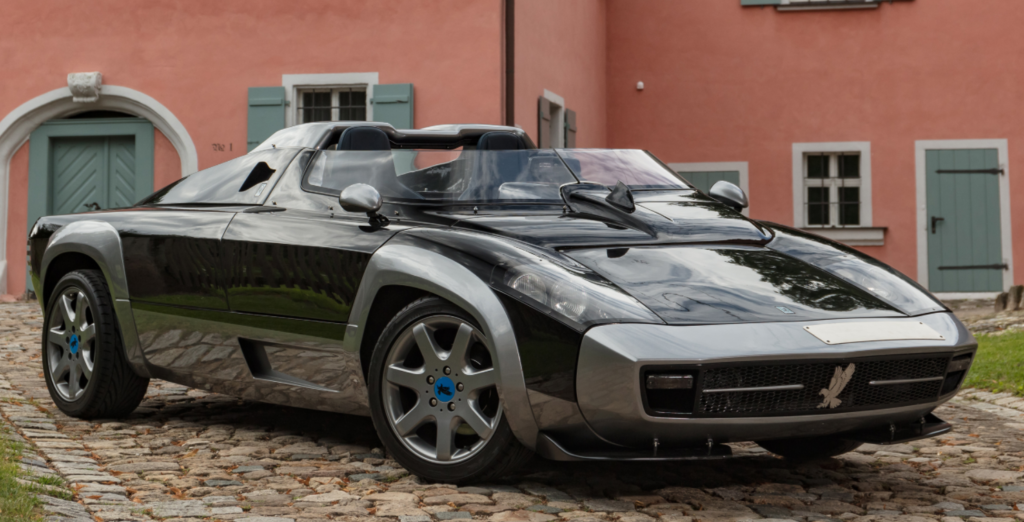
Photo Courtesy of RM Sotheby’s

Isdera, the elusive German boutique carmaker, has been around since the early 1980s. They have not produced many cars since then, but the ones they have are all pretty outrageous and striking. The Spyder was their first model, going on sale in 1982.

The first Spyders were 033i variants with 1.8-liter Mercedes-Benz inline-fours. Then came the 033-16, with a 2.3-liter engine. In 1987, they launched the 036i, which featured a 3.0-liter Mercedes inline-six making 217 horsepower. Only 14 Spyders total are believed to have been built, which each one taking 12 months to complete.

This car was modified and updated by Isdera in 2011, basically restored in different colors and fitted with a 276-horsepower, 3.6-liter AMG inline-six. Isderas rarely change hands, especially at auction. You can read more about this one here.

Update: Not sold.

Citroen Bijou

1962 Citroen Bijou

Offered by Osenat | Fontainebleau, France | March 28, 2022

Photo – Osenat

The Bijou is a small French coupe built by Citroen in England for the British market. It’s actually a 2CV underneath, but the 2CV wasn’t selling well there, so they decided to give it a makeover.

But part of the problem is that it was still a 2CV. The 425cc flat-twin made 12 horsepower. It still had the wonky long-travel suspension. The body is plastic, which kept the weight down (way, or weigh, down). It was actually styled by the same guy who did the Lotus Elite. So you know, sporting cred. But it didn’t work.

Only 209 were built: all right-hand drive. Production also spanned from 1959 through 1964. So they were leaving the factory at quite a leisurely pace. Apparently about 40 are still road-registered in the U.K. This one should fetch between $10,000-$16,000. Click here for more info.

Update: Sold $22,459.

Fiat 1100 Cabriolet

1950 Fiat 1100 Cabriolet by Stabilimenti Farina

Offered by RM Sotheby’s | Fort Lauderdale, Florida | March 25-26, 2022

Photo Courtesy of RM Sotheby’s

Fiat’s 1100 was primarily known as a tiny family sedan (or wagon) that was produced from 1953 through the end of the 1960s. Before that there was another, different 1100. That model offered in a variety of body styles between 1937 and 1953. The car you see here was from the tail end of the earlier model.

This cabriolet we have here is one of more than a few coachbuilt examples and was bodied by Stabilimenti Farina, which was related to Pinin Farina in that it was founded by Battista’s uncle and employed him before he left to launch his own company. The Stabilimenti closed in 1953.

The 1100 was powered by a 1.1-liter inline-four rated at 35 horsepower. It may not look super flashy or ahead-of-its-time, but this was a classy car in Italy in 1950. And it’ll probably get you into quite a few fancy shows today. Click here for more info.

Update: Not sold.

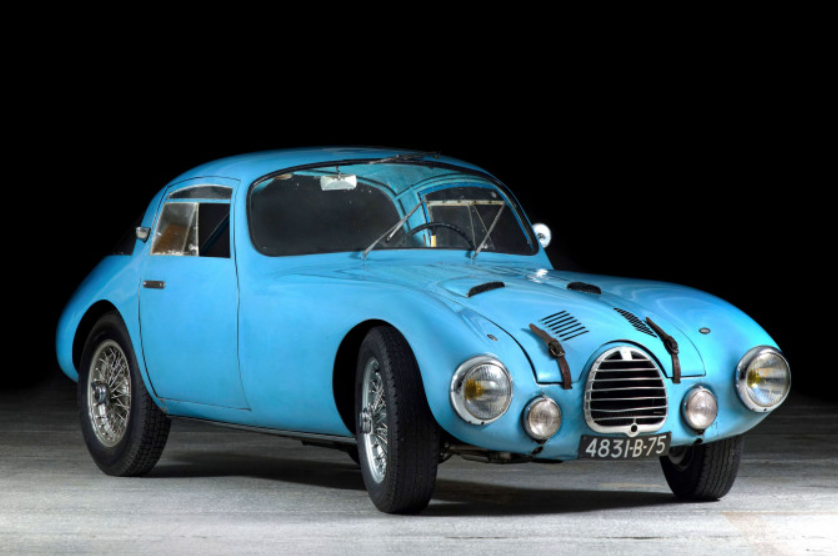
Gordini Type 18S

1950 Gordini Type 18S

Offered by Artcurial | Paris, France | March 18, 2022

Photo – Artcurial

Amedee Gordini started out as a tuner, mostly of Renault products. He eventually got his company into both motorsports (there was a Formula One team at one point) and into sports car production. All of this before Renault acquired the company in 1968.

This Type 18S is one of two produced, and it is powered by the only supercharged Gordini engine, which is a 1.5-liter inline-four. Output was rated somewhere around 175 horsepower. This Simca-based factory race car had the following competition history:

  • 1950 24 Hours of Le Mans – 41st, DNF (with Juan Manuel Fangio and Jose Froilan Gonzalez)

Other famed names to have raced this car in period include Jean Behra and Maurice Trintignant during a competition period that lasted through 1958. The car now has an estimate of $875,000-$1,750,000. Click here for more info.

Update: Sold $1,124,566.

Lagonda 12/24

1925 Lagonda 12/24 Tourer

Offered by H&H Classics | Duxford, U.K. | March 16, 2022

Photo – H&H Classics

Lagonda, which sounds somewhat exotic and high-end, is actually named after a place in… Ohio. The company, which is British, was founded by an Ohioan named Wilbur Gunn. It was taken over by Aston Martin in 1947 and used as a model name on a few Astons over the years.

But this car pre-dates Aston and was offered between 1923 and 1926 alongside the “12”, which carried a slightly lower taxable horsepower rating. Between the two models, approximately 6,000 examples were made, 2,250 of which were the 12/24. Only five are known to exist.

The car features semi-monocoque construction and is powered by a 1.5-liter inline-four that could push the car to 50 mph. Many later Lagondas have swoopy, sporty styling. But this early, more staid example is proof that the company had more humble roots. It has an estimate of $20,000-$22,500. Click here for more info.

Update: Sold $21,666.

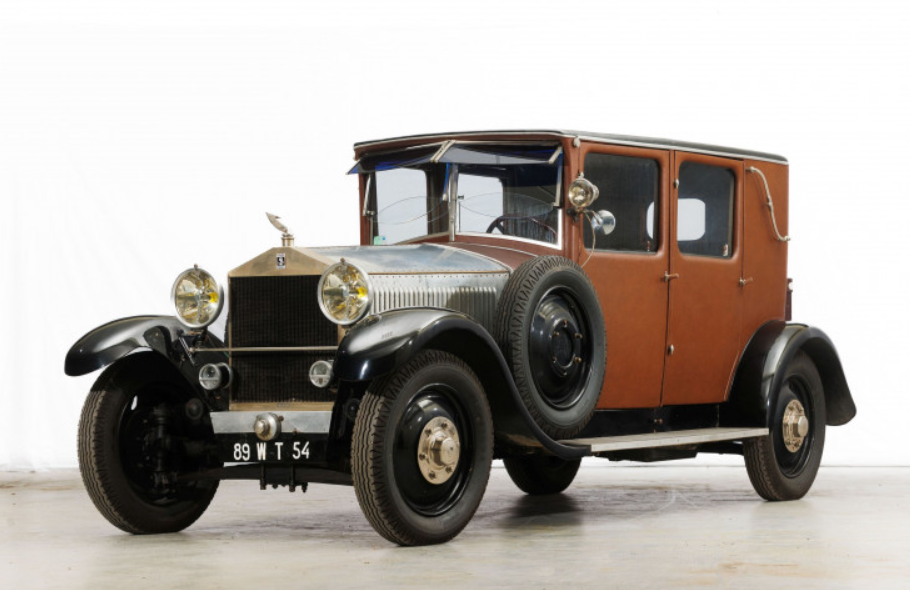
Sizaire Freres

1925 Sizaire Freres 4 RI Berline

Offered by Artcurial | Paris, France | March 18, 2022

Photo – Artcurial

Sizaire-Naudin was a combination of the Sizaire Brothers and family friend Louis Naudin. Their company produced cars from 1903 through 1921, with the Sizaires only remaining with the firm until 1912. The following year they co-founded Sizaire-Berwick with London-based financial investment. By 1920, they had moved onto their own company: Sizaire Freres, which was based solely in France.

The company lasted through 1929 and included models powered by Hotchkiss and Willys-Knight engines. This particular car is powered by a 2.0-liter overhead-cam inline-four that made 50 horsepower. This model was the company’s biggest technical achievement with four-wheel independent suspension, rack-and-pinion steering, and the relatively advanced engine.

The catalog describes the body as “Weymann-type,” which means it’s probably not actually a Weymann body, and the landau bars on the solid rear pillar are an interesting touch. The car hasn’t been driven in a decade and needs mechanical work. Even still, it has a pre-sale estimate of $38,000-$55,000. Click here for more info.

Update: Not sold.

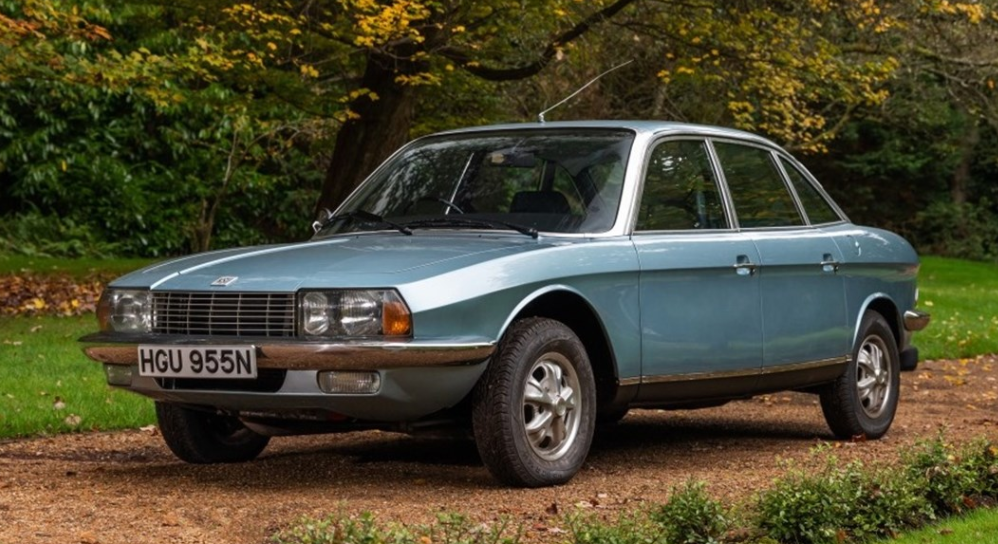
NSU Ro 80

1975 NSU Ro 80

Offered by Historics Auctioneers | Ascot Racecourse, U.K. | March 12, 2022

Photo – Historics Auctioneers

NSU was one of a handful of German automakers that restarted production after WWII. But they really didn’t get going until the late 1950s. In 1967 they introduced this large sedan powered by a Wankel rotary engine. Two years later, the company was acquired by Volkswagen, who eventually merged it into Audi, scrapping the NSU name after 1977.

1977 was also the year the Ro 80 ceased production after a decade and a total of 37,398 examples built. The car was completely out of left field – and in a good way. First, the engine: a 995cc twin-rotor Wankel rotary. It made 113 horsepower and drove the front wheels through a semi-automatic transmission that featured an three speeds and an automatic clutch that worked off of a vacuum system.

The car featured a very low drag coefficient, enabling it to hit 112 mph. The wheels were pushed to the corners, and the interior was appointed with a PVC headliner and carpeted floors. Unfortunately, early cars suffered all kinds of reliability problems that were eventually rectified for later units, but not before the damage was done. Fuel economy was also poor, and all of the warranty claims sucked up NSU’s cash, leading to the VW takeover.

This example is one of 45 registered in the U.K. and has a pre-sale estimate of $17,000-$21,000. Click here for more info.

Update: Sold $10,785.

Kougar Sports

1968 Kougar Sports SB

Offered by Historics Auctioneers | Ascot Racecourse, U.K. | March 12, 2022

Photo – Historics Auctioneers

Kougar Cars was founded by Rick Stevens in 1979 in the U.K. So why is this car listed as a 1968? Well, that’s just what it’s titled as, since the car that gave its life for this Kougar to be born was built in 1968.

There were a lot of less-than-stellar kit cars available circa 1980, but the Kougar wasn’t based on a Beetle pan. Stevens offered a tubular chassis designed to incorporate the suspension and drivetrain from a Jaguar S-Type sedan. The bodywork was especially sporty given the time, and Historics likens it to the Healey Silverstone or Frazer Nash TT Replica of decades prior.

This car is powered by a 4.2-liter Jaguar XK inline-six and apparently carries the chassis tag (and probably suspension components) from a Daimler SP250. The pre-sale estimate is $50,000-$59,000. Click here for more info.

Update: Sold $43,140.

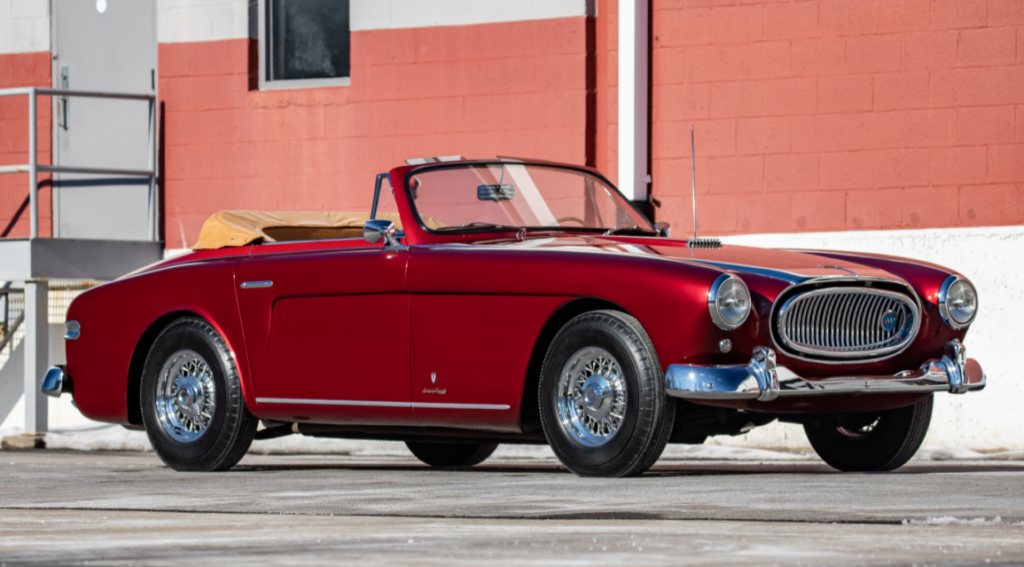
Cunningham C-3 Cabriolet

1953 Cunningham C-3 Cabriolet by Vignale

Offered by RM Sotheby’s | Amelia Island, Florida | March 5, 2022

Photo Courtesy of RM Sotheby’s

There aren’t too many Vignale-bodied American cars, but the Cunningham C-3 is one. But there aren’t too many Cunningham C-3s, either. Only about 24 C-3s were built, all Vignale-bodied. Apparently another dozen or so chassis were built, and some of those were completed individually later on with bodywork limited only by their builders’ imaginations.

Power is from a 5.4-liter Chrysler Hemi V8 that made 220 horsepower when new. C-3 coupes are more common, and just five cabriolets were built. It’s definitely Vignale styling, and it’s another example of American muscle with a sleek Italian body – a common theme of performance cars of the 1950s and 60s.

This was a New York car when new and was shown at Pebble Beach as early as 1956, appearing there most recently in 2015. It was even owned by Briggs Cunningham’s daughter at one point. The pre-sale estimate is $900,000-$1,200,000. Click here for more info.

Update: Sold $1,215,000.

Packard Model 30 Toy Tonneau

1912 Packard Model 30 Toy Tonneau

Offered by Bonhams | Amelia Island, Florida | March 3, 2022

Photo – Bonhams

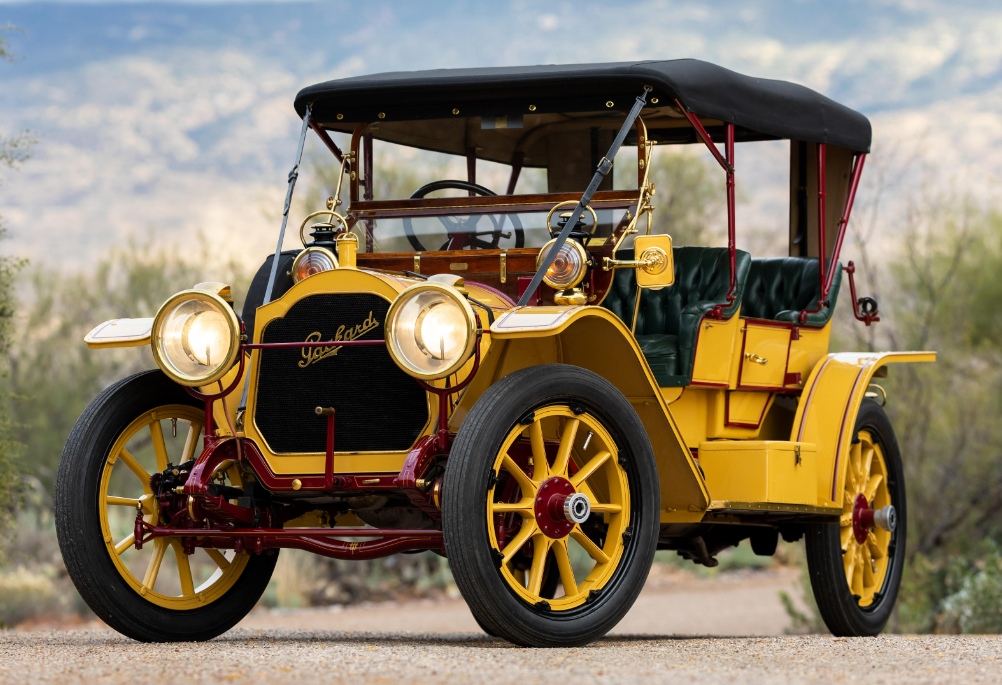
The Model 30 was one of the great early Packards, and it was produced from 1907 through 1912. We’ve feature two of them previously, including a touring car. This is a “toy tonneau,” which looks pretty much like a touring car but with a narrower rear passenger compartment. You can see it in the photo above how the body sits inward of the fenders.

The 30 is powered by a 7.1-liter inline-four that was rated at 30 horsepower when new. The body on this one isn’t original, as it was recreated in a Holbrook style approximately 20 years ago. The car, which is believed to have been the final Model 30 chassis completed, initially spent time with the Detroit Fire Department.

Packard sold 1,250 Model 30s in 1912, and this, the last of them now has an estimate of $250,000-$300,000. Click here for more info.

Update: Sold $257,600.