Lamborghini Jalpa

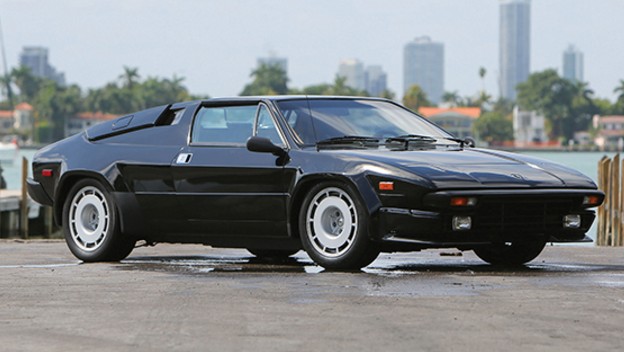
1988 Lamborghini Jalpa

Offered by Auctions America | Ft. Lauderdale, Florida | April 1, 2017

Photo – Auctions America

Lamborghini went bankrupt in 1978 and was acquired by the Mimran brothers in 1980. They updated the Countach, killed off the Urraco and the Silhouette, and introduced the Jalpa (and later the LM002) before selling the brand to Chrysler in 1988.

The Jalpa was based on the earlier Silhouette and was supposed to be Lambo’s “entry-level” model. It’s powered by a 3.5-liter V-8 making 255 horsepower. It was easier to drive than the full-on exotic Countach and the styling, which is by Bertone, is much more restrained. The V-8 was good for a six second sprint to 60 and top speed was 145 mph. All Jalpas were Targas.

This model was introduced in 1981 and 410 were produced before Chrysler killed it off in 1988. They’re around, but they aren’t plentiful – and they’re very 1980s (in a good way). This one should bring between $85,000-$100,000. Click here for more info and here for more from this sale.

Update: Not sold.

March 2017 Auction Highlights, Pt. II

We’re back with more from Amelia Island, beginning with Gooding & Company where they sold a previously-featured Porsche 911 GT1 road car for $5,665,000 – a nice bump over the price the owner paid for it five years ago. The big-money Jaguar XKSS failed to sell, as did the Pegaso. Our Most Interesting award goes to David Brown’s personal 1949 Aston Martin DB Mk II which sold for $1,540,000.
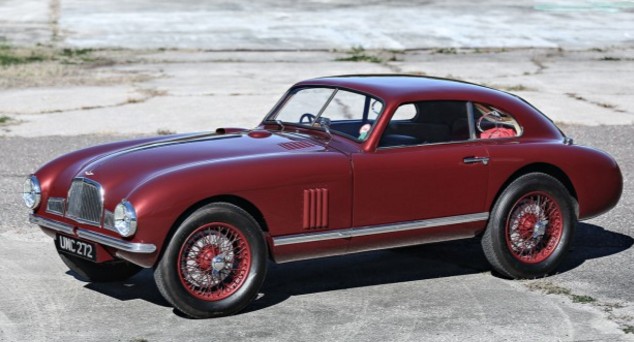
Photo – Gooding & Company

Mazda’s 767B sold for $1,750,000 and the Cisitialia we featured brought $550,000. The rest of Gooding & Company’s Amelia Island results can be found here.

We didn’t get to feature anything from Motostalgia’s Amelia Island sale, but I wish we would’ve featured the top seller, this 1950 Abarth (Cisitalia) 204A Spyder that sold for $1,001,000. Click here for complete results.

Photo – Motostalgia

And now, the final results from Amelia Island: RM Sotheby’s. The Ferrari 166 would’ve been the top seller, but it failed to meet its reserve. So top sale honors went to another of our feature cars, the Bugatti 57S by Vanvooren for $7,700,000. Other million dollar sales included the Lancia Tipo Bocca for $2,145,000, the Supercharged Stutz for $1,705,000, and a previously featured Lancia PF200 Spider that brought $1,248,500.

There were other cars that sold here that we had featured in the past. This beautiful coachbuilt Graham-Paige sold for $770,000 – earning its consignor over a half a million in profit in one year’s time. At the other end of the spectrum, this Atlas Babycar went for just $30,250 – roughly half of what it sold for four years ago.

We’ll give “Most Interesting” to this 1959 Devin D that we neglected to feature. It sold for $88,000.

Photo – RM Sotheby’s

Other feature cars were the Zimmerli Roadster that went for $71,500 and the Meyers Manx that sold for $68,750. To see complete results, including the sale of the Orin Smith Collection, click here.

Now how about a couple of auctions in France? Aguttes held a sale in Lyon and this 1972 Dino 246 GT was the top sale at $335,171.
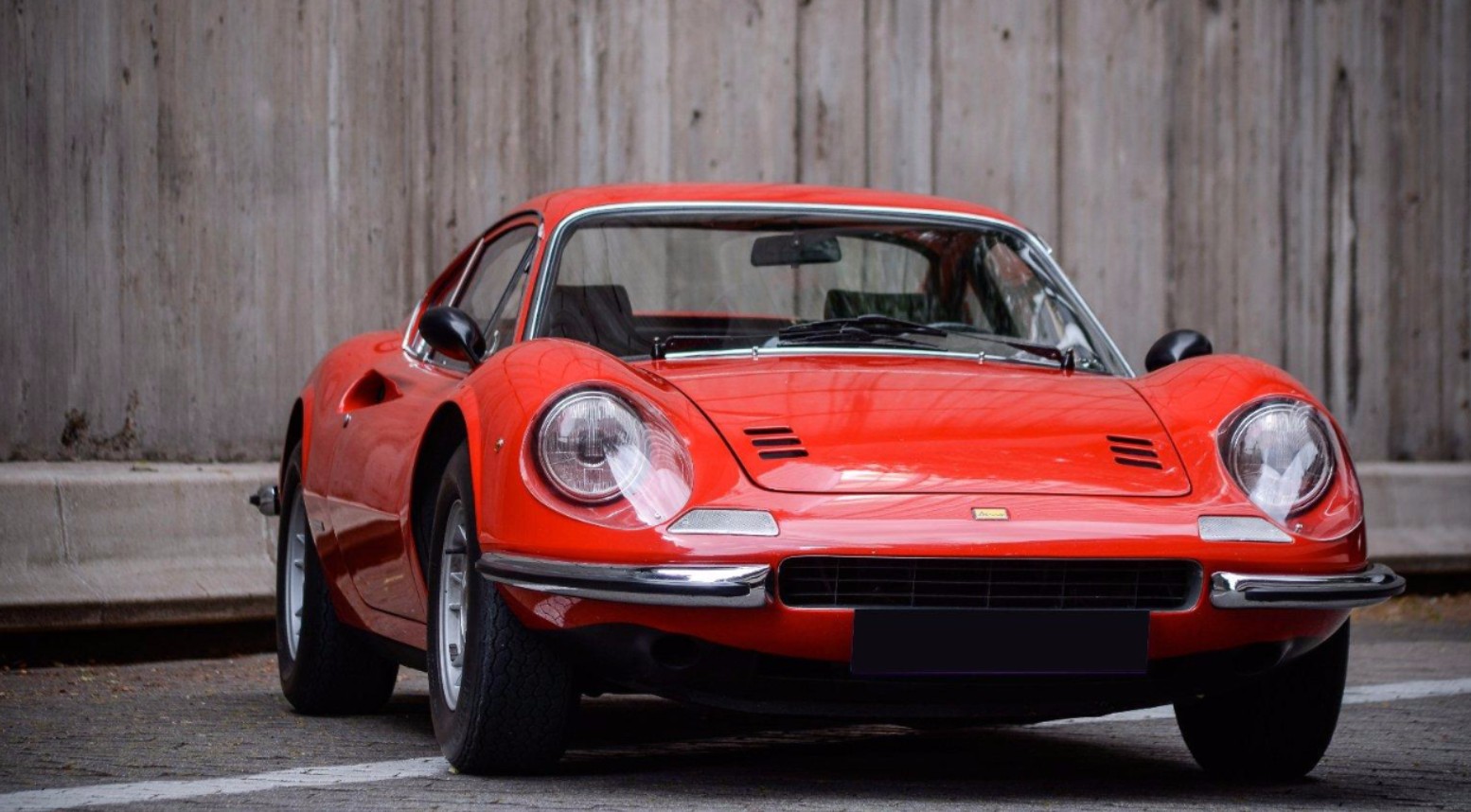
Photo – Aguttes

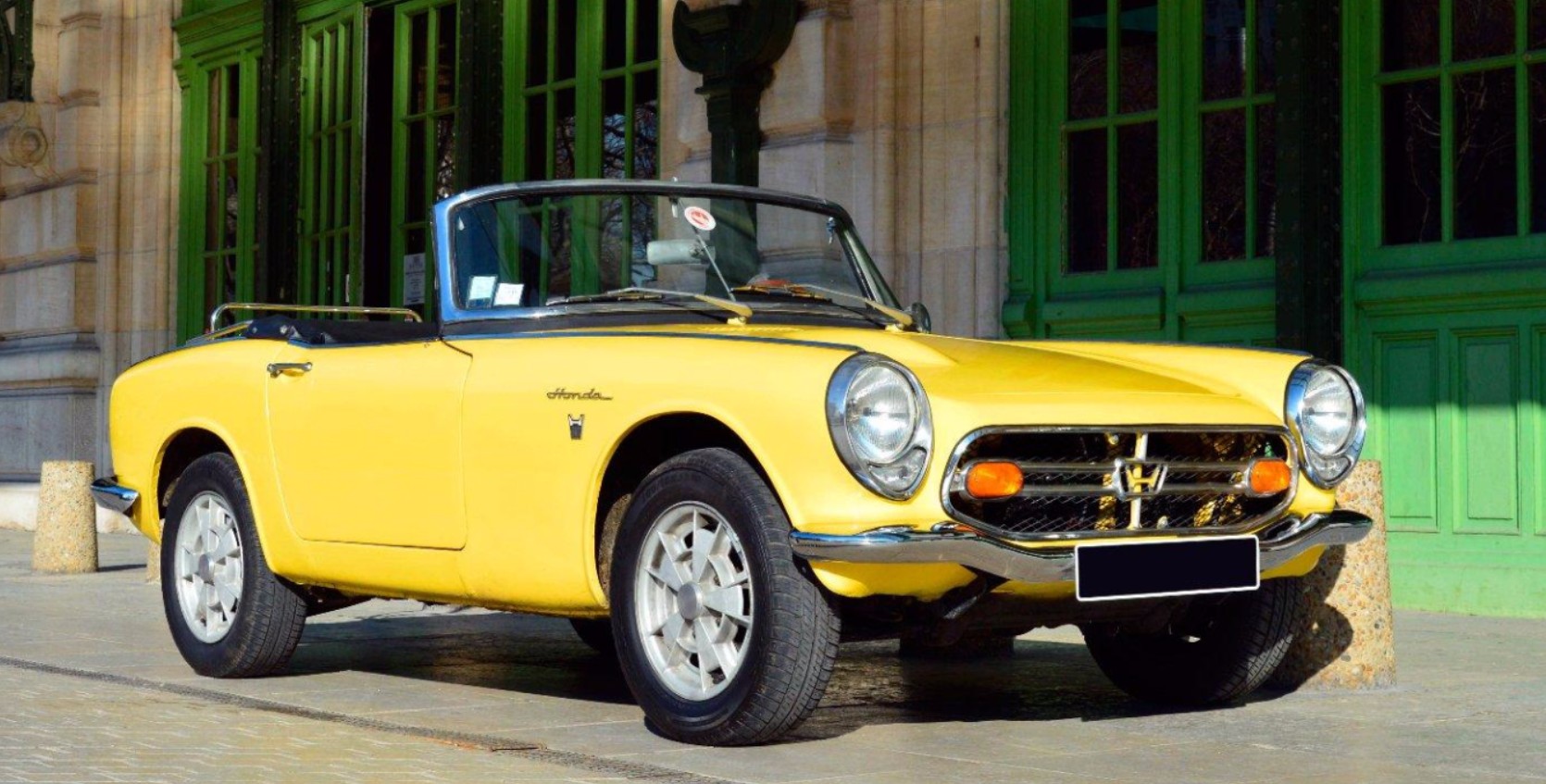
The Honda we featured brought $36,210. Complete results can be found here.

Finally, Osenat auctioned off the Perinet-Marquet Citroen collection. While we didn’t feature anything, this 1969 Citroen DS21 Cabriolet Usine was the top sale at $129,720. Click here for the rest of the results.

Photo – Osenat
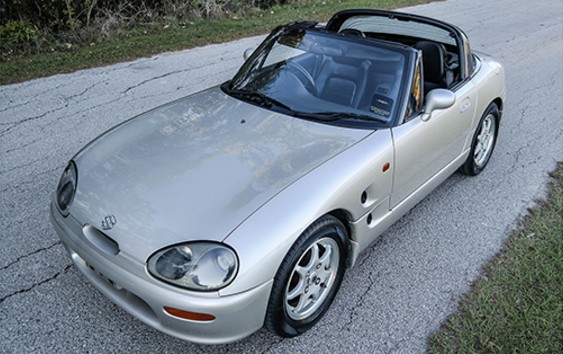
Cappuccino Turbo

1991 Suzuki Cappuccino Turbo

Offered by Auctions America | Ft. Lauderdale, Florida | April 1, 2017

Photo – Auctions America

Japanese Kei cars – small vehicles designed to take advantage of cheaper Japanese tax and insurance regulations – were never sold in the U.S. There were many different versions, but only a few were sports cars. Suzuki designed their Cappuccino to meet Kei car regulations and to be sporty.

These cars have tiny engines – this one is powered by a turbocharged 657cc straight-three that makes 67 horsepower. It won’t set any speed records, but it does rev to 8,500 rpm. And it has 50/50 weight distribution. These facts add up to one thing: it is probably a blast to drive.

Produced from 1991 through 1997, this was Suzuki’s foray into the sports car arena. Name another sporty Suzuki. This example was imported into the U.S. late last year and like all Cappuccinos can have its roof arranged as either a coupe, T-top, targa, or convertible. It is one of what has to be just a handful in North America, especially in the U.S., and should bring between $12,000-$15,000 at auction. Click here for more info and here for more from Auctions America in Ft. Lauderdale.

Update: Withdrawn.

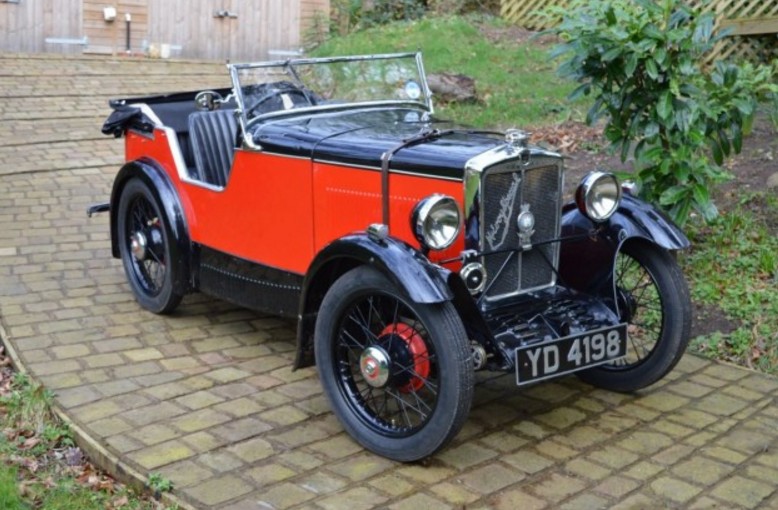
McEvoy Special

1932 McEvoy Special Model 60

Offered by Brightwells | Bicester, U.K. | April 5, 2017

Photo – Brightwells

Michael McEvoy was an engineer who founded McEvoy Motorcycles in Derby in 1925. The company produced very fast motorcycles through 1929, when the money behind the company was killed racing on the Isle of Man. McEvoy moved on but eventually came back around to motorized transport and produced this, the McEvoy Special.

Based on the Wolseley Star/Morris Minor of the late 1920s/early 1930s, the McEvoy Special shared those cars’ mechanicals but sported a body from Jensen. This seemingly tiny car will seat four and cost £149 when new.

This particular Special is based on a 1932 Morris Minor and is powered by that car’s 847cc straight-four that made 20 horsepower in Morris form. McEvoys could be had as a standard “Model 60” or, when fitted with an upgraded carburetor, a “Model 70.”

This car has known history back to 1962. The owner put it in a museum in 1973 where it underwent a 16 year restoration. It exited the museum in 1989 and has been used extensively since. Coming out of 55 year ownership, this car – one of about 60 built – should bring between $18,000-$22,000. Oh, and after WWII, McEvoy found himself in Germany where he played an active part in saving Volkswagen’s factory from destruction and ensuring the marque’s future. No big deal. Click here for more info.

Update: Sold $28,566.

Stutz Speedway Four

1923 Stutz Speedway Four Roadster

Offered by Mecum | Houston, Texas | April 6-8, 2017

Photo – Mecum

The Speedway Four was a model produced by Stutz in 1923 and 1924. This car is titled as a 1922 and is listed in the catalog as such, but Stutz’s 1922 line consisted solely of the 80 horsepower Series K.

Stutz produced two Speedway models – the Four and the Six. Which one do you think was larger and more powerful? You’re wrong, it’s the Four. It’s powered by a 5.9-liter straight-four making 88 horsepower and rides on a 130″ wheelbase. That compares to the Six’s 70 horses and 120″ wheelbase.

Eight body styles were offered and this Roadster looks the part of the performance car it was – and still is. Stutz motorcars are sought after for their power, build quality, and modern day usability. This well restored car is coming out of a decent-sized collection and you can find out more here. And for more from Mecum, click here.

Update: Sold $35,000.

Update: Not sold, Mecum Harrisburg 2017, high bid of $80,000.

Update: Sold, Mecum Indy 2018, $71,500.

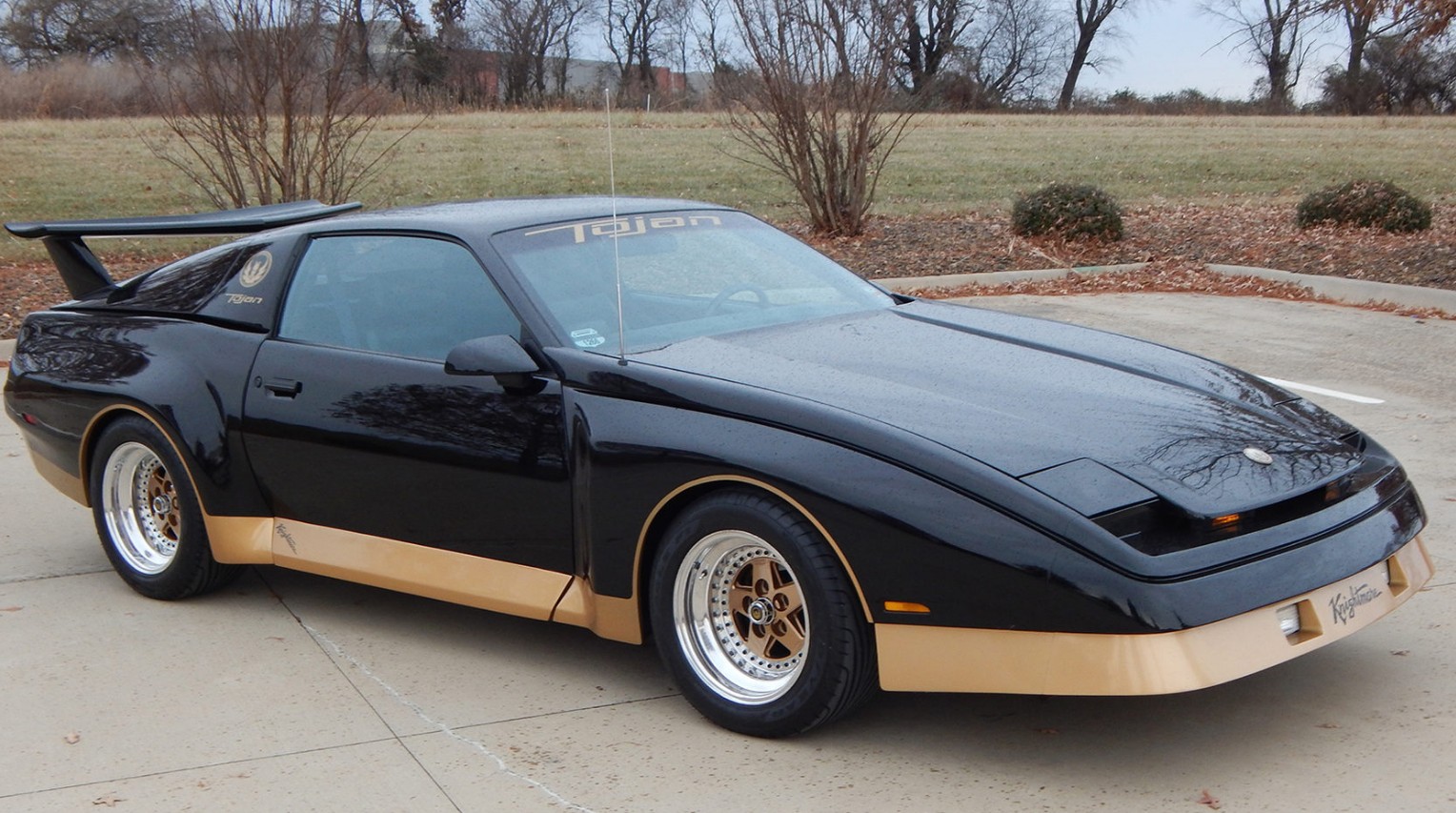
Pontiac Tojan

1991 Pontiac Tojan Knightmare

Offered by Mecum | Kansas City, Missouri | March 24-25, 2017

Photo – Mecum

Ford Mustangs have their famous aftermarket tuners, specifically, Saleen. General Motors never quite had the same thing (they did in the 60s, with Yenko and the like). But for more modern Camaros and Firebirds, you were pretty much left to either DIY or hope GM put out some factory monster. Most GM tuners were focused on Corvettes.

Enter Nebraska-based Knudsen Automotive (who also built a low-run neo-classic). They lent their hand to turning third generation Pontiac Firebirds into more exotic-looking sports cars. Between 1985 and 1991, they made 133 Tojans. Only three of those were “Knightmares.” Powered by Pontiac’s 5.7-liter V-8, this Knightmare also features the optional rear wing that looks like it was plucked directly off a Countach.

The point of the Tojan was, for some serious cash (about $55,000 in the late 80s), give you an American sports car that could keep pace with a Ferrari 308. This 41,000 mile car with cousin-to-KITT appearance is pretty rare. I saw a red Tojan at a car show once and it definitely got my attention. Click here to see more about this car and here for the rest of Mecum’s Kansas City lineup.

Update: Sold $13,500.

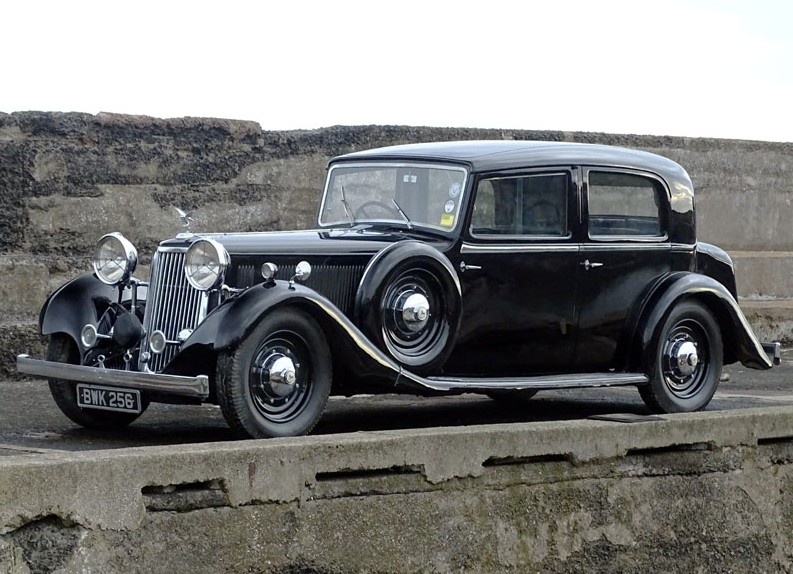
Armstrong Siddeley Special

1935 Armstrong Siddeley Special Mk II Touring Limousine

Offered by H&H Classics | Duxford, U.K. | March 29, 2017

Photo – H&H Classics

Armstrong Siddeley was a company that came together when two other companies merged. Those companies were Armstrong Whitworth and Siddeley-Deasy. Each of those companies were the result of a merger of two other companies. Basically Armstrong Siddeley was the culmination of four different, earlier, automotive companies.

Armstrong Siddeley began in 1919 and produced cars until 1960. From that point on, they focused on aircraft and aircraft engines. Through a series of mergers, they are now part of Rolls-Royce (the aircraft company).

This Special is one of the rarest Armstrong Siddeleys ever built. It was introduced in 1932 and went on sale for 1933, being sold through 1937. Only 253 were built. It’s powered by a 5.0-liter straight-six that offered pretty good performance for its day. This would’ve been their attempt to compete with the likes of Rolls-Royce.

This particular car was a factory demonstrator and is one of about 30 cars that are still in existence. Recently, it was owned by the a trustee of the National Motor Museum and the head of the Armstrong Siddeley Heritage Trust. It runs and drives, but needs a little work to be roadworthy. It will sell at no reserve and you can find more about it here (and more from H&H Classics here).

Update: Sold $28,777.

NSU Kettenkrad

1944 NSU Kettenkrad

Offered by Bonhams | Goodwood, U.K. | March 19, 2017

Photo – Bonhams

It’s weird how war can create the need for vehicles that previously did not exist. Take this, the Kettenkrad – or, technically, the SdKfz 2. “Kettenkrad” is basically German slang for “tracked motorcycle.” This vehicle – it’s not technically a tank, and not technically a motorcycle, nor technically a tricycle (it has the right layout but more wheels than most trucks) – was designed and manufactured by NSU in Germany.

Produced between 1939 and 1948, the Kettenkrad was designed to be used by the German airborne, as it could fit in the cargo compartment of a Junkers Ju 52 – but it couldn’t be dropped via parachute. It’s powered by the 1.5-liter, 36 horsepower straight-four from an Opel Olympia. Top speed was 44 mph – making it the fastest tracked vehicle of WWII.

This has known ownership history back to 2011 (yep) and it’s been completely restored. Kettenkrads are a staple of every WWII movie set in Europe. By the time wartime production stopped in 1944, 8,345 of these had been built. Production resumed after the war as these were popular on farms. About 550 more were built through 1948. This immaculate wartime example should bring between $75,000-$100,000. Click here for more info and here for more from this sale.

Update: Sold $64,108.

Georges Irat Roadster

1936 Georges Irat Roadster

Offered by Osenat | Fontainebleau, France | March 19, 2017

Photo – Osenat

Georges Irat was a car company founded by, guess who, Georges Irat. He started out building engines but turned to full automobile production in 1921. Production continued up to the outbreak of the war and after the war they introduced a few prototypes but they never entered production. They closed their doors in 1953.

One of the company’s more popular pre-war models was the sporty Roadster. It was powered by a Ruby 1.1-liter straight-four, an engine produced by the company’s new corporate overload, Godefroy et Leveque. Right before production ended, a larger engine became available.

About 1,500 of these 6CV rated cars were produced between 1935 and 1939. This sporty, rare, front-wheel drive French Roadster was restored in 1998 and should bring between $21,000-$31,000. Click here for more info and here for more from this sale.

Update: Sold $32,430.

Honda S800

1968 Honda S800 Cabriolet

Offered by Aguttes | Lyon, France | March 18, 2017

Photo – Aguttes

Honda is known for their economy cars and hatchbacks. But the second production car they ever built was a sports car, the 1963 S500. The S800 was introduced two generations later in 1966. It wouldn’t have a successor until 1999’s S2000.

The S800 was produced as a coupe and convertible and its targeted competitors included the likes of the Austin-Healey Sprite and MG Midget. It’s basically Japan’s first take on the classic English roadster. Take that Mazda Miata. The engine here is a 791cc straight-four making 78 horsepower. And it revs to almost nine grand, so it’s going to sound awesome with the top down.

Only 11,536 examples of the S800 were built between 1966 and 1970. The current owner acquired this example in the early 1990s and had it restored. The bright yellow paint looks great and the styling on this cars continues to improve with age. With less than 20,000 miles since the restoration, it’s still relatively fresh and ready to rev. It should bring between $24,000-$30,000. Click here for more info and here for more from this sale.

Update: Sold $36,210.