Nash Special Six

1928 Nash Special Six Cabriolet

Offered by Mecum | Las Vegas, Nevada | February 27-28, 2015
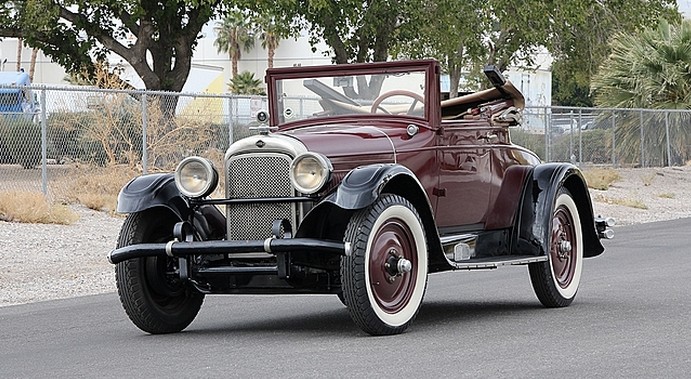
Photo - Mecum

Photo – Mecum Auctions

Nash Motors Company was founded by Charles W. Nash, a former G.M. president, in 1916 when he acquired the Thomas B. Jeffrey Company. Nash branded cars went on sale in 1917. The company would  go on to become part of American Motors, with the Nash name disappearing after 1957.

This Special Six wears an attractive body from the Seaman Body Corporation, which from 1919 was part of Nash. The Special Six nameplate dates back to 1925 and lasted through 1929. It was Nash’s mid-range model for 1928 (a year in which they only offered six-cylinder models). It was slotted between the Standard and Advanced Six models.

The engine is a 3.7-liter straight-six making 52 horsepower at 2600 rpm. This Model 341 Cabriolet retailed for $1,290 in 1928. It has a rumble seat and rear-mounted spare tire. It shows very nice. Click here for more info and here for more from this sale.

Update: Sold $17,000.
427 S/C Cobra

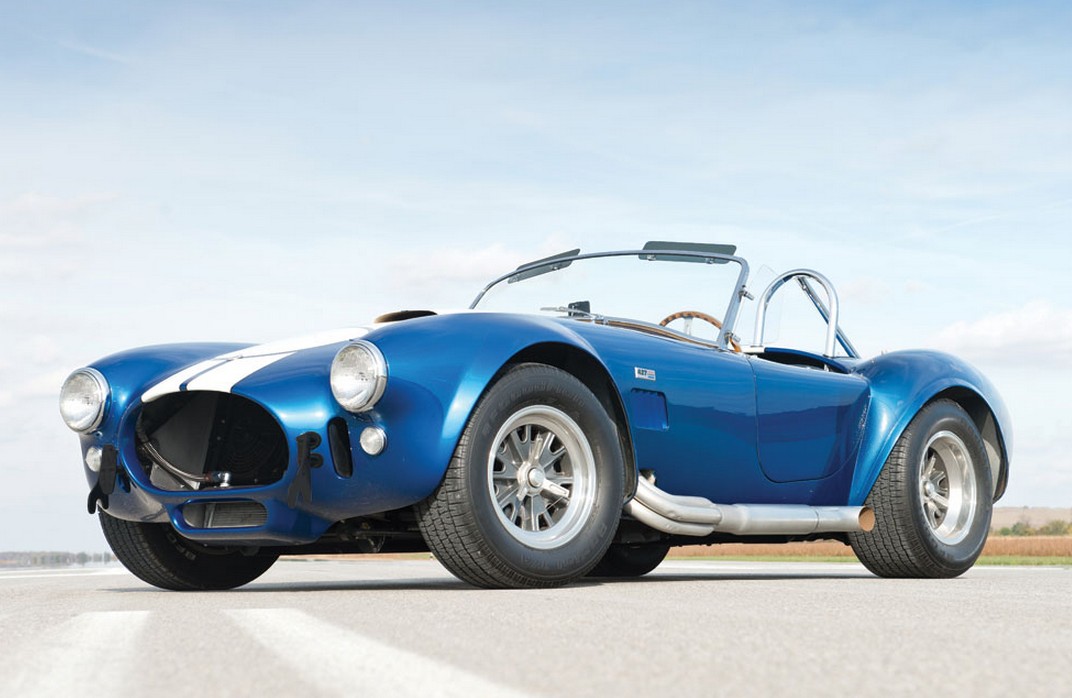
1967 Shelby Cobra 427 S/C

Offered by RM Auctions | Amelia Island, Florida | March 14, 2015

Photo - RM Auctions

Photo – RM Auctions

Here it is. One of the greatest cars of all time. By 1965, there had already been two versions of the Cobra. First, the 260, and then the 289. But the Cobra’s competitors were getting faster and faster and the 289 didn’t have any more power to give. So Carroll Shelby went to ford to get an aluminium 390 V8 and Ford said no and gave him this old iron-block 427 V8 instead.

The thing was monstrous and heavy and the Shelby team had to redesign the chassis to handle it. This is why 427 Cobras have those wide hips compared to earlier cars. So the Mk III Cobra, the 7.0-liter 427 V-8 powered monster, was built between 1965 and 1967.

What makes this even more special is that Shelby was a racer at heart and he wanted to see these things taking checkered flags all over the world. As the FIA was screwing around with their rules and classifications for different cars, Shelby was just trying to keep up. He ordered 100 competition Cobras from AC. 53 were completed before the FIA changed things again and Shelby put a hold on the order. But the new rules pitted the Cobra and GT40, siblings, against each other. Carroll bowed the Cobra out to run the GT40 program and left these roadsters to privateers, selling 16 of his 53 competition Cobras to private teams.

But he had some leftovers. Instead of racing them, they painted them (and this blue with two white stripes is the absolute best Cobra paint scheme there is) and sold them to the public as “Semi-Competition” (or S/C) road cars. They were the fastest street cars ever produced at the time of their introduction (and for quite a few years afterward).

The engine puts out 485 horsepower in S/C form. Top speed is said to be about 185 mph, which is insane for 1967. This particular car has known ownership history from new and 18,000 original miles. It has light SCCA competition history and is one of 29 authentic factory 427 S/C Cobras built. It’s incredible. You can read more here and see more from RM in Amelia Island here.

Update: Sold $2,117,500.

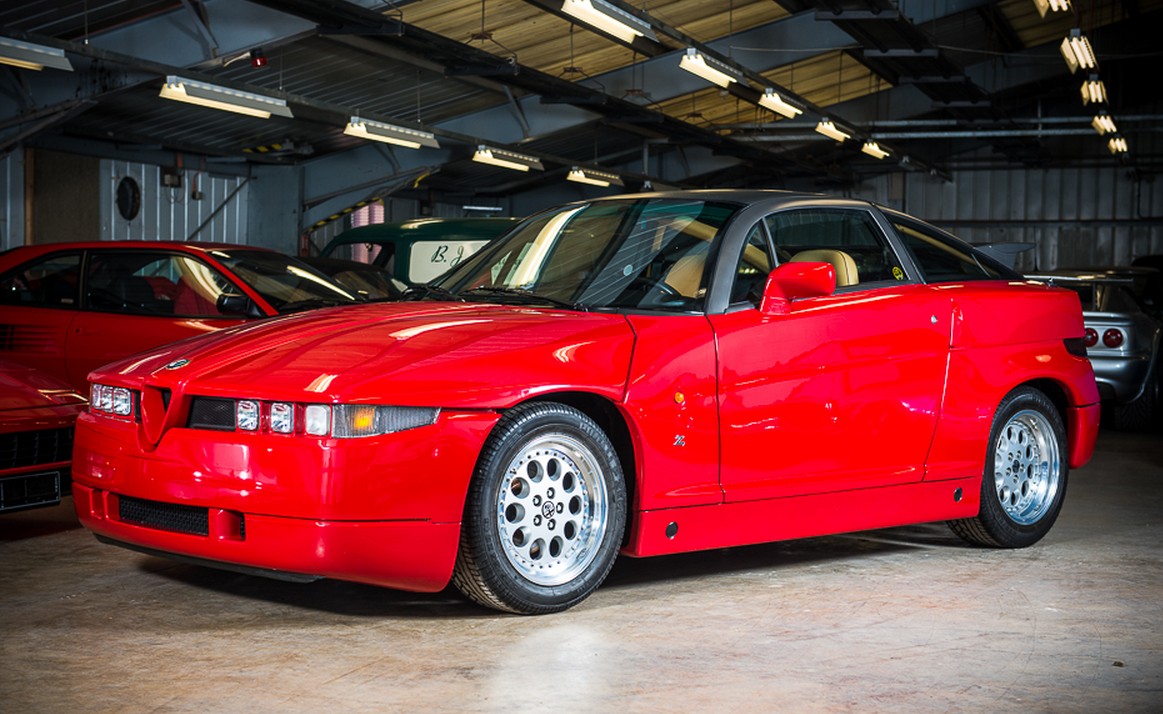
Alfa Romeo SZ

1991 Alfa Romeo SZ

Offered by Silverstone Auctions | Coventry, U.K. | February 21-22, 2015

Photo - Silverstone Auctions

Photo – Silverstone Auctions

The SZ (and it’s roadster twin, the RZ) were the result of a successful collaboration between Alfa Romeo and Zagato – two companies whose intertwined histories go back decades. The SZ was built first, launching in 1989 with production continuing through 1991.

The design by Zagato is rather boxy but definitely unique (Zagato really bought into boxy in the early 1990s). The RZ could only be had in one color: red with a tan interior (although one back car was built for Andrea Zagato). The engine is a 3.0-liter V-6 making 208 horsepower. It’s a compact little thing and for 1991, was pretty zippy.

Only 1,036 SZs were built and this one was sold new in the Netherlands. It’s for sale from it’s original owner and it only has 502 miles on it – so it’s basically brand new. Look for it to bring between $59,000-$82,000. Click here for more info and here for more from this sale.

Update: Sold $130,805.

“Shorty” Mustang

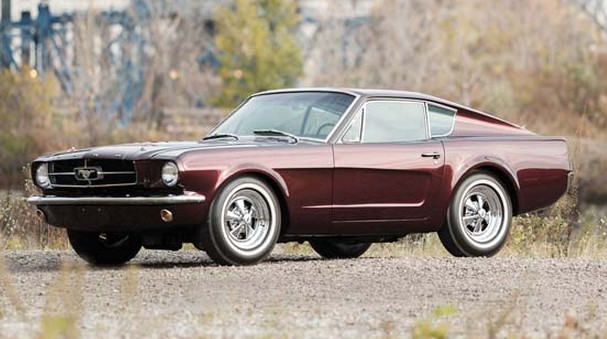
1964½ Ford Mustang “Shorty” Concept

Offered by Auctions America | Ft. Lauderdale, Florida | March 27-29, 2014

Photo - Auctions America

Photo – Auctions America

This may be a car you are not familiar with. It looks like a normal 1965 – or, 1964½, my apologies – Mustang that got struck in a trash compactor. Believe it or not, this was actually a Ford factory concept car, its construction having been outsourced to Dearborn Steel Tubing Industries. This car was originally the 10th Mustang Prototype, but designer Vincent Gardner cut 16 inches out of the wheelbase and re-designed the entire body behind the firewall.

Ford had no intentions of ever building a two-seat-only Mustang because a car with four seats has broader appeal than does one with room only for two. But just for the hell of it, Ford decided to have this concept built anyway. After a few shows and magazine covers, Ford decided enough was enough and planned to have the car scrapped.

But Gardner had other plans. He stole the car and hid it in a warehouse… but he failed to continue to pay his rent and the warehouse’s owner found the car and called the cops. When the Mustang went missing, Ford’s insurance paid them for it, fearing it lost. So now the insurance had the car and Ford already had their money. So they sold it to one of their employees who kept it until 1968 when the current owner acquired it.

It was kept hidden away until the past 15 years, when it was restored and shown at various shows. In fact, here’s a video I took of it driving around last summer. The engine is a 4.9-liter V-8 and the body is fiberglass. Obviously, this is the only Mustang quite like this and it should sell for between $400,000-$600,000. Click here for more info and here for more from this sale.

Update: Sold $511,500.

Here’s video of this actual car:

Duesenberg SJ-553

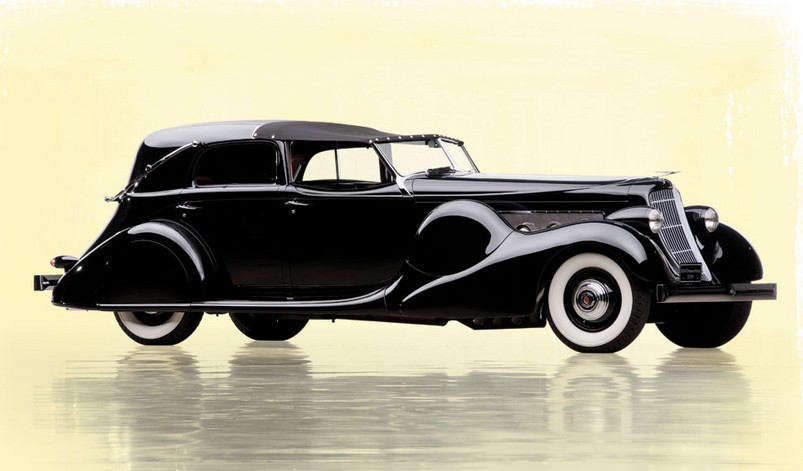
1935 Duesenberg Model SJ Town Car by Bohman & Schwartz

Offered by RM Auctions | Ft. Worth, Texas | May 2, 2015

Photo - RM Auctions

Photo – RM Auctions

It’s been quite awhile since I’ve done a write-up on a Duesenberg. This is an SJ, a factory supercharged example. What’s even better is that it has it’s original chassis, engine and body – there aren’t many SJs (or any Duesenbergs) that can say that.

The SJ was a supercharged version of the standard 6.9-liter straight-eight that pumps out a still-impressive 320 horsepower. The history of this car is interesting: it was a bare chassis sitting in a Duesenberg warehouse after the great clamor for these cars had passed. Designer Herb Newport of Bohman & Schwartz penned this body and the car was to be built for Mae West, who bought another Model J before this one was done.

Instead, this car was sold to Ethel Mars, of the Mars Candy Company. She was chauffeured around Chicago in this car for years. The car then had a string of Chicago-area owners into the 1960s before Bill Harrah got his hands on it. When his collection was dispersed, this car had a few more owners before RM sold it in 2007 for $4.4 million.

So how rare is this combo? Well, it’s a one-of-one design and it’s one of only 36 factory supercharged Model Js built (less than 30 remain). Only 10 have one-off bodies on an original SJ chassis. Bohman & Schwartz only bodied nine Duesenbergs and five of those were rebodies – making this one of four Bohman & Schwartz originals.

It has known ownership history since new and could top $5 million. Check out more here and see more from The Andrews Collection here.

Update: Sold $3,630,000.

Bugatti Profile Aerodynamique

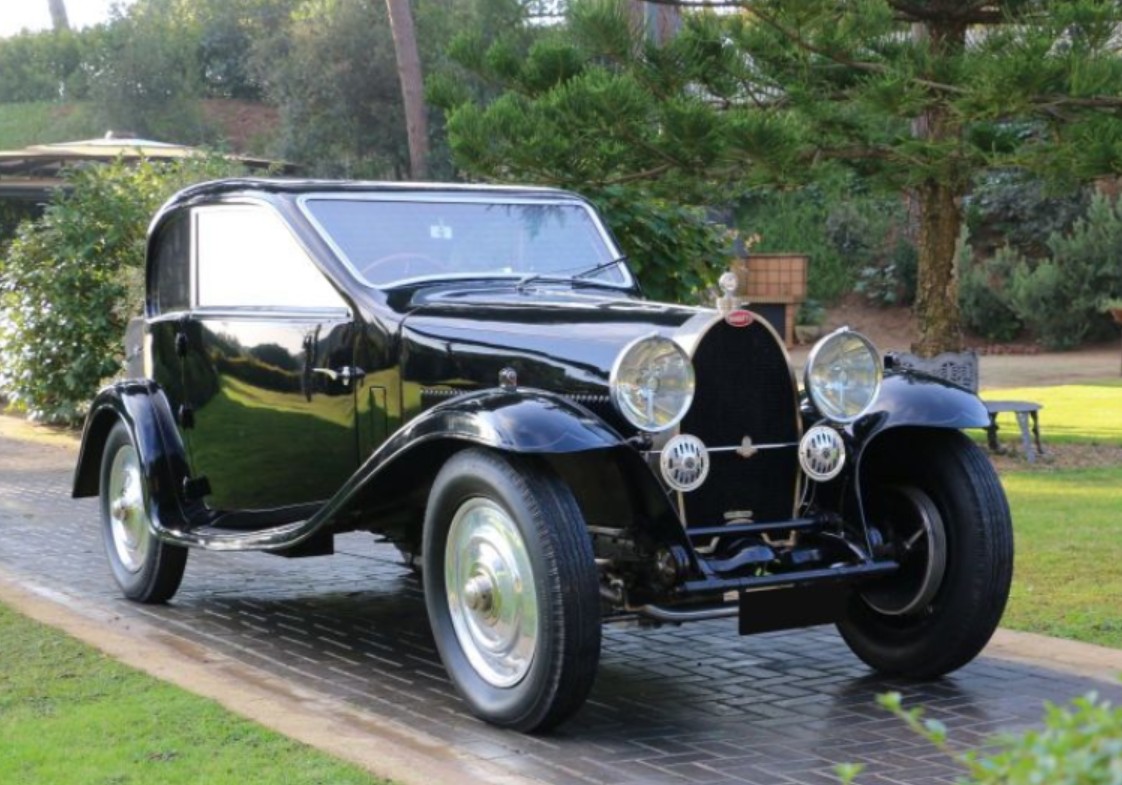
1928 Bugatti Type 44 Profile Aerodynamique by Gangloff

Offered by Artcurial | Paris, France | February 6, 2015

Photo - Artcurial

Photo – Artcurial

The eight-cylinder Bugatti that began with the Type 30 in 1922 would go on to spawn a series of models, including this, the Type 44. It was the most prolific model in the line, remaining in production from 1927 through 1930. In all, 1,095 were built.

The engine is a 3.0-liter straight-eight and the body is an interesting one. It’s aerodynamic and boxy all at the same time – very sporty for the 1920s. Compare the design of this car to the bigger, boxier touring cars of the late 20s and early 30s. It’s just so different.

This car has a very extensive history that you can read more about here. It has known ownership history going back many decades and is kind of a “lost Gangloff,” to borrow a term from the art world. And this car is a work of art. It should sell for between $290,000-$350,000. Click here for the rest of Artcurial’s sale lineup.

Update: Sold $450,409.

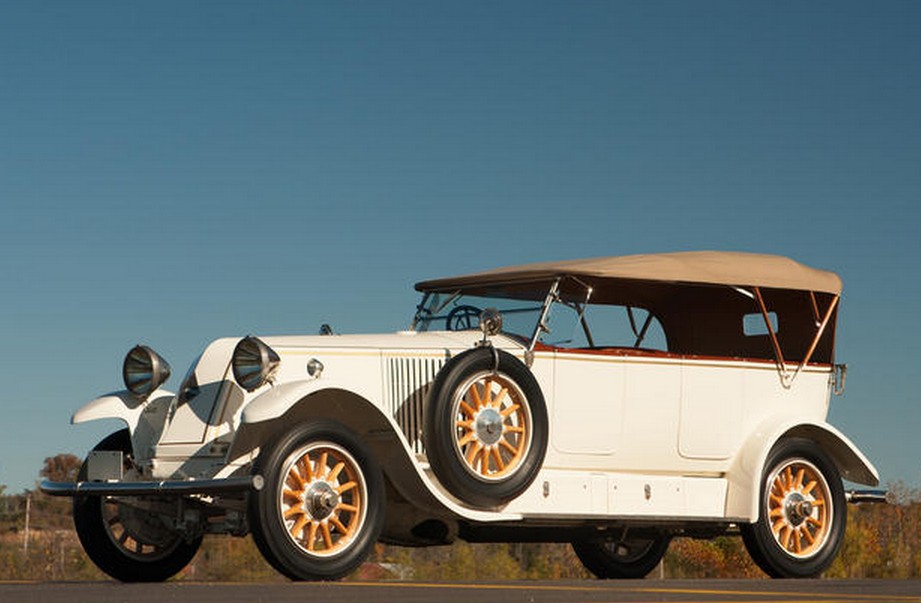
Renault 40CV Torpedo

1925 Renault 40CV Torpedo

Offered by Bonhams | Paris, France | February 5, 2015

Photo - Bonhams

Photo – Bonhams

Renault began by producing small, De Dion-powered automobiles and even today they’re known primarily for their smaller cars. But for a brief period of time, they built some big fanciful cars, like this the 40CV.

In fact, not only was this Renault’s big car, it was the biggest car on the market at the time (until Bugatti topped them all with the Royale). This car is powered by an absolutely massive 9.1-liter straight-six that makes about 120 horsepower. These were seriously grand cars, rivaling the best from Rolls-Royce and Panhard and other European marques. As proof, between 1920 and 1928, the 40CV was the official car for the French President.

All were custom built to suit. This one carries its original coachwork, although the coachbuilder has never been identified. It was owned by the Nethercutt Collection between 1984 and 2010 and the restoration is over 20 years old.

Although introduced originally in 1911, the 40CV underwent changes over the years and the final “HF” version featuring the 9.1-liter engine was new for 1920. Between 1924 and the end of production in 1928, only 608 were built. Only six are known to survive and only a few of those are in private hands. This is your chance to be one of very few. It should bring between $410,000-$520,000. Click here for more info and here for more from this sale.

Update: Not sold.

Update II: Not sold, Barrett-Jackson Scottsdale 2016, high bid of $357,500.

Update III: Not sold, Auctions America Ft. Lauderdale 2016, high bid of $290,000.

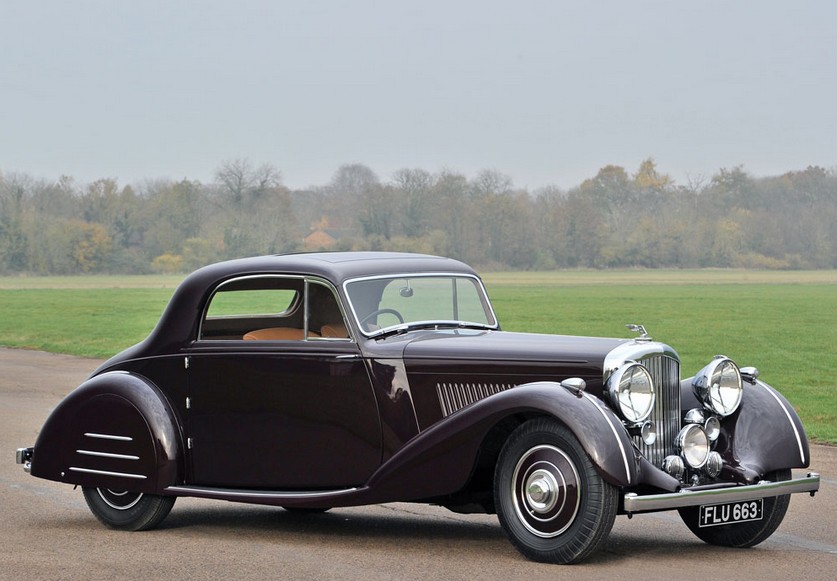
Bentley “Honeymoon Express”

1939 Bentley 4¼ Litre Sports Coupe “Honeymoon Express” by Park Ward

Offered by RM Auctions | Paris, France | February 4, 2015

Photo - RM Auctions

Photo – RM Auctions

The Bentley 4¼ Litre was an offshoot of the Bentley 3½ Litre, which was introduced in 1933. When the engine was enlarged in 1936, the name of the model was changed to reflect it. Note, this model is not the same as the Bentley 4½ Litre or even the plain old Bentley 4 Litre.

Bentleys of this period were actually built under new corporate overlord Rolls-Royce and are sometimes referred to as “Derby Bentleys” because they were produced at Rolls-Royce’s Derby plant. The engine in this car is a 4.3-Liter straight-six making 126 horsepower. But it’s the body that is really interesting.

This was Park Ward’s 1938 Earl’s Court Motor Show car. It’s a two-seater, which was rare for this platform. Instead of rear seats, it has luggage space – just enough for two newlyweds to go off on a jaunt around England. The head of Park Ward kept the car for himself after the show. It later passed to an American serviceman in the 1960s and he kept it until 2002.

A five year restoration was completed in 2011 and it is gorgeous. Bentleys are drivers’ cars and this one is no different. It will prove to be a lot of fun for its new owner. Look for it to bring between $700,000-$840,000. Click here for more info and here for the rest of RM’s Paris lineup.

Update: Sold $769,440.

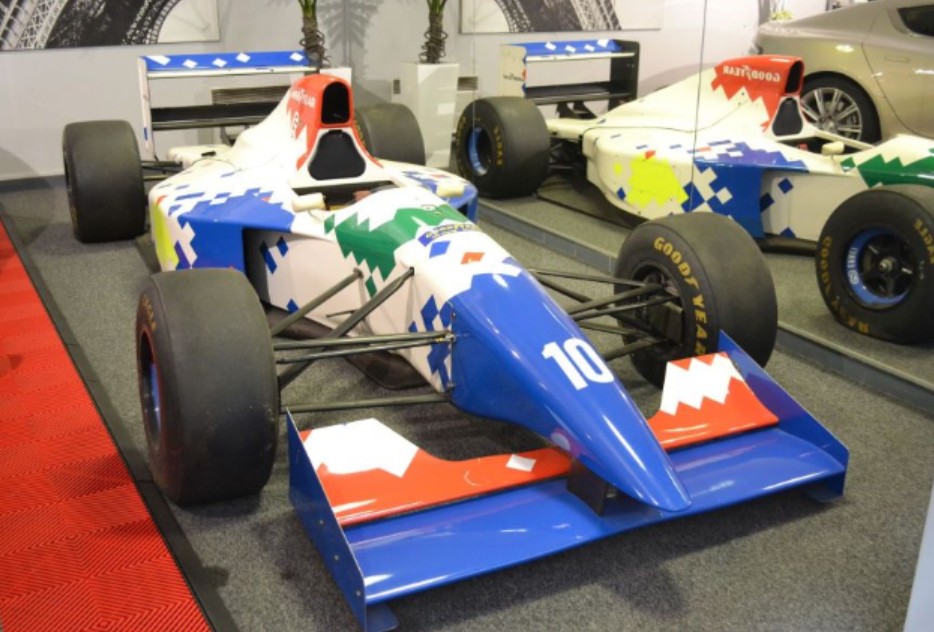
Footwork FA15

1994 Footwork-Ford FA15

Offered by Artcurial | Paris, France | February 6, 2014

Photo - Artcurial

Photo – Artcurial

Arrows Grand Prix International was formed in 1977 by Franco Ambrosio, Alan Rees, Jackie Oliver, Dave Wass, and Tony Southgate. “Arrows” was a play on the first letters of their last names. The made their race debut in 1978. In 1990, the team received a large investment from Japanese businessman Wataru Ohashi and his logistics company, Footwork Express.

For 1991, the team was actually renamed from Arrows to Footwork Arrows. They competed under the “Footwork” name from 1991 through mid-1996, so technically, even though the catalog description here lists this as an Arrows, it’s actually a Footwork car. The engine is a Ford-Cosworth 3.5-liter V8. The car was a relative backmarker and this example (of the two built) was campaigned by Gianni Morbidelli. The only finishes of this car are:

  • 1994 German Grand Prix – 5th
  • 1994 Belgian Grand Prix – 6th
  • 1994 Portuguese Grand Prix – 9th
  • 1994 European Grand Prix – 11th

The other 12 races were DNFs, although Christian Fittipaldi fared better in the sister car, enough to take Arrows to 9th in the constructor standings at the end of the year. At any rate, if you want an easy-to-use late-model F1 car for fun, this one will run you between $80,000-$150,000. Click here for more info and here for more from this sale.

Update: Sold $209,119.

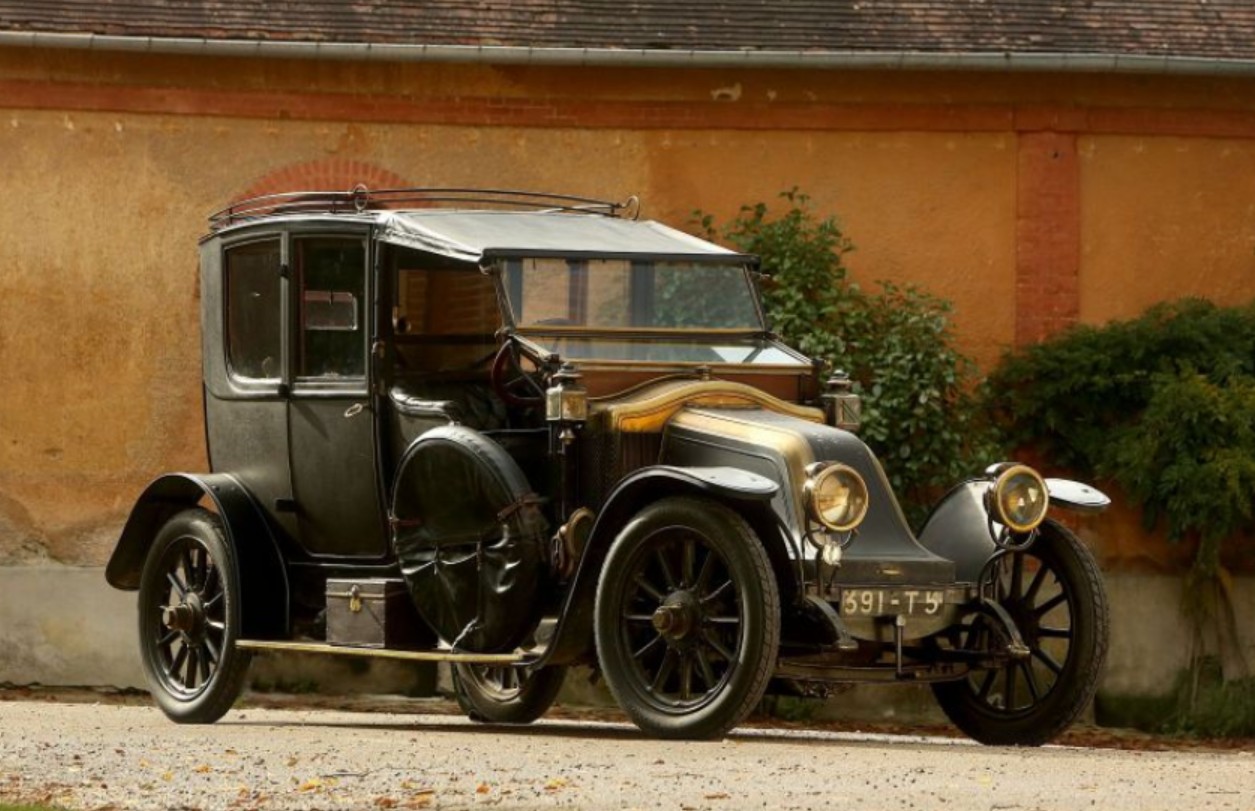
Renault DP Coupe-Chauffeur

1913 Renault Type DP 22/24HP Coupe-Chauffeur by Renaudin et Besson

Offered by Artcurial | Paris, France | February 6, 2015

Photo - Artcurial

Photo – Artcurial

What you can’t see in this image (and what you’ll have to go to Artcurial’s website to check out) are pictures of this car’s interior. It looks like a haunted house in there (and it’s kind of frightening in a kids-in-Victorian-clothing kind of way from the outside too). We sometimes think of the Twentieth Century as “modern times,”  but if you think about it, our knowledge of pop culture doesn’t really go back any farther than the 40s or 30s, or, in some cases, the 20s. But pop culture in the 1900s and 1910s is a mystery to most of us – and so is what they considered stylish and what constituted general day-to-day life. Look at the interior of this car and you can see how far we’ve come.

That was a bit of rant, but here’s some info about this car: the Type DP was built between 1913 and 1914 only. It uses a 5.0-liter, water-cooled straight-four making 24 horsepower. The body here is by Renaudin et Besson of Paris and it is mostly wooden.

This was Renault’s flagship car prior to WWI and this example has been in the same family since new (it is now owned by the great-great grandson of the original owner). It has never been restored and is ripe for preservation awards the world over. It’s really an incredible time capsule and can be yours for between $350,000-$590,000. Click here for  more info and here for more from this sale.

Update: Not sold.

Update: Sold, Gooding & Company Pebble Beach 2023, $78,400.