Duesenberg J-462

1932 Duesenberg Model J LWB Custom Speedster

Offered by Worldwide Auctioneers | Houston, Texas | May 5, 2012

Quick, somebody call Fran Roxas or someone similarly talented, ’cause this Duesey needs a new body. Chassis no. 2522 was one of the later cars built and some records show that it may not have actually been completed and sold until 1935, although it is currently titled as a 1932. Engine J-462 is under the hood, making the standard 265 horsepower.

The original body was a Murphy Beverly Berline – which is attractive. It is thought that the original body was removed and replaced by what you see here sometime in the late 1940s or 1950s. Most of the body panels came off of GM cars of the era. Exotic.

The car is often referred to as the “Tom Mix Duesenberg.” Tom Mix was a silent movie star known for his roles in westerns (I’ve seen a lot of silent films, but never one of his. He is kind of the archetypal movie cowboy). As you can see, this car sports a western motif – but it is also thought that Tom Mix had nothing to do with this car – he died in 1940 and the story attaching his name to the car didn’t appear until the 1970s. Make of it what you will. But it is a Duesenberg.

This car is being offered from the estate of John O’Quinn. It failed to sell at a Bonhams auction in Monterey in 2011. It is being offered in Houston at no reserve with an estimate at $400,000-$500,000, which is pretty cheap as far as Model Js go. Then again, who knows what it will cost to return the car to a more… Duesenberg-like state – if you are so inclined. Or keep it how it is and don’t be just another guy with just another Murphy-bodied Duesenberg (if it’s even legal to say that). This one’s certainly one-of-a-kind.

For the complete catalog description, click here. And for more from Worldwide Auctioneers in Houston, click here.

Update: Sold $297,000.
Rondeau-Cosworth

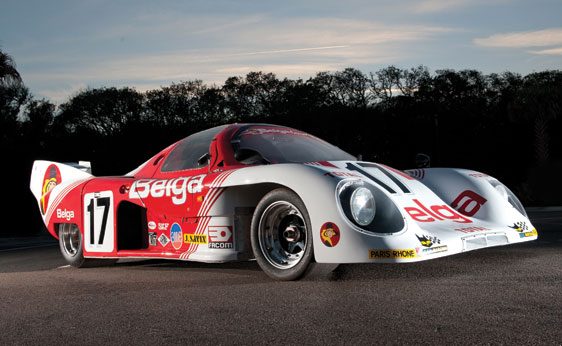
1978 Rondeau M378 Ford-Cosworth

Offered by RM Auctions | Monaco | May 12, 2012

What is it about Le Mans that inspires racecar drivers to want to become manufacturers? Yves Courage, Henri Pescarolo, Alain de Cadenet all caught the bug – and so did Jean Rondeau, who began constructing and racing his own cars at the famed 24 Hours in 1976. 1978 was the first year that the cars actually bore his name and this was the first of them. Rondeau would win the 1980 race in a car of his own design – the only time this has ever happened.

This car, chassis no. 001 holds the record for the most starts at the race with 10. No longer are single cars competitive for an entire decade. It’s an impressive feat. Here’s a rundown of those years:

  • 1978 24 Hours of Le Mans – 9th overall, 1st in class (with Rondeau, Bernard Darniche, and Jacky Haran)
  • 1979 24 Hours of Le Mans – 30th, DNF (with Rondeau and Haran)
  • 1980 24 Hours of Le Mans – 3rd (with Gordon Spice, Philippe Martin and Jean-Michel Martin)
  • 1981 24 Hours of Le Mans – 2nd (with Haran, Jean-Louis Schlesser and Philippe Streiff)
  • 1982 24 Hours of Le Mans – 10th (with Pierre Yver, Bruno Scotty and Lucien Guitteny)
  • 1983 24 Hours of Le Mans – 28th, DNF (with Vic Elford, Joël Gouhier and Anne-Charlotte Verney)
  • 1984 24 Hours of Le Mans – 11th (with Jean-Philippe Grand, Jean-Paul Libert and Pascal Witmeur
  • 1985 24 Hours of Le Mans – 43rd, DNF (with Michel Dubois, Hubert Striebig and Noël del Bello)
  • 1986 24 Hours of Le Mans – 17th (with del Bello, Scotty and Lucien Rossiaud
  • 1988 24 Hours of Le Mans – 27th, not classified (with Scotty and Pierre-Alain Lombardi)

Jean Rondeau was killed in a road car accident in 1985, but his name lived on at the race he lived for – on this car, through 1988. This car also competed in nine other European endurance events, with at least one win.

The engine is a 3.0-liter V8 from Cosworth making 415 horsepower. It’s a race car and weighs next to nothing. So it’s quick. And it’s a piece of history – although it never won the big race, it holds an impressive record and is eligible for historic events. The pre-sale estimate is $790,000-$990,000. To read the complete description, click here. And for the entire RM in Monaco offering, click here.

Update: sold $464,128.

H&H – Imperial War Museum Highlights

H&H held their classic car auction at the Imperial War Museum in Duxford, England on April 19th. Our highlighted 1926 Arab Super Sports sold for about $144,000. Top sale of the auction went to this odd yet strangely attractive in yellow 1970 Aston Martin DB6 Vantage.

It sold for $338,000. I’m not sure I’ve ever seen one in that color, but I kind of like it. Other highlights include the how-did-I-fail-to-feature-this 1947 HRG 1100 which brought $52,000.

Next is the very attractive 1936 MG SA Saloon in silver and blue. It’s a big car and proof that not all MGs be needlessly minuscule and terrifying. It sold for $55,900.

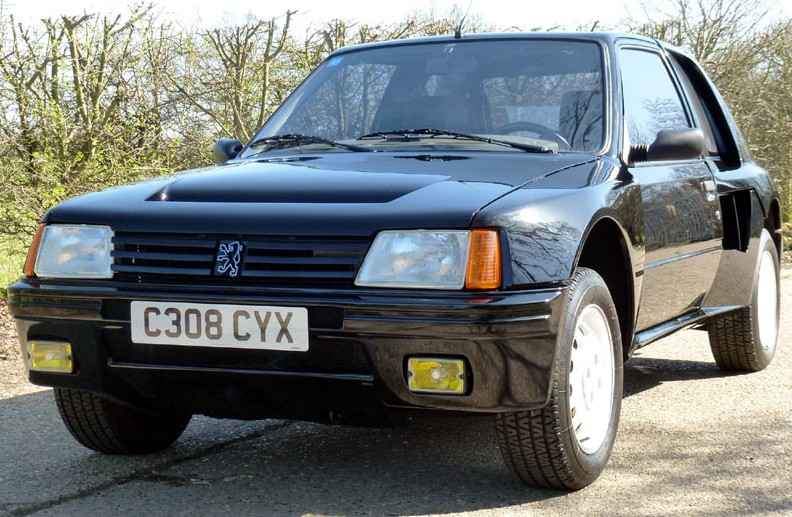
And finally, one super-cool car from Peugeot, the rally-bred 1984 205 T16 that could do 130 mph and hit 60 mph in six seconds. It is one of 200 and it sold for an impressive $180,000. For complete results, check out H&H’s website.

International Travelall

1969 International Travelall 1000D

Offered by Auctions America | Carlisle, Pennsylvania | April, 26-27, 2012

Produced for 22 years, the International Travelall introduced a few things to America that became really popular about 20-30 years later. It was the first six-passenger four-door truck (the Suburban didn’t get four doors until 1973). The Chevrolet Suburban was the prime competition for the Travelall, which was first introduced in 1953.

The model you see here was the freshened body style available from 1969 until the model’s demise in 1975. It features a 145 horsepower 302cid International V-8 engine and 58,000 original miles. It’s an original California car that looks fantastic.

International Harvester has been around since 1902. Passenger-car (or light truck) production ended in 1980 and the company exists today as Navistar International, a leading maker of heavy trucks that still carry the International name.

While I don’t have the production figures for the Travelall sitting in front of me, I can assure you that they are far less than that of the Suburban – and survival rates are even lower. The estimate on this truck/wagon is $22,000-$28,000. It would definitely be a different way to travel, and must have been in 1969 as well. For those that loathed the faux-wood paneled station wagons of the day, this must have been a breath of fresh air, faux-wood paneling or no.

For the complete catalog description, click here. And to see the rest of Auctions America’s Carlisle lineup, click here.

Update: Did not sell.

Ferrari 206 S Dino

1966 Ferrari 206 S Dino Spyder

Offered by RM Auctions | Monaco | May 12, 2012

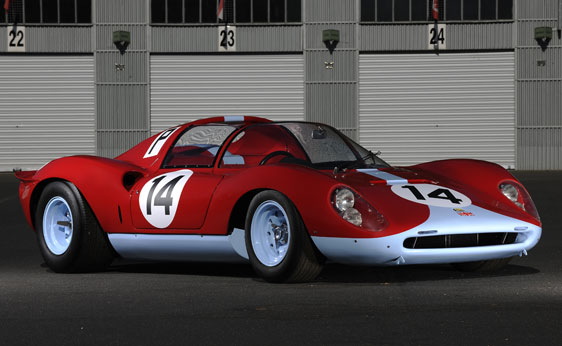
In 1966 Ferrari introduced their gorgeous V-12 powered 330 P3 race car to compete against the big boys in the biggest sports car races on the continent. Alongside the 330, there was a new, smaller race car, powered by a 2.0-liter V6 making 218 horsepower. It was called the 206 Dino S.

With a body penned by Pierre Drogo and built by his company, Carrozzeria Sports Cars, it was certainly a looker. And it was no slouch on the track, placing second at the Targa Florio and taking the bottom two podium spots at the Nürburgring. The car here (chassis #006) was actually the third car built for sale. Some of it’s competition highlights include:

  • 1966 1000km Nürburgring – DNF (with Richard Attwood and David Piper)
  • 1967 Brands Hatch – 6th overall, 1st in class (with Michael Parkes)
  • 1968 Targa Florio – 22nd (with Hans Wangstre and Evert Christofferson)

Most of its brief competition history was at the hands of amateur drivers and it was placed into storage in the early 1970s. When it was removed, it was carefully restored over a number of years to it’s original condition as it was campaigned at the ’66 Nürburgring race.

Ferrari’s original intention was to build 50 homologation examples but they ended up building only 18. And this is a very early example. I love the striking light blue on red color scheme – it’s not something you see everyday. But then again, a 206 S isn’t something you see everyday either, regardless of paint scheme. The price proves it, with an estimate between $2,875,000-$3,600,00. For the compete catalog description, click here and here for the complete lot list.

Update: sold $3,263,400.

Here’s video of a similar car:

Lancia Hyena

1995 Lancia Hyena

Offered by RM Auctions | Monaco | May 12, 2012

In the late 1980s and early 1990s, Lancia was achieving success on the Rally circuit with their series of Delta Integrale rally cars. They also had to produce homologation models for street use in order to compete. Some of these are highly sought after. They were boxy and fast but not necessarily the epitome of Italian automotive style and grace.

Enter Zagato, the famed Italian design house that penned the design you see here – a small two-dour coupe version of the five-door Integrale hatchback. They proposed a limited edition run of these coups, to which Lancia said: “Uh, no thanks.” Their loss, as Zagato went ahead and built them anyway by purchasing Integrales, stripping them down, and fitting them with the body you see here. The cars were lighter and had more power and the same rally-bred all-wheel drive system.

The original Zagato plan pitched to Lancia called for 500 units to be built. But, doing it themselves, the costs soared and only 24 were built and sold for about $75,000 each. They had a 250 horsepower (although the one for sale here has been upped to about 300) 2.0-liter turbocharged straight-four.

These are very rare cars and the price shows it, estimated between $130,000-$185,000. For the complete catalog description, click here. For more on RM in Monaco (including a tremendous collection of Ducati motorcycles) click here.

Update: sold $116,032.

Ferrari 375 MM

1953 Ferrari 375 MM Spider by Pinin Farina

Offered by RM Auctions | Monaco | May 12, 2012

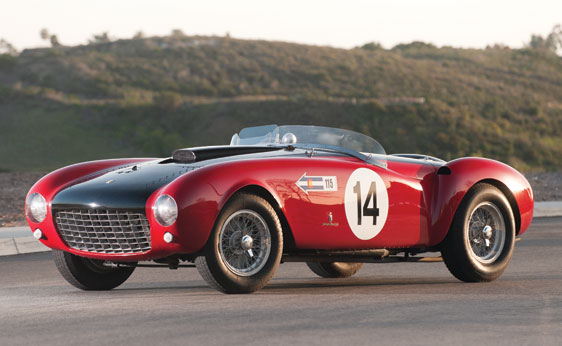
When new, the Ferrari 375 was the top dog among Ferraris with the 4.5-liter Lampredi V-12 making a potent 340 horsepower. It was also capable of a speeds in excess of 170 mph – insanity in 1953. This car was shipped new to Argentina where it quickly built a reputation for speed and success. It’s impressive competition history includes:

  • 1954 Argentine Sports Car Championship – 1st (with Diaz Saenz Valiente)
  • 1954 Turismo Carretera – 1st (with Valiente)
  • 1955 Buenos Aires 1000 km – 2nd (with Cesar Rivero and Raul Najurieta)
  • 1955 Argentina Sports Car Championship – 1st (with Najurieta)
  • 1956 500 Miles of Argentina – 1st (with Najurieta)

The car suffered a few serious crashes in its lifetime, but it is a race car, and repairs from racing are kind of expected. The last serious accident was in 1957 and it’s racing career ended. An American V8 was then installed in the car and it was used on the street until it was eventually parked and forgotten.

In 1983, the car was discovered again in Montevideo, Uruguay. It was shipped to Italy and restored under the ownership of Count Vittorio Zanon di Valgiurata between 1984 and 1986. A correct 375 MM engine was found and put into the car – although it is not the engine it came with from the factory. Since its restoration, it has changed hands a number of times and has enjoyed a career of historic racing – including the Monterey Historics and Mille Miglia Storica.
Only 15 Ferrari 375 MMs were built and they are valuable. This one has known (and successful) competition and ownership history. It is simply a killer Ferrari and won worth it’s weight in gold. The pre-sale estimate is (converted to USD) $4,300,000-$5,300,000. Good luck bidding.

For the complete catalog description, click here and for more from RM in Monaco, click here.

Update: did not sell.

Dennis Fire Engine

1930 Dennis Fire Engine

Offered by Coys | Ascot Racecourse, U.K. | April 21, 2012

John & Raymond Dennis set up shop as Dennis Brothers Ltd in 1895 in Guildford. Originally, the sold bicycles before building their first motor-powered tricycle in 1899. Four-wheeled cars followed in 1901 and commercial vehicles – beginning with a bus – in 1903. The first Dennis fire engine was built in 1908 and the company had found their groove. Passenger cars disappeared by 1915.

Buses and fire engines were their specialty and this 1930 fire engine features a 2.7-liter four-cylinder engine and it is in the livery of what is believed to be the original department, County Hospital Prestwich. There is a lot of attractive brass and many period fire-fighting items, including antique extinguishers, ladder and a trailer pump.

The Dennis company has gone through a serious of corporate mergers since 1972. At one point, it was split into three separate companies, with Dennis Bus and Dennis Fire being merged back into one another and re-branded as Alexander Dennis in 2001, the form in which they currently exist.

Fire engines are great collectibles – they usually don’t cost all that much and there are a ton of them out there. Dennis is a recognized brand name among fire equipment collectors and this one shows well and would be great for parades – the most common duty retired fire trucks serve. Coys estimates that this will sell for between $15,000 – $24,000. For the complete description, click here. And for the rest of Coys’ Ascot lineup, click here.

Bugatti EB110

1994 Bugatti EB110 GT

Offered by RM Auctions | Monaco | May 12, 2012

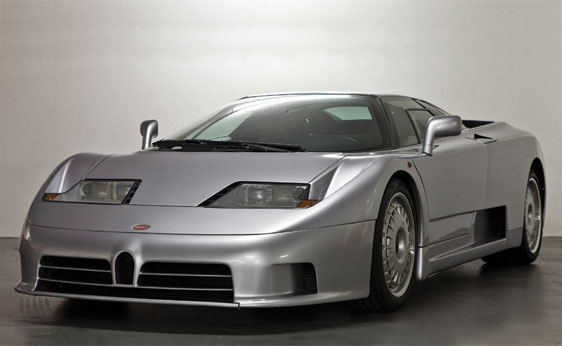
If someone offered me the choice between receiving one of the two most recent Bugatti models: an EB110 or a Veyron (and I wasn’t allowed to sell them for cash) – I would take the former. I would then dictate that the car be blue and have a spoiler. And then I would wake up from that dream.

For whatever reason, the Veyron, in all of it’s 1,000+ horsepower, 250+ mph glory, doesn’t seem quite as wild or supercar-ish as does this EB110. Maybe it’s because the Veyron is a Volkswagen and this was produced by a company always on the verge of financial ruin – the true supercar-manufacturing way.

Ettore Bugatti founded his company (in France) in 1909 and when he died in 1947 it was on its last leg, building only one more true Bugatti in the mid-1950s before succumbing to the times. Enter Romano Artioli who bought the Bugatti name in the late 1980s and set up shop in Italian supercar territory near Modena. The EB110 was born shortly thereafter, entering production in 1991, 110 years after Ettore Bugatti’s birth (hence the car’s name).

In GT trim the car makes 561 horsepower from its quad-turbocharged 3.5-liter V-12. A top speed of over 210 mph was possible as were 0-60 times in the sub-four second range. It is seriously quick, even in today’s terms. There was also an SS (SuperSport) model making 603 horsepower and a top speed of 216 mph. Both models feature four-wheel drive and a carbon fiber chassis making them quite advanced for the early 1990s. They also had scissor doors – as in straight up and straight down – no faux gullwing stuff here.

In 1993, Artioli bought Lotus and tried to make headway with both brands in North America – which was experiencing a recession and was in no mood for over-the-top supercars. Artioli’s fortunes waned and Proton got Lotus during liquidation and Bugatti production ceased in 1995. Dauer Sportwagen bought the remnants of the EB110 project and built additional, slightly more refined cars. When Dauer went bust, the leftovers were acquired by B Engineering for their Adonis supercar.

The car offered here is one of 84 EB110 GTs built and one of only 115 EB110s built in total. It has covered only slightly more than 10,000 miles in its life and was recently serviced at a cost roughly four times the retail value of my current daily driver. Yikes. But I still love these cars – the 90s were a great time for ridiculous supercars and this is among the best. The estimate is $290,000-$340,000. For the complete catalog description, click here. And for more on RM in Monaco, click here.

Update: Not sold.

Baldwin Motion Manta Ray

1973 Chevrolet Baldwin Motion Corvette Manta Ray GT

Offered by Mecum | Indianapolis, Indiana | May 19, 2012

The Baldwin-Motion Performance Group came together in 1967 and was active in its original form until 1974. It was a partnership between Baldwin Chevrolet and Motion Performance – both located in Baldwin, Long Island in New York. They took standard Chevrolets of the day and turned them into monsters – drag strip terrors that would eat up competitors.

Well, the muscle car era began to fade rather abruptly in the early-70s and the partnership tried something different: this 1973 Manta Ray GT Corvette. It was one of three built and the only one known to exist. It has the 350 small block V8 putting out 425 horsepower. It was also given a makeover – the attractiveness of which depends on your taste. But it is certainly distinctive.

Baldwin-Motion cars are very desirable today. The name carries similar gravitas as “Yenko” or “Nickey.” And this one is far rarer than a Baldwin-Motion Camaro from the late 60s. Better buy it now.

There is no pre-sale estimate available for this car. For the complete catalog description, click here and for more on Mecum’s Spring Classic in Indianapolis, click here.

Update: not sold.