Offered by RM Sotheby’s | Hershey, Pennsylvania | October 10-11, 2019
Photo Courtesy of RM Sotheby’s
We’ve chronicled the story of George Selden, the man who was granted a patent for an internal combustion-powered automobile in 1895. He received a royalty on every car built in the U.S. until Henry Ford quit paying him, initiated a lawsuit, and brought the whole Selden Patent to an end in 1911.
Selden did build cars in his own right in Rochester, New York between 1907 and 1914, with commercial vehicles continuing on through 1932. The example above is from 1911, a year in which Selden offered six different models. The Model 40R was only offered as a three-passenger Varsity Roadster, which cost $2,500 when new.
Power is from a 40 horsepower, 5.8-liter inline-four, and the car remained with the same family from new until 1983. It was restored in 1996 to the condition you see here. Remarkably, this is one of only six Selden automobiles to survive. You can read more about it here and see more from this sale here.
The Porsche 935 was a factory racing version of the 911 Turbo, aka the 930. It was built for competition in the FIA’s Group 5 category, hence the 935 designation. Porsche launched it with the 935/76 in 1976, followed by the 935/77, which included customer cars.
Porsche updated it one more time in 1978 before moving on to other projects. Fortunately, for those still interested in a car that continued to dominate, Kremer Racing was building their own versions of Porsche’s 935 Evolution models. The K2, K3, and K4 versions of the 935 were available from Kremer 1977 through about 1980. A K3 like this one won Le Mans outright in 1979.
This car started life as one of about 24 factory 935s built for customers. It was delivered in the US in 1978 and raced for a few years before being upgraded to Kremer K3 specification later on. K3 spec normally meant a twin-turbocharged 3.2-liter flat-six capable of more than 740 horsepower. The competition history for this chassis includes:
1979 12 Hours of Sebring – 26th, DNF (with Henn, Hurley Haywood, and Peter Gregg)
1980 24 Hours of Daytona – 2nd (with Henn, John Paul Sr., and Al Holbert)
1980 12 Hours of Sebring – 4th (with Henn, Paul Sr., and Holbert)
1981 24 Hours of Daytona – 64th, DNF (with Henn and Bob Bondurant)
1981 12 Hours of Sebring – 48th, DNF (with Henn, John Gunn, and Gary Belcher)
Henn, who owned the car, sold it in 1982. It then had a lengthy career int he SCCA. It’s eligible for historic racing events the world over, and you can read more about the car here.
Offered by Bonhams | Cheserex, Switzerland | September 29, 2019
Photo – Bonhams
Koenigsegg does this thing where they design a car and then keep iterating on it and giving each new version a distinct name. The Agera was introduced in 2011 as the successor to the CC/CCX line of cars. And the Agera kind of just looked like a development of the earlier car.
The Agera and its associated line of spin-off models lasted through 2018 and included this, the One:1, which is so-named due to its remarkable power-to-weight ratio of one metric horsepower per kilogram. The twin-turbocharged 5.0-liter V8 makes 1,341 horsepower. Only six were built between 2014 and 2016.
This particular car – as with many of the other exotics in this sale – was owned by the vice-president of Equatorial Guinea (who also happened to be the son of the sitting president). His cars were seized by the Swiss government after he was found guilty of embezzlement. He has a pretty terrible rap sheet of financial crimes and sounds like a real, great overall dude. This car cost $2,850,000 when new and now is expected to bring $1,800,000-$2,300,000. Click here for more info and here for more from this sale. Proceeds go toward social programs in Equatorial Guinea, where perhaps the money should’ve been spent in the first place.
Offered by Bonhams | Chichester, U.K. | September 14, 2019
Photo – Bonhams
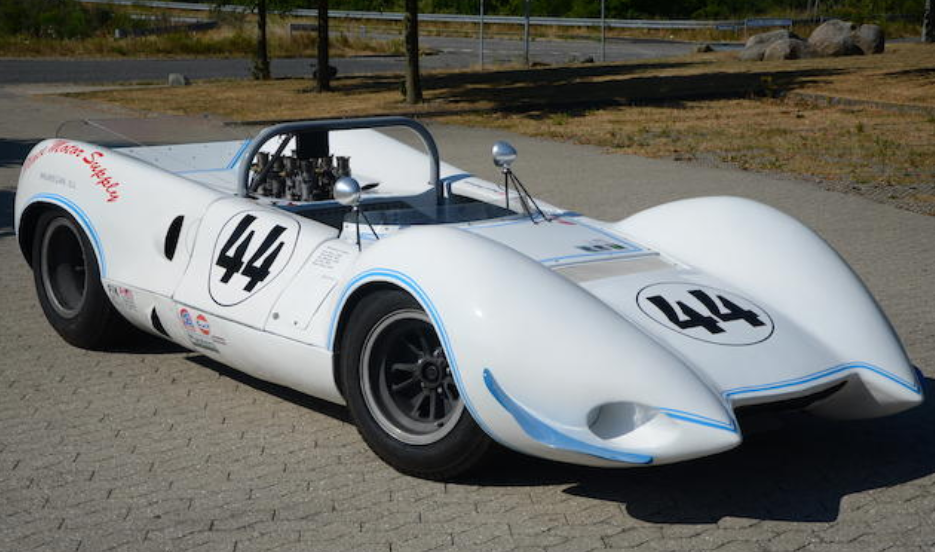
Can-Am’s debut season was 1966. But it wasn’t a surprise. Driver Jerry Hansen knew it was coming and got together with two engineers from GM to design and build a race car for him for the ’66 season.
Lee Dykstra (for whom the car appears to be named) and George Anderson designed this, the Wolverine. It has a tube spaceframe chassis and a small-block Chevrolet V8. An aluminum body was constructed, but over time the rear section has been replaced with fiberglass.
Hansen entered the car in the first Can-Am race, where he finished 20th. It also ran in SCCA events that year, but for 1967, Hansen upgraded to a McLaren. The Wolverine passed between a few other owners and was entered in Can-Am races through 1970.
They intended to build three of these, but only one was completed. The current owner bought the car in a series of boxes and had it completely rebuilt since 2010. It’s been at the Goodwood Revival and Monterey Motorsports Reunion. It should now sell for between $98,000-$110,000. Click here for more info and here for more from this sale.
Offered by Worldwide Auctioneers | Corpus Christi, Texas | October 4-5, 2019
Photo – Worldwide Auctioneers
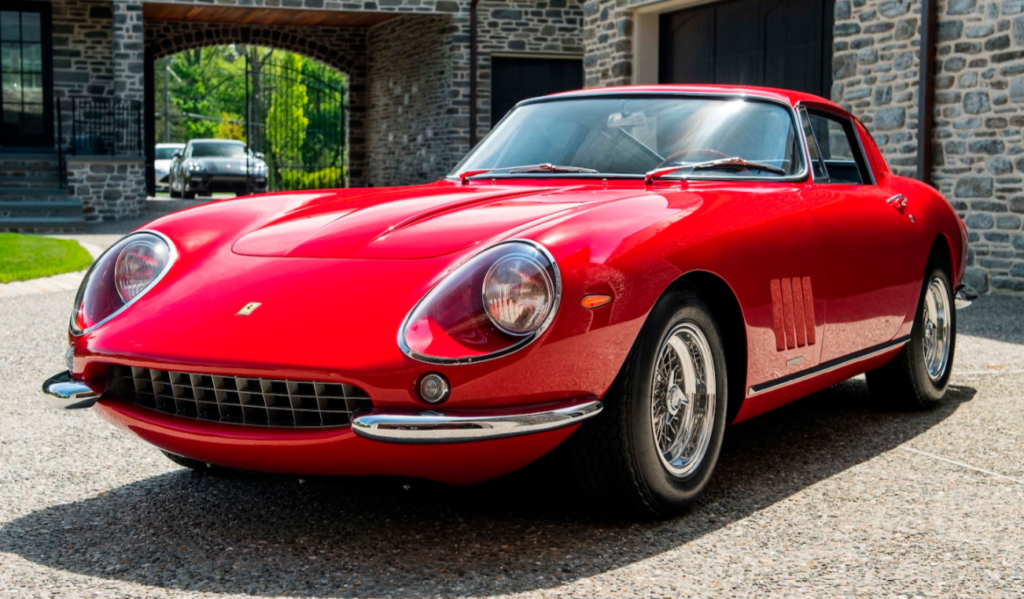
There is absolutely zero about this car that screams “Oakland, California.” Yet that’s where it was assembled. The Apollo was the result of the work of a trio of Californians who wanted European style and American reliability in their sports cars. The first Apollo went on sale in 1962. Two models were offered: the 3500 GT and the 5000 GT.
This 3500 GT model is powered by a 3.5-liter Buick V8 that made 200 horsepower. The body was built in Italy by Intermeccanica, and the whole package was assembled in Oakland.
Only 11 GT Spiders were built, with this being the very first one. About 90 Apollos were made in general across multiple companies (including cars badged as the Vetta Ventura). They’re very rare, but they’re around. And the Spider variant is beautiful. It is being sold without reserve, and you can read more here. See more from this auction here.
Offered by Bonhams | Bicester, U.K. | September 26, 2019
Photo – Bonhams
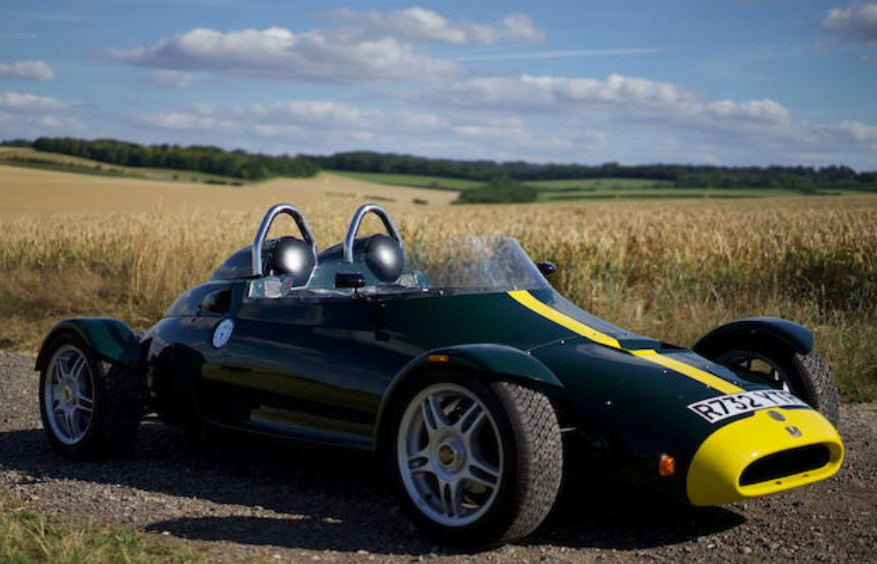
The Brooke ME190 was designed by Toby Sutton and produced by his company, Brooke Cars beginning in 1994. Its looks and two-abreast seating are very reminiscent of the LLC Rocket, but it is said that this car was designed first.
Powertrains for the ME190 differed, but all of them were mounted behind the driver. This car is powered by a Honda 1.8-liter inline-four from a Civic Type R that has been tuned to put out more than 200 horsepower (the stock ME190 made 190 horsepower).
Only about eight examples were produced before the company ran into financial trouble and closed down. Another company bought the rights and produced only slightly more updated versions called the Double R. This car should bring between $20,000-$24,000. Click here for more info and here for more from this sale.
Offered by Mecum | Louisville, Kentucky | September 20, 2019
Photo – Mecum
The Chrysler New Yorker nameplate dates back to 1940, and the Town & Country model was introduced in 1941. For a while, Town & Country models could be had in all manner of body styles, including a very attractive convertible. But by the time the 50s rolled around, they became the station wagon versions of other Chrysler cars.
And that’s what we have here. The sixth-generation New Yorker went on sale in 1960, and by 1962 those wild rear fins had disappeared. This nine-passenger Town & Country is one of just 1,244 built in 1963. It is powered by a 6.8-liter V8 capable of 340 horsepower.
So why is it notable? Well, there was the limited production, but how many of these actually survived? And in this condition at that? This car retailed for $4,815 when new. It should certainly bring more than that later this month. We’ll have to wait and see just how much more. Click here for more info and here for more from this sale.
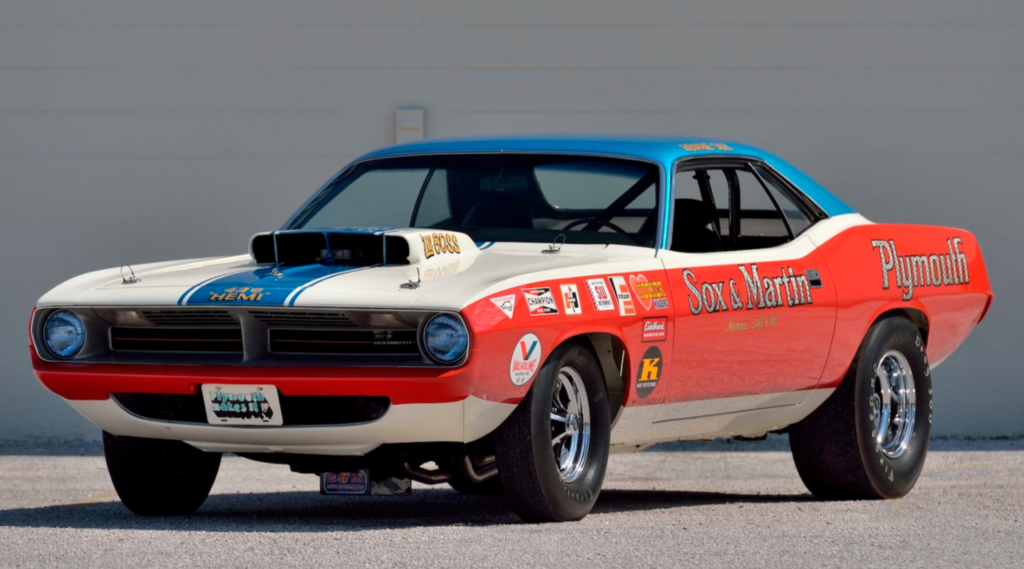
We’ll start in August with Mecum’s Harrisburg sale, where an insane thing happened: the Plymouth Superbird we featured (that also happened to be Richard Petty’s former race car), failed to sell… for $3,500,000. Yeesh. The overall top seller was this 1970 Plymouth Hemi Cuda Sox & Martin drag car for $429,000. Click here for complete results.
The Ferrari we featured, the Niki Lauda F1 car, sold for $6,000,000. Other Italian sales included the Alfa 256 for $2,755,000 and the Isotta Indy car for $2,645,000.
And to wrap this post up, RM Sotheby’s much-talked-about sale, where the expected star, the 1939 Porsche, failed to sell after mass confusion. They did manage to set a record for a McLaren at auction, selling this 1994 McLaren F1 “LM-Spec” car sold for $19,805,000. These cars are not done appreciating.
Offered by Bonhams | Chichester, U.K. | September 14, 2019
Photo – Bonhams
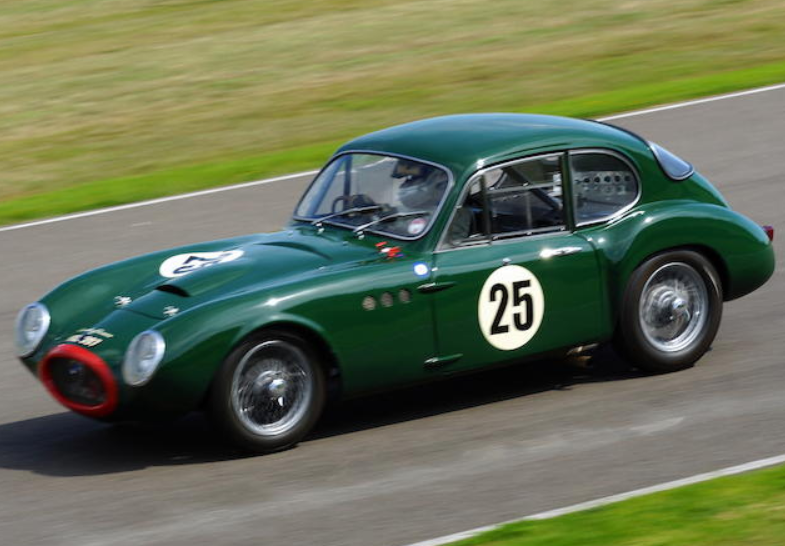
Rochdale Motor Panels and Engineering was founded in 1948 by Frank Butterworth and Harry Smith. They got their start producing automobiles in 1954, which were technically just fiberglass shells used by customers to re-body Austin Sevens.
The GT was the third such product launched by the company, and it went on sale in 1957. They had the Ford Popular in mind as a base, but by 1960 you could get it on Rochdale’s own frame, as the company had moved to produce its own cars outright with the introduction of the Olympic in 1959.
This example is based on a Ford Popular frame and is powered by a 1.5-liter Coventry-Climax inline-four producing 140 horsepower. The GT was far and away Rochdale’s largest success, with about 1,350 built in total. Rochdale closed its doors in 1973, and it is thought that only about 80 GTs survive. This one has been restored and is eligible for historic racing events. It should bring between $36,000-$49,000. Click here for more info and here for more from this sale.
Offered by Brightwells | Leominster, U.K. | September 4, 2019
Photo – Brightwells
Another Bristol! The 412 was the successor to the 411, and we’ve featured four of those so far. This model was produced in two series between 1975 and 1981. Production figures were never released to the public, but its thought about 80 were produced before Bristol slightly revised the 412 and renamed it the Beaufighter.
The 412 was built side-by-side with the 603, and the cars were very similar. This car uses a 5.9-liter Chrysler V8 good for 170 horsepower. Top speed was 140 mph. The body of this Bristol was actually designed by Zagato, and it’s a targa.
Remarkably, for a handbuilt car this rare, the pre-sale estimate is only $18,000-$22,000. Click here for more from Brightwells.