166 MM Berlinetta Le Mans

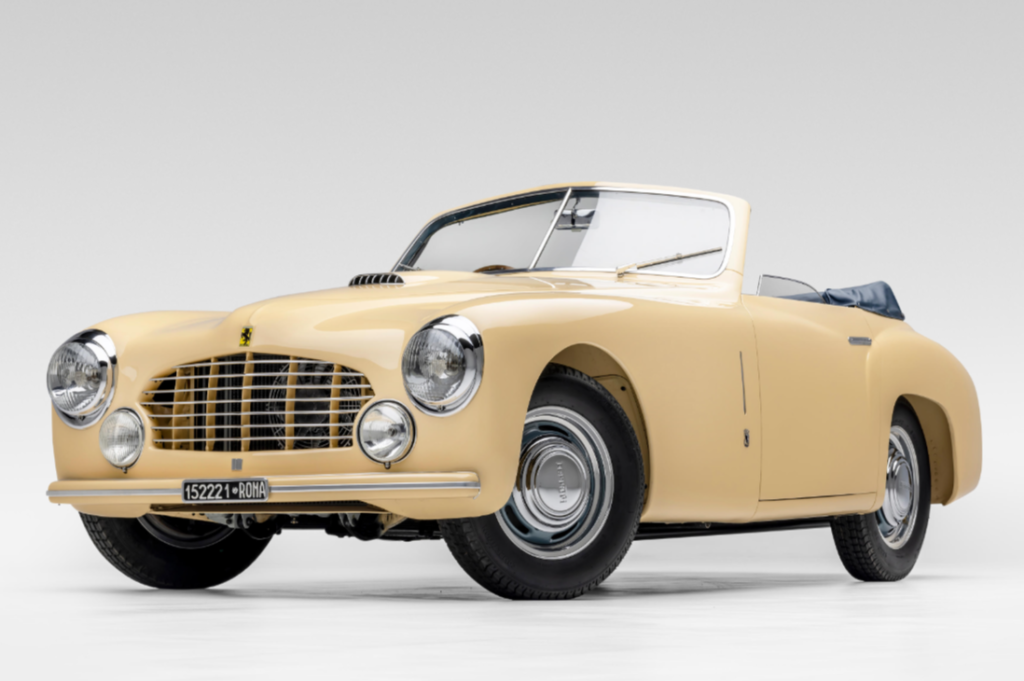
1950 Ferrari 166 MM Berlinetta Le Mans by Touring

Offered by Gooding & Company | Pebble Beach, California | August 19-20, 2022
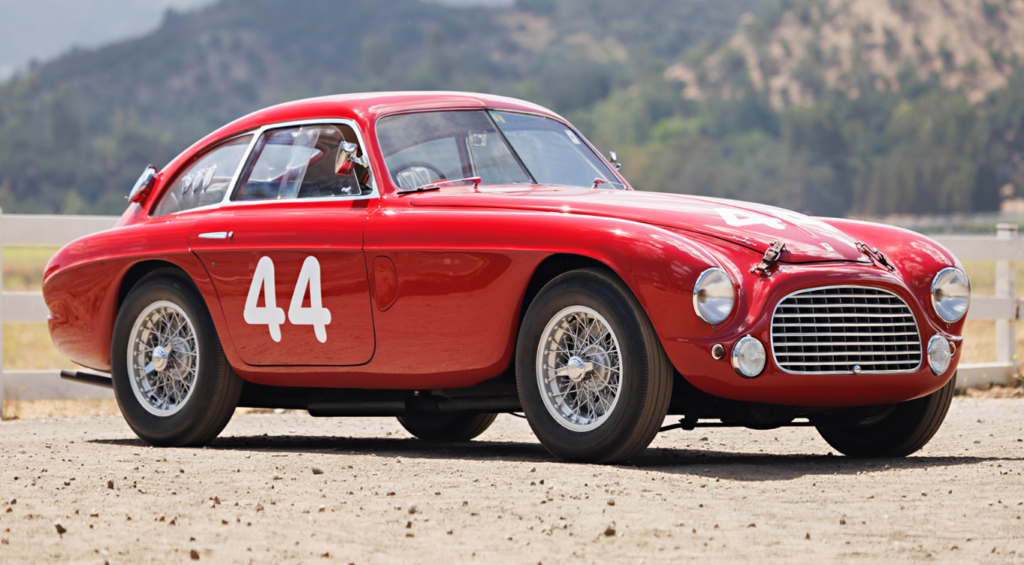
Photo – Gooding & Company

Ferrari’s first cars were the 125 S and 159 S. After that, on the racing side, there was the 166 S and 166 MM. That makes this a very early, very valuable Ferrari. The 166 MM was built between 1948 and 1953, and it was a fairly high-volume model. Well, relatively anyway: 47 were built.

Of those, just five of those were Touring-bodied Berlinettas, which were introduced in 1950. Power is provided by a 2.0-liter V12 rated at about 170 horsepower. This is a car from 1950 with a five-speed. It meant business.

This model’s racing success was also serious. It was the only model to have ever won Le Mans, the Targa Florio, and the Mille Miglia. This car, confusingly serialed as 0066 M, was the last of the five built. It never took part in any of Europe’s grand races, but did take part in hillclimbs and road races in Europe before being imported to the U.S. in 1958.

It’s been with its current California-based owner since 2008 and it’s back at auction with an estimate of $5,500,000-$6,500,000. Click here for more info.

Update: Not sold.

Dort Model 5

1916 Dort Model 5 Touring

Offered by Silverstone Auctions | Broadway, U.K. | August 5, 2022

Photo – Silverstone Auctions

Flint, Michigan’s Dort Motor Car Company was founded by Billy Durant and Dallas Dort in 1886. The company started out building carriages and at one point was the largest such builder in the country. Dort made a late switch to motorcars, and that’s mostly because Durant had founded General Motors in 1908 and remained as part owner of Dort until 1914.

Once he left Dort, the company was free to basically compete against him. So the first Dort cars rolled out for 1915. The first two years of production consisted of this: the Model 5 Touring. They sold 9,000 of them by the end of 1916. Power is from a 2.7-liter Lycoming inline-four rated at 17 horsepower.

The cars cost $695 when new, over $200 more than a Model T. The last Dorts were sold in 1924, and Dallas Dort died the following year. This car is one of two Dorts in the U.K. and has a pre-sale estimate of $12,000-$18,000. Click here for more info.

Update: Sold $11,005.

Railton Cobham

1936 Railton Cobham Deluxe

Offered by Brightwells | Leominster, U.K. | August 3, 2022

Photo – Brightwells

Here’s one you may not be familiar with. Railton was founded by Noel Macklin, who previously founded Invicta. He named his next company after Reid Railton, a British world speed record holder. The kind of weird part was, Macklin used American Hudson powertrains for his British-built cars (initially inline-eights).

The Cobham, of which this appears to be an early example, was the “small” Railton at this time of its introduction, with power from a 2.7-liter Hudson inline-six. An even smaller Railton would debut in 1938 and was based on Standard mechanicals instead of those from Hudson.

Just 81 examples of the Cobham were produced, either as a sedan or drophead coupe. This is one of about six that remain. It was repainted in 1993, receiving mechanical repairs and upgrades as needed over the years. The pre-sale estimate is $24,000-$30,000. Click here for more info.

Update: Not sold. Offered for sale at half it’s lower estimate above.

Update: Sold Brightwells September 2022, $17,707.

Miller-Ford

1935 Miller-Ford

Offered by Gooding & Company | Pebble Beach, California | August 19-20, 2022

Photo – Gooding & Company

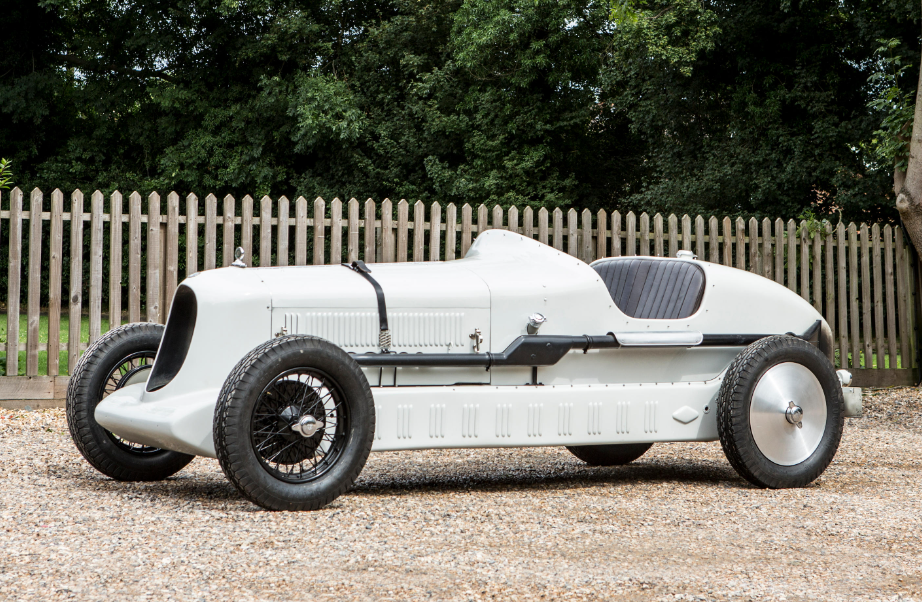
Few names are as synonymous with Indianapolis as Harry Miller. Maybe Andy Granatelli would be up there for people in the know. And Tony Hulman. Well, all three are in play here, but let’s start with this: legendary Indy car designed Harry Miller was approached by Preston Tucker to design an Indy car around a road car-based engine. This was the “junk formula” era.

Tucker then got his friend Edsel Ford to persuade his dad Henry to fund it. Henry ended up making his franchised dealers foot the bill, but the project went ahead. The result was a two-seater, front-wheel-drive chassis powered by a Ford flathead V8. The bodies were built by Emil Diedt, a famous Indy car name on its own.

Ten examples were produced, but just four qualified for the 1935 Indy 500. None finished due to a design flaw with the steering. Henry Ford scooped all of them up, apparently out of embarrassment/rage, and hid them away in Dearborn. They would slowly be sold off to private customers.

This car escaped not long after, and, just after WWII, was owned by a California-based race team owner who had a 4.4-liter Offenhauser inline-four put in it in place of the flathead. Output now is estimated to be 350 horsepower. In 1948, the car was purchased by team owner Andy Granatelli, who entered it in the 1948 race. So the known competition history for this car, chassis #5, consists of:

  • 1948 Indianapolis 500 – DNQ (with Granatelli)

He actually destroyed the car in practice and it was later rebuilt. In 1949, it was purchased by Indianapolis Motor Speedway owner Tony Hulman and remained with the IMS Museum until 1993. This is a hard car to come by, and it has an estimate of $750,000-$1,000,000. Click here for more info.

Update: Sold $830,000.

Figoni-Bodied Alfa 8C

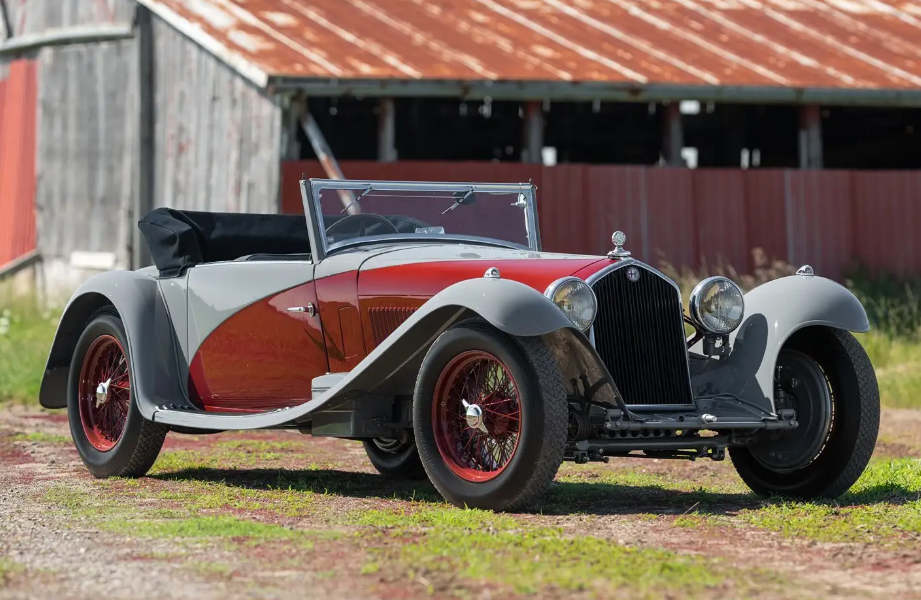
1933 Alfa Romeo 8C 2300 Cabriolet by Figoni

Offered by RM Sotheby’s | Monterey, California | August 18-20, 2022

Photo Courtesy of RM Sotheby’s

We’ve featured our fair share of Alfa 6C cars, but the 8C is much less common. Part of that is because it was a more racing-focused chassis and part is because the 8C did not return after WWII like the 6C did. This is the most common version of the 8C: the 2300.

Introduced in 1932, it featured a Vittorio Jano-designed inline-eight displacing 2.3 liters. Most of these were race cars, but, during a production run that lasted until 1935, there were 188 road-going examples made.

This car features a swoopy two-tone body by Figoni from his pre-Falaschi days. It’s got known ownership history back to new, including time spent with two-time Le Mans-winning racing driver (both wins in Alfa 8Cs, but not this one), Raymond Sommer. Now it’s got an eye-watering price estimated in the $4,000,000-$6,000,000 range. Click here for more info.

Update: Not sold.

Update: Not sold, RM Sotheby’s Monterey 2023.

Duesenberg J-368

1930 Duesenberg Model J Limousine by Willoughby

Offered by Broad Arrow Auctions | Monterey, California | August 18, 2022

Photo – Broad Arrow Auctions

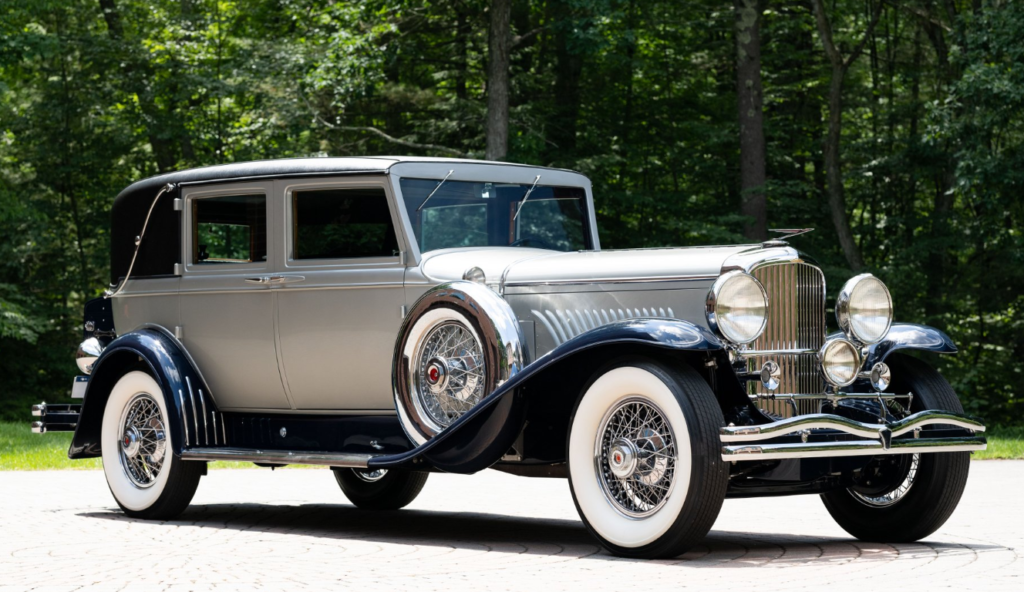
Fixed-roof Model Js have never been the most sought after. Maybe in their day when they were used by titans of industry or Gilded Age heiresses to be chauffeured around in. But not now. Everyone wants an open car of some kind, disappearing top convertibles or even touring cars.

So, because of this, many sedans and limousines have been rebodied, and those that haven’t are generally less expensive. Well those days are apparently over. This car features a limousine body by Willoughby, a design that was updated in period as updates became available. It was later reverted to more closely resemble how it looked when new. The 6.9-liter inline-eight was rated at 265 horsepower.

This car was purchased new by the co-founder of Esquire magazine. A restoration by a later owner was completed in 1991, and the car was subsequently donated to a museum, who sold it for profit. The current owner bought it in 2018. The estimate is $1,000,000-$1,500,000. You’re gonna have to find a different “cheaper” entry point into the Model J owner’s club. Click here for more info.

Update: Sold $1,000,000.

166 Inter Cabriolet

1949 Ferrari 166 Inter Cabriolet by Stabilimenti Farina

Offered by Bonhams | Carmel, California | August 19, 2022

Photo – Bonhams

The 166 Inter was Ferrari’s first real road car, and it was built in limited numbers (just 38 were produced) from 1948 through 1950. We’ve featured one of them before, but naturally that one was used in competition.

This car does not look like a race car. It isn’t even immediately recognizable as a Ferrari either. Part of it is the restrained two-door cabriolet body by Stabilimenti Farina, and the other is the very demure beige paint. This car was hand built over a nine-month period that ended in October 1949. It’s powered by a 2.0-liter Colombo V12 that made about 110 horsepower.

This was the 16th Ferrari road car built, and it has been restored. There is now a pre-sale estimate of $1,800,000-$2,200,000. Click here for more info.

Update: Not sold.
The Most Amazing Car In The World

1924 Hispano-Suiza H6C Tulipwood Torpedo

Offered by RM Sotheby’s | Monterey, California | August 18-20, 2022

Photo Courtesy of RM Sotheby’s

For many years I have found this car to be remarkable. And I never thought I’d see the day where it changes hands publicly. Let’s start with the boring: Hispano-Suiza’s H6C debuted in 1924 and was the ultimate iteration of Hispano’s six-cylinder line of the 1920s. Production ended in 1933.

Power is from an 8.0-liter inline-six made about 195 horsepower. But forget mechanicals. This car is all about the body. This is the second H6C chassis, and it was built for Andre Dubonnet, who was one of those guys from that era who did it all. He was a flying ace in WWI, an Olympic bobsledder, a racing driver, and a lover of fine cars. He was like the French Eddie Rickenbacker, if Rickenbacker came from an extremely well-to-do family.

This car is one of three H6Cs with a factory-lowered chassis. Dubonnet sent it to French aircraft builder Nieuport-Astra for a body, and they used 1/8″-thick strips of mahogany (though people have long referred to the wood as tulipwood) to body the car, a process that used thousands of rivets. The body is said to weigh 160 pounds. Which is insane. It was even raced. The car’s competition history includes:

  • 1924 Targa Florio – 6th (with Dubonnet)

He later used it as a road car before selling it. It was discovered in 1950 with shrapnel damage on the tail caused by a WWII bomb. The car was later refreshed and then restored in the 1980s. It’s been at the Blackhawk Collection for a while, and they are presumably getting rid of some stuff. It has an estimate of $8,000,000-$12,000,000.

The car is just magnificent. So much so that I am considering making this the last [regular] post on this site, because really, where can you go from here? We’ll see. Click here for more info.

Update: Sold $9,245,000.

Alfa 6C Record Car

1930 Alfa Romeo 6C 1750 Gran Sport Testa Fissa

Offered by Bonhams | Carmel, California | August 19, 2022

Photo – Bonhams

Alfa Romeo’s 6C 1750 was a very successful racing car in its day, racking up victories at the Mille Miglia, Targa Florio, 24 Hours of Spa, and Grands Prix all over Europe. If it had speed on track with other cars, why wouldn’t it have speed on a track by itself?

This car is believed to have been ordered new by a Brooklands racing driver as a rolling chassis that was test driven at the factory before being returned to the U.K. Once there, it was fitted with an aluminum body co-designed by three-time Land Speed Record holder George Eyston. The Alfa’s supercharged 1.7-liter inline-six made 102 horsepower in Gran Sport “Testa Fissa” form. This one is rated at 140 horsepower with some slight modern modifications.

Eyston set multiple records in the car during 1930 at Brooklands. A later owner removed the body, which had been damaged by that point, so the one it wears today is a recreation. This beastly looking Alfa is a throwback to the days of insanely dangerous speed record chasing. You can read more about it here.

Update: Not sold.

Isotta 8A Landaulet Imperiale

1931 Isotta Fraschini Tipo 8A Landaulet Imperiale by Castagna

Offered by RM Sotheby’s | Monterey, California | August 18-20, 2022

Photo Courtesy of RM Sotheby’s

The 8A was one of the biggest and grandest exotic luxury cars you could buy at the dawn of the Great Depression. This particular car was sold new to a woman in New York City who traded in another 8A on the purchase. It cost her $9,250 in 1931. Yeesh. Definitely a car for running over poor people.

The body is by Castagna, a familiar name on Isotta Fraschini chassis. The body is an all-weather landaulet limousine cabriolet. That’s a lot of descriptors. Landaulet Imperiale sounds fancier. This means that various parts of the top can come off, probably including the very rear portion or the bit over the driver/chauffeur.

Power is provided by a 7.4-liter inline-eight that made about 115 horsepower in base form. The car has known ownership history since new and was restored decades ago. The pre-sale estimate is $275,000-$375,000. Click here to read more.

Update: Sold $368,000.

Update: Sold, Mecum Monterey 2023, $330,000.