Hummer H1

2004 Hummer H1 Wagon

Offered by Mecum | Las Vegas, Nevada | November 12-14, 2020

Photo – Mecum

This is, potentially, the manliest passenger vehicle ever made. It helps that it started out as a military vehicle (in 1983!) that AM General started selling to civilians in 1992. Those were called “Am General Hummer”s. In 1999, General Motors purchased the Hummer name and launched the former Hummer model as the Hummer H1.

The original H1 lasted through 2004 (2006’s H1 Alpha was an updated version for one year only). Up until 2004, there were four engine/gearbox combos offered through the years. This wagon is powered by a 6.5-liter diesel V8 that made a wimpy 205 horsepower and a more significant 440 lb-ft of torque.

Different body styles of the civilian Hummer/H1 were sold, and this wagon version is the best-looking for those of you who like to drive through brick walls. These are big. They are spacious. They are slow. And they are just so damned cool. Not inexpensive to own or drive, they will continue to turn heads everywhere they go for as long as those of us are still around who remember what big-boy, big-money SUVs looked like before the year 2000 (yeah, this may be an ’04… but this is a 90s truck). Click here for more info and here for more from this sale.

Update: Not sold, high bid of $90,000.
Camaro Europo Hurst

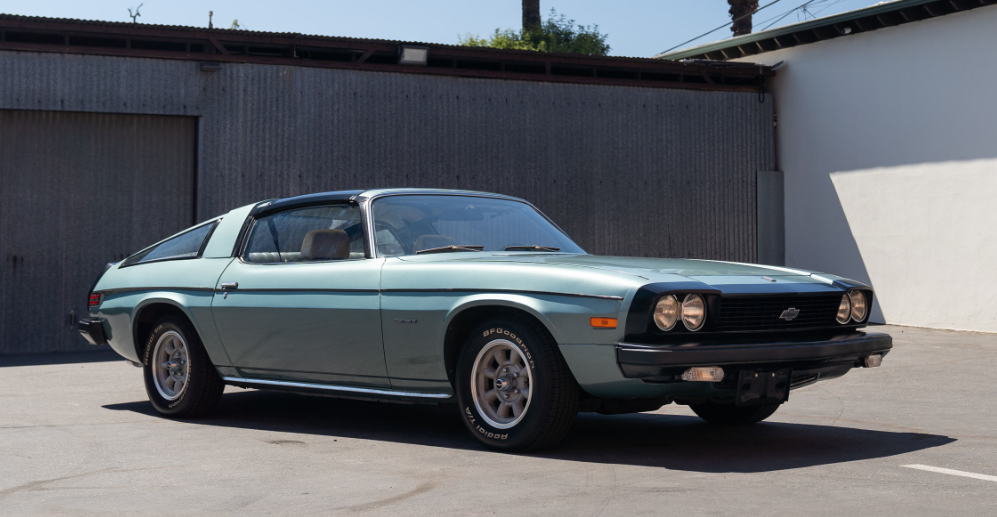
1976 Chevrolet Camaro Europo Hurst by Frua

Offered by RM Sotheby’s | Online | September 16-25, 2020

Photo Courtesy of RM Sotheby’s

The second-generation Chevrolet Camaro was in production for an eternity: 11 years between 1970 and 1981. Even by 1976, it was kind of long-in-the-tooth. And it was weak. The most powerful ’76 Camaro had the same 165 horsepower, 5.7-liter V8 that this car has. It was a long way from the ZL-1 (from only seven years earlier!).

One way to spice things up would be to let an Italian coachbuilder get their hands on one. In this case, it was Pietro Frua, who debuted his take on the Camaro at the 1976 Turin Motor Show with this car. It was later shown at 1977’s New York show, where the company displaying it said they were going to offer conversions of standard Camaros to look like Frua’s. They were going to call them the “Europo Hurst.”

It is unclear if any were actually made. I think this is actually an okay-looking car, and it’s definitely something different compared to what else was on sale in 1976. It is expected to bring between $80,000-$120,000 when it sells at no reserve. Click here for more info and here for more from this sale.

Update: Sold $31,900.

1950s Leyland Tanker

1958 Leyland Super Comet Tanker

Offered by Bonhams | Bicester, U.K. | September 20, 2020

Photo – Bonhams

The Comet was a model of heavy truck produced by Leyland Trucks over a series of generations between 1947 and 2015. That’s quite the nameplate heritage. They were produced in every conceivable truck variant: flatbeds, box trucks, tankers, and more.

The third generation Comet was available between 1958 and 1963. During this run, the Super Comet was introduced, which was of an even heavier-duty variety. This particular truck is finished in a bright yellow National Benzole livery. This very truck was used to produce a toy version, which is kind of cool.

The 6.2-liter diesel inline-six makes 110 horsepower. The truck has been offered by Bonhams before, and it’s now back with an estimate of $13,000-$20,000. That’s a lot of vehicle for the money. Click here for more info and here for more from this sale.

Update: Sold $24,412.

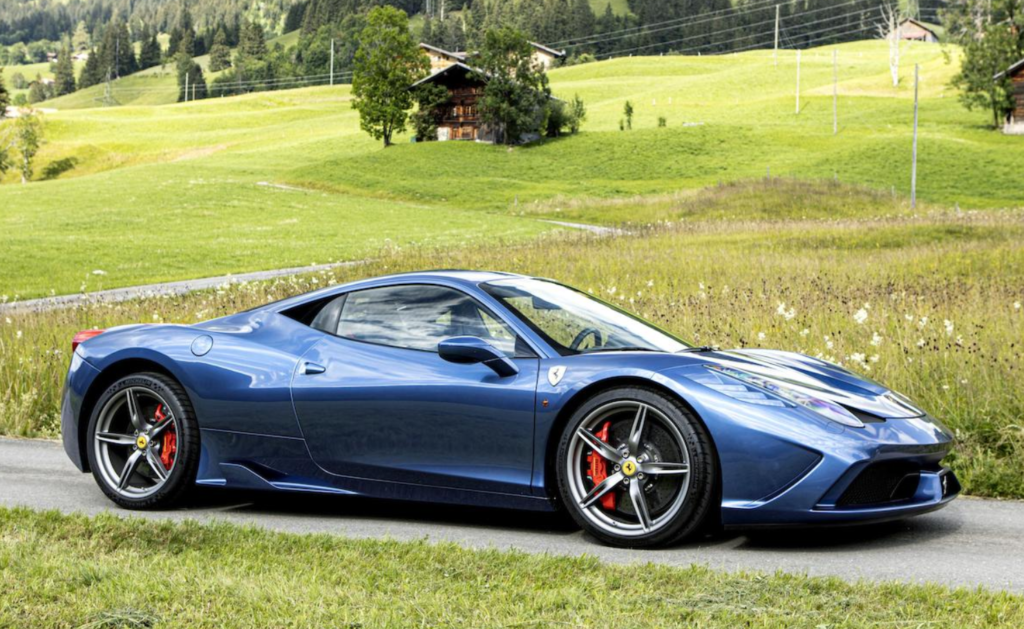
458 Speciale

2014 Ferrari 458 Speciale

Offered by Bonhams | Cheserex, Switzerland | September 20, 2020

Photo – Bonhams

I remember when the 458 Italia launched, and I remember seeing one shortly thereafter at a gas station near Cannes where some girl got out of the passenger side. She slammed the door into a concrete pillar, and the driver just laughed. A different world.

Somehow, Ferrari is already two generations down the road from the 458. The 488 GTB and the F8 Tributo are both fairly derivative of this design, as the F430 was to the 360, and the F355 was to the 348 back in the ’90s. In that regard, the 458 has aged kind of well. It’s not as garish as the later cars. And as all of the models just listed have done, the 458 was littered with special editions, including the 2013-2015 Speciale, which was akin to the F430 Scuderia or the 360 Challenge Stradale.

Differences from the base car include forged wheels, a larger rear spoiler, finned side sills, and re-designed bumpers. The 4.5-liter V8 also got a power bump to 597 horsepower. This example is essentially brand new and is registered in Switzerland. This Bonhams sale has become a supercar highlights sale, but there are no “confiscated dictator” collections this year (sad face). This is like “supercar-lite” when compared to the three Veyrons already announced. The price for this Blu Mirabeau car is estimated at $440,000-$550,000. Click here for more info and here for more from this sale.

Update: Not sold.

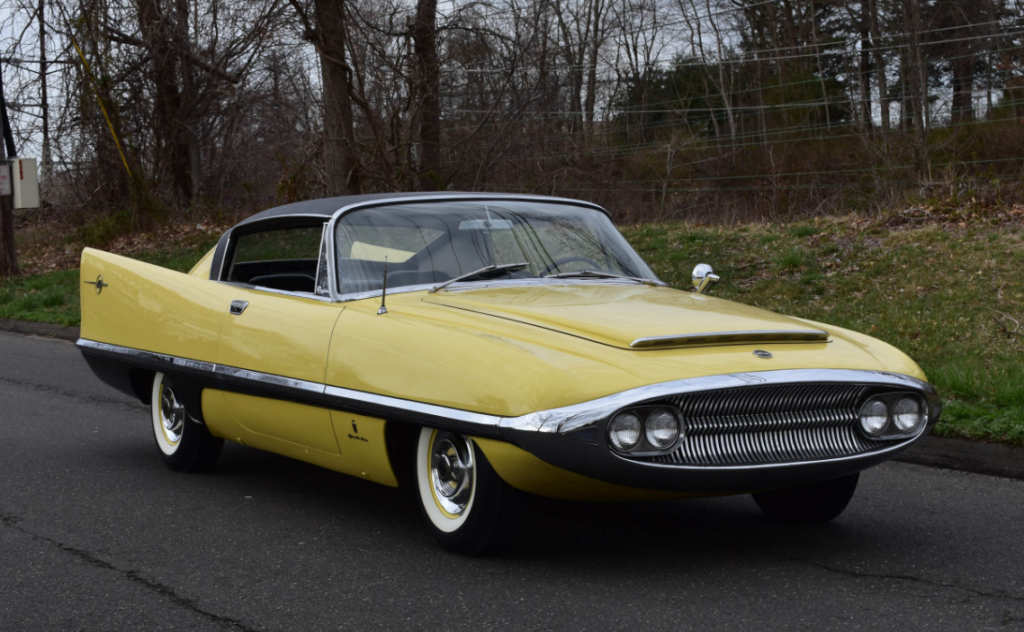
Superdart

1957 Ghia 400 Superdart Concept

For Sale by Dragone Classic Motorcars | Orange, Connecticut

Photo – Dragone Classic Motorcars

This is a car with quite a few names. I’ll start at the beginning, and you can draw your own conclusions as to what it should be called (I just went with what the dealership selling the car calls it). The Ghia and Chrysler connection of the 1950s is well documented. Chrysler spent a lot of money designing fanciful show cars in the ’50s, with styling done by Ghia (well, styling by Exner, execution by Ghia).

Ghia showed a prototype dubbed “Gilda” in 1955. Then there was Dart concept was styled by Exner in 1956, and a second version called the Diablo also appeared in ’56. Then, in 1957, Ghia showed another evolution, called the Superdart. It was reportedly created for Chrysler, but there doesn’t appear to be any Chrysler badging on this car.

Power is from a 400 horsepower Hemi V8, and the car rides on a Chrysler 300C chassis. It debuted at the 1957 Turin Motor Show and later ended up in the U.S., where it was purchased by Dual Motors, who showed the car as a Dual-Ghia prototype. Most of the internet seems to just call this car a 1958 Dual-Ghia Prototype. Which is what it was last shown as. But it’s not what it was called originally.

A private owner purchased it shortly after Dual-Ghia’s 1958 New York show appearance and actually put nearly 40,000 miles on it over nearly two decades. It’s said to be original and unrestored. Be it a Chrysler, a Ghia, or a Dual-Ghia, it remains as a fantastic piece of ’50s styling excellence. It’s for sale in Connecticut with no price listed. Click here for more info.

Update: Sold, Bonhams Scottsdale 2023, $819,000.

Cicostar Matic 50

1979 Cicostar Matic 50

Offered by Bonhams | Bicester, U.K. | September 20, 2020

Photo – Bonhams

I credited Bonhams on the above photo, but I doubt they want to be associated with such terrible photography. This little blue blob was produced by Cico S.A. of France to take advantage of France’s sans permis laws enacted in the 1970s in response to the fuel crisis.

Basically, they were small, sub-50cc cars that could be driven without registration or a license. They had to hold two people and not have a top speed in excess of 45 kph. You just had to be 14 in order to drive it on the road.

These go by different names. Bonhams lists this as a “Matic 50” and elsewhere you’ll find it called an LCS. Power is from a 49.9cc (just under the law) two-stroke single from Motobecane that makes 3.2 horsepower. They were produced between 1971 and 1983, and the top speed was right at the legal max: just under 28 mph. This one is estimated to sell for between $1,300-$3,900, and if the reserve is even the lower end of that estimate, it will be a stretch for this car to sell. Click here for more info and here for more from this sale.

Update: Sold $1,077.

1924 Delaunay-Belleville

1924 Delaunay-Belleville P4B Drophead Coupe

Offered by Bonhams | Brussels, Belgium | September 6, 2020
Photo – Bonhams

One of the grand French “Ds”, Delaunay-Belleville was one of the more expensive options when shopping for a French car, pretty much from their inception in 1904 on into the 1920s. The P4B was introduced in 1922 and would last until 1927, which was about the time the company started to fade away.

It is powered by a 2.6-liter inline-four, and the car retains the company’s signature circular grille, although by this point it was more of an oval. Though a two-door, this car is likely larger than it looks and has sort of a Bugatti-ish feel when looked at from the front.

Delaunay-Belleville cars were expensive when new and were not sold in the largest of numbers. They remain rare today – and expensive. This car carries an estimate of $71,000-$94,000, which is significantly cheaper than other cars from this marque that we’ve featured. Click here for more info and here for more from this sale.

Update: Not sold.

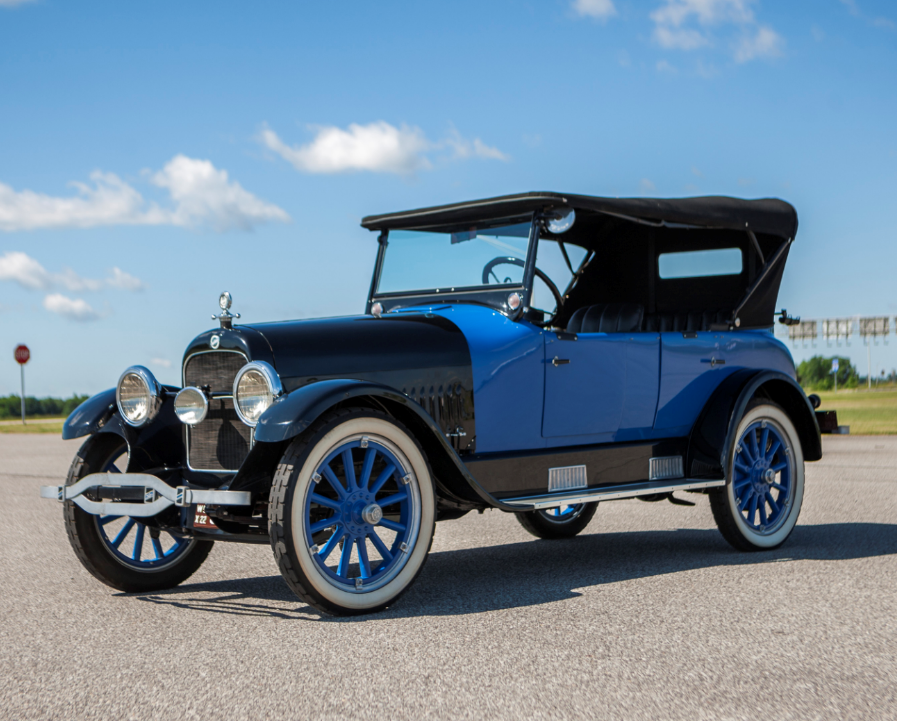
Studebaker Special Six

1922 Studebaker Special Six Touring

Offered by RM Sotheby’s | Auburn, Indiana | September 3-5, 2020

Photo Courtesy of RM Sotheby’s

This is a car I’d love to own because of the following: 1. It’s a Studebaker. 2. It’s a pre-1930 touring car and 3. It’s rocking some great colors, including blue-painted artillery wheels wearing whitewall tires. Studebaker offered three models in 1922: the base Light Six, the top-of-the-line Big Six, and the mid-level Special Six, which was also known as the Series 22 Model EL.

Power is from a 4.7-liter inline-six rated at 50 horsepower. Styling was sort of a carryover of the previous year’s Big Six, and six body styles were offered. The Special Six was built for three model years, and 111,443 were built across all styles for those three years.

Obviously restored, this car is fitted with a few factory options, including a spare tire, bumpers, and a motometer. It’s now offered at no reserve with an estimate of $25,000-$30,000. Click here for more info and here for more from this sale.

Update: Sold $17,600.

Franklin Airman

1932 Franklin Airman Sedan

Offered by RM Sotheby’s | Auburn, Indiana | September 3-5, 2020

Photo Courtesy of RM Sotheby’s

Franklin, whose air-cooled cars first hit the market in 1903, decided to move slightly upmarket in the early 1930s with the introduction of a V12 model. This was bad timing, as the economy had crashed, and engineering an entirely new engine was a big financial outlay, one that would not be recouped. Franklin was gone after 1934.

Another thing that happened in the early 1930s was that Franklin switched from “Model 123” nomenclature to actually giving their models names. The Airman was introduced in 1932 and was joined by the Olympic in 1933. The Airman was their only product in 1932, and it was offered in a variety of body styles. Power came from a 4.5-liter air-cooled inline-six making 100 horsepower.

Franklin was America’s most successful manufacturer of air-cooled cars, and this later model is a rarity. This car appears largely original and carries an estimate of $25,000-$30,000. Click here for more info and here for more from this sale.

Update: Sold $18,150.

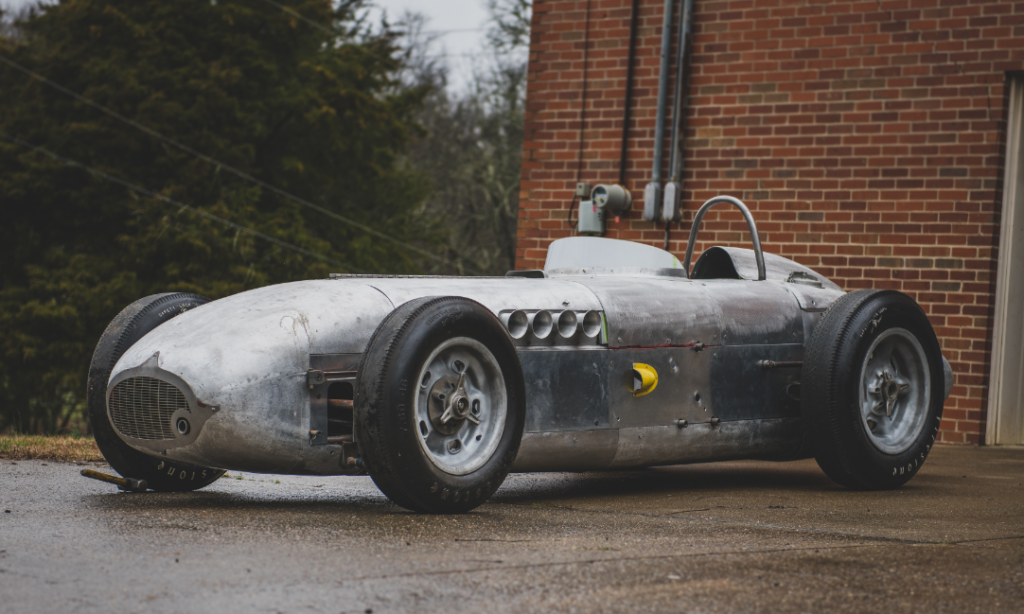
Kurtis 500E

1956 Kurtis 500E

Offered by RM Sotheby’s | Auburn, Indiana | September 3-5, 2020

Photo Courtesy of RM Sotheby’s

Frank Kurtis built quite a few race cars in his day, but he only built one 500E. In fact, he only built three cars in 1956 in total, two of which were Novi-powered 500Fs. The E was produced for the Federal Engineering race team, and it was an evolution of the earlier 500D, except the engine was tilted to the left and the fuel cap shifted places on the tail.

The engine would’ve been an Offenhauser inline-four. The car currently houses a mock-up of an Offy, but it’s not actually powered. The competition history for this chassis includes:

  • 1956 Indianapolis 500 – 7th (with Bob Veith)
  • 1957 Indianapolis 500 – DNQ (with Billy Garrett)
  • 1958 Indianapolis 500 – 14th, DNF (with Bob Christie)
  • 1959 Indianapolis 500 – 14th, (with Jimmy Daywalt)
  • 1960 Indianapolis 500 – 17th (with Shorty Templeman)
  • 1961 Indianapolis 500 – 10th (with Norm Hall)
  • 1962 Indianapolis 500 – 21st, DNF (with Chuck Hulse)
  • 1964 Indianapolis 500 – Never arrived

Yeah, it was raced at Indy, a lot. It was supposed to go back in ’64, but they never ended up preparing it. The car’s trail went cold, until John Snowberger, went on the hunt for his dad’s old race cars (his father, Russ, was Federal Engineering’s crew chief for many of those Indy appearances). He found a rusty old frame in a Detroit-area shop, which later turned out to be the remains of the 500E. It has been semi-restored, and is now expected to bring between $90,000-$120,000. Click here for more info and here for more from this sale.

Update: Sold $68,200.