MMC Charette

1900 MMC 6HP Charette Rear-Entrance Tonneau

Offered by Bonhams | London, U.K. | November 1, 2019

Photo – Bonhams

The Great Horseless Carriage Company was founded by Harry J. Lawson, who would end up in prison by the time MMC, The Great Horseless Carriage Company’s successor, went out of business (for the first time) in 1904.

MMC staggered around until 1908, but it was the early years that they did their best work. Lawson had managed to get his hands on the Daimler patent, and this car’s six horsepower, 1.5-liter inline-twin was a Daimler engine.

The original owner of the car is known, and it remained with his family for 53 years. During WWI, the body was removed and the car was hooked to a bandsaw. In 1927, the original owner’s sons put the car back together and hoped to partake in the 1930 London-to-Brighton run with their “1897 Daimler.”

They didn’t make it, but the car did compete in 1931 – and by this point, they realized it was an MMC. It continued to compete through the 1930s, and in 1953, with its next owner, it completed a 10-day, 870+ mile trek. It was restored in 1996 and was purchased by the current owner in 2005.

MMCs are rare, but not unheard of. This one has great history and should sell for between $280,000-$340,000. Click here for more info and here for more from this sale.

Update: Sold $290,428.
Erskine Panel Delivery

1928 Erskine 51B Panel Truck

Offered by Mecum | Davenport, Iowa | November 7, 2019

Photo – Mecum

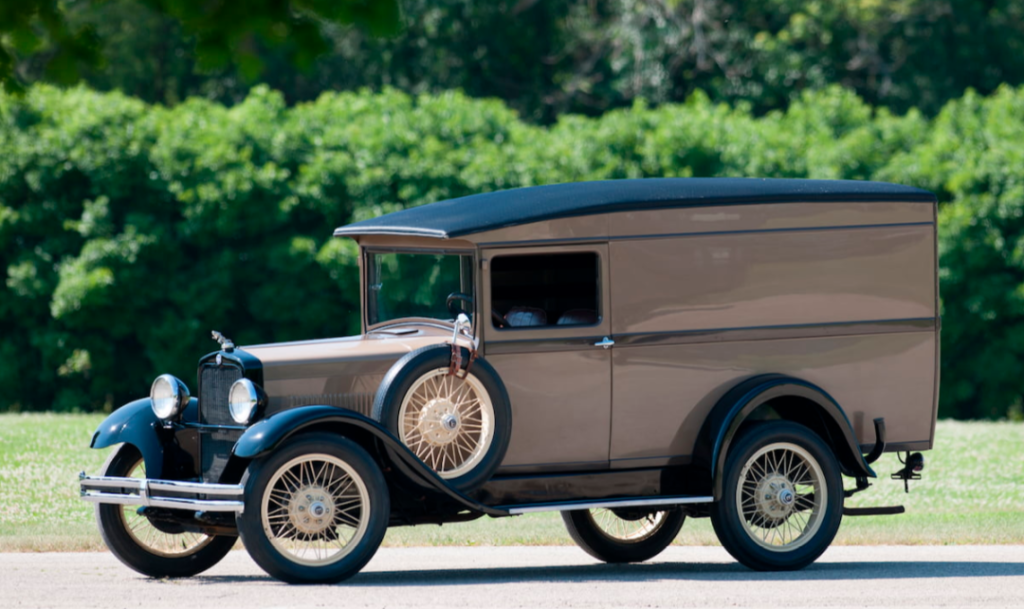
Erskine was introduced by Studebaker in 1927 as a low-priced brand and was named for company president Albert Erskine. It lasted through the 1930 model year when Studebaker dumped the idea and absorbed the line into its own.

What Erskine didn’t really do was commercial vehicles. Yet here we are. This is believed to be the only example of the Erskine Panel Truck produced, and it was built in 1928 as part of the Model 51 line, which was powered by a 43 horsepower 2.6-liter inline-six.

The truck was discovered in a warehouse in 1962 and later restored. It’s now being offered as part of Mecum’s “Antique Trucks” day at their massive tractor auction in Iowa. Click here for more info and here for more from this sale.

Update: Not sold, high bid of $19,000.

Update: Sold, Mecum Indy 2020, $28,600.

Update: Sold, Mecum Monterey 2021, $18,700.

Le Papillon Bleu

1901 Panhard et Levassor 7hp Twin-Cylinder Rear-Entrance Tonneau

Offered by Bonhams | London, U.K. | November 1, 2019

Photo – Bonhams

This is a car with a story. It was ordered new by Chevalier Rene de Knyff, a Belgian who happened to be one of the most successful racing drivers of his era. He won five of the 18 races he entered between 1897 and 1903. And remember, in those days, a race was held between two cities.

He also happened to be the president of Panhard after Mr. Levassor’s death in 1897. He drove Panhards in competition and ordered this one especially for himself. It is said that the car was one of the most well-built Panhards of its day, with de Knyff putting his best people on its assembly.

Power is from a seven-horsepower twin-cylinder engine, likely of 1.6-liters in capacity. The body is from J. Rothschild. The car is finished in light blue over a bordello-esque gorgeous red cloth. Named The Blue Butterfly, the car was purchased from Panhard/de Knyff by an Englishman who paid an exorbitant sum, as de Knyff didn’t really want to sell it all.

Its trail goes quiet until the 1920s when it is made apparent by the car’s next owner that it is very much still road-registered. It competed in the inaugural London-to-Brighton commemorative run. In 1927. It did it again in 1928.

And it’s done it 60 more times, 25 of which over the last 27 years with its current owner. This was considered a racing car in its day, with a “semi-racing” engine and a “lightweight” body. Only 992 6/7HP Panhards were built, and this is likely the most well-traveled and most famous among them. It is expected to fetch between $250,000-$320,000. Click here for more info and here for more from this sale.

Update: Sold $573,410.

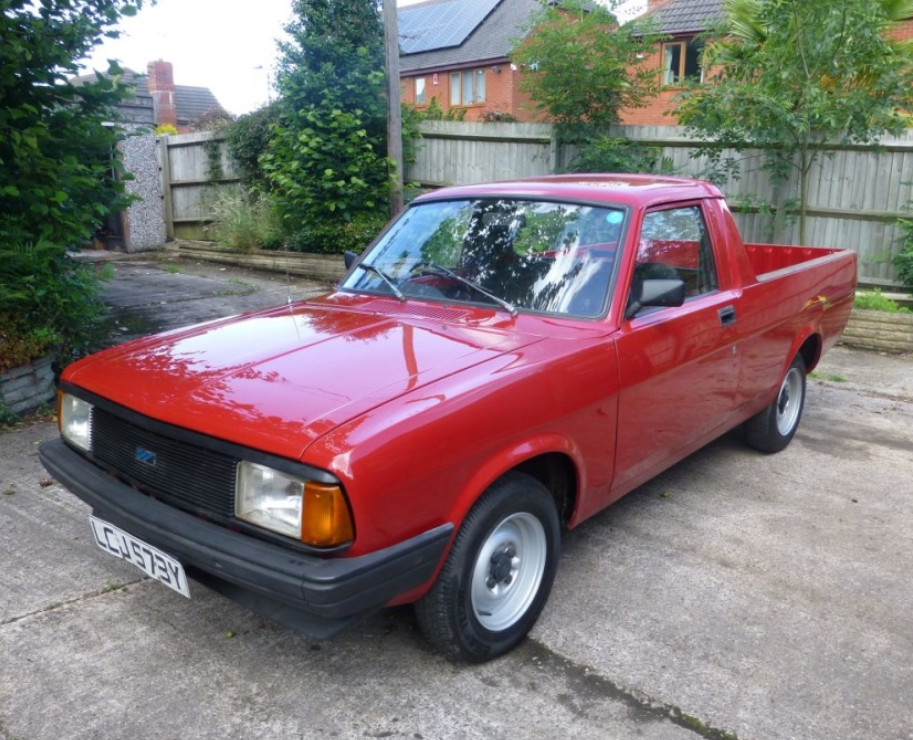
Morris Ital Pickup

1983 Morris Ital Pickup

Offered by Brightwells | Leominster, U.K. | November 27, 2019

Photo – Brightwells

Up until sometime in the 1990s, car companies would produce all sorts of body style variations of their cars. This was especially popular in Europe, where sedans could also be had in wagon, van, and even pickup forms. They would all wear the same model nameplate.

The Morris Ital was only built by British Leyland between 1980 and 1984. It was available as… well, a sedan, wagon, van, and pickup. This example is powered by a 1.3-liter inline-four good for 61 horsepower.

But what draws us to this example is the sheer rarity of it. The Ital was the final model to wear the Morris badge and only 37 are still registered in Britain, with another 145 or so extant but not roadworthy. Only six of that combined number are said to be pickups. And this one looks great. It should sell for between $3,800-$5,000. Click here for more info and here for more from Brightwells.

Update: Sold $5,496.

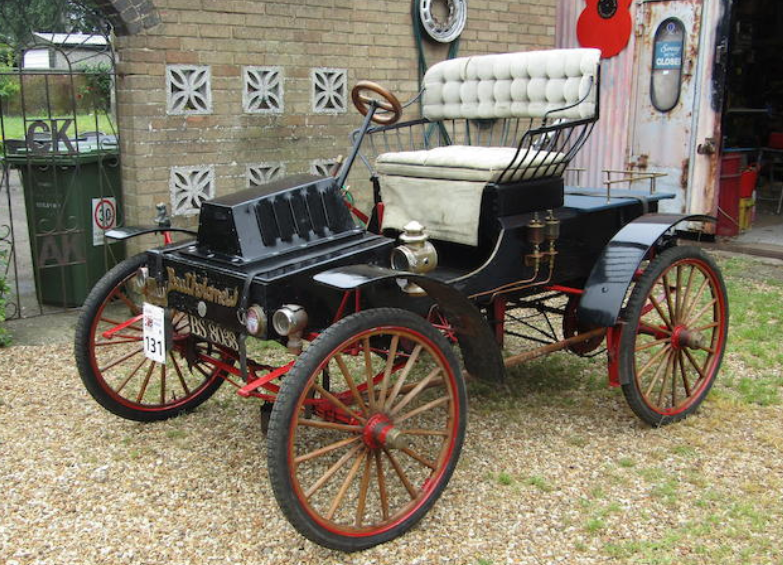
1902 Bartholomew

1902 Bartholomew 3.5hp High-Wheeled Spindler

Offered by Bonhams | London, U.K. | November 1, 2019

Photo – Bonhams

George Bartholomew of Russell, New York saw someone driving a car in a nearby town just after the turn of the century. So he went home and built himself one. This, the Bartholomew, is a one-off car that was built by George, who used it regularly for about four years.

Power is from a 3.5-horsepower single-cylinder two-stroke engine manufactured by Fairfield. It’s actually a stationary engine that Mr. Bartholomew adapted for use in his car. Features include a teeny-tiny steering wheel and seating for two.

The car remained in his family until 1949, when it went to a museum. It ended up in the U.K. by the late 1980s and has successfully completed the London-to-Brighton run twice. It should now bring between $35,000-$46,000. Click here for more info and here for more from this sale.

Update: Sold $25,254.

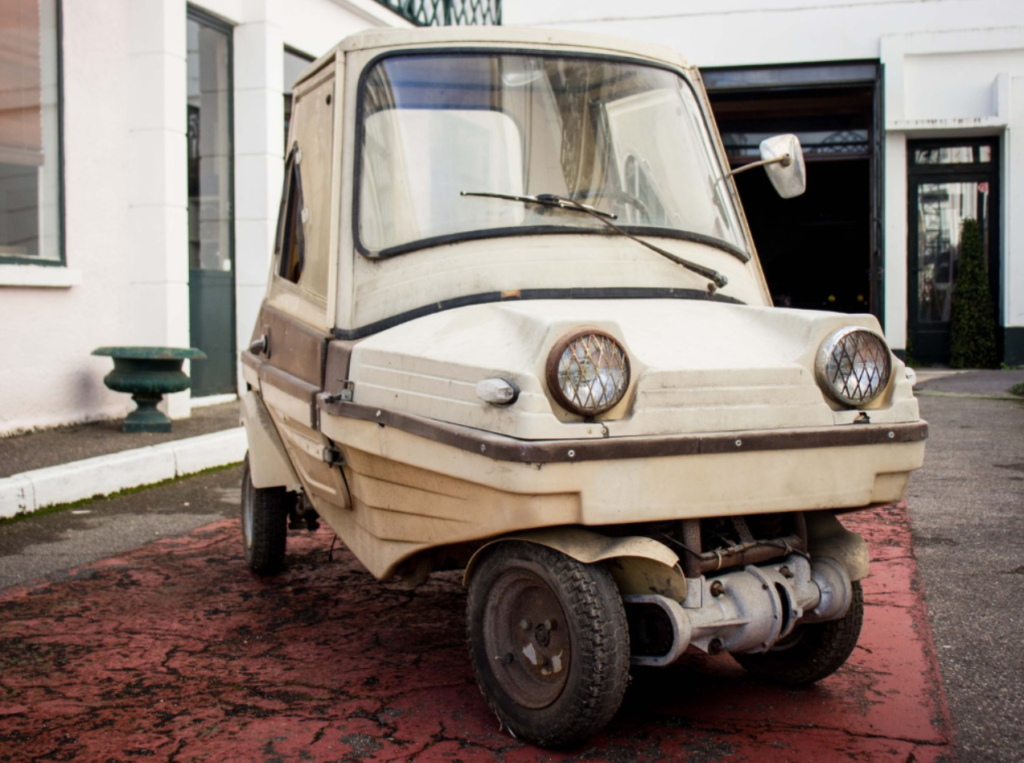
Flipper

1979 SEAB Flipper I

Offered by Osenat | Fontainebleau, France | October 19, 2019

Photo – Osenat

The Flipper was built by SEAB (Societe d’Exploitation et d’Application des Brevet) between 1978 and 1984. The company gained exposure to building plastic-bodied cars by doing just that for the Citroen Mehari. Also, gotta love any company whose official name includes the word “exploitation.”

The Flipper was built as two different models (a third never entered production), all of which were “sans permis” – meaning they could be driven without a license. That is, they are small enough not to qualify as cars in France. Power is from a 47cc Sachs single-cylinder engine. Despite its looks, it is not amphibious.

And it was only available in beige or brown. The coolest part about it is that it doesn’t have a reverse gear. Instead, it has a front axle that pivots all the way around. So to go backward, just keep turning the steering wheel until you start going backward. The Flipper II went about things more traditionally. It’s kind of weird. Kind of French. Kind of cool. This “survivor-level” car should bring between $880-$1,700. Click here for more info and here for more from this sale.

Update: Not sold.

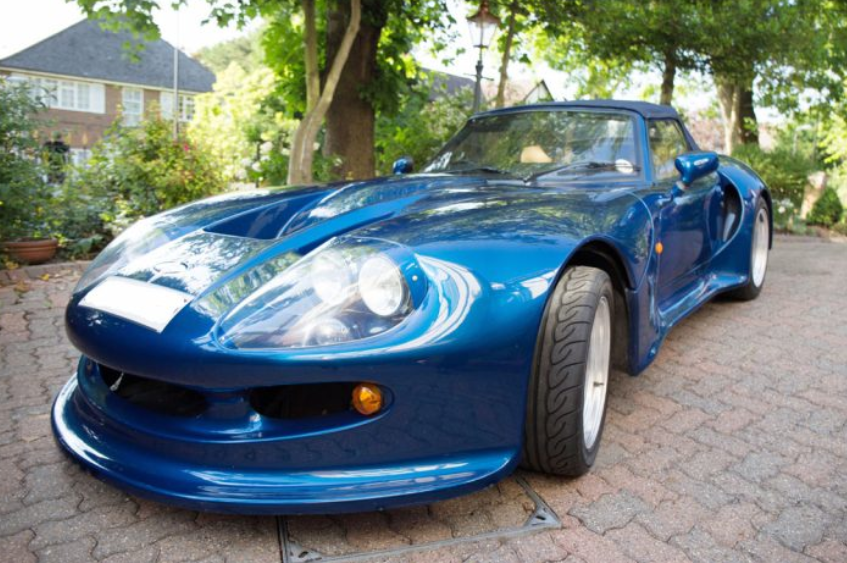
Marcos LM400

1997 Marcos LM400 Roadster

Offered by Coys | Syon Park, U.K. | October 19, 2019

Photo – Coys

It’s too bad the photos of this car aren’t better, because it’s a wild thing. Marcos was founded in 1959, but by the 1990s they were on shaky ground and had been for quite a while. They were bankrupt (for the second time) in 2000. This was pretty much it for Marcos (though there was a brief revival). They went down swinging in the 90s with some outrageous stuff.

It started with the Mantis in 1968, and Marcos styling just sort of evolved from that point. In the 80s and early 90s, there were all sorts of takes on the Mantis: the Mantula, Martina, Mantara… and a fresh Mantis. Around 1993, Marcos wanted to get back into motorsport. In order to do so, they had to build road-going versions of whatever they wanted to race.

And the LM-series of cars were born. Built in 400, 500, and 600-spec, the LM was a limited-production series. Only 30 were built in total, 14 of which were LM400s. Power is from a 3.9-liter Rover V8 making 190 horsepower. It’s unclear how many of the 14 LM400s were convertibles.

This one should sell for $30,000-$40,000. Click here for more info and here for more from this sale.

Wiesmann GT

2007 Wiesmann GT MF4

Offered by RM Sotheby’s | London, U.K. | October 24, 2019

Photo Courtesy of RM Sotheby’s

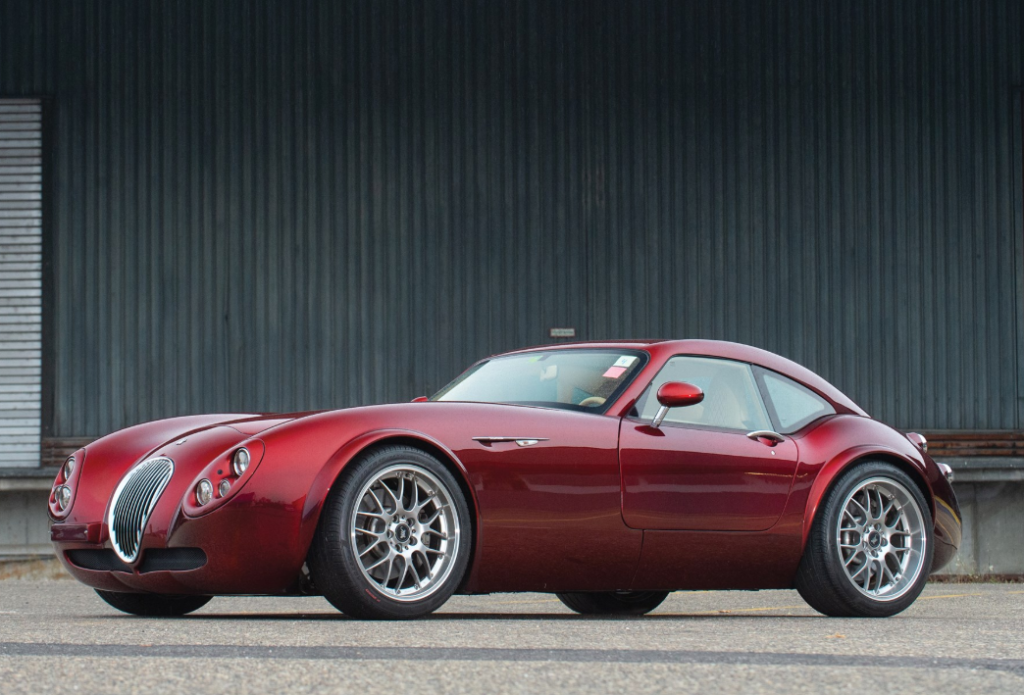
Martin and Friedhelm Wiesmann started a company in 1988 to build a classic-style roadster. That came to fruition in 1993, and from there, the company moved from neo-classic-esque open roadsters to something bordering on an insane supercar wrapped in a classically-styled package.

Their first closed car was the GT, which went on sale in MF4 guise in 2003. This two-seat coupe is powered by a 4.8-liter BMW V8 that puts out 367 horsepower. That’s enough power to propel this little thing to 60 mph in 4.6 seconds on the way to a top end of 180 mph. After 2010, the MF4 broke the 400 horsepower barrier. I saw one of these parked on the street in Switzerland. They are great-looking cars.

More extreme versions were offered, but this example represents the classic Wiesmann GT before they went power-crazy. Production lasted until 2013 when the company went bankrupt. They’ve since been purchased by a group of investors, but it is unclear if production will resume. Between 1988 and 2013, Wiesmann built about 1,600 cars. This one should bring between $100,000-$125,000. Click here for more info and here for more from this sale.

Update: Sold $103,257.

Simca Sport

1950 Simca 8 Sport Cabriolet by Facel

Offered by Artcurial | Paris, France | October 27, 2019

Photo – Artcurial

Simca’s two-door model range is a bit confusing, especially cars built around 1950. The Simca 8 was new in 1937 and was re-introduced after the war, with production continuing through 1951. It was a rebadged Fiat 508C, and it was Simca’s bread and butter.

Company president Henri Pigozzi had Pininfarina mock up a coupe version of the 8, which was popular. It went on sale as the Simca Sport in 1950. Later, in 1952, an updated version called the Simca 9 Sport went on sale and was built alongside the Sport, which was also referred to as the 8 Sport. Right.

This Facel-bodied cabriolet is powered by a 1.2-liter inline-four capable of 50 horsepower. The car had a single owner from new until the early 2000s. It should now bring between $38,000-$60,000. Click here for more info and here for more from this sale.

Update: Sold $32,210.

Arrows A21

2000 Arrows A21

Offered by RM Sotheby’s | London, U.K. | October 24, 2019

Photo Courtesy of RM Sotheby’s

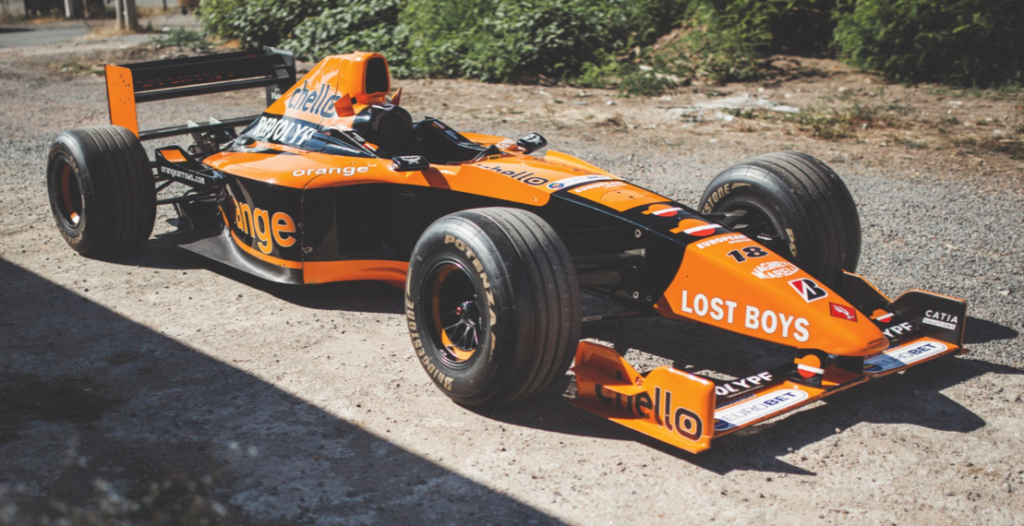
Arrows Grand Prix International was an active F1 team between 1978 and 2002. They never won a race, and by 2000 they weren’t in the best position on the grid, literally and figuratively. Drivers Jos Verstappen and Pedro de la Rosa managed a best result of 4th all season.

The A21 was their car for 2000. Originally, it was powered by a 3.0-liter V10 from Supertec. Now it has a 3.0-liter Cosworth AC V8, which is probably much more reliable, even if it was built 25 years ago. The AC carried a rating of about 500 horsepower when new. The competition history for this chassis includes:

  • 2000 Belgian Grand Prix – 16th (with Pedro de la Rosa)
  • 2000 Italian Grand Prix – 21st, DNF (with de la Rosa)

And that was it for A21 chassis no. 05. It was later rebuilt after the accident at Monza and is now being offered alongside another A21 at RM’s sale. It’s like a turn-key F1 team from 20 years ago. Get after it! Click here for more info and here for more from this sale.

Update: Sold $92,194.