GT40 Roadster

1965 Ford GT40 Roadster Prototype

Offered by RM Auctions | Monterey, California | August 15-16, 2014
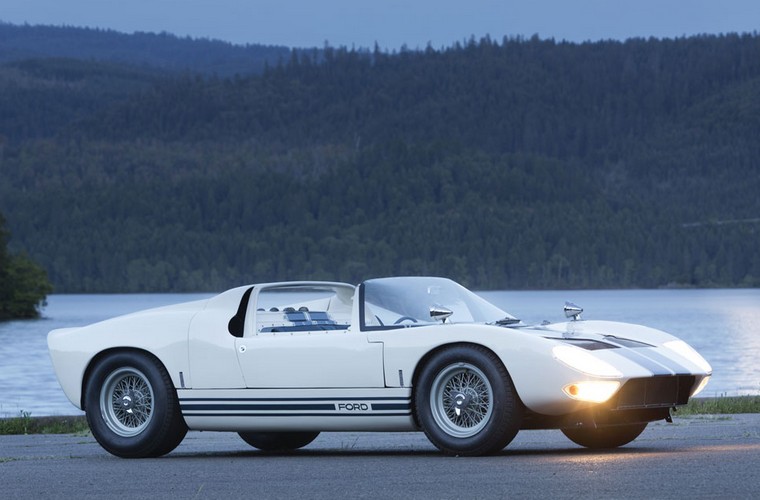
Photo - RM Auctions

Photo – RM Auctions

We’ve already featured a Ford GT40 Prototype, but what we haven’t featured is a Ford GT40 Roadster Prototype. That’s right, back in the 60s, Ford was adventurous and decided a GT40 with the roof chopped off might be a good idea. I can’t vouch for how good of an idea it was at the time, but it is certainly pretty awesome now.

Ford actually built a few of them, but this is the only one that has maintained its identity over all the years. The other three roadsters were converted to coupes or used as spares (at least one has been converted back to a roadster). This is the eighth GT40 Prototype built (of the twelve, total) and one of four roadsters.

This one uses a 4.7-liter Ford 289 V-8. It was a test car, mostly, and was never entered in competition. The most on-track action it ever saw was in the vintage racing circuit over the past 25 years. During testing, it was driven by Carroll Shelby, Jim Clark, and Ken Miles. It’s a once in a lifetime chance to get an as-built GT40 Roadster and it will likely cost you around $5 million. Click here for more info and here for more from RM in Monterey.

Update: Sold $6,930,000.

Update: Sold $7,650,000.
Coachbuilt Jaguar Mk VII

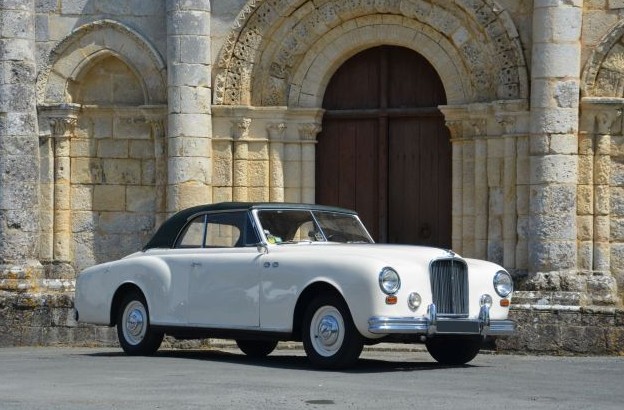
1953 Jaguar Mk VII Cabriolet Prototype by Beutler

Offered by Artcurial | Le Mans, France | July 5, 2014

Photo - Artcurial

Photo – Artcurial

The Jaguar Mk VII wasn’t an exciting car. It shared a similar style to the Bentleys and Rolls-Royces of the era – or really, any large British sedan. It was built between 1950 and 1956 as four-door sedan only. And if that’s the case, then what do we have here?

A two-door version, of course, built as a stylish (for the era, although you could argue “plain” today) by Swiss coachbuilder Beutler. It features an all-aluminium body around the base Mk VII mecahnicals: a 3.4-liter straight-six making 160 horsepower. The car was shown initially at the Geneva Motor Show before being packed away back at Jag headquarters and eventually sold and registered in 1964.

The car retains its original engine, which as been refurbished, and the interior has been “renovated.” The catalog description does not mention a “restoration” anywhere. At any rate, this is a one-of-a-kind Jaguar that can be yours for between $82,000-$110,000. Click here for more info and here for more from Artcurial in Le Mans.

Update: Sold $217,162.

DB HBR5

1959 DB Panhard HBR5 Coupe

Offered by Artcurial | Le Mans, France | July 5, 2014

Photo - Artcurial

Photo – Artcurial

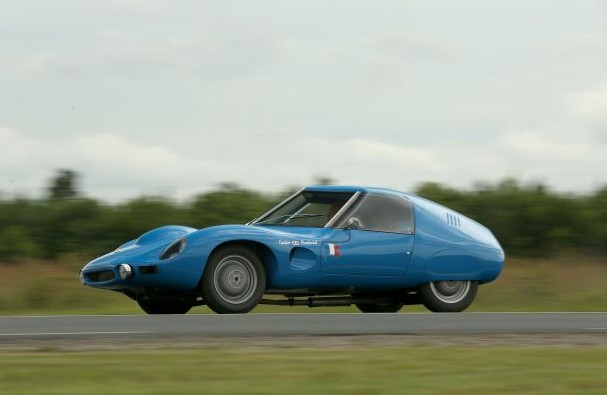
Charles Deutsch and Rene Bonnet began building cars together in 1938. Based near Paris, the 24 Hours of Le Mans became their goal, and in the 1950s, their cars competed there numerous times. This very car raced there three different years.

Their HBR series of cars were produced between 1954 and 1959 and they built several hundred of them with different engines available. This car has a very unique – almost aircraft-like – two-panel windscreen. It had a few engines over the years (depending on which class it was competing in at Le Mans) and was last raced with an 848cc flat-twin. It’s competition history includes:

  • 1959 24 Hours of Le Mans – 31st, DNF (with Alejandro de Tomaso and Colin Davis)
  • 1960 24 Hours of Le Mans – 19th (with Robert Bourharde and Jean-Francois Jaeger)
  • 1961 24 Hours of Le Mans – 21st (with Edgar Rollin and Rene Bartholoni)

This is a three-time factory entry at the 24 Hours. It was active in hillclimbs until 1970 and has been restored to its distinctive “Vitrine” two-windshield configuration. It should sell for between $165,000-$215,000. Click here for more info and here for more from this sale.

Update: Sold $160,860.

Koenig Evolution Testarossa

1987 Ferrari Testarossa Koenig Competition Evolution II

Offered by Artcurial | Le Mans, France | July 5, 2014

Photo - Artcurial

Photo – Artcurial

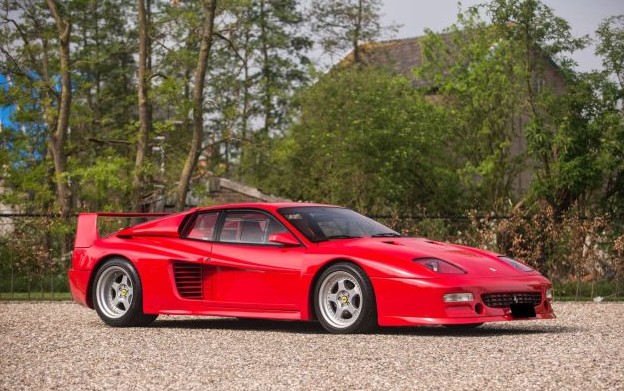
The Ferrari Testarossa sort of defines 1980s exotic sports cars (along with the box-ified Countach). But what happens when you need more than just a Testarossa? Well Koenig happens, that’s what.

We’ve featured another Koenig-tuned Ferrari in the past, but this one is decidedly cooler and more extreme. It started life as a Testarossa but within a year of its manufacture, it was in the hands of Koenig Specials in Munich. They applied their Competition Evolution package to it (and later, re-worked it to look more like a 512 M at the front). There’s a little F40 look to it at the back too, no?

The engine is the standard 4.9-liter Flat-12 but it has been tuned to make 800 horsepower. A lot has been revised here and more than you can see. Technical bits have been bettered so that this thing drives a little less wild than it looks. Koenig only modified 21 Testarossas with this (or a similar) package. It should sell for between $110,000-$165,000. Click here for more info and here for more from this sale.

Update: Sold $160,860.

Felday 5

1966 Felday 5 Prototype

Offered by Bonhams | London, U.K. | June 27, 2014

Photo - Bonhams

Photo – Bonhams

Peter Westbury is a London-born race car driver. He had a single Formula One start in 1969 and mostly drove sports cars. He had his own company, Felday Developments, that he started in 1965. In a speed trials race in 1964, he had a chance to compete in the Ferguson P99 4WD race car.

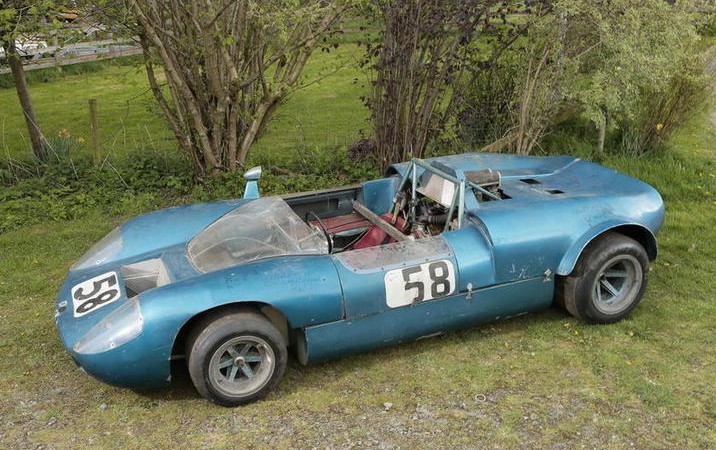
So he took that info with him back to Felday. The Felday 4 was a four-wheel drive race car with a 2.0-liter V-8 engine from BRM. Jim Clark raced it at Brands Hatch. The Felday 5 looked very similar to the 4, but it had a spaceframe chassis. It also had four-wheel drive.

The original engine was a 7.0-liter Ford V-8 prepped by NASCAR team Holman-Moody to make 500 horsepower. Westbury told the press that he might enter this car in the new Can-Am series in North America, if he could find a sponsor. He couldn’t. This car only drove a single race, retiring with driver Mac Daghorn at Brands Hatch the same day Jim Clark drove the Felday 4.

This car was part of the Group 7 class, which was abandoned for 1967. So it had nowhere to compete. It passed around a few owners before someone put a Chrysler V-8 engine in it and re-configured it for rear-wheel drive and raced it briefly in the early-1970s.

This car is offered in “as-it-was-put-away-in-the-1970s” condition and lacks the four-wheel drive system. I think it’s super-interesting. And I now kind of also want to meet Peter Westbury. This car is expected to sell for between $25,000-$34,000. Click here for more info and here for the rest of Bonhams Goodwood Festival of Speed Sale lineup.

Update: Sold $56,844.

Aston Martin Ulster

1935 Aston Martin Ulster

Offered by Bonhams | London, U.K. | June 27, 2014

Photo - Bonhams

Photo – Bonhams

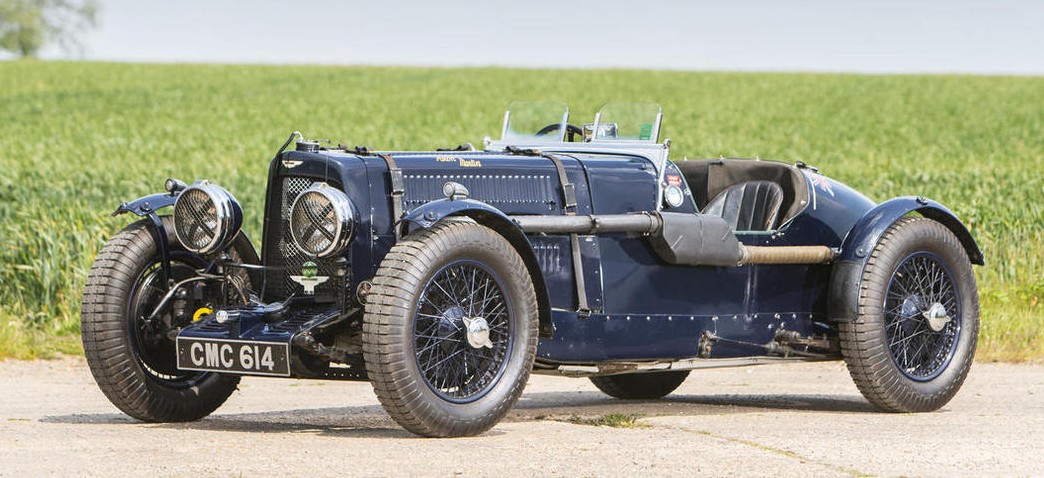
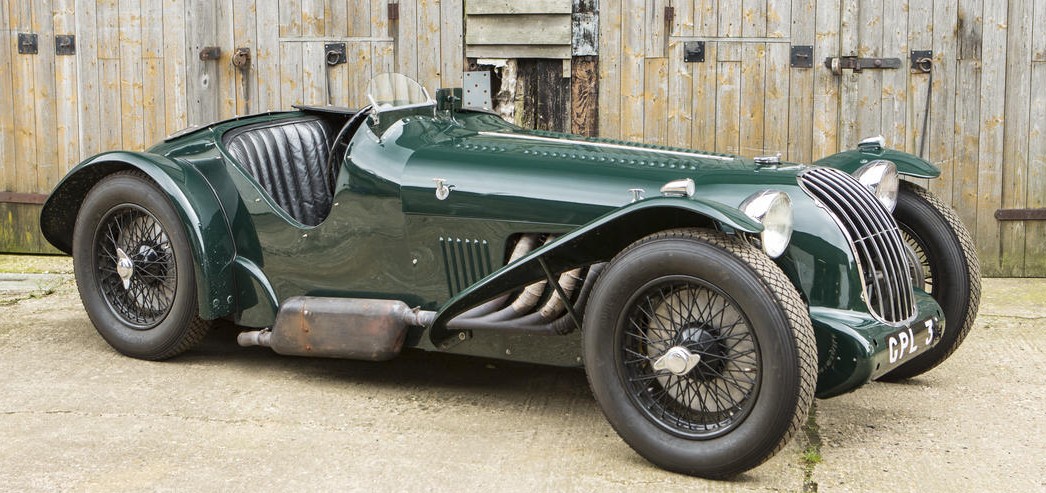
The Ulster is one of Aston Martin’s most sought-after and glorious models. It’s also quite manly, isn’t it? It just looks like to takes serious brawn to slide over that big exhaust and into the car. What’s even better is that this car competed in some of the biggest races of its day as an Aston factory racer.

The Ulster was built between 1934 and 1936 and only 21 were constructed, making it extremely rare. It was essentially a lightened version of the Aston Mk II and uses a 1.5-liter straight-four making 80 horsepower (although a one-time owner and specialist said that number is more like 120). It could do 100 mph.

This one has some pretty serious race history, including:

  • 1935 Mille Miglia – DNF (with Eddie Hall and “Marsden”)
  • 1935 24 Hours of Le Mans – 8th (with Maurice Faulkner and Tom Clarke)
  • 1935 Targa Abruzzo – 5th, 1st in class (with Count Giovanni Lurani and Ermengildo Strazza)

The first actual owner of this car was an Aston factory driver, Ian Porter-Hargreaves. Marque specialist Derrick Edwards bought it in 1963. It’s been restored to its former glory. Bonhams says that this might be the “most revered” Ulster there is. That’s a big statement. And it carries a big price: $2,400,000-$2,700,000. Click here for more info and here for more from this sale.

Update: Not sold.

Nissan R87E

1987 Nissan R87E

Offered by Bonhams | London, U.K. | June 27, 2014

Photo - Bonhams

Photo – Bonhams

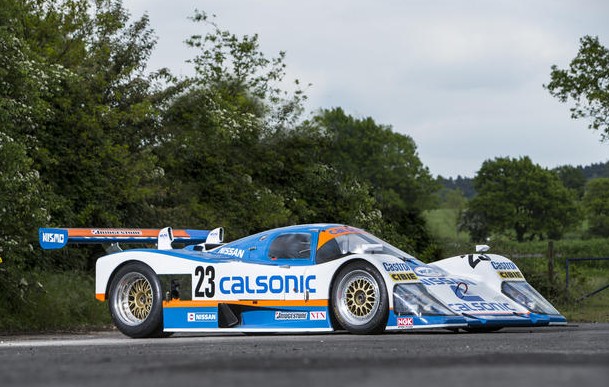
Nissan built some pretty awesome Group C racing prototypes in the late-80s and early-90s even if they didn’t have much on-track success. The R87E was their 1987 car and their third attempt at breaking into the Group C world. It used a chassis supplied by March Engineering of the U.K. and an in-house designed-and-built engine.

The powerplant is a 3.0-liter twin turbo V-8 making in excess of 750 horsepower. This was a step up from their previous car’s 700hp V-6. 1987 was a disastrous year for Nissan’s program, running only two events and failing to finish both. So for 1988, this car was upgraded to R88C specification and it ran at Le Mans again in 1988. Here is it’s 1988 competition history:

  • 1988 Fuji 500km – DNF (with Kazuyoshi Hoshino and Kenji Takahashi)
  • 1988 Suzuka 500km – 6th (with Hoshino and Takahashi)
  • 1988 Fuji 1000km (May) – 7th (with Win Percy, Hoshino and Takahashi)
  • 1988 24 Hours of Le Mans – 29th, DNF (with Aguri Suzuki, Takao Wada and Hoshino)
  • 1988 Fuji 500 miles – 5th (with Hoshino and Takahashi)
  • 1988 Suzuka 1000km – DNF (with Toshio Suzuki, Hoshino and Takahashi)
  • 1988 Fuji 1000km (October) – 9th (with Allan Grice, Hoshino and Takahashi)

This car was sold and restored to R87E specification with 1988 Calsonic livery and a 3.3-liter development version of the 3.0-liter Nissan V-8 – making 780 horsepower. Bonhams says the engine has been run for less than an hour since rebuild. Only three of these were built and this one should bring between $710,000-$810,000. Click here for more info and here for more from Bonhams.

Update: Not sold.

A Darracq Talbot-Lago

1939 Darracq T120 Major 3-Litre Three-Position Drophead Coupe

Offered by Bonhams | London, U.K. | June 27, 2014

Photo - Bonhams

Photo – Bonhams

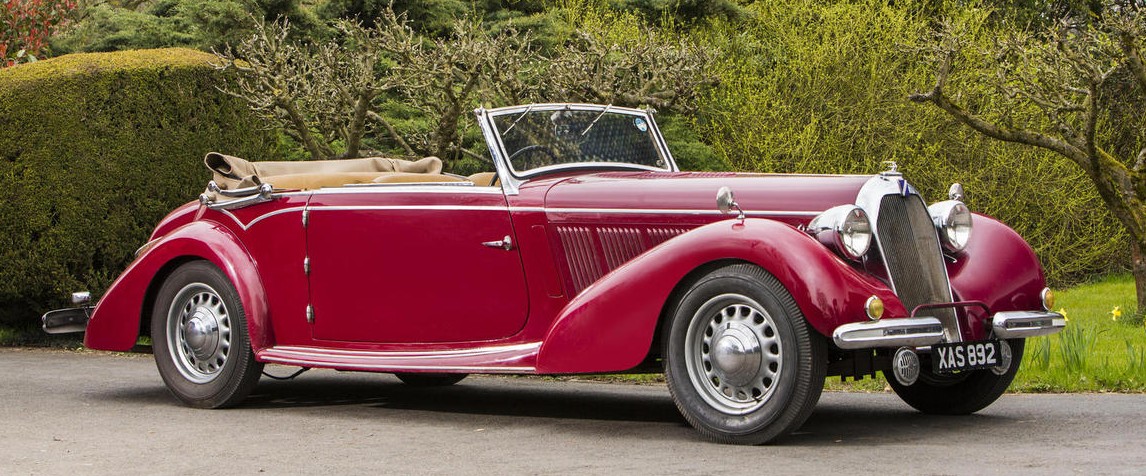
Someday I’ll have to do one of our “Car Guy History” posts about Darracq’s corporate history, but until then I’ll answer your question: no, this is not a Talbot-Lago. Well, I mean, it is a Talbot-Lago – but the brand name of this car is a Darracq. See, today’s proliferation of brand-engineered mini-SUVs wasn’t the first time stuff like this has happened.

Because of the weirdness in the history of the Talbot name, Talbot-Lago cars were only “sold” in France. The Rootes Group in England owned the Talbot name everywhere except France, so for more generic-looking exports (to places like the U.K. and Sweden, where this car was bought new), Talbot-Lago badged their cars “Darracq.” This is essentially a badge-engineered Talbot-Lago T120 Major.

The engine is a 3.0-liter straight-six and the car has spent most of its life in Sweden and Denmark. In the last 10 years, it came to the U.K. via a sale at Retromobile in Paris. It was freshened (the restoration was done in the late-80s) and used for touring. Bonhams describes this car as “elegant” – which it certainly is. It should sell for between $120,000-$130,000. Click here for more info and here for more from this sale.

Update: Sold $122,735.

Lotus Type 49B

1968 Lotus Type 49B

Offered by Bonhams | London, U.K. | June 27, 2014

Photo - Bonhams

Photo – Bonhams

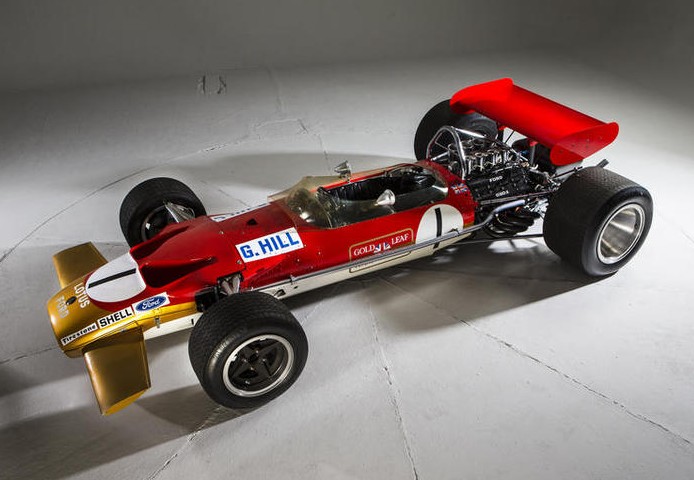
Remember how bad ass open wheel race cars used to be? Especially in the days before big rear wings when men had to manhandle them around courses. This one is now fitted with a wing, but it wasn’t always.

The Lotus 49 was designed for the 1967 Formula One season by Colin Chapman and Maurice Philippe. From the onset, this car was amazing. It blew everything else away, and Lotus teammates Graham Hill and Jim Clark dominated the opening weekend with this car.

Only nine Lotus 49s were built. Some of them were built as a Type 49 and later rebuilt as a Type 49B or 49C. The engine is a Cosworth DFV V-8 in 3.0-liter form capable of 408 horsepower. It is one of the best racing engines ever manufactured.

Want the competition history? I do – this car competed in the Tasman Series and Formula One:

  • 1969 New Zealand Grand Prix (as a Type 49) – 18th, DNF (with Graham Hill)
  • 1969 Levin International – DNF (with Hill)
  • 1969 Lady Wigram Trophy – 2nd (with Hill)
  • 1969 Teretonga International – 2nd (with Hill)
  • 1969 Australian Grand Prix – 4th (with Hill)
  • 1969 Sandown International 100 – 6th (with Hill)
  • 1969 Monaco Grand Prix (now in 49B configuration) – 4th (with Richard Attwood)
  • 1969 British Grand Prix – 7th (with Hill)
  • 1969 German Grand Prix – 18th, DNF (with Jo Bonnier)
  • 1970 South African Formula One Championship – 1st (with Dave Charlton)
  • 1971 South African Formula One Championship – 1st (with Charlton)

After the 1972 South African F1 season, the car was dismantled and purchased by a renown Australian Lotus collector who had the car restored. It’s been demonstrated and shown and now it can be yours. Only six Type 49s remain. This one has factory-Lotus F1 history and can be yours for between $1,200,000-$1,700,000. Click here for more info and here for more form this sale.

Update: Sold $1,147,135.

A Supercharged Alta

1938 Alta Supercharged Sports

Offered by Bonhams | London, U.K. | June 27, 2014

Photo - Bonhams

Photo – Bonhams

The Alta Car and Engineering Company was founded by Geoffrey Taylor in 1929. Their goal was to build sports cars – and later, racing cars, having entered factory racers in the first three different Formula One seasons. They were – and remain – very rare cars.

This 2.0-liter straight-four powered car has the optional supercharger that allows it to push out 180 horsepower. It could do 120 mph – making it one of the fastest cars you could buy in 1938. It could hit 60 mph in 7 seconds – that’s quicker than the car I drive today!

This car was extensively raced and has had many owners in the U.K., U.S., and Australia. The restoration was completed around 2000. Only 19 Alta cars were made prior to WWII. It’s been used a fair amount and well maintained. This car is ripe for historic racing. It should sell for between $300,000-$370,000. Click here for more info and here for more from this sale.

Update: Sold $336,390.