Detroiter Speedster

1912 Detroiter Type A Speedster

Offered by RM Sotheby’s | Hershey, Pennsylvania | October 10-11, 2019
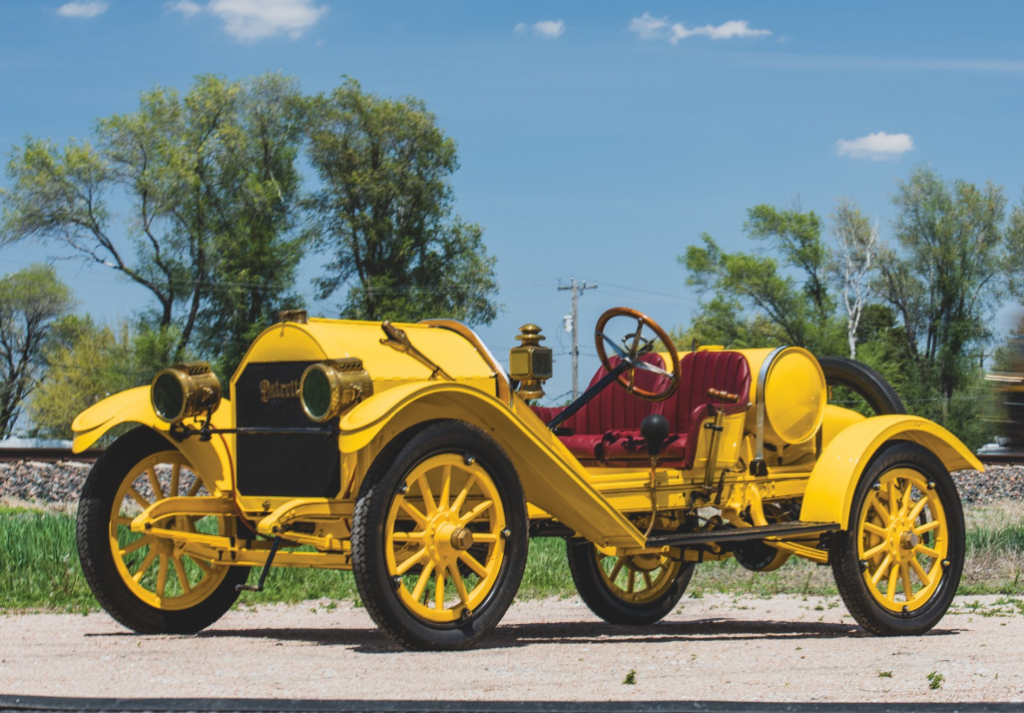
Photo Courtesy of RM Sotheby’s

Detroiter was a Detroit, Michigan-based car company that operated from 1912 through 1917. It was founded by Claude Briggs and John Boyle as the Briggs-Detroiter Company. They produced conventional touring cars and coupes using purchased engines.

But they also built some really sharp-looking Speedsters beginning in 1914. This car was actually ordered as a bare chassis by a Detroiter dealer in Indiana. He wanted a Mercer but could get a deal on a Detroiter, so he built a Mercer-style body on the chassis he bought. It ended up being the prototype for later Detroiter Kangaroo Speedsters.

Power is from a 25 horsepower Turner & Moore inline-four cylinder engine. This, the oldest-known Detroiter in existence, will sell at no reserve. Click here for more info and here for more from this sale.

Update: Sold $28,050.
1903 Dyke

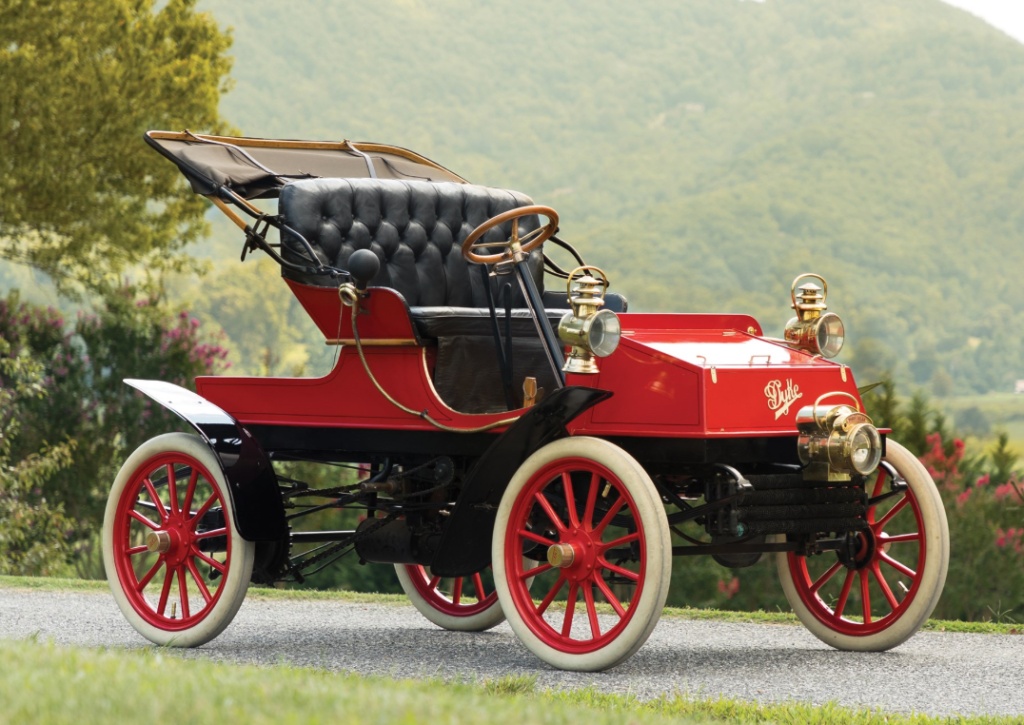
1903 Dyke No. 1 Gasoline Runabout

Offered by RM Sotheby’s | Hershey, Pennsylvania | October 10-11, 2019

Photo Courtesy of RM Sotheby’s

Andrew Dyke founded the first automobile supply catalog business in 1899. But because no one really yet needed parts, he decided to build some cars (and sell some kit cars) while he waiting for the need to arise.

This is one of the kits, as his early cars were electrics, and the 1904 Dyke-Britton was a four-cylinder touring car. Essentially, you bought the running chassis from Dyke and them went about sourcing a body. This is powered by either a one or two-cylinder engine – the auction catalog does not make it clear, and the photos are not of any help.

Only three such cars remain, and the current owner of this car purchased it directly from a Harrah dispersal sale in 1985. It’s been freshened and modified (slightly) for an improved top speed: 30 mph. You can read more about this no reserve car here and see more from RM here.

Update: Sold $60,500.

Ferrari 412 T1

1994 Ferrari 412 T1

Offered by RM Sotheby’s | London, U.K. | October 24, 2019

Photo Courtesy of RM Sotheby’s

The 412 T1 was Ferrari’s Formula One car for the 1994 season. Mid-way through the season, the cars were heavily updated and were later dubbed 412 T1B. The 412 T2 would replace the car for 1995. Ferrari’s drivers for 1994 were Gerhard Berger and Jean Alesi, the latter of whom would be replaced for two races by Nicola Larini after Alesi had a massive testing crash.

This car is powered by a 3.5-liter V12. It is the second of eight examples built, and it was primarily used as a testing car throughout the season. Its competition history includes:

  • 1994 Brazilian Grand Prix – 3rd (with Jean Alesi)
  • 1994 Italian Grand Prix – 2nd (with Gerhard Berger)

The car has had two private owners since Ferrari sold it into public hands in 2002. It is in running order and will cross the block in London late next month. Click here for more info and here for more from this sale.

Update: Not sold.

1911 Selden Roadster

1911 Selden Model 40R Varsity Roadster

Offered by RM Sotheby’s | Hershey, Pennsylvania | October 10-11, 2019

Photo Courtesy of RM Sotheby’s

We’ve chronicled the story of George Selden, the man who was granted a patent for an internal combustion-powered automobile in 1895. He received a royalty on every car built in the U.S. until Henry Ford quit paying him, initiated a lawsuit, and brought the whole Selden Patent to an end in 1911.

Selden did build cars in his own right in Rochester, New York between 1907 and 1914, with commercial vehicles continuing on through 1932. The example above is from 1911, a year in which Selden offered six different models. The Model 40R was only offered as a three-passenger Varsity Roadster, which cost $2,500 when new.

Power is from a 40 horsepower, 5.8-liter inline-four, and the car remained with the same family from new until 1983. It was restored in 1996 to the condition you see here. Remarkably, this is one of only six Selden automobiles to survive. You can read more about it here and see more from this sale here.

Update: Sold $159,500.

The German T-Bird

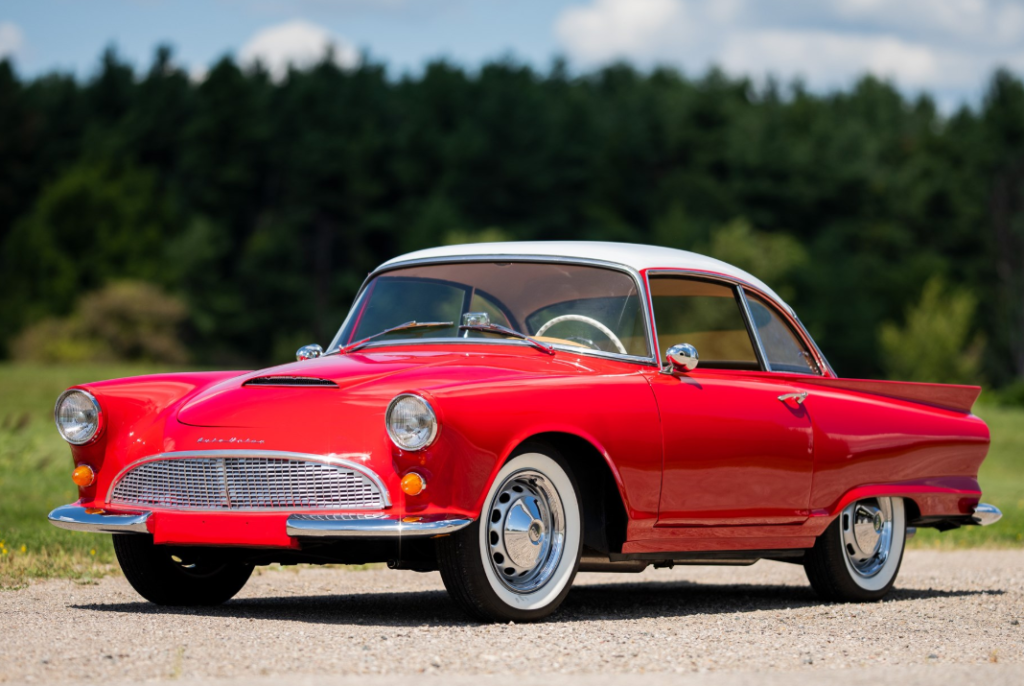
1960 Auto Union 1000 SP

Offered by RM Sotheby’s | Auburn, Indiana | August 29, 2019

Photo Courtesy of RM Sotheby’s

Four of Germany’s auto manufacturers joined forces in 1932 to form Auto Union. They were Audi, DKW, Horch, and Wanderer. Auto Union racing cars were some of the best of the 1930s, and after WWII, what was left of Auto Union‘s West German holdings began producing cars under the new brand. The DKW brand was still active as well.

Auto Union would eventually be purchased by Volkswagen and merged with NSU. The current Audi brand carries the torch for the history of the four original brands. For a while in the 1950s, Daimler-Benz owned the company, and it was during their reign that the Auto Union 1000 was built (1958-1963). It was a sedan that was essentially a re-badged DKW.

But between 1958 and 1965, they built a version called the 1000 SP. The styling was lifted almost intact from the contemporary Ford Thunderbird, but the cars were powered by an 896cc inline-three good for about 54 horsepower. This example is gorgeous and is very T-Bird-esque, but slightly more exotic.

Only 5,004 coupe versions were built and they’re rarely seen in the U.S. This one was restored in 2009 and should bring between $30,000-$40,000. Click here for more info and here for more from this sale.

Update: Sold $23,650.

1966 Duesenberg

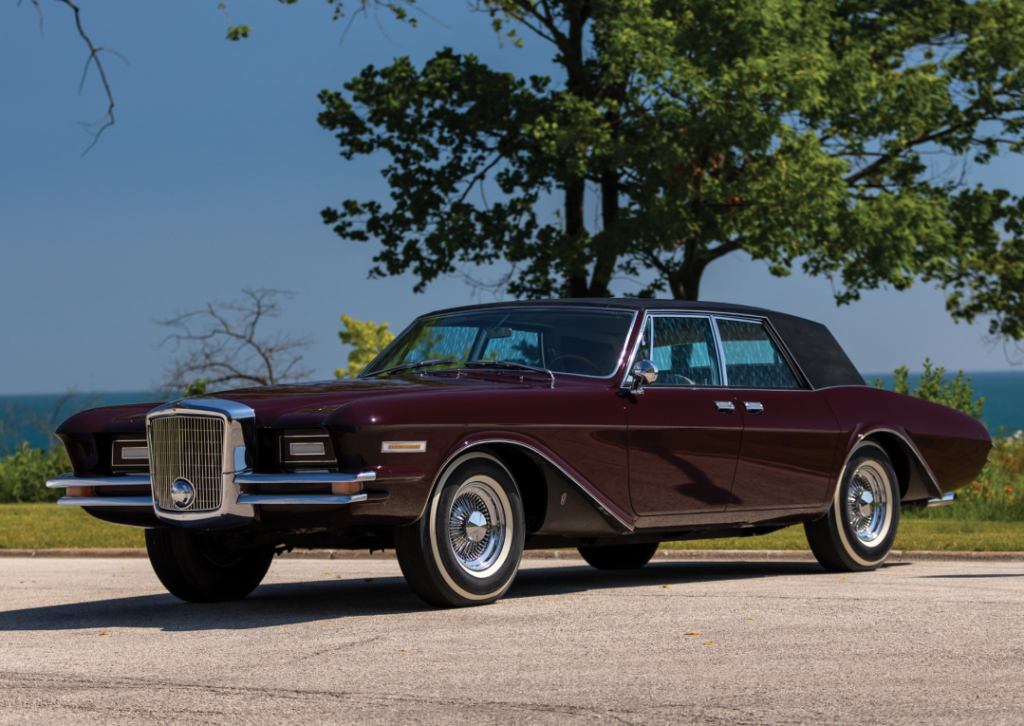
1966 Duesenberg Model D Concept

Offered by RM Sotheby’s | Auburn, Indiana | August 29-September 1, 2019

Photo Courtesy of RM Sotheby’s

What’s rarer than a Model J Duesenberg? A Model D, of course. The Duesenberg name – and its associated automobiles – have retained such an aura around them since the company originally went out of business in the 1930s that it’s no wonder there have been multiple attempts to restart it. Someone built a “Duesenberg” in 1959 using a Model J engine and a Packard chassis.

In the 1960s, Augie Duesenberg‘s son arranged financing (which ultimately fell apart) to restart the company with serial production. This prototype was conceived and it. Is. Lavish. Boasting features that wouldn’t be standard for another 30+ years, the car is powered by a 425 horsepower, 7.2-liter Chrysler V8.

The body was styled by Virgil Exner and crafted by Ghia in Italy. Yes, it evokes the Stutz reboot that occurred just a few years after this car debuted. And there’s a good reason: Exner styled that one as well.

Apparently, the company received around 50 orders before it all went wrong. This car stayed in the ACD Museum in Auburn for over three decades before joining a prominent collection. It’s more-or-less as it was the day it was built, with just 800 miles on the clock. RM estimates $300,000-$350,000 to take it home, which still means it’s cheaper than the comparatively-common Model J. Click here for more info and here for more from this sale.

Update: Not sold.

Harroun Touring

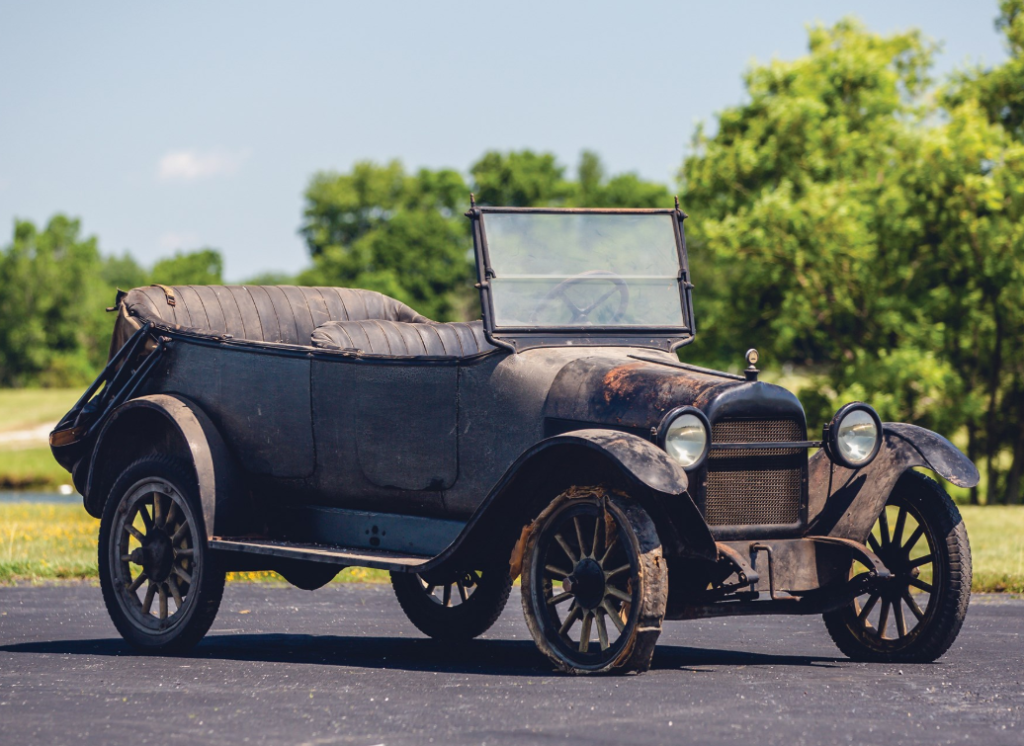
1918 Harroun Model A-1 Touring

Offered by RM Sotheby’s | Auburn, Indiana | August 29-September 1, 2019

Photo Courtesy of RM Sotheby’s

To win the very first Indianapolis 500 is kind of a big deal. Ray Harroun will be remembered for as long as that race continues… and then for another century or so. But after that 1911 victory, he retired from racing. And most people who know who he is have no idea what became of him after that.

Well, let’s backtrack. In 1905, Mr. Harroun built his own racing car before he got a job as a riding mechanic. So he knew his way around the mechanical parts of a car. In 1917, he set up shop in Wayne, Michigan, to build automobiles. And unlike some people who just slapped their name on the front of cars for the promotional benefit, Harroun actually designed the cars that carried his name.

The Model A-1 was built in 1917 and 1918. It’s powered by a 43 horsepower inline-four. This example is a little rough, but it’s believed to be one of two such examples in existence (and one of only 326 built in 1918). All-original, it’ll need a little TLC (and tires, at least) to get going again. But once it’s up and running it will be a roaming part of history. Harroun Motors closed in 1922. This car is estimated to sell for between $15,000-$20,000. Click here for more info and here for more from this sale.

Update: SOld $33,000.

DB5 Shooting Brake

1965 Aston Martin DB5 Shooting Brake by Radford

Offered by RM Sotheby’s | Monterey, California | August 15, 2019

Photo Courtesy of RM Sotheby’s

There have been a few Aston Martin wagons – err, “shooting brakes” – over the years. They officially started with the DB5. The story is that company owner David Brown was annoyed that his hunting dog was destroying the front seats in his normal DB5, and he had nowhere to put his polo gear. I should’ve warned you that it was a very pretentious story.

The Shooting Brake versions of the DB5 share the same 282 horsepower, 4.0-liter inline-six as the coupes. But it has that extra bodywork and glass at the rear, courtesy of Radford, a British coachbuilder hired by Brown to build the bodies, as the Aston factory didn’t have the capacity to fill the special orders for these cars.

Only 12 examples of the DB5 Shooting Brake were built by the “factory” (i.e. by Radford). One for Brown, and 11 others for customers who saw Brown’s car and wanted their own. They are very hard to find today, and this example has been with three Swiss owners since new. It should bring between $1,000,000-$1,400,000. Click here for more info and here for more from this sale.

Update: Sold $1,765,000.

FXX

2006 Ferrari FXX

Offered by RM Sotheby’s | Monterey, California | August 15-17, 2019

Photo Courtesy of RM Sotheby’s

The Ferrari Enzo ushered in a new era of supercars when it went on sale in 2002. It spawned a new form of supercar: track-only variants. These have since given way to track-only cars from other major manufacturers. That track-only Enzo variant is this: the 2005-2007, invitation-only, FXX.

The FXX took the Enzo platform a step (or five) further. It is a hardcore track machine. The 6.3-liter V12 makes 789 horsepower. It can hit 60 in 2.7 seconds and tops out at 214 mph. The car was offered to Ferrari’s most exclusive customers. Only 29 were built initially, with a 30th produced for Michael Schumacher upon his initial F1 retirement. Eight more followed for other customers for a grand total of 38 cars.

Ferrari has since introduced an Evoluzione package that updates the FXX to a more dramatic spec. This car has not received that kit and thus remains as it was originally intended. It has only been driven once – at the Fiorano track by its current and first owner before it was delivered to his collection. You can read more about it here and see more from RM here.

Update: Sold $3,520,000.

Pantera Si

1990 De Tomaso Pantera Si

Offered by RM Sotheby’s | Monterey, California | August 15-17, 2019

Photo Courtesy of RM Sotheby’s

The Pantera was in production by De Tomaso for what seemed like a lifetime. Introduced in 1971, the cars carried wedge-shaped styling by Tom Tjaarda at Ghia. Ford powerplants were standard, and the styling was updated in the 1980s to make it boxier and, well, more “80s.”

By the time 1990 rolled around, the car was extremely long in the tooth. Marcello Gandini was brought in to freshen the design up, and here is what he came up with. The car also received a partial chassis redesign and a new suspension setup. The old Ford 351 was replaced by a 302ci, 5.0-liter V8.

Only 41 were built – 38 of which were sold to the public – before De Tomaso shifted gears and moved on to the Guara after 1992. I’ve never seen one of these offered for public sale – not in the last 10 years anyway. Click here for more info and here for more from this sale.

Update: Sold $240,800.