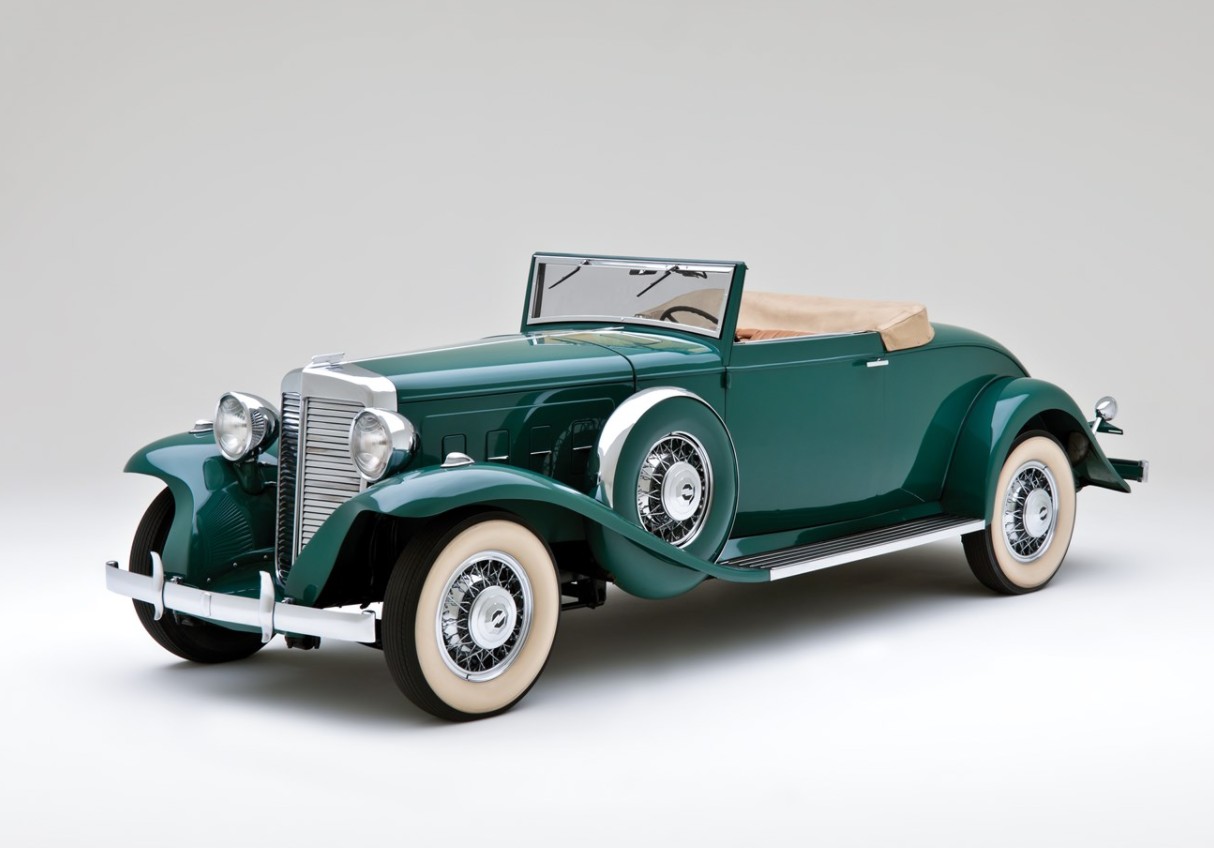
Ford Model K

1907 Ford Model K Roadster

Offered by RM Sotheby’s | Phoenix, Arizona | January 19, 2018

Photo Courtesy of RM Sotheby’s

Before Henry Ford conquered the world with basic, affordable transportation, he spent the early years in his company just trying to keep it going (after two failed attempts). In 1904, he introduced the Model B which was Ford’s “upscale” model (because it had brass and wood trim and a decent engine). In 1906, it was replaced by the Model K, which was positioned at the top of the automobile market.

Ford didn’t really want to build this car, but his investors did. Featuring on the first  commercially available six-cylinder engines, the Model K is powered by a 6.6-liter straight-six that makes 40 horsepower. Priced at $2,500, it was the most expensive Ford product to date. Different body styles were offered and it was available through 1908. In 1907, the Model K was the best-selling six-cylinder car in the world, with nearly 500 sold.

Ford offered three other models in 1907: the Model N, Model R, and Model S. Come 1909, they would be selling only one model: the Model T. About 1,000 Model Ks were built in total and only 10 Roadsters are known to exist. This one has been only owned by two different families in the past 110 years. It was restored – nearly half a century ago. It’s a really cool, rare Ford from the pre-T era. In this barn-find condition, it should bring between $175,000-$275,000. Click here for more info and here for the rest of RM’s Arizona lineup.

Update: Sold $252,000.
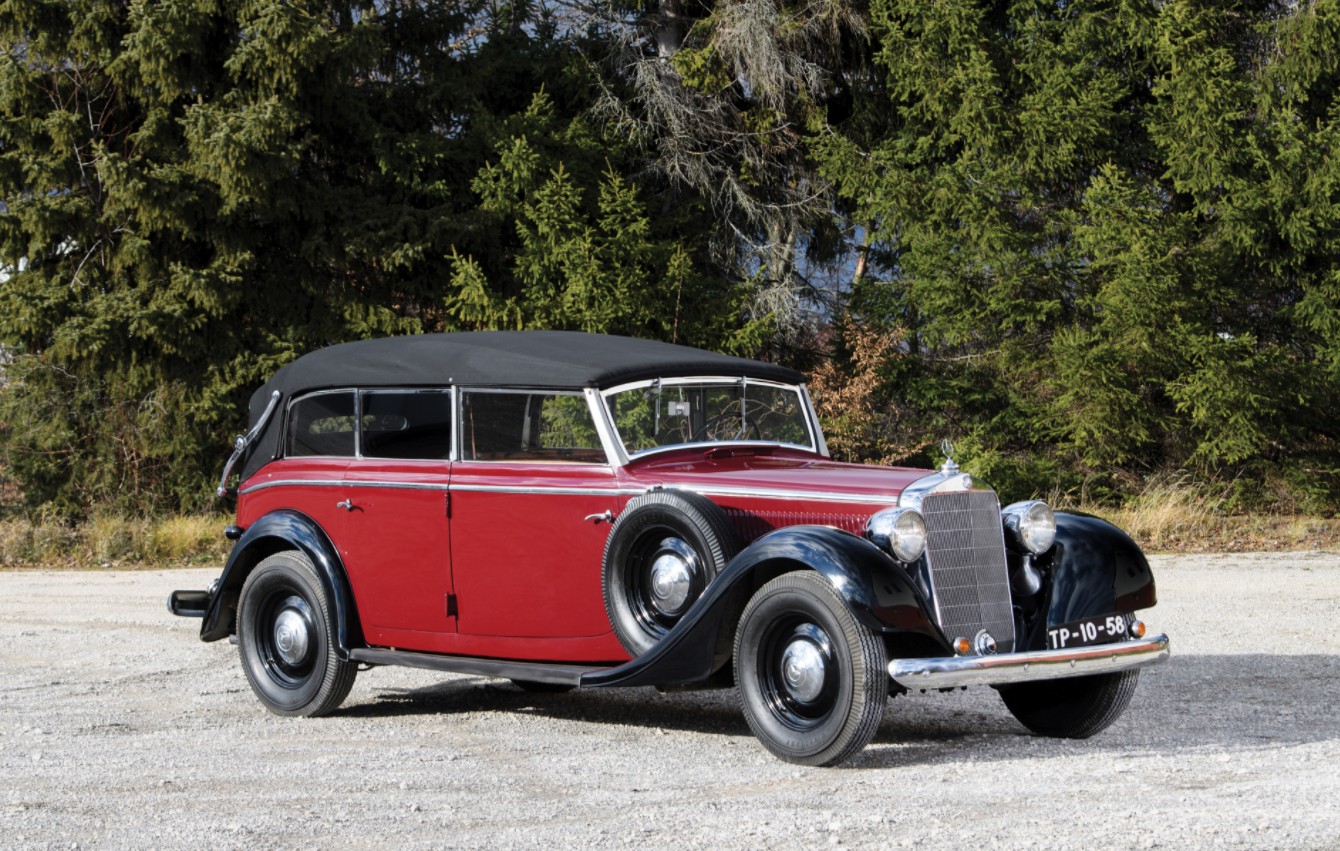
320 Cabriolet F

1942 Mercedes-Benz 320 Cabriolet F

Offered by RM Sotheby’s | Paris, France | February 7, 2018

Photo Courtesy of RM Sotheby’s

This wartime Mercedes-Benz might look big and imposing (and it is), not unlike a certain other large Mercedes touring sedan we recently featured, but it is, in fact, the smaller 320 model (W142, in internal MB-speak). The 320 was the replacement for the 290, which it took over duties for in 1937. It lasted through 1942, when Germany was forced to focus all of its production might on military needs.

The 320 was offered in two wheelbases, short and long. This is a long wheelbase car and it could’ve been had with a variety of bodywork, including bodies from outside coachbuilders. The base model was a four-door limousine, but there were four convertible versions offered from in-house coachbuilder Sindelfingen as well: Cabriolets A, B, D, and this, the seven-seater Pullman Cabriolet F.

The other thing this car has going for it is that it is equipped with the optional (beginning in 1938) engine with increased cylinder bore. It’s a 3.4-liter straight-six that makes 77 horsepower (which is actually the same rating the smaller, standard engine offered). This car, which looks very much like an Indiana Jones chase vehicle, has an older restoration. Mercedes pushed out 7,017 320s in total and I’m not sure how many carried this rare body style. It should bring between $130,000-$155,000. Click here for more info and here for more from this sale.

Update: Sold $197,262

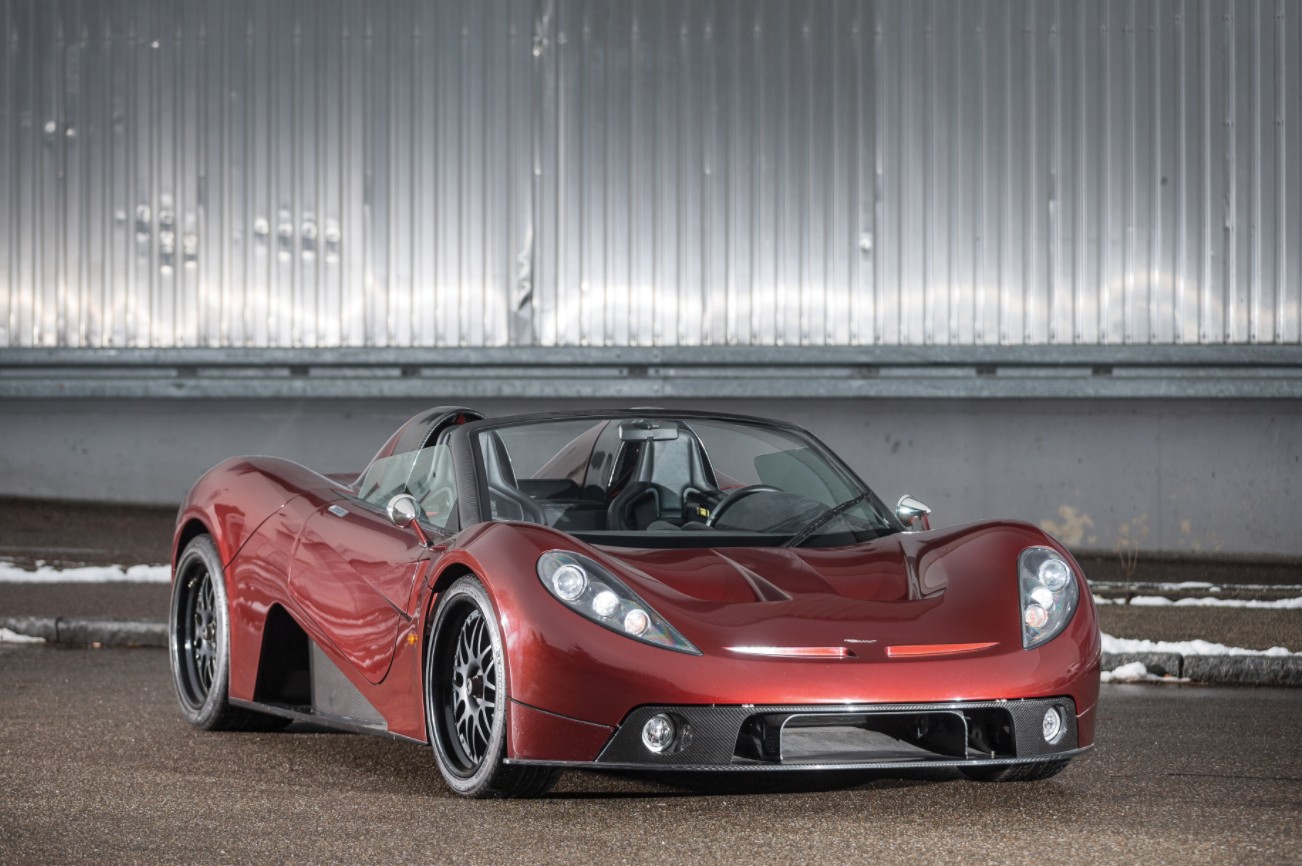
Magnate Barchetta

2005 Magnate P708 Barchetta

Offered by RM Sotheby’s | Paris, France | February 7, 2018

Photo Courtesy of RM Sotheby’s

Giotto Bizzarrini stopped building “production” cars (even though they were all very limited in number) in 1969. Since then, a number of cars have shown up wearing his name, including a few P538 cars built using leftover components, and a number of concept cars.

There were concept cars using the Bizzarrini name in 1990, 1998, and a couple since the year 2000, including one called the P708 Barchetta. Developed with input from Bizzarrini himself, the P708 was shown around, seeing if there was any interest in a production version. It was supposed to be seen as a modern take on the classic P538.

Power comes from a 7.0-liter Chevrolet V-8 making 505 horsepower. The body is carbon fiber and it was built by a company called Magnate out of Thailand. It was purchased by an American in 2013 and only then was the car made driveable. It has since covered 1,000 miles. It’s listed as a “2005” because that is when construction of this car began, even if it took many more years to fully realize the final product.

At some point, the branding on the car switched from Bizzarrini to Magnate. What country of origin would you file this under? It had an Italian name, originally, but now sports a name (and body) from Thailand. It was completed in America but started out in Germany. It’s multi-national, for sure, and should bring between $335,000-$565,000. Click here for more info and here for more from this sale.

Update: Sold $109,198.

Phantom III Pillarless Saloon

1937 Rolls-Royce Phantom III Pillarless Saloon by Vesters & Neirinck

Offered by RM Sotheby’s | Phoenix, Arizona | January 18-19, 2018

Photo Courtesy of RM Sotheby’s

By definition, the Rolls-Royce Phantom III was not a sporty automobile. It was a huge car, introduced by Rolls in 1936 and it lasted through 1939. The bare chassis alone weighed in at just over two tons. It featured a big, 7.3-liter V-12 making about 160 horsepower, which was a decent amount of power, but not enough to scoot the pure massiveness of this car along at any decent clip.

But, I suppose, that has never been the point of a Rolls-Royce, V-12 or otherwise (the Phantom III was the first V-12 RR and the last one until 1998). Because these were sold as bare chassis, it was kind of up to the coachbuilder of your choice to make it seem sporty and that is where Vesters & Neirinck of Brussels succeeded wildly with this car. The low, extremely solid-looking roof, swoopy fenders and two-tone paint really do make this car look sporty. And the fact that it lacks B-pillars is icing on that design cake.

Now let’s talk about this car’s downright bizarre ownership history. It is said that during WWII this car was used by the King of Belgium and Field Marshall Bernard Montgomery. In the late 1950s the car was in Germany and a decade later it was in the U.S. where it had a series of owners. Then, in the 1980s, it was purchased by G. Gordon Liddy (of Watergate infamy). He sold it to Charles Nelson Reilly, who, because he was way before my time, became known to me thanks to Alec Baldwin’s not-as-over-the-top-as-you-might-think impression of him on Saturday Night Live.

Restored between 1992 and 1994, this car won its class at Pebble Beach and has been in the same collection for nearly 20 years. Only 727 Phantom IIIs were built and this is, so far, the best-looking example I’ve seen (though we featured another wild one a few weeks ago). It should bring between $550,000-$750,000. Click here for more info and here for more from this sale.

Update: Sold $593,500.

Alfa 1900C SS Speciale

1955 Alfa Romeo 1900C SS Speciale by Boano

Offered by RM Sotheby’s | Phoenix, Arizona | January 18-19, 2018

Photo Courtesy of RM Sotheby’s

The Alfa Romeo 1900 was Alfa’s executive car introduced at the 1950 Paris Motor Show. Produced through 1959, it could be had as a four-door sedan, two-door coupe, or two-door convertible. This is not the standard coupe.

There were a few sub-models of the 1900, including the 1900 Super, 1900TI, and the 1900C – which was the short wheelbase version. This SS version is powered by a 115 horsepower, 2.0-liter straight-four.

Quite a few of these were coachbuilt specials and many of those were one-offs, including this Turin Motor Show car by Mario Boano. Sold after that show to a Milanese buyer, it remained in Italy for quite some time, finally finding a foreign owner in 2013. The restoration you see here wasn’t complete until 2017 – and it has been restored back to as it was on the Turin Motor Show stand.

The styling on this car is very Jet Age, carrying bodywork that fit right in with other coachbuilt specials from the era. When it crosses the block in January, it is expected to bring between $1,250,000-$1,750,000. Click here for more info and here for more from this sale.

Update: Sold $1,270,000.

November/December 2017 Auction Highlights

We’re winding up 2017 and we’re starting with Historics at Brooklands at Mercedes-Benz World. Two cars here shared the “top sale” honors. They were this 1972 BMW 3.0 CSL:

Photo – Historics at Brooklands

And this 1994 Lamborghini Diablo VT. Both brought $182,216.

Photo – Historics at Brooklands

The Peugeot van we featured failed to sell, but the Ligier microcar went for just $2,987 -a steal for a true oddity. Click here for complete results.

Brightwells sort of snuck a sale in under our radar in late November and we didn’t get to feature anything from it. The top sale was $89,965 for this 1963 Jaguar E-Type Series I 3.8 Roadster. Click here for more results.

Photo – Brightwells

Next up, Bonhams’ first of two December sales held in London. This, the Bond Street Sale, appropriately saw this very Bond-esque ex-Paul McCartney 1964 Aston Martin DB5 bring the most money of any car in the sale: $1,811,994.

Photo – Bonhams

That means that the Ferrari 288 GTO (and the Bristol 411) failed to sell. Click here for more from this sale.

RM Sotheby’s held their “Icons” sale in New York City and this 1959 Ferrari 250 GT LWB California Spider Competizione blew everything else away, selling for $17,990,000.

Photo Courtesy of RM Sotheby’s

The three cars we featured from this sale all sold, with the Pagani bringing the most at $1,850,000. The Marmon sold for $962,000 and the Chrysler Special $885,000. Click here for the rest of the big dollar cars (and they were all big dollar cars).

Finally, for 2017, Leclere auctioned off some of Citroen’s private reserve. The top sale was the Tubyk Concept we featured for $43,747. The 1980 Xenia Concept missed its estimate, bringing just $8,616. Most Interesting goes to this semi-bizarre 2007 Citroen Jumpy “Snow Atlantic” by Sbarro which sold for $21,210.

Photo – Leclere

The other Sbarro creation was the topless Berlingo and it sold for $12,593. The two Eco 2000 prototypes both sold with the 1983 version bringing $11,268, while the 1984  version brought $19,222. And the Citela Concept sold for $17,233. Click here for complete results.

Juan Peron’s Ferrari

1952 Ferrari 212 Inter Coupe by Ghia

Offered by RM Sotheby’s | Phoenix, Arizona | January 18-19, 2018

Photo Courtesy of RM Sotheby’s

Ferrari’s weren’t always red. In fact, this yellow and black paint scheme with whitewalls and knock-off wire wheels is one of the most brilliant Ferrari road car liveries we’ve seen in a while.

The 212 Inter was introduced at the 1951 Brussels Motor Show and produced in either 73 or 82 examples through the following year. This particular chassis (#49) was on Ferrari’s stand at the 1952 Paris Salon where it was purchased by Juan Perón, President of Argentina. The car remained in his possession until he was forced out of Argentina in 1955. In 1987 it was sold to a European and the car was then restored. The current owner acquired it in 1999

The 212 Inter is powered by a 150 horsepower 2.6-liter V-12. Bodies were supplied by different coachbuilders including Vignale and Touring. This is a one-off body by Ghia and it is fantastic. The proportions are perfect and that understated from end with dim headlights just begs you to buy it. The livery it sports is what it looked like on the Paris stand in 1952.

Early Ferraris are some of the best looking Ferraris and this one has pretty impressive provenance. It is expected to bring between $1,600,000-$2,000,000. Click here for more info and here for more from this sale.

Update: Sold $1,187,500.

Bizzarrini 1900 GT Europa

1968 Bizzarrini 1900 GT Europa

Offered by RM Sotheby’s | Paris, France | February 7, 2018

Photo Courtesy of RM Sotheby’s

Giotto Bizzarrini founded his company in Livorno, Italy, in 1964 after getting canned by Enzo Ferrari and after having worked at ATS and Iso. Bizzarrini S.p.A. built some race cars and their first road car was based on the Iso Grifo A3C and it was called the 5300 GT Strada.

It was a stunning road car and sold in small numbers and would ultimately be their most successful model. Meanwhile, Bizzarrini was working on a version of the 5300 GT for General Motors’ Opel division. It was a lighter model with a smaller engine. He liked it enough that he ended up building the car himself, and he called it the 1900 GT Europa.

It’s powered by a 1.9-liter Opel straight-four that makes 110 horsepower (a few cars had a 1.5-liter Fiat unit). With a fiberglass body, these cars are extremely light, making them good performers. Only 17 left the factory between 1966 and 1969, though a few more may have been assembled after the company closed down using spare parts.

Bizzarrinis rarely come up for sale, and the Europa model comes up for sale even less often. This one should bring between $300,000-$350,000. Click here for more info and here for more from RM in Paris.

Update: Sold $260,667.

The Oldest Alfa Romeo

1921 Alfa Romeo G1

Offered by RM Sotheby’s | Phoenix, Arizona | January 18-19, 2018

Photo Courtesy of RM Sotheby’s

Alfa Romeo traces its roots back to the Italian Darracq company that was founded in 1906. That company became Societa Anonima Lombarda Fabbrica Automobili, or A.L.F.A., in 1910. During the First World War, Nicola Romeo became the director of A.L.F.A. and after the war he changed the name of the company to Alfa Romeo.

The new company’s first model was designed by longtime Alfa designer Giuseppe Merosi. Introduced in 1921, the G1 as it was called, was built in limited numbers through 1923 before being replaced by the more popular RL. It should also be noted that there were a few A.L.F.A.-branded G1s that made it out of the factory before the branding switched.

The G1 is powered by a 6.3-liter straight-six making 70 horsepower, quite a decent amount for its day. This car sports a racer’s body, having been most recently restored in 2000. It’s early years were spent on a farm in Australia before being rescued in the 1960s and it’s remained in the collection of New Zealand’s Alfa importer for some time.

Only 52 examples of the G1 were ever built and this is the only one known to exist, making it the oldest Alfa Romeo-branded automobile in the world. It should bring more than a million dollars when it goes under the hammer in January. Click here for more info and here for more from this sale.

Update: Sold $445,000.

Marmon Sixteen Convertible Coupe

1932 Marmon Sixteen Convertible Coupe by LeBaron

Offered by RM Sotheby’s | New York, New York | December 6, 2017

Photo Courtesy of RM Sotheby’s

Marmon of Indianapolis introduced their Sixteen model in 1931. It was their top-of-the-line model that year, sitting alongside three different eight-cylinder models. In 1932 the Sixteen was offered alongside a single eight-cylinder model. 1933 was Marmon’s last and the brilliant Sixteen was the only model you could get.

There haven’t been many sixteen cylinder cars in history. Cadillac’s V-16 was the chief rival for this car, as were cars like the Duesenberg Model J. The engine here is an 8.0-liter V-16 that makes 200 horsepower. That kind of power aimed it squarely at the Model J. In 1931, a Marmon Sixteen Convertible Coupe would set you back $5,300. A Model J would’ve cost $9,500 as a bare chassis. The body was extra.

This particular car was purchased by Bill Harrah and restored in the 1960s. It’s next owner didn’t acquire the car until 1987 and the current owners bought it from him. It still sports Harrah’s restoration, a testament to the quality of work he pursued for his cars. Fewer than 400 Marmon Sixteens were built and eight with with this body style are known to exist. They do not change hands often. It should bring between $1,000,000 and $1,200,000. Click here for more info and here for the rest of the lots in this sale.

Update: Sold $962,000.