Offered by Bonhams | Chichester, U.K. | September 14, 2019
Photo – Bonhams
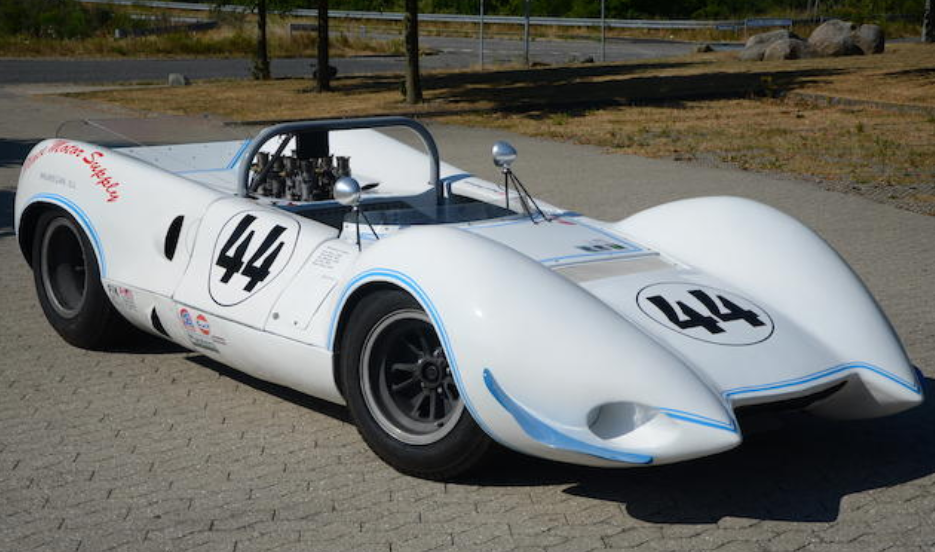
Can-Am’s debut season was 1966. But it wasn’t a surprise. Driver Jerry Hansen knew it was coming and got together with two engineers from GM to design and build a race car for him for the ’66 season.
Lee Dykstra (for whom the car appears to be named) and George Anderson designed this, the Wolverine. It has a tube spaceframe chassis and a small-block Chevrolet V8. An aluminum body was constructed, but over time the rear section has been replaced with fiberglass.
Hansen entered the car in the first Can-Am race, where he finished 20th. It also ran in SCCA events that year, but for 1967, Hansen upgraded to a McLaren. The Wolverine passed between a few other owners and was entered in Can-Am races through 1970.
They intended to build three of these, but only one was completed. The current owner bought the car in a series of boxes and had it completely rebuilt since 2010. It’s been at the Goodwood Revival and Monterey Motorsports Reunion. It should now sell for between $98,000-$110,000. Click here for more info and here for more from this sale.
Offered by Worldwide Auctioneers | Corpus Christi, Texas | October 4-5, 2019
Photo – Worldwide Auctioneers
There is absolutely zero about this car that screams “Oakland, California.” Yet that’s where it was assembled. The Apollo was the result of the work of a trio of Californians who wanted European style and American reliability in their sports cars. The first Apollo went on sale in 1962. Two models were offered: the 3500 GT and the 5000 GT.
This 3500 GT model is powered by a 3.5-liter Buick V8 that made 200 horsepower. The body was built in Italy by Intermeccanica, and the whole package was assembled in Oakland.
Only 11 GT Spiders were built, with this being the very first one. About 90 Apollos were made in general across multiple companies (including cars badged as the Vetta Ventura). They’re very rare, but they’re around. And the Spider variant is beautiful. It is being sold without reserve, and you can read more here. See more from this auction here.
Offered by Bonhams | Bicester, U.K. | September 26, 2019
Photo – Bonhams
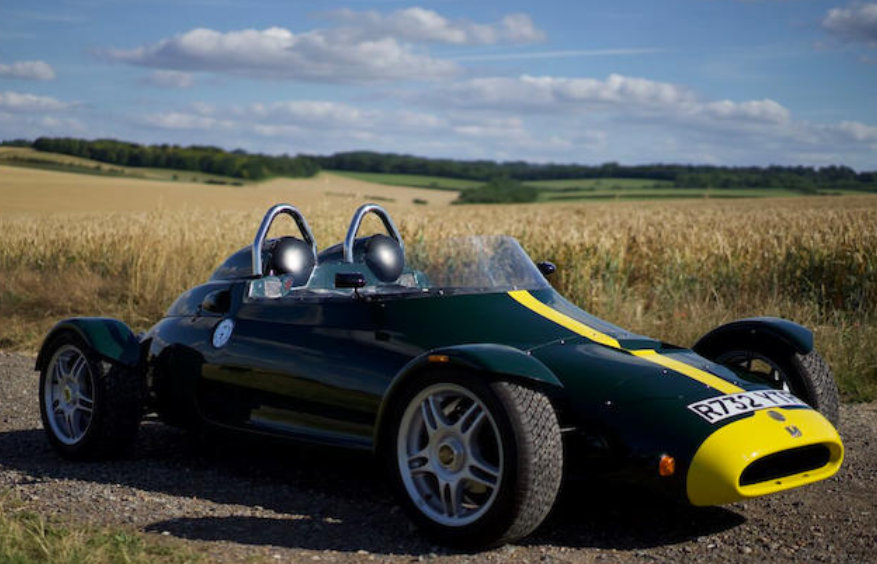
The Brooke ME190 was designed by Toby Sutton and produced by his company, Brooke Cars beginning in 1994. Its looks and two-abreast seating are very reminiscent of the LLC Rocket, but it is said that this car was designed first.
Powertrains for the ME190 differed, but all of them were mounted behind the driver. This car is powered by a Honda 1.8-liter inline-four from a Civic Type R that has been tuned to put out more than 200 horsepower (the stock ME190 made 190 horsepower).
Only about eight examples were produced before the company ran into financial trouble and closed down. Another company bought the rights and produced only slightly more updated versions called the Double R. This car should bring between $20,000-$24,000. Click here for more info and here for more from this sale.
Offered by Mecum | Louisville, Kentucky | September 20, 2019
Photo – Mecum
The Chrysler New Yorker nameplate dates back to 1940, and the Town & Country model was introduced in 1941. For a while, Town & Country models could be had in all manner of body styles, including a very attractive convertible. But by the time the 50s rolled around, they became the station wagon versions of other Chrysler cars.
And that’s what we have here. The sixth-generation New Yorker went on sale in 1960, and by 1962 those wild rear fins had disappeared. This nine-passenger Town & Country is one of just 1,244 built in 1963. It is powered by a 6.8-liter V8 capable of 340 horsepower.
So why is it notable? Well, there was the limited production, but how many of these actually survived? And in this condition at that? This car retailed for $4,815 when new. It should certainly bring more than that later this month. We’ll have to wait and see just how much more. Click here for more info and here for more from this sale.
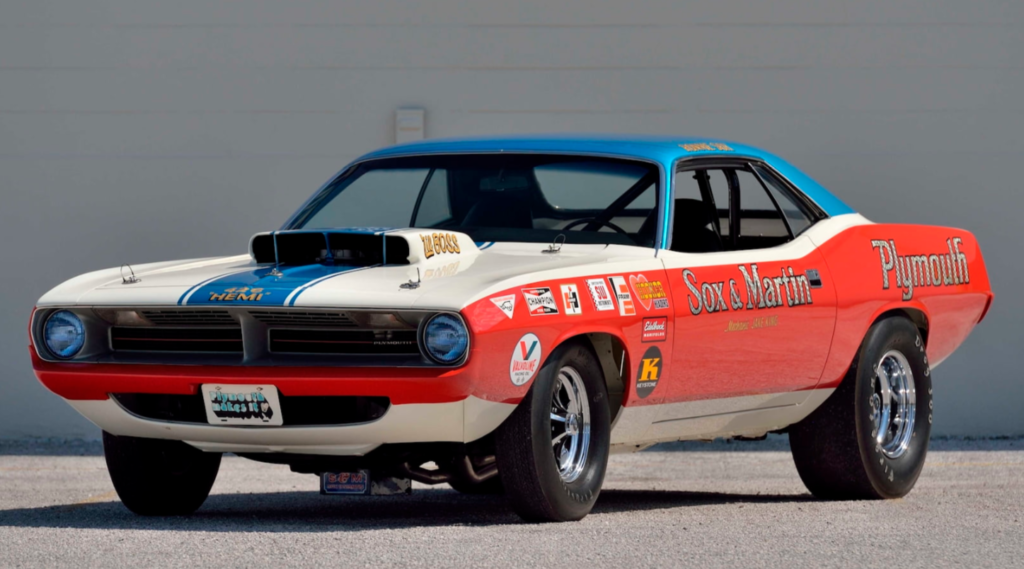
We’ll start in August with Mecum’s Harrisburg sale, where an insane thing happened: the Plymouth Superbird we featured (that also happened to be Richard Petty’s former race car), failed to sell… for $3,500,000. Yeesh. The overall top seller was this 1970 Plymouth Hemi Cuda Sox & Martin drag car for $429,000. Click here for complete results.
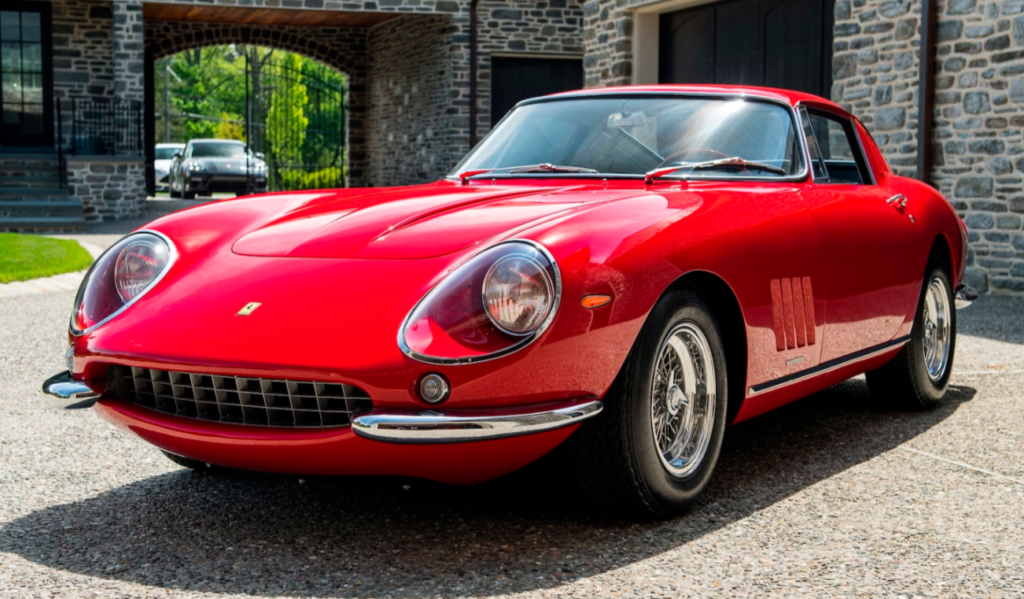
The Ferrari we featured, the Niki Lauda F1 car, sold for $6,000,000. Other Italian sales included the Alfa 256 for $2,755,000 and the Isotta Indy car for $2,645,000.
And to wrap this post up, RM Sotheby’s much-talked-about sale, where the expected star, the 1939 Porsche, failed to sell after mass confusion. They did manage to set a record for a McLaren at auction, selling this 1994 McLaren F1 “LM-Spec” car sold for $19,805,000. These cars are not done appreciating.
Offered by Bonhams | Chichester, U.K. | September 14, 2019
Photo – Bonhams
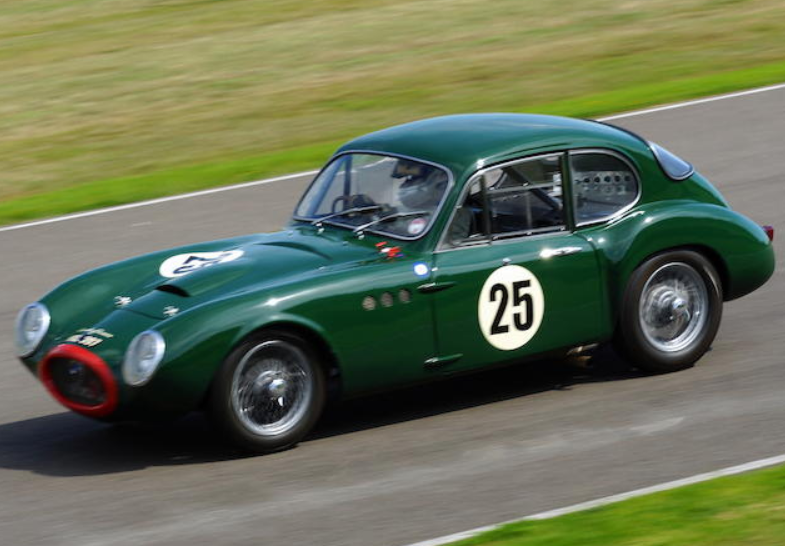
Rochdale Motor Panels and Engineering was founded in 1948 by Frank Butterworth and Harry Smith. They got their start producing automobiles in 1954, which were technically just fiberglass shells used by customers to re-body Austin Sevens.
The GT was the third such product launched by the company, and it went on sale in 1957. They had the Ford Popular in mind as a base, but by 1960 you could get it on Rochdale’s own frame, as the company had moved to produce its own cars outright with the introduction of the Olympic in 1959.
This example is based on a Ford Popular frame and is powered by a 1.5-liter Coventry-Climax inline-four producing 140 horsepower. The GT was far and away Rochdale’s largest success, with about 1,350 built in total. Rochdale closed its doors in 1973, and it is thought that only about 80 GTs survive. This one has been restored and is eligible for historic racing events. It should bring between $36,000-$49,000. Click here for more info and here for more from this sale.
Offered by Brightwells | Leominster, U.K. | September 4, 2019
Photo – Brightwells
Another Bristol! The 412 was the successor to the 411, and we’ve featured four of those so far. This model was produced in two series between 1975 and 1981. Production figures were never released to the public, but its thought about 80 were produced before Bristol slightly revised the 412 and renamed it the Beaufighter.
The 412 was built side-by-side with the 603, and the cars were very similar. This car uses a 5.9-liter Chrysler V8 good for 170 horsepower. Top speed was 140 mph. The body of this Bristol was actually designed by Zagato, and it’s a targa.
Remarkably, for a handbuilt car this rare, the pre-sale estimate is only $18,000-$22,000. Click here for more from Brightwells.
Offered by Bonhams | Beaulieu, U.K. | September 7, 2019
Photo – Bonhams
The Donald Healey Motor Company built a number of limited-run sports cars between 1945 and 1954. Healey then turned his attention to the Austin-Healey and Jensen-Healey, both of which were produced in much higher numbers than these earlier cars.
The Tickford Saloon was bodied by the British coachbuilder Tickford (thus the name) and is powered by the same 2.4-liter Riley inline-four used in earlier cars like the Westland, Sportsmobile, and Silverstone. Claimed output was 106 horsepower. Top speed was 96 mph. Bonhams notes that this was one of the fastest cars in its day. It was, apparently, a slow day.
In all, 222 examples of the Tickford were built, which makes it the most popular Healey model produced (not counting the Nash-Healey or any of the other hyphenated cars). This one was once part of the Aalholm Automobile Collection and should bring between $24,000-$30,000. Click here for more info and here for more from this sale.
Offered by RM Sotheby’s | Auburn, Indiana | August 29, 2019
Photo Courtesy of RM Sotheby’s
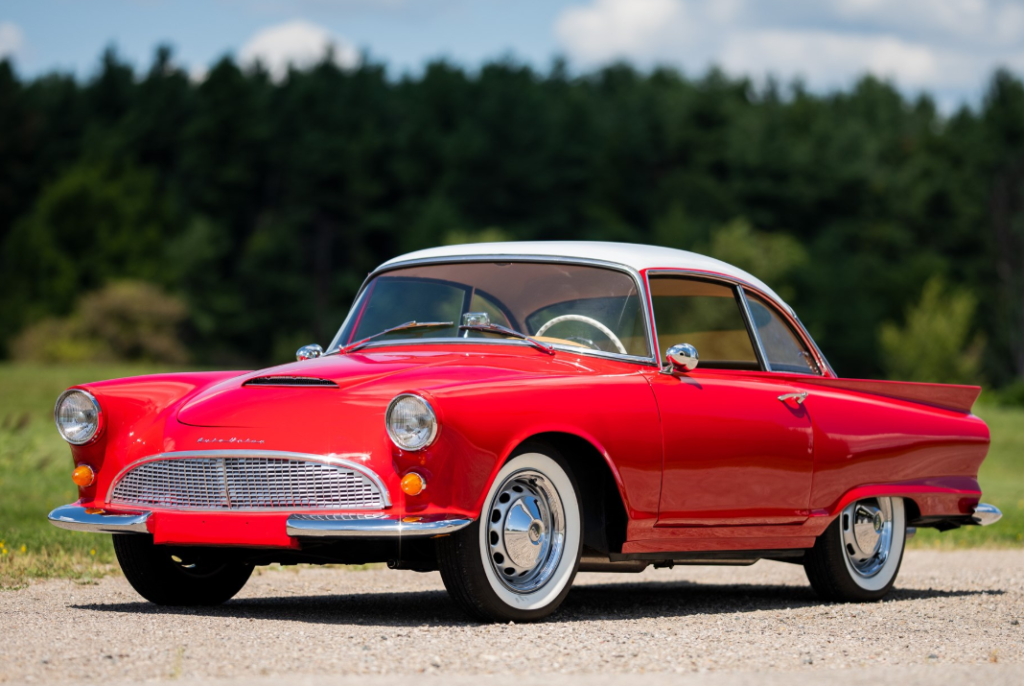
Four of Germany’s auto manufacturers joined forces in 1932 to form Auto Union. They were Audi, DKW, Horch, and Wanderer. Auto Union racing cars were some of the best of the 1930s, and after WWII, what was left of Auto Union‘s West German holdings began producing cars under the new brand. The DKW brand was still active as well.
Auto Union would eventually be purchased by Volkswagen and merged with NSU. The current Audi brand carries the torch for the history of the four original brands. For a while in the 1950s, Daimler-Benz owned the company, and it was during their reign that the Auto Union 1000 was built (1958-1963). It was a sedan that was essentially a re-badged DKW.
But between 1958 and 1965, they built a version called the 1000 SP. The styling was lifted almost intact from the contemporary Ford Thunderbird, but the cars were powered by an 896cc inline-three good for about 54 horsepower. This example is gorgeous and is very T-Bird-esque, but slightly more exotic.
Only 5,004 coupe versions were built and they’re rarely seen in the U.S. This one was restored in 2009 and should bring between $30,000-$40,000. Click here for more info and here for more from this sale.
Offered by Worldwide Auctioneers | Auburn, Indiana | August 31, 2019
Photo – Worldwide Auctioneers
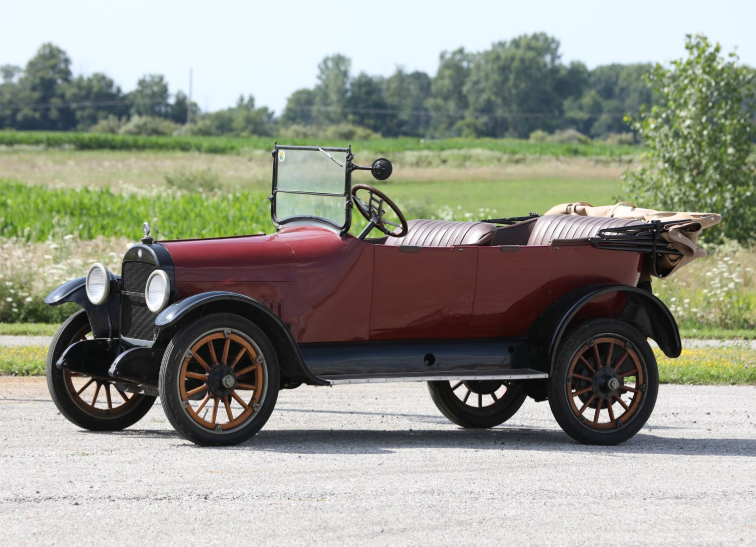
William Gray founded a carriage-building company in Chatham, Ontario in 1856. In 1915, his company began selling American-made Dort cars under license in Canada. By 1916, they were building the cars themselves and fitting them with luxurious and innovative features. The first reverse light was installed on a Gray-Dort.
This Model 15 touring car is powered by a 21 horsepower, 3.2-liter Lycoming inline-four. The cars were popular in Canada, outselling Chevrolet there for a period of time. And Canadians took notice – the Canadian Parliament named Gray-Dort a national treasure. The Bricklin didn’t get that honor.
About 26,000 cars were built through 1925, which is when Dort closed down. Gray-Dort searched for another manufacturer to hook up with, attempting deals with Nash and Hudson before trying the American company Gray. But Gray closed down in 1926 and Gray-Dort was gone. Only 30 examples of their work remain, and this one will sell at no reserve. Click here for more info and here for more from this sale.