Offered by RM Sotheby’s | Amelia Island, Florida | March 6-7, 2020
Photo Courtesy of RM Sotheby’s
Cadillac was founded in 1902, and by the 1930s they were known for their large V12 and V16-powered cars. But single-cylinders were an important part of their history. It was all they made until their first four went on sale in 1905. But at that time singles were still selling, so they stayed on through 1908.
The Model K was sold in 1906 and 1907, and in ’07 you could’ve had a $3,500 Runabout like this car, or a $3,700 Runabout with a Victoria top. Power is from a 1.6-liter single-cylinder that was advertised at 10 horsepower.
This one retains its original body and is said to be set up for touring. It should sell for between $60,000-$80,000. Click here for more info and here for more from this sale.
Offered by Bonhams | Amelia Island, Florida | March 5, 2020
Photo – Bonhams
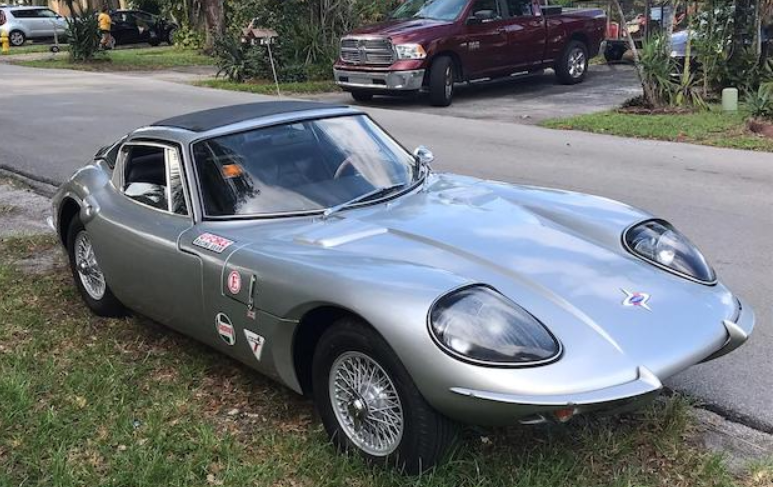
The Marcos GT remains the torchbearer for Marcos styling. They’ve more or less iterated upon this design since it was first launched in 1964 as the 1800. Part of the charm of that car was that it used a fiberglass body over a plywood chassis and a Volvo-sourced engine.
In 1966, Marcos placed a 1.5-liter Ford Kent inline-four under the hood and re-dubbed the car the 1500GT. Output was 85 horsepower. The car would continue to evolve and eventually lose its plywood chassis in favor of a steel one.
This is one of only 82 1500GTs built and one of only eight delivered new to the U.S. They’re a rare sight on either side of the pond, and this one should sell for somewhere in the neighborhood of $50,000-$60,000. Click here for more info and here for more from this sale.
Offered by Bonhams | Amelia Island, Florida | March 5, 2020
Photo – Bonhams
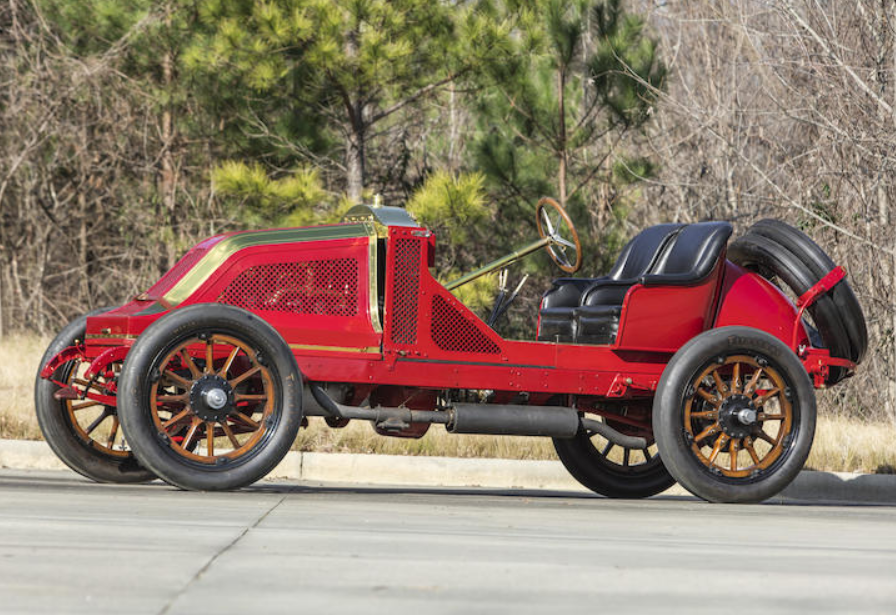
The Renault AI was one of the company’s large luxury cars and was offered between 1905 and 1910. They were powered by large 7.5-liter inline-fours that made about 65 horsepower. The fact that this big power rating came from one of France’s more storied early competition car-builders is probably why this car exists.
Willie K. Vanderbilt, yes, of that family, was a gearhead who started competing in races in the US and Europe about as early as you could. Around 1906, he asked Renault to build him a run of race cars based on their AI engine. He bought 10 of them for $150,000 and all had different coachwork. He sold most of them and kept one for himself.
The cars were successful racing in America, and this is one of five Vanderbilt racers that have survived. It was discovered in 1946 and went to the new Indianapolis Motor Speedway Hall of Fame Museum in 1957. Most of the other survivors are locked away in collections. Bonhams won’t even give an estimate on this car, but it’s a pretty incredible, useable survivor. Click here for more info and here for more from this sale.
Offered by RM Sotheby’s | Amelia Island, Florida | March 6-7, 2020
Photo Courtesy of RM Sotheby’s
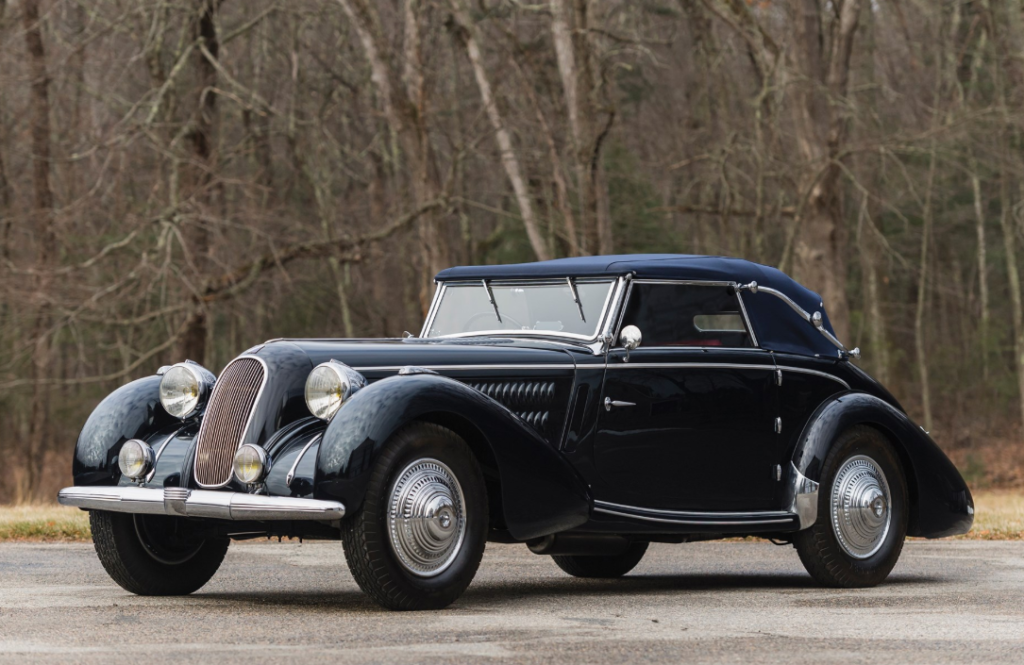
When Anthony Lago bought out failing Talbot in 1936, he went about turning the company around. A big part of his plan were models like this, the T23. It was one of the first new models introduced, and it was downmarket from the later, extremely grand, models like the T26 and T150C.
Power is from a 4.0-liter inline-six good for 140 horsepower. Dubbed the “Baby Talbot,” the cars still wore fanciful bodies like this one, which was built by the factory but designed in partnership with Figoni.
It wears an older restoration and has a very nice-looking red and wood interior. The bigger Talbot-Lagos command big money. This Baby should bring between $300,000-$400,000… which is still a decent amount. Click here for more info and here for more from this sale.
Offered by Bonhams | Amelia Island, Florida | March 5, 2020
Photo – Bonhams
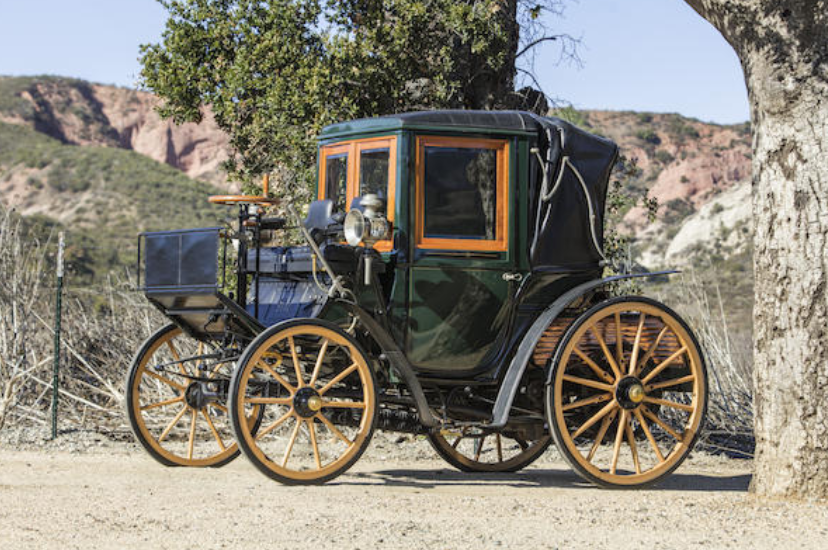
Let’s start with the fact that this car is listed as a “circa 1897” in the catalog, which is interesting because it is powered by a 2.7-liter flat-twin. This 10 horsepower engine was first found in the Benz Dos-a-Dos of 1899. Earlier in this car’s life, before its late-1980s restoration, it was registered as an 1895. So who knows.
This Mylord-Coupe is one of three known examples. These early twin “contra-motor”Benzes are highly sought after for their increased power. The Dos-a-Dos was gone by 1902, giving way to more modern vehicles. This incredibly rare early car is expected to fetch between $500,000-$750,000. Click here for more info.
Offered by Bonhams | Amelia Island, Florida | March 5, 2020
Photo – Bonhams
Adam Opel set up shop in 1862 to make sewing machines. He stuck around through a switch to bicycle manufacturing in 1886, but died before the company built its first car in 1899. Early Opels don’t come up for sale that often, though there are some to be found at classic car dealerships all over Germany. You certainly don’t see them in the U.S. all too often.
This pre-GM 14/38 PS (General Motors took over in 1931) was a model produced between 1913 and 1924. It was a large luxury car that was revised over the years. In 1918, the 3.3-liter inline-four was rated at 38 horsepower.
This one retains its original body and was parked unused in Sweden from 1939 until 1998. It has since been restored and is now expected to fetch between $125,000-$175,000. Click here for more info and here for more from Bonhams.
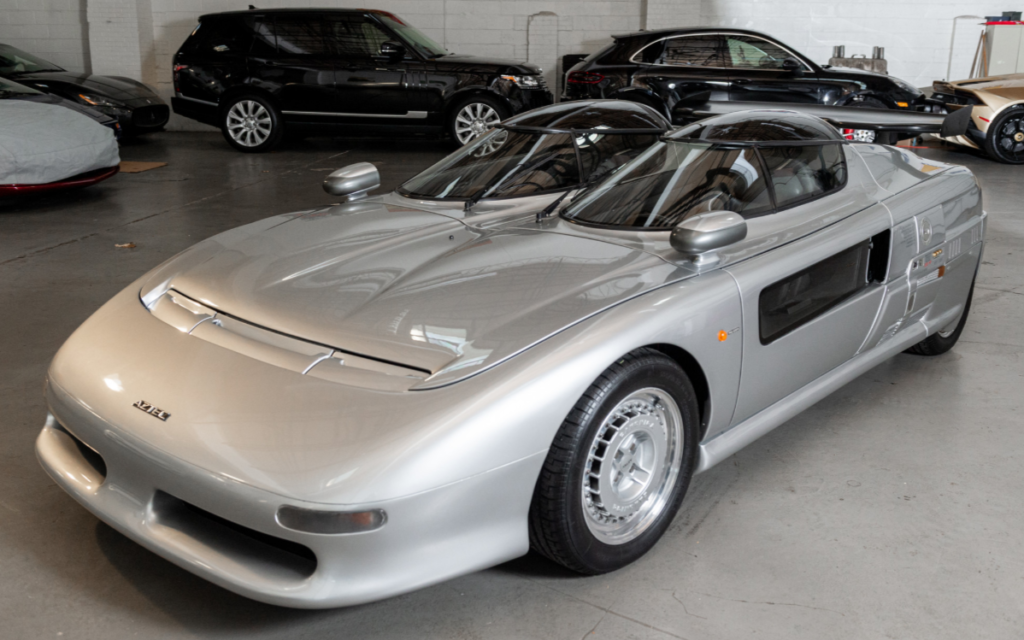
The Aztec was designed by Giorgetto Giugiaro at Italdesign as a celebration of the company’s 20th anniversary. It was shown as a prototype at the 1988 Turin Motor Show. Then the company decided to actually build road-going examples. They wanted to make 50 of them, but probably only 18 were actually completed.
It’s an almost-mythical car. They never come up for sale (at least publicly) and this is the first one to hit the auction block in more than a decade (though a quick search will show you zero auction results for the model at all). This one was once in the Shanghai Auto Museum, which seems like a place cars don’t escape from. But it was brought stateside by the Blackhawk Collection (who has a magical way to get some other classics out of China).
The Aztec is powered by a turbocharged 2.2-liter Audi inline-five that made 250 horsepower (if the stickers on the car are to be believed). That’s not exactly supercar territory, power-wise. But, those looks. That’s why this qualifies as a supercar. It looks like it drove off of a Star Wars set. It has a dual-canopy cockpit with gullwing and side-hinged doors. It’s straight out of bizarro land.
And it. Is. Amazing. This is a car I’ve wanted to see come to market for a long time (since I started this site almost a decade ago). And it’s the first one to hit the open market. What’s it worth? That’s the fun part. No one knows… there isn’t a big list of past sales to give us a clue. But if it isn’t a big money car, it deserves to be. Chances are you won’t see another one change hands for quite a while (unless the selling price here knocks it out of the park… then we’ll see a few of them).
Think about all of the wild stuff that came out of the 90s supercar madness. This is like the genesis of that. It’s a bummer this wasn’t a bigger success, then maybe they would’ve put the Nazca C2 into production as well. That could’ve led to even more fun in the 90s (Alfa Romeo Scighera anyone?).
The Aztec is among the wildest designs ever put into production, and it is the precursor to all of the low-run, high-end stuff we are awash in today. Check out more about this car here. But hurry, the auction ends Monday.
Offered by Bonhams | Amelia Island, Florida | March 5, 2020
Photo – Bonhams
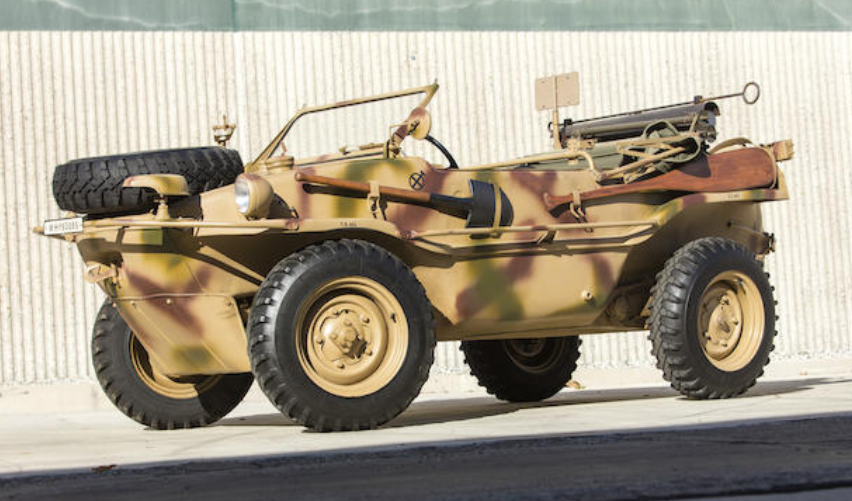
The Volkswagen project kicked off in 1937 to build Germany a “people’s car.” Well, that plan sort of got derailed with Germany’s other big passion: taking over the world. So Volkswagen got repurposed to build military vehicles. And they produced three different kinds. Two of them are on offer at this sale.
The Schwimmwagen is the most mass-produced amphibious vehicle in history. In all, 14,265 of them were built between 1942 and 1944. They were used by the Germans throughout the war and could obviously be used on land or water. Power is from a 1.1-liter flat-four good for 25 horsepower. The Schwimmwagen even made an appearance in the Gran Turismo video game series. It was not fast.
The whole military history of this car shouldn’t really deter people from having one. They are probably tons of fun. This one was recently restored and is expected to bring between $100,000-$125,000. Click here for more info.
Update: Sold $145,600.
1944 Volkswagen Type 82 Kubelwagen
Offered by Bonhams | Amelia Island, Florida | March 5, 2020
Photo – Bonhams
We said that Volkswagen produced two other military vehicles for Germany during WWII, aside from the Schwimmwagen. This, the Kubelwagen, was another one (there was also a four-wheel-drive version of the Beetle). This is the one the bad guys always drove in WWII video games.
Produced between 1940 and 1945, the Type 82 is powered by a 25 horsepower, 1.1-liter flat-four. Earlier versions had smaller engines. It was the German version of the Jeep. But, unlike the Jeep, this thing is heavily based on Beetle designs and is rear-wheel drive.
That’s right! This thing will go anywhere with just two driven wheels. Part of the trick is that the car is very light, uses portal axles, and has a relatively smooth underside. They built 50,435 examples, and this one has been restored. It should bring between $30,000-$40,000. Click here for more info and here for more from this sale.
1932 Duesenberg Model J Convertible Coupe by Murphy
Offered by RM Sotheby’s | Amelia Island, Florida | March 6-7, 2020
Photo Courtesy of RM Sotheby’s
The Walter M. Murphy Company of Pasadena, California, bodied more Duesenberg Model Js than any other coachbuilder, and their most popular body style was this, the convertible coupe. While only 25 were built with a convertible soft top, that was enough to make it the top seller among a very limited production run.
Power, of course, is from a 6.9-liter straight-eight good for 265 horsepower. This car is apparently one of a few Duesenbergs owned by gangster Jake the Barber. It was restored in 1995 and was purchased by the current owner, Keith Crain, about 16 years ago.
Crain is dumping a few classics at this sale, all at no reserve… which is interesting. You can see more about this car here and see more from this sale here.
We kick off in January with RM Sotheby’s in Arizona where the top sale was this 2018 Pagani Huayra Roadster that sold for $2,370,000.
Photo Courtesy of RM Sotheby’s
All of our feature cars sold, with the V-16 Cadillac leading the way at $1,105,000. Following that was the Hispano-Suiza at $445,000 and the Shelby Series I at $91,840. Other sales included the Chalmers for $61,600, the Locomobile for $58,240, and the Kaiser for $10,080. Click here for complete results.
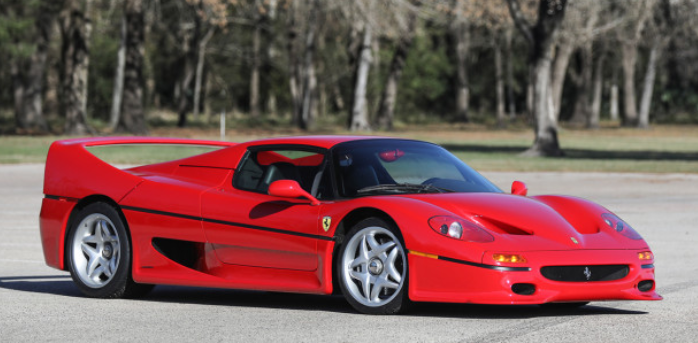
Next up, Gooding & Company, also in Arizona. This auction proved that bedroom wall car posters are key indicators of what’s going to skyrocket in value. In this case, it was a 1995 Ferrari F50 that outsold a Tucker at $3,222,500. It also way outsold the 250 GT Cabriolet that brought $1,462,500.
We move on to Barrett-Jackson, where the top sale was a charity lot: the first mid-engine Corvette. A 2020 Stingray that hasn’t even been built yet. This red pre-production car crossed the block, but the actual first one will be black.
Photo – Barrett-Jackson
I couldn’t even tell you what their overall top sale was that wasn’t a charity lot because the results page isn’t sortable :(. I have strong feelings on these moonshot charity auctions, but I will keep them to myself.
Every car we featured sold, which is no surprise because this entire sale is 99.9% reserve-free. The Superbird brought $313,500, the L88 Corvette $330,000, and the Kuzma-Offy $165,000. The Aerocar went for a lot less than I anticipated, bringing only $275,000. I think, had it sold 15 years ago, it would’ve gone for much more.
On the other side of things were the Lawil at $12,100 and the Bremen Sebring at $7,700. Click here for all of the results.
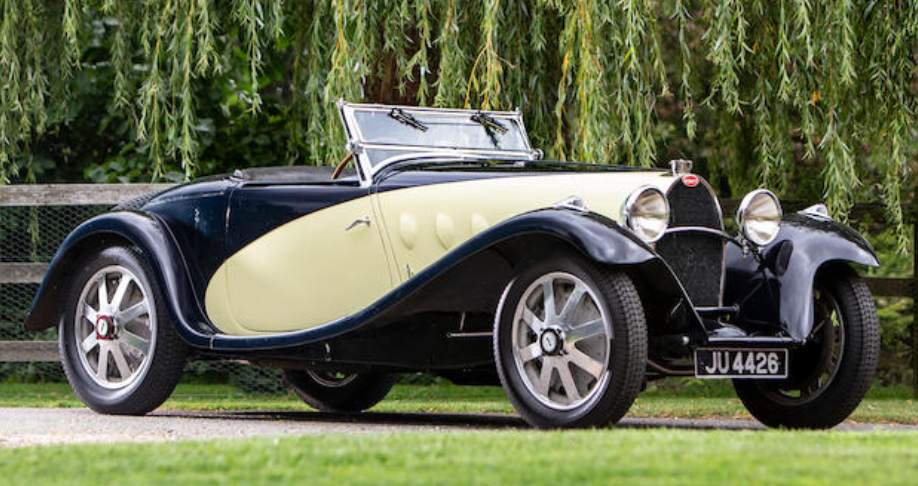
Finally, we have Bonhams at Retromobile. The top overall sale was this 1931 Bugatti Type 55 Supersport that sold for $5,045,740.
Photo – Bonhams
Other big-dollar sales among our feature cars included the Pegaso for $782,089, a previously-featured Delahaye for $227,058, a previously-featured Talbot racer for $964,997 (less than half of what it sold for in 2014), and a BMW-Glas prototype for $229,581.