Ferrari 268 SP

1962 Ferrari 268 SP by Fantuzzi

Offered by RM Sotheby’s | Monterey, California | August 19-20, 2016
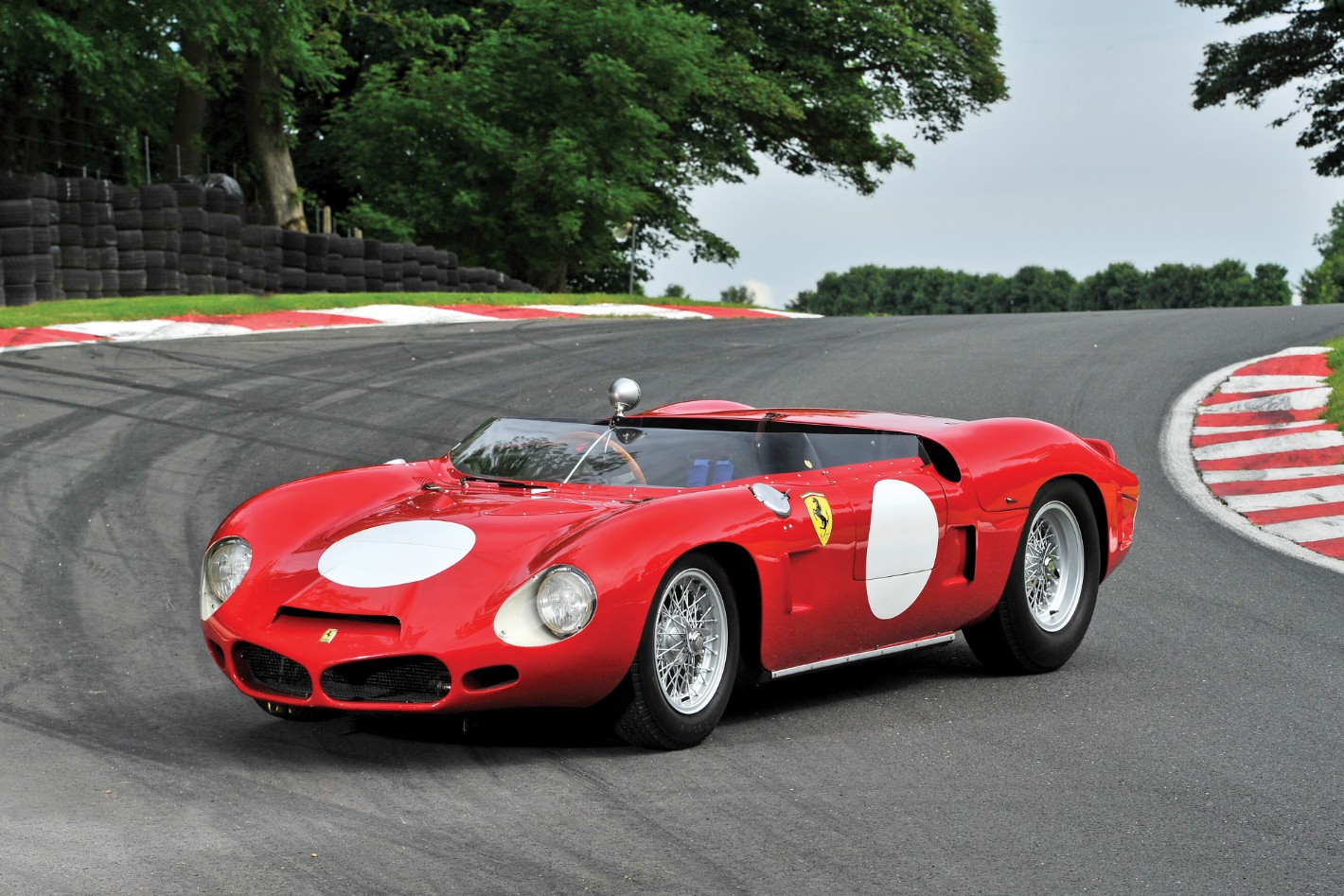
Photo Courtesy of RM Sotheby's

Photo Courtesy of RM Sotheby’s

Here’s a car you aren’t likely to get another shot at purchasing. With only two examples produced (of this chassis/engine combo), the 268 SP hails from an era of dramatic change in the racing world. Right about 1960, there was a drastic shift in thought: if we mount the engine behind the driver, maybe these things will handle better.

So Ferrari, and their sports prototype cars, adopted this new philosophy. The SP line of cars debuted in 1961 and only six of this lineage would be built. Only two of them were fitted with this 265 horsepower, 2.6-liter V-8. The awesome body by Fantuzzi is similar to other Ferrari racers of the day, namely the 250 TR 61.

This, car #3 or chassis #0798, has a factory competition history consisting of:

  • 1962 24 Hours of Le Mans – 19th, DNF (with Giancarlo Baghetti and Ludovico Scarfiotti)

After Le Mans, the car came to America to race as part of Luigi Chinetti’s NART team. As part of this team, its competition history includes:

  • 1962 Bahamas Speed Weeks, Nassau Trophy Race – 8th (with Lorenzo Bandini)
  • 1963 12 Hours of Sebring – 34th (with John Fulp and Harry Heuer)
  • 1963 Bahamas Speed Weeks, Nassau Trophy Race – 5th (with Fulp)

It ran a few more races through 1966 and then sat until 1969 when it went to a collector in France. It was restored during his ownership and the current owner acquired the car approximately 20 years ago. It’s a fairly famous car that has been shown at the most exclusive events worldwide. With only six built – and being one of only two built with this engine – this Ferrari is one those seriously collectible 1960s racers. Huge money is one the table here. Click here for more info and here for more from this sale.

Update: Not sold.

Update: Sold, RM Sotheby’s Monterey 2021, $7,705,000.
Arrows A10

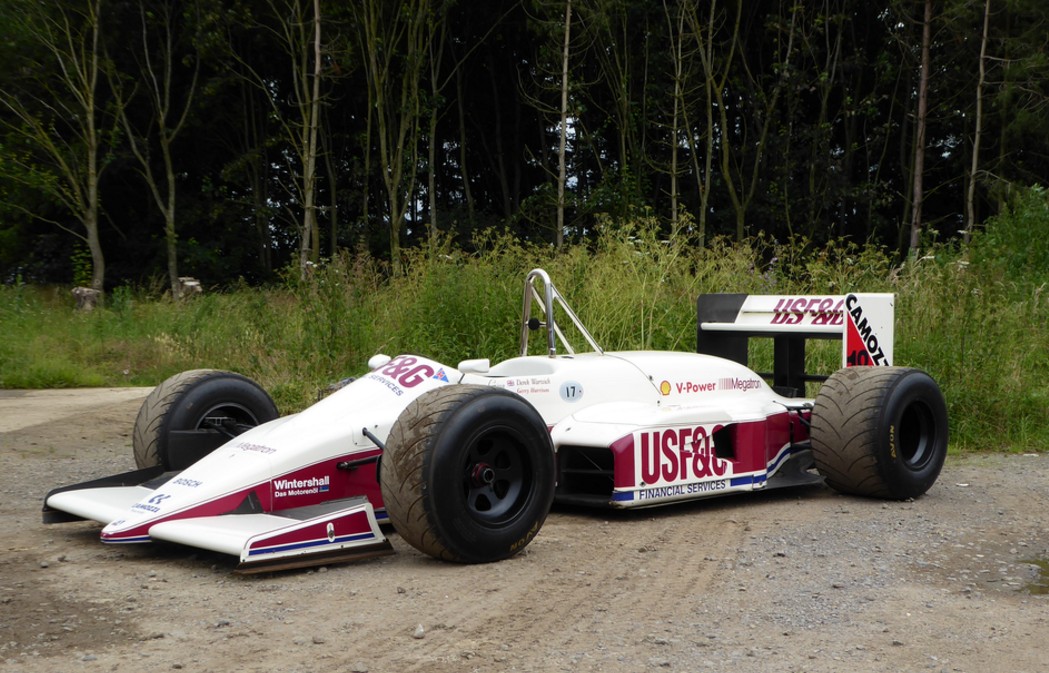
1987 Arrows-Megatron A10

Offered by Silverstone Auctions | Silverstone, U.K. | July 28, 2016

Photo - Silverstone Auctions

Photo – Silverstone Auctions

Arrows, the long-running British Formula One Team, first competed in 1978. 1987 wasn’t a banner year, as they had more retirements than finishes. The 1987 A10 chassis was actually designed by Ross Brawn, he of considerable recent F1 fame. The A10 was deemed “good enough” that, for 1988, it was slightly revised and renamed to the A10B.

For 1987, Arrows’ former engine supplier and partner, BMW, packed up and left. Arrows managed to get some sponsorship money from USF&G and BMW finally agreed to supply engines, so long as they were branded as Megatron (which sounds like the name of a Transformer). That engine is a turbocharged 1.5-liter straight-four that made over 1,000 horsepower in qualifying and 850 in race trim.

This was Derek Warwick’s car for 1987 and it’s best finish was 5th at the British Grand Prix that year. The current owner acquired the car in 2002 and it has been used at 1-2 historic events a year for the past 10 years. It was demonstrated at this year’s Goodwood Festival of Speed and should bring between $130,000-$155,000. Click here for more info and here for more from this sale.

Update: Not sold.

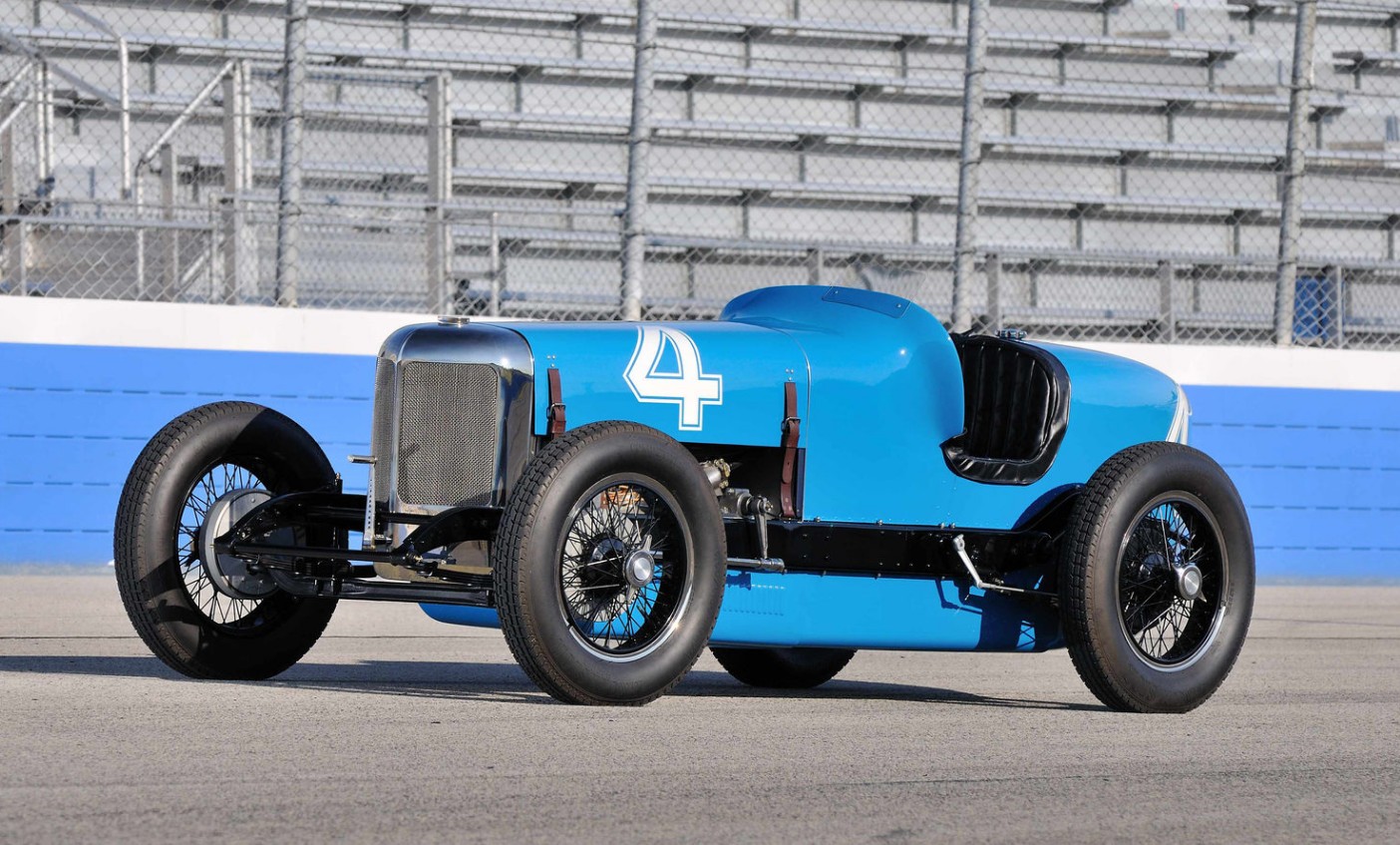
The Hupp Comet

1932 Snowberger-Hupmobile

Offered by Mecum | Monterey, California | August 18-20, 2016

Photo - Mecum

Photo – Mecum

Russ Snowberger is a name that has been associated with the Indianapolis 500 since the 1920s. Snowberger was a very talented mechanic and engineer – but he was also a skilled driver. He competed in the Indy 500 15 times from 1928 through 1947. His best finish was 5th (twice) – one of those was in this very car.

Snowberger was interesting in that he built his own cars. Not very many drivers have entered a car at Indy with a chassis bearing their own name. Not even Louis or Gaston Chevrolet. All of the Snowberger chassis that competed in Indy were Studebaker powered. Except one. This one.

Hupmobile made a sponsorship deal with Snowberger to use a Hupp engine at Indy. This was the only Hupmobile-powered car to ever run the 500 as the company ran out of marketing dollars and Snowberger had to return the engine (which later made its way in a Bonneville land speed car). John Snowberger, Russ’ son, later acquired the engine and restored the “Hupp Comet” to as you see it today.

This is a rare chance to acquire a famous Indy 500 race car from one of the race’s early legends and owner/drivers. You can read more about it on Mecum’s site here and see more from this sale here.

Update: Not sold, high bid of $310,000.

Update: Not sold, Mecum Kissimmee 2017, high bid of $270,000.

Update: Sold, Mecum Indianapolis 2017, $205,000.

Bocar XP-5

1959 Bocar XP-5

Offered by RM Sotheby’s | Monterey, California | August 19-20, 2016

Photo - RM Sotheby's

Photo – RM Sotheby’s

Bocar is one of those car manufacturers from the 1950s that built sports and racing cars in limited numbers. Most people haven’t heard of them and even fewer have actually seen an example. This is about as close as most will come to actually seeing a Bocar. And from the looks of it, you won’t see a nicer one.

Bob Carnes founded Bocar (which comes from the first letters of his first and last name) in Lakewood, Colorado, in 1957. Carnes started with the XP-1 through XP-4, which were essentially one-offs. With the XP-5, he began building production cars, including this one that was one of two team cars for the Meister Bräuser team in SCCA competition.

It’s passed through a few different owners since its period competition history ended and was in the possession of one owner for over 40 years. It was restored by the current owner in 2014 and is an award winner at Amelia Island. The engine is a 4.6-liter Corvette V-8 making 315 horsepower.

Only 15 of this type were built and good luck finding a prettier example. This 160 mph rocket cost somewhere around $8,700 when new and should bring much more this August. Click here for more info and here for more from this sale.

Update: Sold $412,500.

Costin-Nathan Prototype

1966 Costin-Nathan Prototype

Offered by H&H Classics | Chateau Impney, U.K. | July 10, 2016

Photo - H&H Classics

Photo – H&H Classics

The Costin brothers are probably better well known by the companies they founded than by their names themselves. Mike Costin co-founded Cosworth while brother Frank Costin worked at Lotus and co-founded Marcos before joining Roger Nathan in 1965 to build a prototype race car.

Costin did the chassis and body and Nathan worked on the engine. That engine was a one-liter straight-four tuned to the max, putting out 100 horsepower. The chassis is made of tube-framed steel at both ends with plywood in the middle. The body on this prototype is aluminium (later cars were fiberglass). Now a coupe, it was originally an open-top roadster. This is the original Works prototype racer and was campaigned in period by Roger Nathan.

Nathan did win the 1966 Coupe de Paris in this car before selling it in early 1967 (when it was converted to a coupe). The engine was also replaced at this time and now carries a Twin-Cam Lotus 1.6-liter straight-four. The car is being offered from the estate of the man who bought it in 1967. It raced for a few seasons before being parked and is being offered in as-parked condition. It’s the perfect project car for someone who wants a car that is eligible for many historic races. It should sell for between $36,000-$43,000. Click here for more info and here for more from this sale.

Update: Sold $105,855

McLaren M1B

1966 McLaren-Chevrolet M1B

Offered by Bonhams | Goodwood, U.K. | June 24, 2016

Photo - Bonhams

Photo – Bonhams

McLaren has been around since 1963, having entered their first Formula One race in 1966. Today, the company is primarily known for their Formula One team and exotic sports cars. But back in the 1960s and 70s, they built sports prototype race cars for the Can-Am series. Cars like this M1B.

The first Can-Am season was 1966 and McLaren offered customer versions of this car, available with V-8 engines from Ford, Oldsmobile, or Chevrolet. This car carries the latter. It was sold to an American (and in the U.S., these were marketed as the McLaren-Elva Mark 2 as Elva built McLaren’s Group 7 customer cars).

The 1966 season highlight for this car was a 5th place finish at Laguna Seca with Masten Gregory at the wheel (he ran it the rest of the season as well but had a string of bad luck). As an historic race car, it has been used extensively by its current owner and is ready to run. Only 28 were sold in the U.S. and this one should bring between $350,000-$410,000. Click here for more info and here for more from Bonhams.

Update: Not sold.

205 Turbo 16 Evo 1

1984 Peugeot 205 Turbo 16 Evolution 1 Group B

Offered by RM Sotheby’s | Monaco | May 14, 2016

Photo - RM Sotheby's

Photo – RM Sotheby’s

The Peugeot 205 was a small car sold by the French company all over the world between 1983 and 1998. Versions of is became some of the best Hot Hatches of the era. It just so happened that during this car’s production run, the insane rally category – Group B – was thriving.

Between 1982 and 1987, Group B cars were the most over-the-top rally cars ever built. Peugeot entered the fray in 1984 and Group B regulations required homologation road cars. The hatchback road cars were front-engine, front-wheel drive – but the rally cars (and their road-going counterparts) are mid-engined and four-wheel drive. That engine is a 1.8-liter turbocharged straight-four making 345 horsepower. It’s a beast.

This was a works rally car, and as such, it’s competition history includes:

  • 1985 Rallye Monte-Carlo – 1st (with Ari Vatanen)
  • 1985 Swedish Rally – 1st (with Vatanen)

After the ’85 season (which included more races than those listed above), the car was sold to a collector in France. It has been recently serviced and is the perfect car for anyone with an insane amount of driving skill. Or you know, a collector. Click here for more info and here for more from this sale.

Update: Not sold.

Grosser Werkmeister

1952 Grosser Werkmeister

Offered by Coys | Essen, Germany | April 9, 2016

Photo - Coys

Photo – Coys

The car you see here (quite possibly for the first time) is an East German race car that was built by Georg Werkmeister. East Germany really isn’t known for their automobiles (other than say, the Trabant), but there were a number of pop up race car builders in the 1950s that came from the far side of the wall.

Like most of these cars, they were based on the pre-war BMW 328. So the engine here is a 328-donated 2.0-liter straight-four making about 135 horsepower. The low, streamlined body was designed by an ex-Auto Union aerodynamicist. It was raced, semi-successfully, in 1952 and 1953.

But in ’53, Werkmeister left for West Germany and his car was seized by the East German government. It continued to race into 1954 before suffering some engine damage. Over the following decades, the car was used as a road car under the care of many owners. It was expertly restored in 2004 and is ready for historic races and tours. Click here for more info and here for more from Coys.

Update: Not sold.

Porsche 908 Coupe

1968 Porsche 908 Coupe

Offered by Gooding & Company | Amelia Island, Florida | March 11, 2016

Photo - Gooding & Company

Photo – Gooding & Company

The Porsche 908 was actually a series of race cars that the company produced between 1968 and 1971. We’ve already featured three variations: the 908/2 Longtail Spyder, the 908/03 Spyder, and a 908/03 Spyder Turbo. They all look different. For instance: this one has a top.

So the 907 was built in 1967 and to take advantage of a rule in the FIA book, Porsche adapted their flat-eight engine to 3.0-liters (in this car, putting out 350 horsepower) and the body was just sort of the natural next step from the 907. The first batch of cars were closed coupes to make outright speed. In total, 31 908s were built with five Coupes remaining. The factory competition history for this car (chassis no. 11) includes:

  • 1968 1000km Spa – 3rd (with Hans Herrmann and Rolf Stommelen)
  • 1968 6 Hours of Watkins Glen – 27th, DNF (with George Follmer and Joe Buzzetta)
  • 1968 500km Zeltweg – 13th, DQ (with Jochen Neerpasch and Rudi Lins)

After those three races, Porsche was quickly on to other styles of the 908 and its successive siblings. This car went to a privateer in Switzerland who used it in hillclimbs (which sounds like an awesome amount of overkill). It was wrecked slightly in 1974 and later repaired. In the last 10 years this car has seen use in historic racing and many shows. If you’ve been hunting for a true, usable factory Porsche racer, look no further. It should bring between $3,000,000-$3,300,000. Click here for more info and here for more from this sale.

Update: Not sold.

OSCA S-273

1959 OSCA Tipo S-273

Offered by Gooding & Company | Amelia Island, Florida | March 11, 2016

Photo - Gooding & Company

Photo – Gooding & Company

O.S.C.A. was founded by the Maserati brothers after they left the company that bore their name. The company, whose initials stood for Officine Specializzate Costruzione Automobili – Fratelli Maserati S.pA., was set up in Bologna in 1947 and lasted through 1967. They built mostly racing cars although some road cars were available as well.

The S-273 originally came with a 1.1-liter four but this car had an engine swap before delivery to its first owner, Briggs Cunningham. The new engine is a 860cc straight-four making 75 horsepower (down 20 from the original). This was a Cunningham team car and as such competed in the following race:

  • 1960 12 Hours of Sebring – 56th, DNF (with Denise McCluggage and Marianne Windridge)

That was the final race for this car under Cunningham’s flag (it had earlier appearances in regional events). It then went to a privateer who continued to use it. It has been restored to its original Cunningham livery with the 860cc engine. This is a model that saw low production numbers and it should bring between $650,000-$800,000. Click here for more info and here for more from this sale.

Update: Not sold.

Update: Sold, Gooding & Company, Pebble Beach 2016, $605,000.

Update: Not sold, Gooding & Company, Pebble Beach 2019.