Alitalia Stratos

1976 Lancia Stratos Group IV

Offered by Bonhams | Paris, France | February 9, 2017

Photo – Bonhams

Okay, so maybe it’s not an actual Lancia works rally car sporting the most famous of rally car liveries, but it is a racing Stratos that has competition history that just so happens to sport that very same green and white Alitalia livery.

The Stratos was the first purpose-built rally car from a major manufacturer. Yes, at one time, Lancia was a major manufacturer (they are lucky to still be around right now, as the current top brass at Fiat seems to have completely forgotten that they exist). In order to race the Stratos, Lancia had to build road-going versions, which it did – about 400 in total. It was a supercar in its day, powered by the feisty 2.4-liter V-6 from the Ferrari Dino. Depending on engine tune, it can put out between 190 and 320 horsepower.

It might not seem like a lot, but the mid-engined, rear-wheel drive layout of this featherweight car makes it an absolute handful. I mean, the guys you see in old videos jumping these things over little humps on mountain roads are – and there’s no graceful way to say this – batshit crazy. At its limit (and on dirt or snow no less), this has to be one of the most difficult cars to drive that has ever been built.

This three-owner car has known race history back to 1993, so its unclear if it was built as a competition car from new, or converted from one of the homologated road cars. Either way, the owner picked the right paint job. It should sell for between $370,000-$480,000. Click here for more info and here for more from Bonhams.

Update: Not sold.

Alfa Romeo Tipo B

1934 Alfa Romeo Tipo B P3

Offered by RM Sotheby’s | Paris, France | February 8, 2017

Photo Courtesy of RM Sotheby’s

The Alfa Romeo P2 was built between 1924 and 1930 and it won the inaugural Automobile World Championship, the precursor to the European Championship (which itself was a sort of precursor to modern Formula One). The Alfa Romeo P3 (or Tipo B) was introduced halfway through the 1932 season. It was the first monoposto (true single seat) race car on the circuit.

The engine is a 255 horsepower, supercharged 2.9-liter straight-eight – a really stout motor. The car was instantly successful, racking up victory after victory in the major Grands Prix across Europe. This particular car was campaigned by none other than Scuderia Ferrari for the 1934 and 1935 seasons. Because the record keeping of the day wasn’t the best, no one can say with certainty who raced this car where, but it is believed (and likely) that it was driven in period by Tazio Nuvolari, Achille Varzi, and Pierre Louis-Dreyfus.

This example is the sixth of seven second-series “wide body” examples built out of a total of about 13 cars in all. It has known ownership history from new and is in spectacular condition. If you want to feel like a true racing hero, you should buy this and take it to a track day. The Alfa P3 is one of the greatest and most dominant race cars of all time and this is your chance to get one. Click here for more info and here for more from RM Sotheby’s.

Update: Sold $4,177,896.

340 America Competizione

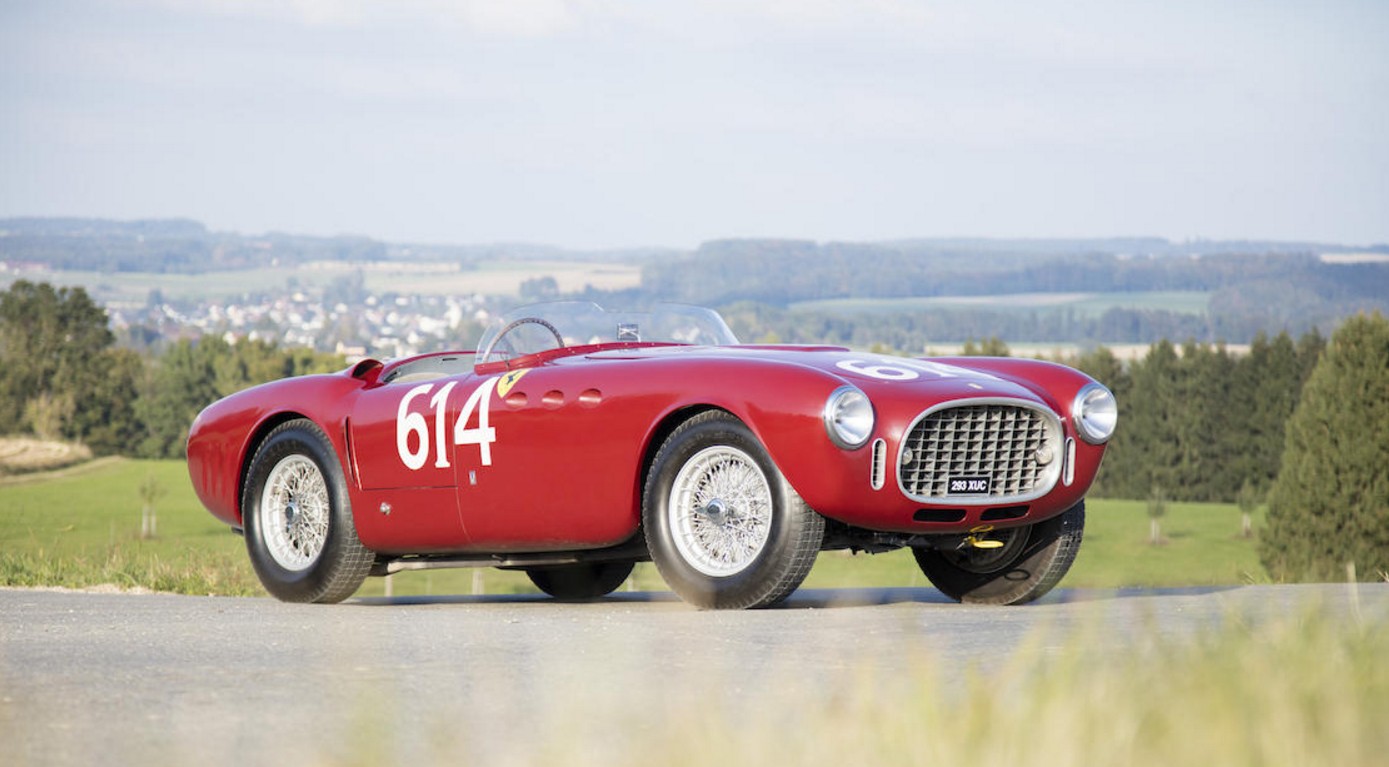
1952 Ferrari 340 America Spider Competizione by Vignale

Offered by Bonhams | Scottsdale, Arizona | January 19, 2017

Photo - Bonhams

Photo – Bonhams

The Ferrari 340 America was the first model of the Ferrari “America” cars which would reach their pinnacle in the 1960s with the Ferrari 400 Superamerica. They all wore bodies by either Ghia, Vignale or Touring. Built from 1950 through 1952, the 340 America would be replaced by the exceedingly rare 342 America.

This car is powered by a 4.1-liter V-12 making 280 horsepower. It’s stout and a performer. It was raced in period and by the factory. Its competition history includes:

  • 1952 Mille Miglia – DNF (with Piero Taruffi and Mario Vandelli)
  • 1952 24 Hours of Le Mans – 42nd, DNF (with Louis Rosier and Maurice Trintignant)

Only 22 examples of the 340 America were built – eight of which were sold as decked-out luxury tourers for the street. Of the remaining 14, only three were spec’d as Competizione models from Ferrari. This, car #17, is one of those cars (and it is also one of only four bodied as a Vignale Spider).

The consignor acquired the car in 2011 after it had passed through countless other owners. The restoration dates to 2000, but it’s been lovingly cared for and lightly used on the historic circuit – namely the historic running of the Mille Miglia. This former factory racer will bring big money when it crosses the block in January. Click here for more info and here for more from Bonhams.

Update: Sold $6,380,000.

Falcon Competition

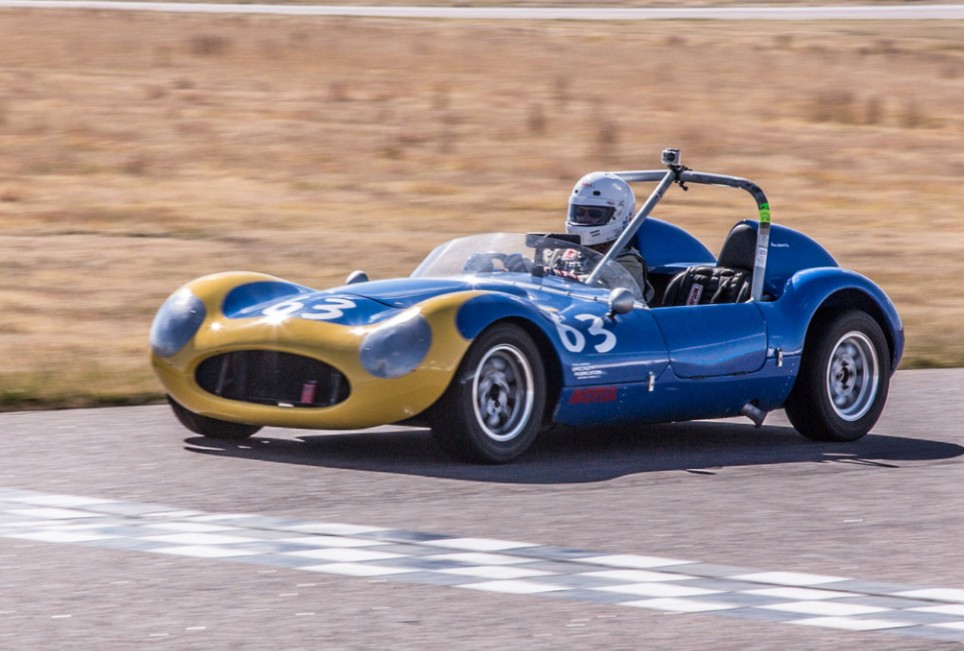
1963 Falcon Competition Mk III

Offered by Russo & Steele | Scottsdale, Arizona | January 18-22, 2017

Photo - Russo & Steele

Photo – Russo & Steele

Peter Pellandine’s Falcon Shells (later, Falcon Cars) built kit cars and body shells for cars in England between 1956 and 1964. The first two models they offered were called the Mark 1 and Mark 2. The third car was called the Competition and the fourth car was introduced as the Mark III but sold as the Caribbean. What we have here is a Competition model, sometimes referred to as a Mark III because it was the third model the company built.

This sports racer was originally fitted with running gear from an MG A which has since been swapped out for a Ford Cortina’s 1.3-liter straight-four. The kit cost £560 when new and both a Ford engine and a chassis were included in that price. Or you could just buy the body shell.

This particular example has been active off and on in historic racing since 1994. It’s been recently prepped and is ready to run. It is described as the “last known” Falcon Competition “known to exist.” Either that means it is the only one left or it was the last one built… I’d lean toward the last one left. Either way, you can read more about it here and see more from Russo & Steele here.

Update: Not sold.

Ferrari F1-91

1991 Ferrari F1-91

Offered by Bonhams | Stuttgart, Germany | August 12-September 27, 2016

Photo - Bonhams

Photo – Bonhams

Bonhams is offering cars from the Willi Balz collection at a public tender sale – meaning it isn’t a live auction, but instead you can offer a price via a sealed bid. There are a number of classic F1 cars on offer here, including this: Ferrari’s 1991 F1 machine.

The F1-91 was also known as the Ferrari 642, following the 1990 641/2 and the 1989 F1-89. For 1991, the Scuderia powered their cars with a 3.5-liter V-12. Horsepower should be about 740, as the 1990 car put out 685 from the same engine (up 85 from 1989). This car has race history including:

  • 1991 San Marino Grand Prix – DNS (with Alain Prost)
  • 1991 Monaco Grand Prix – 3rd (with Jean Alesi)

Since its retirement from Ferrari, it has been used at historic events including Goodwood and the Nurburgring. The 642 had a short shelf-life as it was only used in the first five races of 1991 before being replaced by the 643. This, chassis 124, is the third of five built and it should bring between $340,000-$680,000. Click here for more info and here for more from this sale.

BRM P133

1968 BRM P133

Offered by Bonhams | Stuttgart, Germany | August 12, 2016-September 27, 2016

Photo - Bonhams

Photo – Bonhams

In modern Formula 1 it’s kind of rare for a chassis manufacturer to build its own engines. Only actual road car manufacturers that compete do it (Mercedes, Ferrari, Renault). Those teams that exist solely to compete in motorsport usually outsource their engines… but when your team name is British Racing Motors, I guess building engines is sort of your wheelhouse.

BRM was founded in 1945 by Raymond Mays and competed in F1 between 1950 and 1977. It won the constructors’ title in 1962 (this was the year that Graham Hill won the drivers’ championship).

This, the first P133 built, is powered by a 3.0-liter V-12 and has race history including:

  • 1968 South African Grand Prix – 7th (with Jackie Oliver)
  • 1968 Belgian Grand Prix – 2nd (with Pedro Rodriguez)
  • 1968 Dutch Grand Prix – 3rd (with Rodriguez)
  • 1968 German Grand Prix –  6th (with Rodriguez)
  • 1968 Canadian Grand Prix – 3rd (with Rodriguez)
  • 1968 Mexican Grand Prix – 4th (with Rodriguez)

The car is listed as being in original condition, even though it has been used in historic racing. It’s an awesome example of late-1960s F1 technology and has great looks to match. It should bring between $340,000-$450,000. Click here for more info and here for more from this sale.

Aston-Butterworth

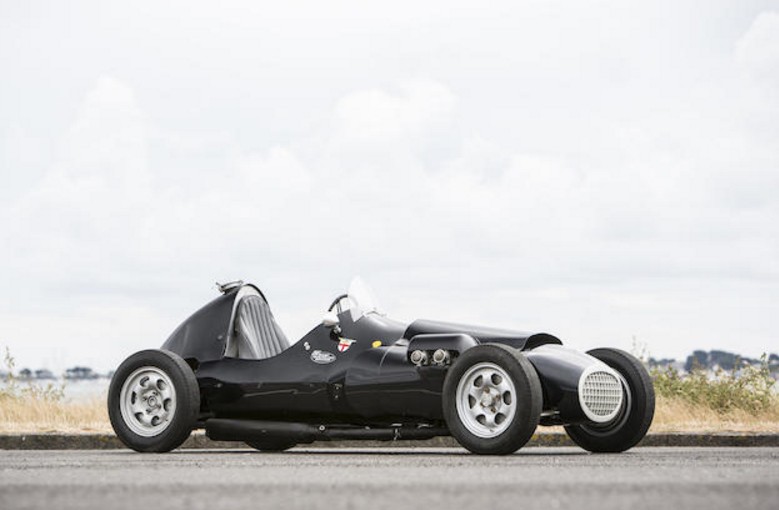
1952 Aston-Butterworth Grand Prix Monoposto

Offered by Bonhams | Goodwood, U.K. | September 10, 2016

Photo - Bonhams

Photo – Bonhams

For starters: no, this car has nothing to do with Aston Martin. The Aston-Butterworth was the project of Bill Aston. He started with a Cooper Mark I chassis and then used an engine from Archie Butterworth to create this Formula 2 racer. Remember, about this time, Formula 2 was the formula used for the World Championship, like modern Formula 1.

Butterworth’s engine is a 2.0-liter flat-four that makes 140 horsepower. Aston raced one of the cars himself, and built a second (this car) for Robin Montgomerie-Charrington who DNF’d at the 1952 Belgian Grand Prix after running in the top 10.

This car passed through a couple of owners before being bought at auction in 1999 and completely restored in 2004. The current owner acquired the car in 2014 and actually got to use it in a few historic events. This car, one of two from a little-known Grand Prix team should bring between $79,000-$100,000. Click here for more info and here for more from Bonhams in Goodwood.

Update: Not sold.

Cheetah GT

1964 Cheetah GT Coupe

Offered by Bonhams | Monterey, California | August 19, 2016

Photo - Bonhams

Photo – Bonhams

Shortly after the sporty Corvette went on sale, tuners got their hands on it and began modifying it for racing. Bill Thomas was one of those tuners and he began his career in 1956. GM was impressed and paid him to help with the Corvair and Chevy II.

Thomas also opened Bill Thomas Race Cars in 1960 in Southern California. When Ford partnered with Shelby, General Motors felt a little left out and went to Thomas to see what could be done about it. Thing was, GM had a ban on factory racing so they had to support the program covertly.

So Bill Thomas and Don Edmunds designed the Cheetah. Chevrolet supplied the 400+ horsepower 5.5-liter V-8 and a bunch of other parts. The first two cars were bodied in aluminium by California Metal Shaping. After GM gave the thumbs up, the rest of the cars were fiberglass, done by Contemporary Fiberglass. GM wanted 100 cars to homologate it for FIA competition but they cancelled their support after only 11 cars were made between 1963 and 1965.

This is the fourth fiberglass Cheetah built. It was one of three purchased by Alan Green Chevrolet in Seattle and the only one of those to see action on the track, competing in the SCCA. A subsequent owner converted it for street use, which included stamping his own serial number on the chassis and replacing the body. In 2012, the original body was put back on the car.

There were extra chassis and bodies completed, but only 11 actual cars were ever built, turn-key, by the factory. These are legendary American performance machines that are much rarer than Shelby’s counterpart (and also like the Cobra, originals are way outnumbered by replicas). They rarely change hands and this fully restored example should bring between $300,000-$500,000. Click here for more info and here for more from this sale.

Update: Not sold.

Bugatti Type 51 Grand Prix

1931 Bugatti Type 51 Grand Prix

Offered by Bonhams | Monterey, California | August 19, 2016

Photo - Bonhams

Photo – Bonhams

The Bugatti Type 35 (and ensuing series) is one of the most famous Grand Prix Bugattis, launching in 1924. For 1931, Bugatti upped the game, introducing the Type 51 (which to the untrained eye looks identical to the earlier cars). The Type 51 would give way to the Type 54 and later, Type 59.

It is powered by a supercharged 2.3-liter straight-eight that makes 160 horsepower and 180 with the supercharger engaged. It was a true race car, and the competition history of this example includes:

  • 1931 Monaco Grand Prix – 11th, DNF (with Earl Howe)
  • 1932 Monaco Grand Prix – 4th (with Howe)
  • 1933 Monaco Grand Prix – 12th, DNF (with Howe)
  • 1933 French Grand Prix – 9th, DNF (with Howe)

It raced through 1937 before being damaged and sidelined. Years later, the current owner acquired it (in 1983). It has been relatively hidden since then – but has recently been freshened so it does run and drive. It is one of the first of 40 built and was raced competitively in period by Earl Howe (and was driven by Tazio Nuvolari at some point, too). The fantastic history of this car leads it to be one of those “inquire for the pre-sale estimate” types. Click here for more info and here for more from Bonhams.

Update: Sold $4,000,000.

Tojeiro California

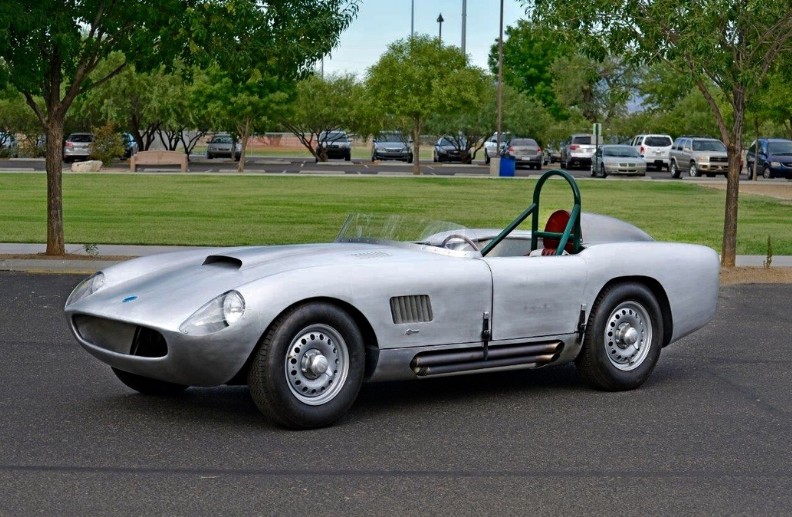
1959 Tojeiro California

Offered by Russo & Steele | Monterey, California | August 18-20, 2016

Photo - Russo & Steele

Photo – Russo & Steele

John Tojeiro was born in Portugal but lived in England for most of his life. He began designing the racing cars that bore his name in the 1950s. They often used the best engines of the day, be they from Jaguar, MG or whatever.

But in the late 1950s and into the 1960s the mid-engined race car revolution was well under way and Tojeiro knew it. By the early 60s he was building mid-engined cars. This California Barchetta is one of the last front-engined Tojeiro race cars. The engine in this case is a 5.0-liter straight-six from GMC.

The body on this car was designed by Cavendish Morton and was set in the style of the Ferrari California Spyder (hence the car’s name). But it was never completed in the day and was put aside. Much, much later, the head of the Tojeiro Registry acquired the car and had the body completed to original specifications. So what we end up with is a very pretty and functional vintage racer that has never really been raced. It’s fresh and clean and can be yours at Russo & Steele in Monterey this August.

Update: Not sold.