Hudson Town Car

1928 Hudson Model O Town Car by Murphy

Offered by Worldwide Auctioneers | Shipshewana, Indiana | August 4, 2018
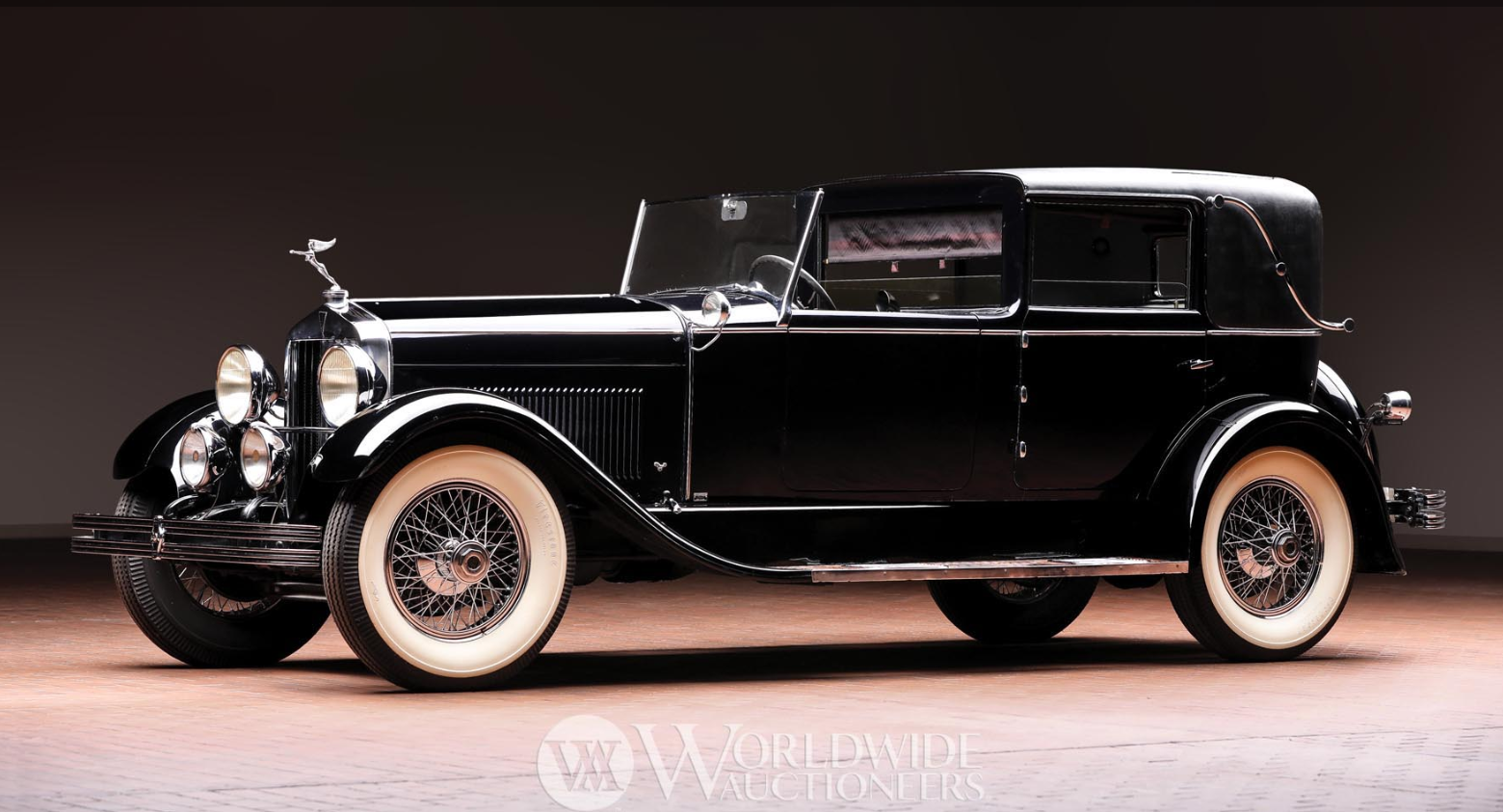
Photo – Silverstone Auctions

Here’s a fancy Hudson from the Hostetler Hudson Auto Museum in Shipshewana, Indiana. The Model O was produced by Hudson in 1927 and 1928. They offered five body styles from the factory, but the car you see here is a one-off coachbuilt Town Car by the Walter M. Murphy Company of Pasadena, California.

It is powered by a 4.7-liter straight-six that makes 92 horsepower. It might seem unusual to have custom coachwork affixed to a six-cylinder Hudson chassis, but the original owners were wealthy Columbus, Ohio, couple. And the Mrs. in that family had a brother who worked for Hudson. So you can probably imagine how this car came to be.

As noted in the catalog, this car is titled as a 1928 model, but the chassis tag makes it pretty clear it was actually built in 1927. It is thought that the completion of the body likely occurred in 1928. Dubbed the most expensive Hudson ever built – at the princely price of $13,500 in 1928 – this will likely be one of the bigger dollar cars at this sale. You can see more about this sale here and more about this particular Hudson here.

Update: Sold $313,500.
Porsche 550A Spyder

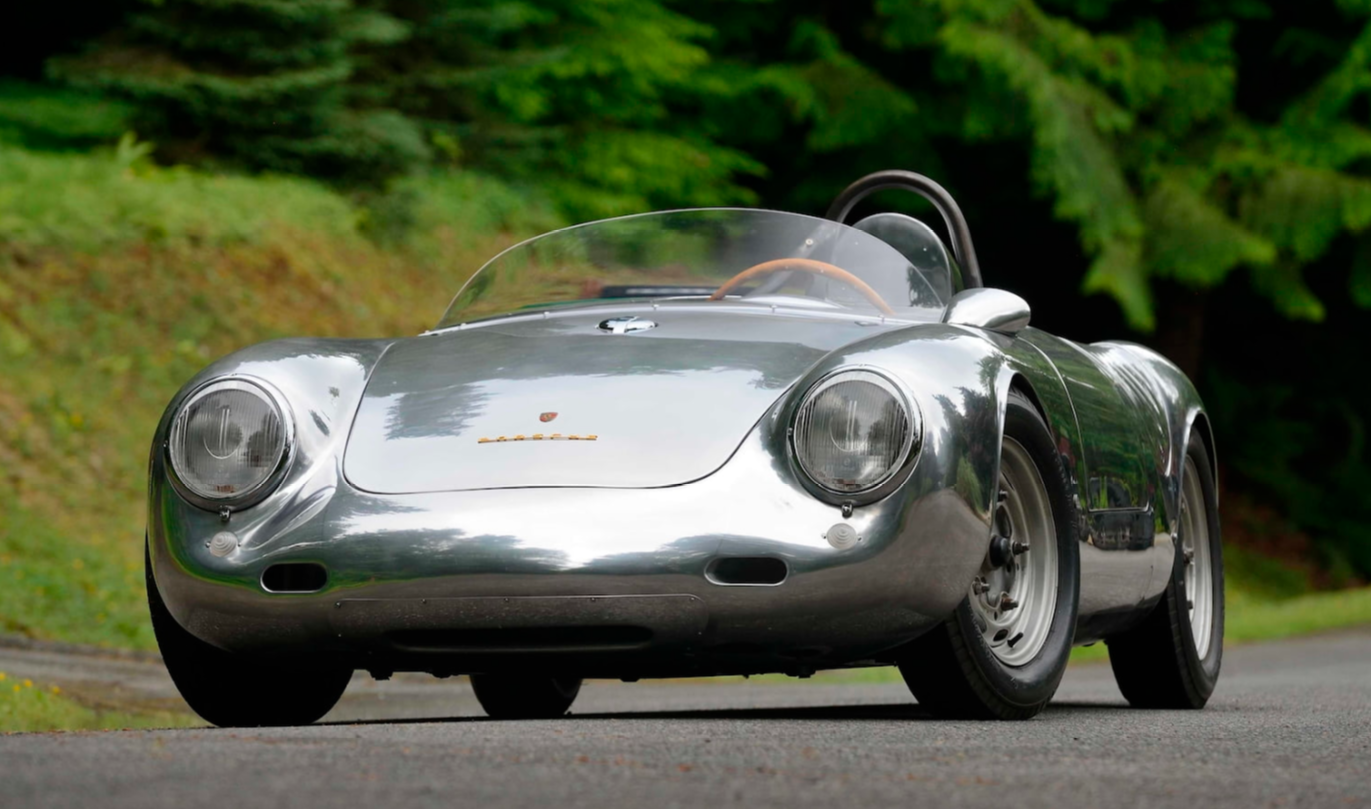
1958 Porsche 550A Spyder

Offered by Mecum | Monterey, California | August 23-25, 2018

Photo – Mecum

Have you ever seen one of these in person? Or, I guess, have you ever heard one? They’re loud. And it is intoxicating.

The 550 Spyder was a race car (that you could drive to the track) from Porsche that was available from 1953 through 1956. The 550A was an evolution of the original car and was only available in 1956.

The differences included a tubular space frame (as opposed to the normal 550 Spyder’s ladder frame). This increased rigidity and decreased weight. The transmission got an extra gear (up to five) and the wheels lost an inch in diameter. The improvements were designed to increase the car’s competitiveness on track. The 1.5-liter flat-four was a carryover, but made 135 horsepower in this trim.

This car is thought to have originally been owned by the Piech family (they who own 10% of Porsche today) before being sold to its first owner: a famed Austrian concert pianist and composer. And he raced the pants off this car, winning circuit races and hillclimbs in the late 1950s in Austria and Yugoslavia.

After that it went to the U.S. and spent a lot of time in SCCA races. The current owner found the car over 30 years ago and spent most of the time since restoring it. It shows fewer than 600 miles since restoration. Only 39 examples of the lightweight 550A were built, making this a big money car at Mecum in Monterey. Click here for more info and here for more from this sale.

Update: Not sold, high bid of $2,000,000.

GT40 Mk II

1966 Ford GT40 Mk II

Offered by RM Sotheby’s | Monterey, California | August 24-25, 2018

Photo Courtesy of RM Sotheby’s

We all know the story of the GT40 by this point: Ford wanted Ferrari. Ferrari said no. Ford decided to whip Ferrari at Le Mans. And then did just that. The first GT40s hit the track in May 1964. Later that year, after disappointing results, the racing program was given to Carroll Shelby and he turned it around.

Using 1964 and 1965 as “work-out-the-bugs” seasons, Ford applied an upgrade to the GT40 for 1966. Dubbed “Mk II,” the cars now carried monstrous 7.0-liter V-8 engines. These 427s were built by Holman-Moody of NASCAR fame and boasted 450 horsepower. To handle the extra weight of the stock car engine, Kar Kraft upgraded the Mk II’s chassis, suspension, and engine mounts. And oh boy, what a package it was.

Ford dominated the 1966 24 Hours of Le Mans, finishing 1-2-3 in a clean sweep and embarrassing Ferrari – which was sort of the point of the entire program. This car was part of that sweep, coming home third. The race history for this chassis includes:

  • 1966 24 Hours of Daytona – DNF (with Ronnie Bucknum and Richie Ginther)
  • 1966 12 Hours of Sebring – 12th (with Bucknum and A.J. Foyt)
  • 1966 24 Hours of Le Mans – 3rd (with Bucknum and Dick Hutcherson)
  • 1967 24 Hours of Daytona – DNF (with Mark Donohue and Peter Revson)

In 1970, Ford donated this car to the Harrah Collection. A few other private owners followed, with a restoration coming in the 1990s. One of only eight examples of the Mk II produced, this car is well acquainted with the historic show and race circuit, accumulating refurbishment as-needed along the way.

Coming out of nearly a decade and a half of continuous ownership, this GT40 will be overshadowed (in price and in conversation) by RM’s consignment of a 250 GTO. But this is a far more historically important – and interesting – car. Click here for more info and here for more from this sale.


Side note: Dick Hutcherson is, statistically, one of the greatest NASCAR drivers of all time – despite only three seasons in the sport. He is never brought up in conversations about NASCAR greats. But he should be. Plus, how many other NASCAR drivers have finished on the podium at Le Mans? Just wanted to put that out there…

Update: Sold $9,795,000.

Nissan NPT-90

1990 Nissan NPT-90 IMSA GTP

Offered by Mecum | Monterey, California | August 25, 2018

Photo – Mecum

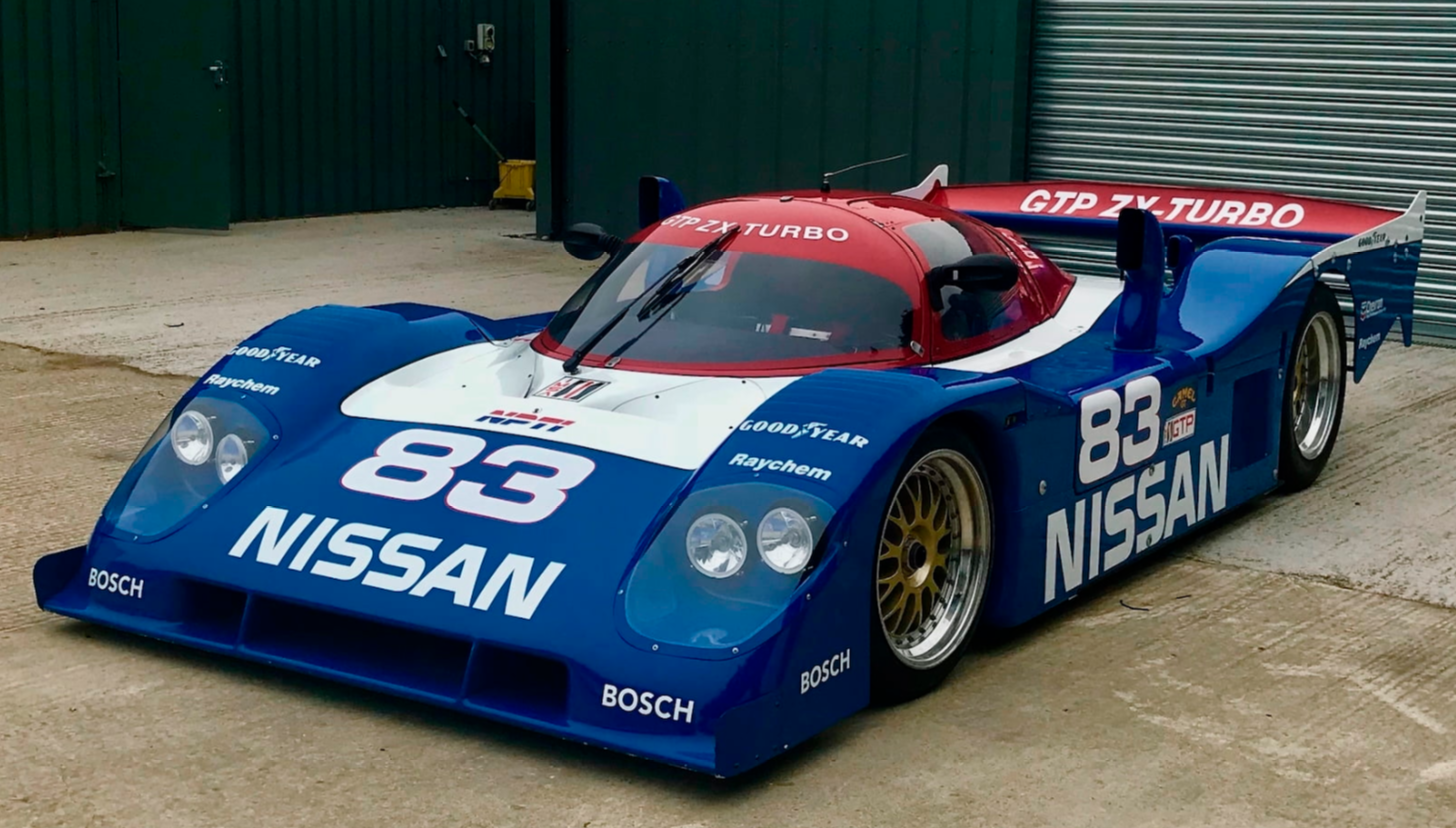
The IMSA GT Championship was an American racing car series that lasted from 1971 through 1998. Its shining moment was from 1981 through 1992, when a category called GTP existed. It featured prototype sports cars from some big name manufacturers like Porsche, Jaguar, Toyota, and Nissan.

Nissan won the championship in 1989 and this was the follow-up car to the series winning GTP ZX-Turbo. It debuted in the middle of the 1990 season and the competition history for this chassis includes:

  • 1992 IMSA Grand Prix of Mami – 1st (with Geoff Brabham)
  • 1992 12 Hours of Sebring – 2nd (with Brabham, Derek Daly, Gary Brabham, and Arie Luyendyk)
  • 1992 IMSA Road Atlanta – DNF (with Geoff Brabham)

Brabham crashed it at Road Atlanta and that was sort of it for this chassis. It was later comprehensively restored and is powered by a twin-turbo 3.0-liter V-6 capable of 750 horsepower. It’s eligible for historic racing in the U.S. and in Europe (against Group C racers from the same era). Works GTP cars don’t change hands publicly all that often, so this is an interesting opportunity to get one of the big ones. You can read more here and see more from Mecum here.

American-bodied Isotta Fraschini

1927 Isotta Fraschini Tipo 8A S Roadster by Fleetwood

Offered by RM Sotheby’s | Monterey, California | August 24-25, 2018

Photo Courtesy of RM Sotheby’s

Isotta Fraschini dates to 1900, when it was founded by Cesare Isotta and the three Fraschini brothers: Vincenzo, Antonio, and Oreste. Cars were available from the outset, with production wrapping up about the time WWII came around (though five units were produced after the war).

The legendary and most well-regarded models in the company’s history were from the Tipo 8 line. The Tipo 8A was the second-generation model, available from 1924 through 1931. It’s powered by a 7.4-liter straight-eight and horsepower depended on which car you bought. This is a “Sport” model, so it rides on a shortened wheelbase.

NYC-based Fleetwood bodied two similar Tipo 8As in period. This one was custom built for legendary silent film star Rudolph Valentino but, unfortunately, he died before the car was delivered. The current owners bought the car in 2001 and had RM do a thorough, award-winning restoration, as the car has been shown successfully on multiple occasions since. It’ll be a big dollar car when it crosses the block in Monterey. Click here for more info and here for more from RM.

Update: Not sold.

First Year Essex

1919 Essex Series A Touring

Offered by Worldwide Auctioneers | Shipshewana, Indiana | August 4, 2018

Photo – Worldwide Auctioneers

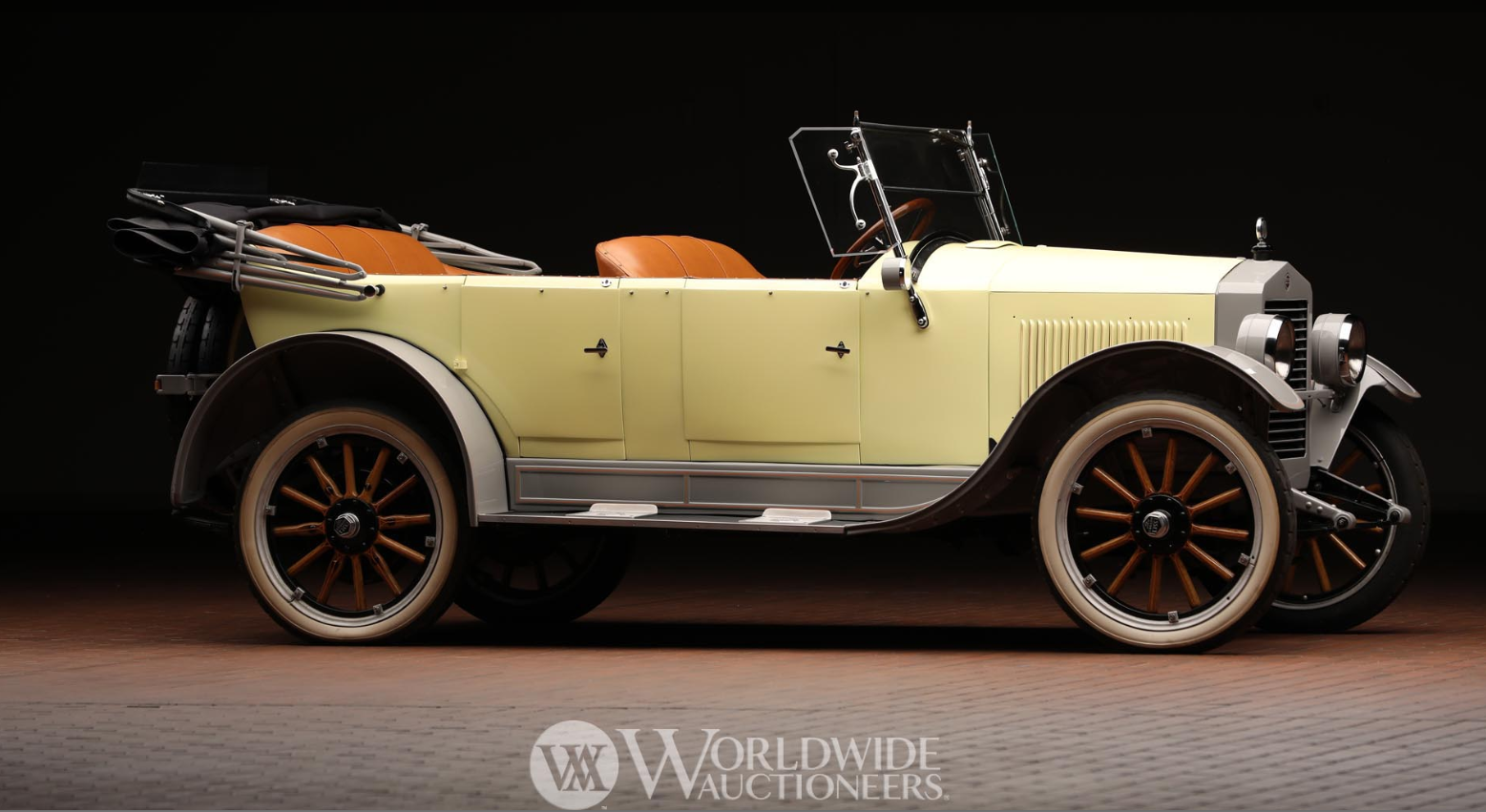
Essex was a brand of automobile founded by Hudson as a small, affordable car aimed at the lower end of the market. The first cars went on sale in 1919 and this example is from that first year of production.

The Series A became the Series 5-A, 6-A, and 7-A in 1920, making it, in name, a one-year only model. Three body styles were available: a four-door sedan, two-door roadster, or this, the five-passenger, four-door touring car. The engine is a 55 horsepower, 2.9-liter straight-four. With it’s low price, middle-of-the-road looks, and big power, there’s an argument to be made that the Essex was the original sleeper. Top speed was about 60 mph.

With a $1,395 as-new price, this touring car was a good start for a company that would produce cars through 1932. The restoration is older but the light yellow and silver paint are a good combo with those white wall tires. It’s been part of this Hudson museum since 2000. Click here for more info and here for more from this sale.

Update: Sold $26,400.

Rinspeed R69

1980 Porsche 911 Turbo R69 by Rinspeed

Offered by Silverstone Auctions | Silverstone, U.K. | July 21-22, 2018

Photo – Silverstone Auctions

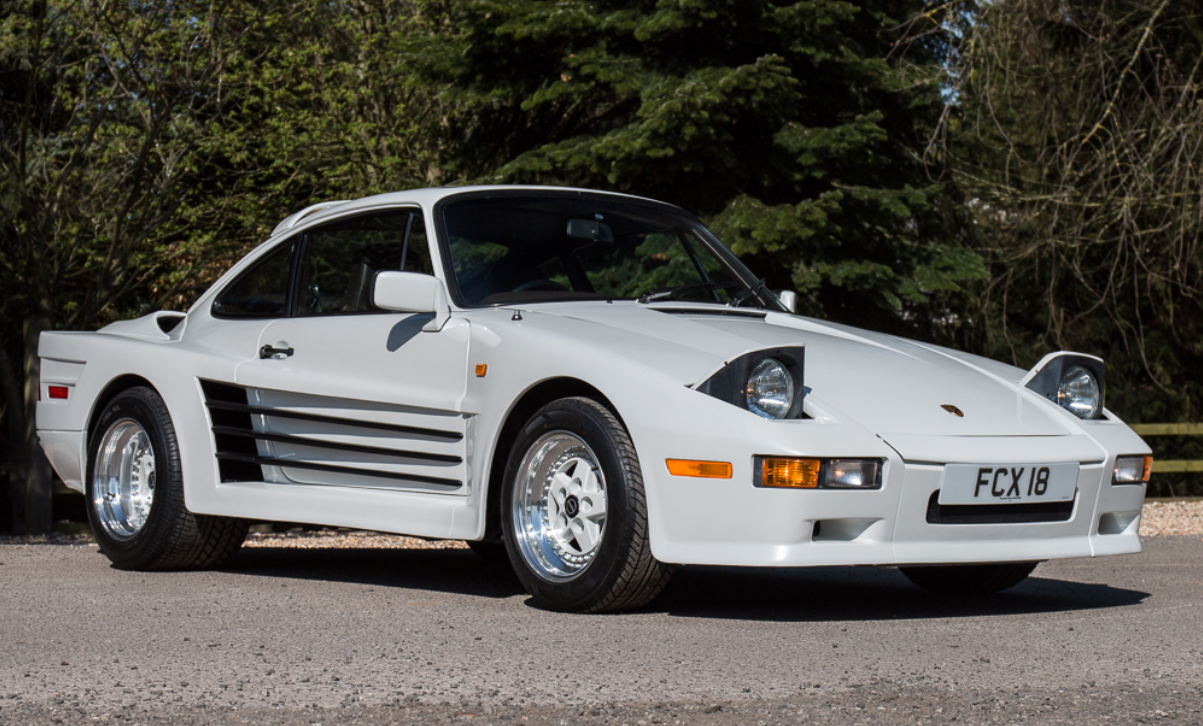
If you thought the 1980s were a period of excess then consider the people who bought this car. “I want a Porsche and I want a Ferrari.” Well here, have both, said Rinspeed. Actually, that’s not true… those dramatic side strakes that look like they were ripped right off a Testarossa were actually designed a few years before the big Ferrari ever went on sale.

This car started as a 1980 Porsche 911 (930) Turbo. That means it’s got a 296 horsepower, turbocharged 3.3-liter flat-six tucked out back. In 1983, the first owner sent it to Rinspeed in Switzerland to get the full Rinspeed 969 – or R69 – treatment. This meant the addition of pop-up headlights from the Porsche 944, those super-80s side strakes, and custom wheels. Basically, the task at hand was “box-ify it.” And that they did.

After a few years in storage, this example has recently been repainted in Rinspeed Pearl White and shows 69,000 original miles. It’s a straight-up Miami Vice ride. It’s thought that only 12 of these re-bodies were completed as they likely were not cheap. This one is selling at no reserve with no pre-sale estimate available. Click here for more info and here for more from this sale.

Update: Sold $73,699.

TVR Sagaris

2007 TVR Sagaris

Offered by Silverstone Auctions | Silverstone, U.K. | July 21-22, 2018

Photo – Silverstone Auctions

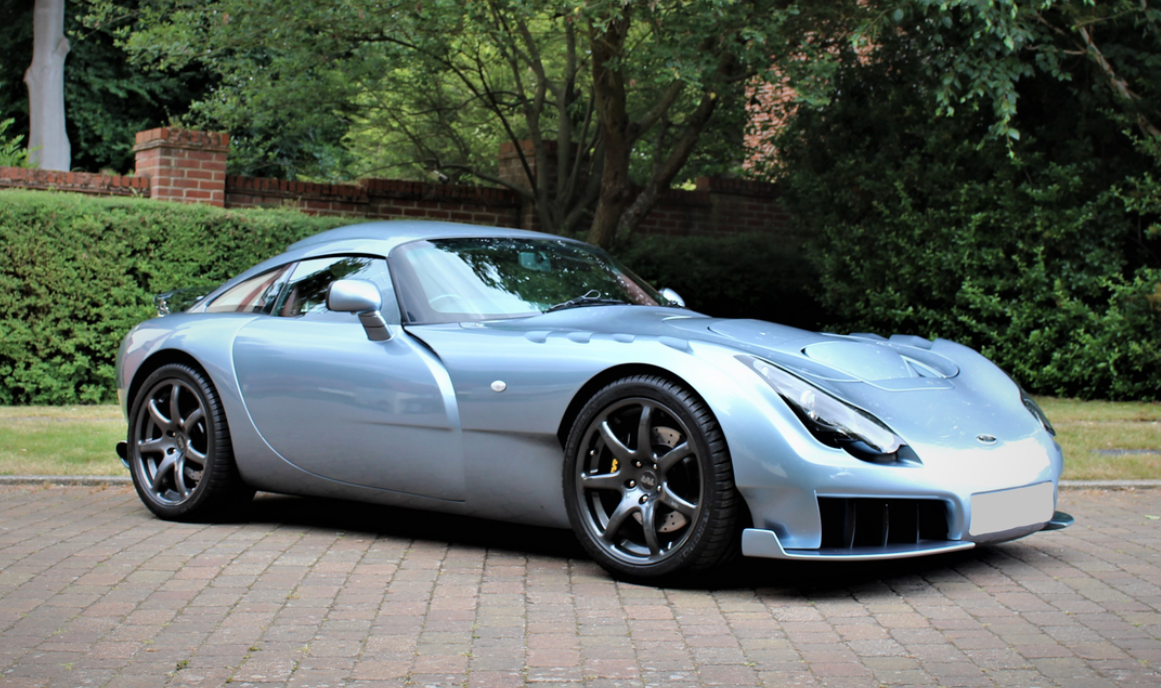
TVRs are wild – wild in design, appearance, and demeanor. The Sagaris might be the ultimate example of this. And it kind of makes sense that it would be, as it was the final new TVR model introduced before the company fizzled out under Russian ownership.

First shown at the 2004 Birmingham Motor Show, the Sagaris went on sale in 2005 and by 2006 the company was barely in existence so this model had but one year to make its mark. The car features a 4.0-liter straight-six that makes 406 horsepower. Sixty arrives in 3.7 seconds and the car tops out at 185 mph. Despite important EU regulations and recommendations, there is no ABS. No airbags. No traction control. It’s a monster. Oh, and in keeping with TVRs weird sense of design, the rear spoiler is clear and the dual rear exhausts point to the sides. Why not?

With fewer than 200 units produced, the car is quite rare. I remember seeing one for sale in Chicago a few years ago – but its unclear how that car could possibly be in this country legally. The example you see here has been owned by members of the TVR Club UK and is freshly serviced and ready to run. It should bring between $85,000-$100,000. Click here for more info and here for more from this sale.

Update: Not sold.

Beauford Series III

1999 Beauford Series III

Offered by H&H Classics | Buxton, U.K. | July 19, 2018

Photo – H&H Classics

Neoclassics were a type of car that first became very popular in the 1970s. But the Beauford is proof that it’s still a viable concept 40 years later. They got their start in Lancashire in the mid-1980s selling Mini-based kits.

Beaufords are designed to look like large 1930s touring cars. And that’s kind of why, especially in the U.K., they’re still around. The “wedding car” industry is sort of unique to Britain where couples want to be toted around in a grand old car on their big day. And this is the perfect car for that. In fact, it’s sort of designed around being able to do that.

The running gear is centered around a 2.0-liter Ford straight-four and a 4-speed manual transmission. The interior is modern with an old-time setup. It’s got the fiberglass body that takes you back in time, but it’s likely much more reliable than a 60 year old Jag. There is an active owners club and you can always make money on the side with it. The price should be in the $18,000-$22,000 range. Click here for more info and here for more from this sale.

Update: Not sold.

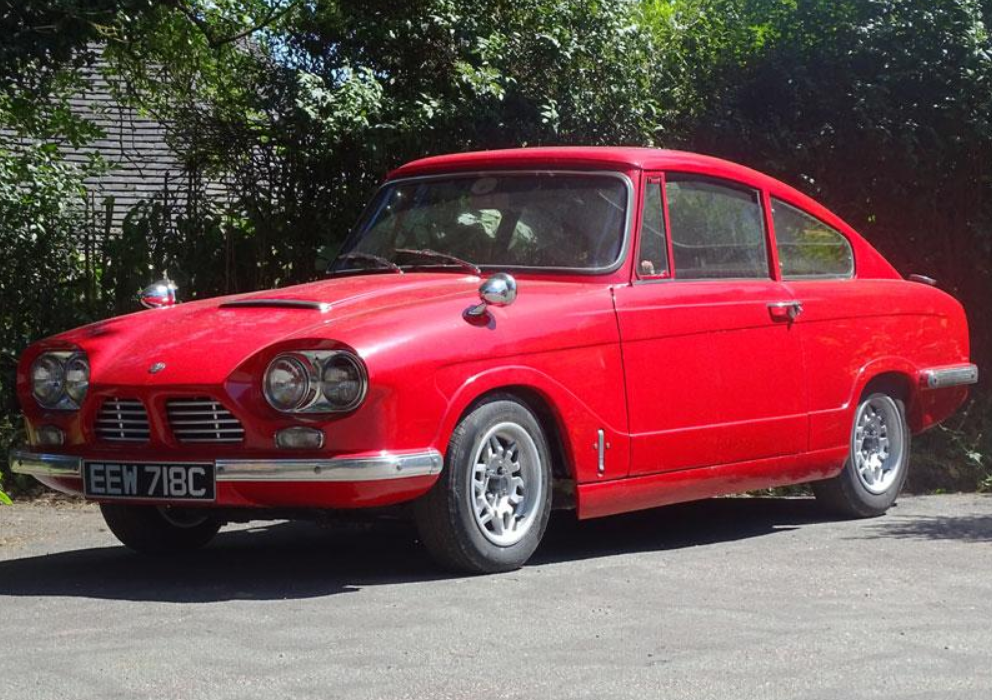
Bond Equipe GT 4S

1965 Bond Equipe GT 4S

Offered by H&H Classics | Buxton, U.K. | July 19, 2018

Photo – H&H Classics

We recently featured the ultimate iteration of the Bond Equipe, the 2-Litre GT. This, the GT 4S, was the second version of the car introduced. Originally, the Equipe went on sale in 1963 and the GT 4S hit the market in September of the following year. It was built through January of 1967.

It’s powered by a 1.1-liter straight-four from a Triumph Herald, tuned to make 67 horsepower here. When the GT 4S was replaced in 1967, it was replaced by a 1.3-liter variant, the 1300. The fastback body is fiberglass.

This 82,000 mile example is one of just 1,934 units product – the most of any Equipe model. It’s described as being in good overall condition, with perhaps the paint needing some attention. It should sell for between $3,000-$4,500. Click here for more info and here for more from this sale.

Update: Sold $4,577.