Offered by Worldwide Auctioneers | Pacific Grove, California | August 15, 2019
Photo – Worldwide Auctioneers
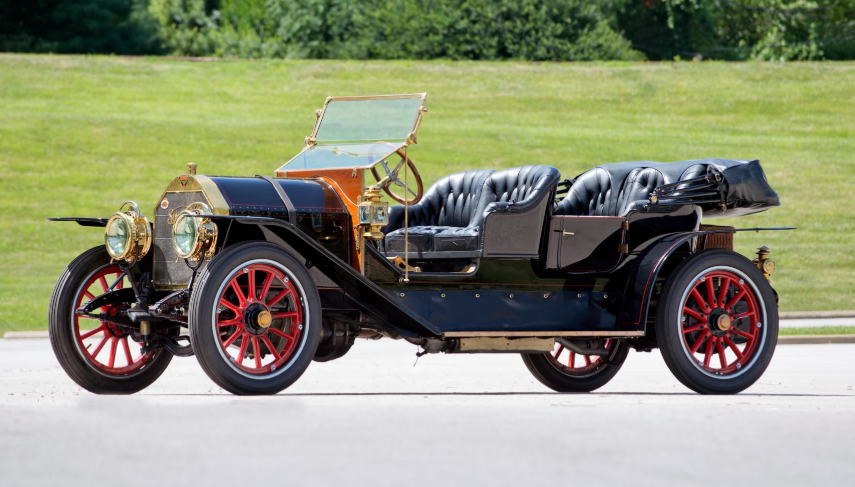
The “Three Ps” of Packard, Peerless, and Pierce-Arrow get all of the glory as America’s best early cars. But there were some pretty good “S”s too. And Simplex was foremost among them. Between 1907 and 1914, Simplex turned out some of the greatest cars you could buy at the time. For 1915, they became Crane-Simplex (or Simplex Crane).
The Model 38 sat at the lower end of the 1912 and 1913 Simplex lineup. Powered by a 38 horsepower, 7.8-liter inline-four, the cars could be had in two wheelbases. The car you see here is the short wheelbase at 127″. It’s a four-passenger touring car, which would’ve cost $4,850 when new. That was a lot in 1912.
The body appears to be a replacement, as it is described as being “in the style of Holbrook.” It also has kind of a funky inward lean to it, but I think it may just be an odd photo angle. Completely restored, this is a useable brass era car, with enough power to comfortably use on tours. Click here for more info and here for more from this sale.
Offered by Mecum | Monterey, California | August 15-17, 2019
Photo – Mecum
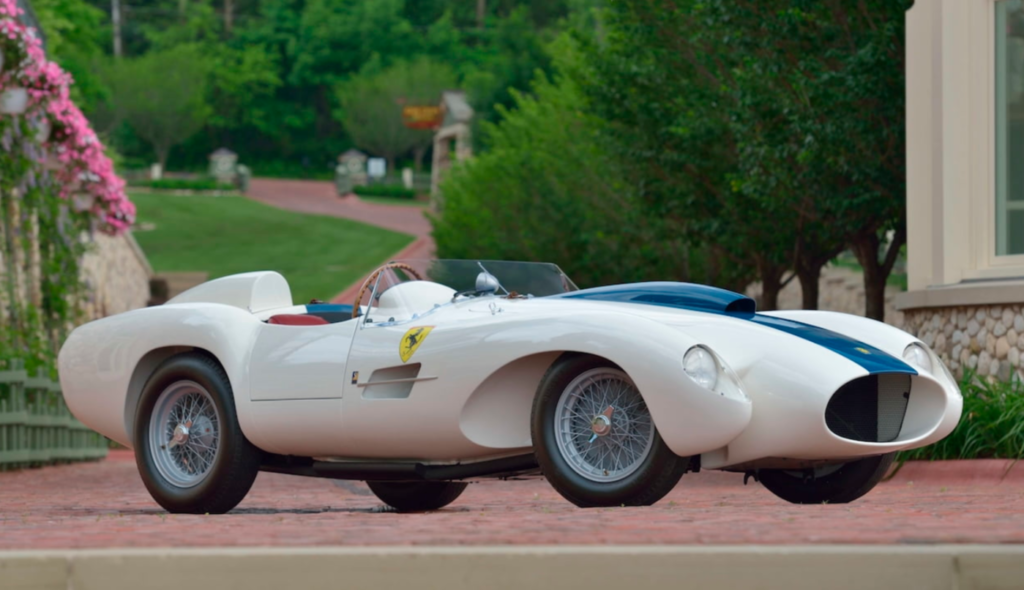
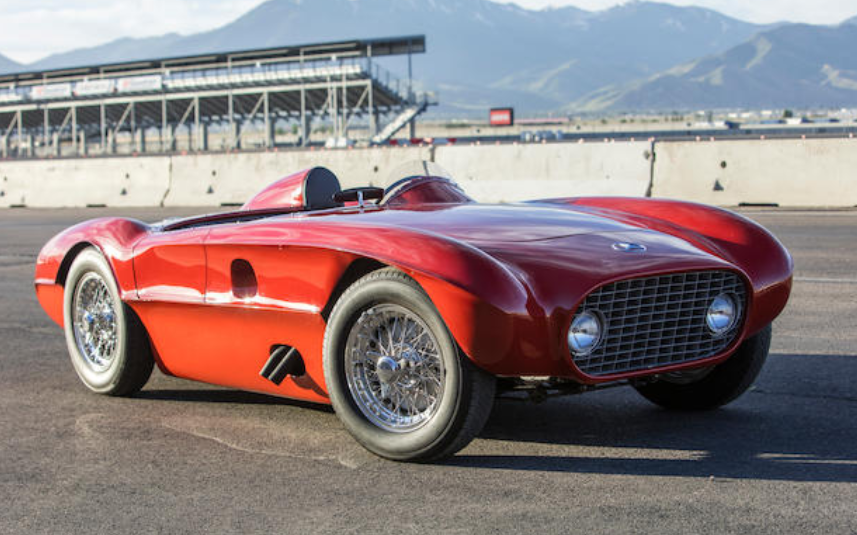
It’s a little amusing how much the Mecum catalog is hedging on the description of this car. It is in the catalog as “1954/1959 Ferrari 0432M.” Which is useless info. This car has a nuanced history, that’s for sure. I guess when you own the auction house you want to lay out the facts and let others draw their own conclusions – which I will now do. This car was born in 1954 as a Pinin Farina-bodied 250 Monza Spider.
Only four examples of the 250 Monza were built and they were essentially the 750 Monza with a 3.0-liter V12 instead of a 3.0-liter inline-four. Output was 260 horsepower. This particular car won the 1954 12 Hours of Hyeres with Maurice Trintignant and Luigi Piotti.
Sometime in 1956 or 1957, the car returned to Ferrari, who had it re-bodied by Scaglietti with the pontoon fender-style body you see here. The interesting bit is that this was done at approximately the same time Scaglietti was designing the 250 Testa Rossa. Maybe it’s like a proto-Testa Rossa?
In 1959, it arrived at Luigi Chinetti’s place in New York, and it was shown at the 1959 New York Auto Show. From there it’s had a few owners, including Dana Mecum who had the car restored in 2014. The catalog makes this car seem mysterious. But old cars changed bodies here and there. No big deal. It’s a factory-re-body of a 250 Monza. And it’s wonderful. I look forward to your hate mail telling me why my assumptions are wrong. Check out more info on this car here, and see more from Mecum here.
Offered by Worldwide Auctioneers | Pacific Grove, California | August 15, 2019
Photo – Worldwide Auctioneers
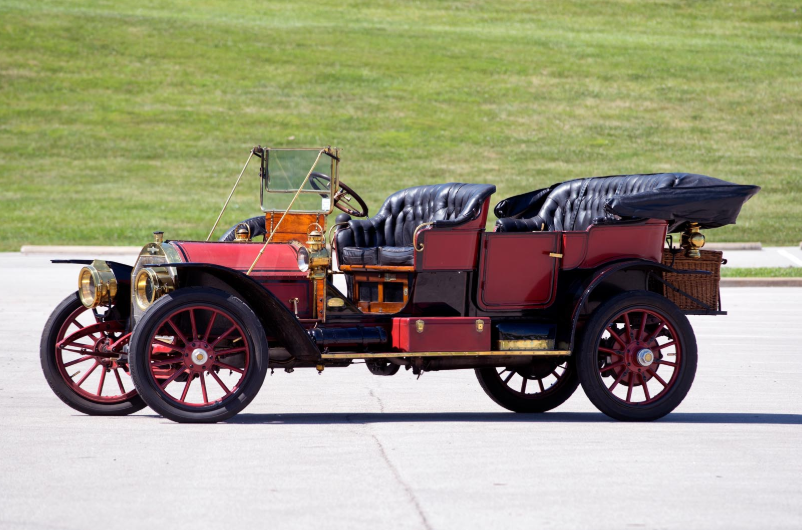
Stevens-Duryea was founded in 1901 when J. Frank Duryea got pissed off at his brother and left their joint company to work elsewhere. He designed a car and convinced The J. Stevens Arms and Tool Company to build it. They continued to offer very expensive cars through 1927.
This Model X, which is listed as a 1908 but was first purchased in 1911, was from the heydey of Stevens-Duryea. The Model X was produced from 1909 through 1912. Power is from a 36 horsepower, L-head four-cylinder engine. The car is wonderful, especially if you start looking at the details. And it’s all-original apart from a 1950s repaint.
But the big story here is the car’s history. It was retained by its first owner for many years before being willed to Henry Austin Clark Jr. in the 1950s. Clark kept it in his museum and used it on tours (of which video exists on YouTube). It’s currently on only its fourth owner. No pre-sale estimate is provided, but it failed to sell on BringaTrailer for $125,000. Click here for more info and here for more from this sale.
Offered by RM Sotheby’s | Monterey, California | August 15, 2019
Photo Courtesy of RM Sotheby’s
There have been a few Aston Martin wagons – err, “shooting brakes” – over the years. They officially started with the DB5. The story is that company owner David Brown was annoyed that his hunting dog was destroying the front seats in his normal DB5, and he had nowhere to put his polo gear. I should’ve warned you that it was a very pretentious story.
The Shooting Brake versions of the DB5 share the same 282 horsepower, 4.0-liter inline-six as the coupes. But it has that extra bodywork and glass at the rear, courtesy of Radford, a British coachbuilder hired by Brown to build the bodies, as the Aston factory didn’t have the capacity to fill the special orders for these cars.
Only 12 examples of the DB5 Shooting Brake were built by the “factory” (i.e. by Radford). One for Brown, and 11 others for customers who saw Brown’s car and wanted their own. They are very hard to find today, and this example has been with three Swiss owners since new. It should bring between $1,000,000-$1,400,000. Click here for more info and here for more from this sale.
Offered by Bonhams | Carmel, California | August 16, 2019
Photo – Bonhams
The 1950s were a great time for one-off road racing specials. Returning soldiers saw the light in Europe with their lightweight sports cars and came back with an increased technical know-how to get it done. And that’s what we have here.
Charles Hughes and Kurt Kircher teamed up to build this very pretty special. Kircher was an ex-GM man who helped develop the Powerglide transmission. Hughes was an ex-G.I. who happened to buy a Jaguar XK120. He took it to Kircher, now in Colorado, and used the XK120 engine, a tube-frame chassis, and an MG steering rack to create the first version of the Hughes-Kircher Special. The body was done in aluminum.
After a few years, the car ceased to be competitive. Somehow, the duo got their hands on a Mille Miglia-prepped 300SL race engine and plopped it under the hood. Later, that engine was swapped for a 240 horsepower, 3.0-liter inline-six from a “standard” 300SL. It still has such an engine, just a different one, as the second straight-six was eventually reunited with its factory Gullwing chassis.
This car has raced all over the world and has been in some major collections. It’s been restored and looks as good as any period Ferrari. But it’ll be much cheaper – between $300,000-$400,000 will take it home. Click here for more info and here for more from this sale.
Offered by Gooding & Company | Pebble Beach, California | August 17, 2019
Photo – Gooding & Company
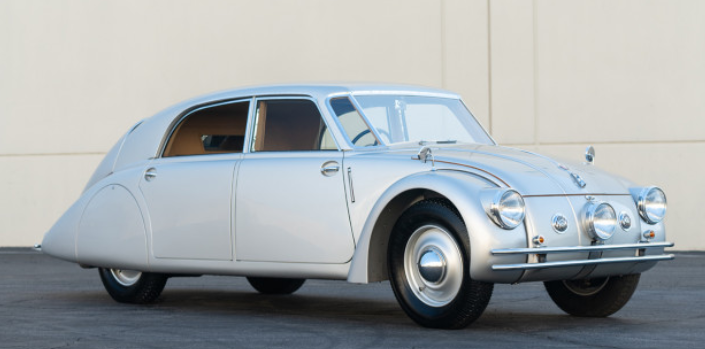
Let’s start with this: Tatras are amazing with their unique, otherworldly designs. These big, streamlined, rear-engined cars must’ve seemed completely alien to car shoppers in the 1930s. That’s right, the 1930s! The Tatra 77 was introduced in 1934 and was the world’s first production aerodynamically-designed air-cooled car.
Features include three headlights and a sloping fastback body style that achieved an insanely-low drag coefficient. Power is from a 75 horsepower, 3.4-liter V8. The engine compartments in these cars are so interesting – it looks like there is some kind of machine back there, not an air-cooled V8. Top speed on the 77A was 93 mph.
The interior here is pretty luxurious as well, with a huge rear passenger compartment partitioned off from the driver. And the rear seatback folds forward to reveal a nicely-trimmed trunk ahead of the engine. Only 255 combined examples of the 1934-1935 Tatra 77 and 1935-1938 77A were produced. Only 20 are thought to remain.
Check out Gooding’s posted ownership history: purchased new by a Czech citizen who had the car confiscated by the German army in 1939. The Soviet army took possession of the car in 1945. In 1950, a Russian bought the car and kept it for 50 years before the current owner bought it from him. It should sell to its next owner for between $450,000-$650,000. Click here for more info and here for more from this sale.
Offered by Bonhams | Carmel, California | August 15, 2019
Photo – Bonhams
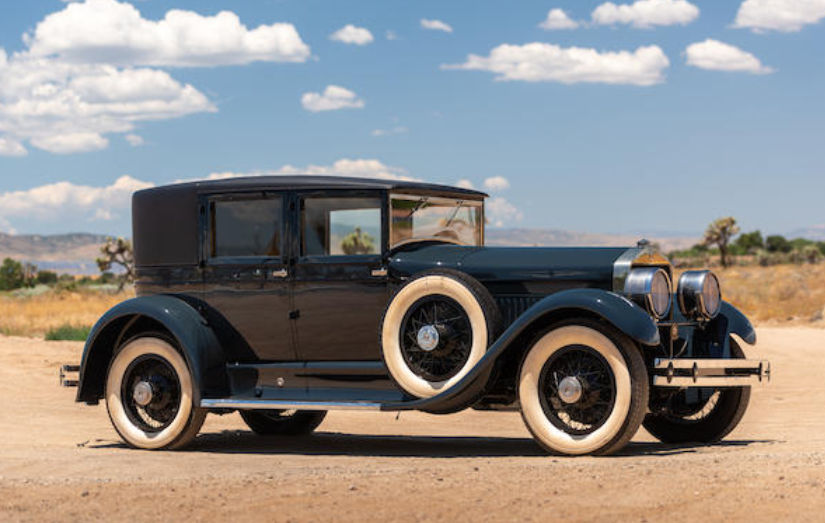
James Cunningham founded a carriage-building business with his songs in Rochester, New York in 1882 and then died in 1886. His son Joseph ran things from then on, and by 1911 they were in the automobile business. By 1916 they were selling V8-powered cars. Never inexpensive, the Cunningham car disappeared after 1929, with a few leftovers completed during the 1930s.
Cunningham also had a very confusing naming convention for their cars. It started innocently enough, but when the five-year-old Series V gave way to the V-4 in 1922, things got weird. All powered by the firm’s V8 engine, the models would be named V-4, V-5, V-6, V-7, and apparently even V-8. Things started to make sense just in time to go out of business.
The engine in this car is a 7.2-liter V8 rated at 106 horsepower when new. It likely would’ve cost its new owner in the neighborhood of $8,500 in 1928 – quite a sum. Later, this car was owned by Bill Harrah and remained in his collection until his death. The restoration is fresh as of 2016, and the car should now bring between $150,000-$220,000. Click here for more info and here for more from this sale.
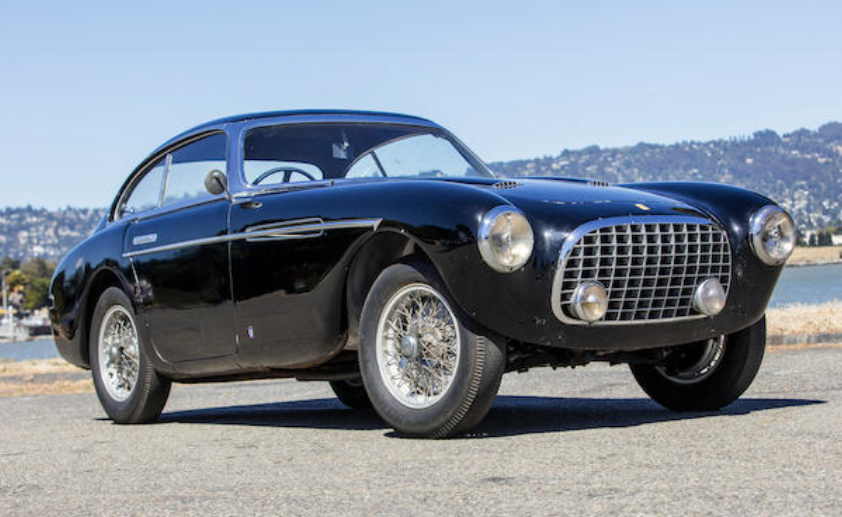
1951 Ferrari 340 America Coupe Speciale by Vignale
Offered by Bonhams | Carmel, California | August 16, 2019
Photo – Bonhams
The 340 was the first in Ferrari’s line of America cars that sort of culminated in the ultra-rare 365 California. Produced between 1950 and 1952, the 340 was intended as a grand tourer, but, being Ferraris, that didn’t stop some from being pressed into racing duty. In 1951, a 340 America won the Mille Miglia.
Power is from a 4.1-liter V12 making 220 horsepower. The engine was actually derived from Ferrari’s Grand Prix motor. Only 23 examples of the 340 America were produced, with two of those actually being cars converted from earlier 275 S models. Eleven of them were bodied by Vignale.
Five of those 11 were coupes, including this one. At a cost of $25,000 when new, the car was kept around Southern California in its early years before being acquired by the current owning family in the late 1950s. It’s remarkably untouched after 60+ years, with chipping paint and great patina. If only all old Ferraris looked this authentic. No estimate is available, but you can read more here and see more from Bonhams here.
We shifting gears a little bit now. From here out, our monthly auction rundowns will only cover auctions from which we actually featured cars. Sorry all others, I don’t have the time. Life is busy. That also means it will be a straight-shot chronologically (well, based on when the results are published anyway). Previous rundowns used to be broken up a little bit, as we’d only feature one result from any particular auction house per highlight post. Not anymore!
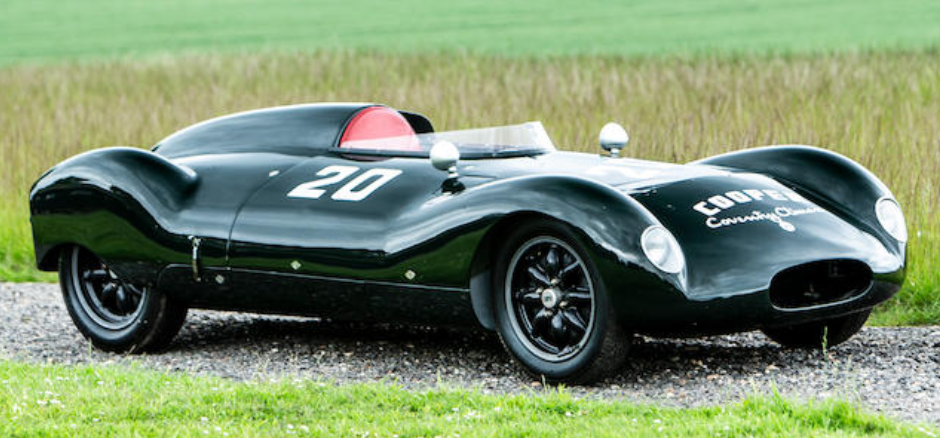
We start this time around with Bonhams in Goodwood, where the top seller, by some margin, was the Williams F1 car we featured. It sold for $3,385,271, while the other F1 car – the Toyota roller – brought $86,416. Rounding it out was the Lister Storm for $583,311. Most Interesting goes to this 1956 Cooper T39 that sold for $151,228. Click here for more results.
Photo – Bonhams
Next up is Brightwells’ Leominster Classic & Vintage sale. This 1961 Jaguar XK150S coupe was the top sale at $134,401.
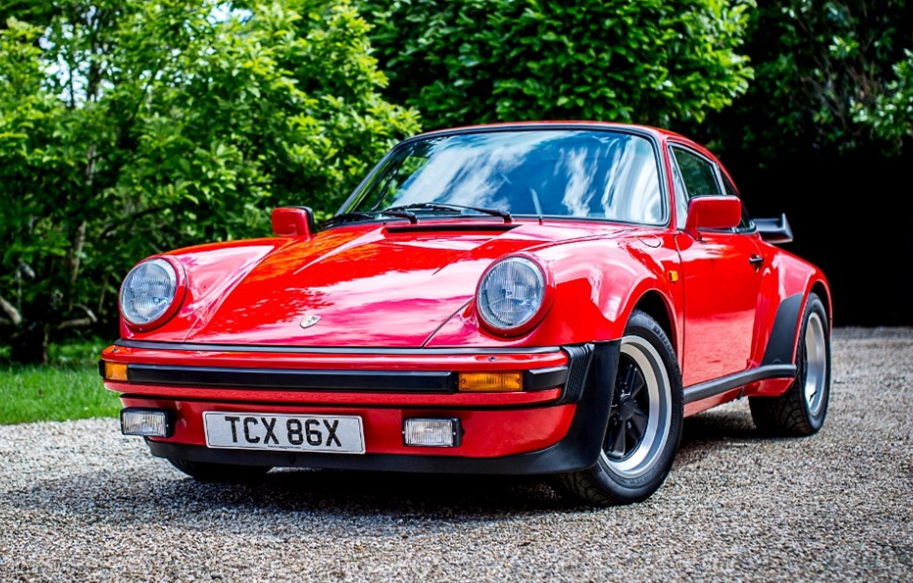
Historics held a sale at Brooklands in July, and this 1981 Porsche 911 Turbo took top sale honors, selling for $114,822.
Photo – Historics Auctioneers
All three of our feature cars sold, with the Jensen bringing the most: $84,016. The Bristol 411 sold for $49,708, and the Healey $22,404. Click here for complete results.
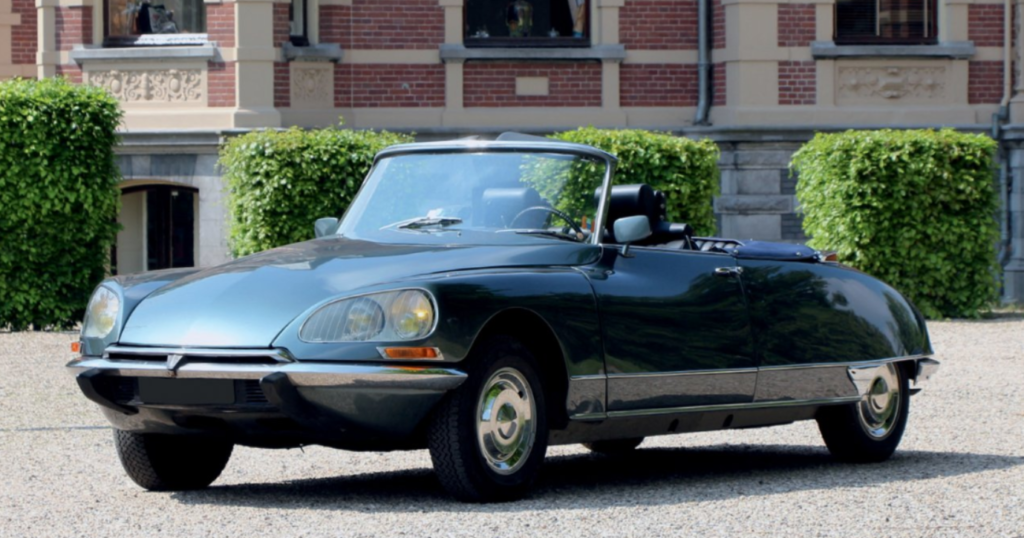
Aguttes’ all-Citroen sale saw the Coupe Concorde we featured fail to find a new home. The Citela concept car we featured a while back also failed to sell here. Top money went to this 1968 Citroen DS 21 Cabriolet for $238,579.
Photo – Aguttes
Two other previously-featured concept cars did manage to sell here. The Eco 2000 SA 109 went for $1,137 and the Tubyk $7,156 – both way down from what they brought not all that long ago at a different sale. More results are available here.
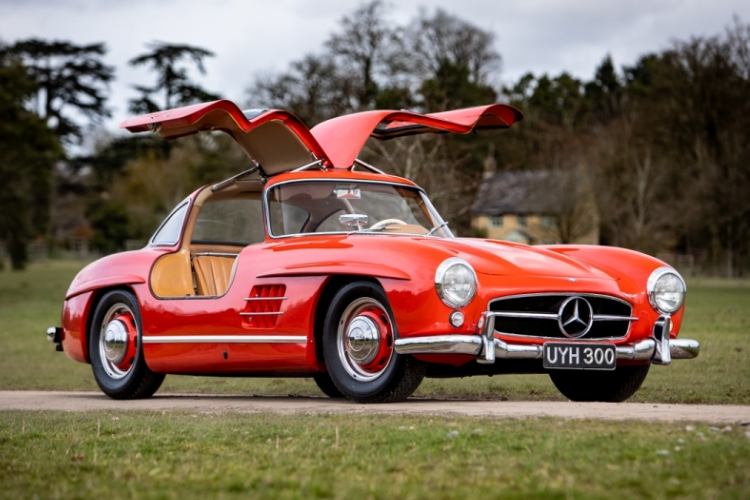
Finally, we have Silverstone Auctions. Fresh feature cars in this sale consisted of the Renault 5 Turbo 2, which sold for $100,258. The top sale was $1,030,431 for this 1954 Mercedes-Benz 300SL.
Photo – Silverstone Auctions
A previously-featured AC Aceca sold here for $167,096. Final results are available here and here.
Offered by Bonhams | Carmel, California | August 16, 2019
Photo – Bonhams
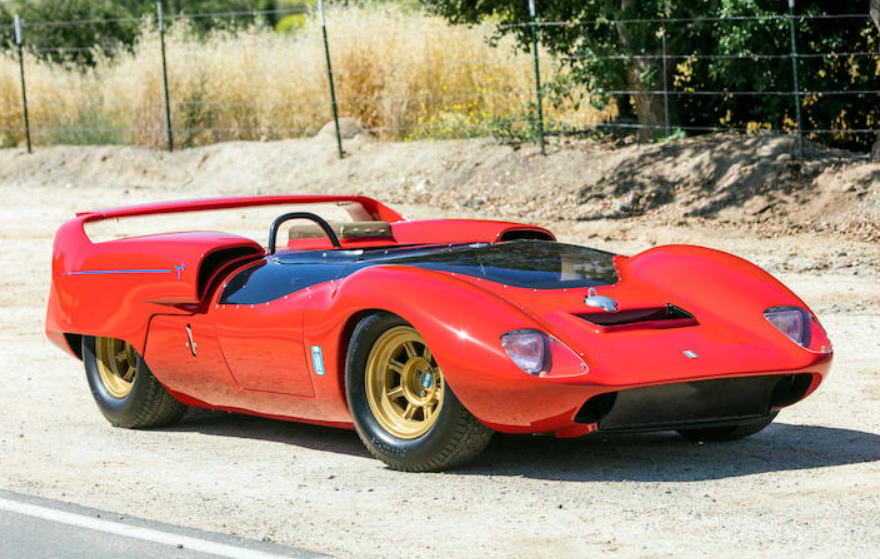
There were a lot of cooks in the kitchen when it came to getting this car built. And that’s probably a big part of the reason only an example or two were ever completed. Let’s start with the backstory: Carroll Shelby was killing it with his Cobras, including the legendary Daytona Coupes. But there were rumblings that McLaren was about to drop a huge 7.0-liter monster on the Cam-Am and USRRC circuits.
To hedge his bets while he waiting to find out if he would be taking over Ford’s GT40 program, Shelby teamed up with Alejandro de Tomaso to one-up McLaren before they got too far ahead. The car was engineered by de Tomaso and the body was designed by Peter Brock, who had also designed the Daytona Coupe. The body was then constructed by Fantuzzi in Italy.
Already featuring adjustable aerodynamics, Ol’ Shel wanted a lightweight powerplant. But it never got that far. Shelby got the GT40 gig and bolted from this project, and De Tomaso ended up showing the car at the 1965 Turin Auto Show as the “Ghia de Tomaso.”
Then it went into storage, staying put long after de Tomaso was gone. In 2004, the car’s body panels were discovered, and a very rough version of the car won awards at the 2005 Quail Motorsports Gathering. It was then restored and is now fitted with a 350 horsepower, 4.7-liter Gurney-Weslake V8. It’s expected to fetch between $2,000,000-$3,000,000 – which is a lot for a historic racing car with no racing heritage to speak of. Click here for more info and here for more from this sale.