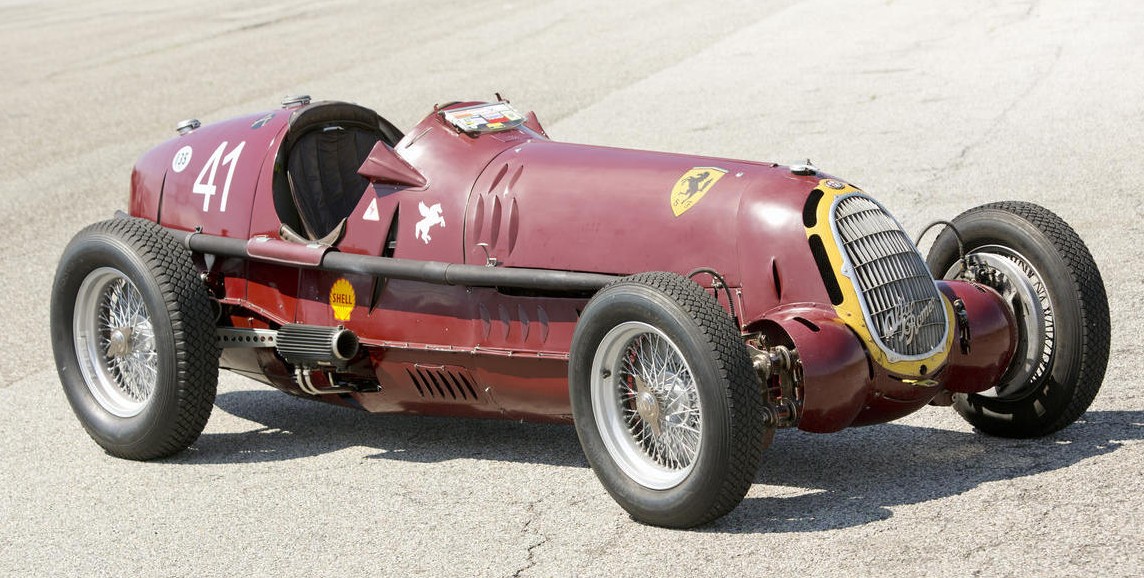
OSCA 750 S

1960 OSCA 750 S

Offered by RM Auctions | Phoenix, Arizona | January 17, 2013
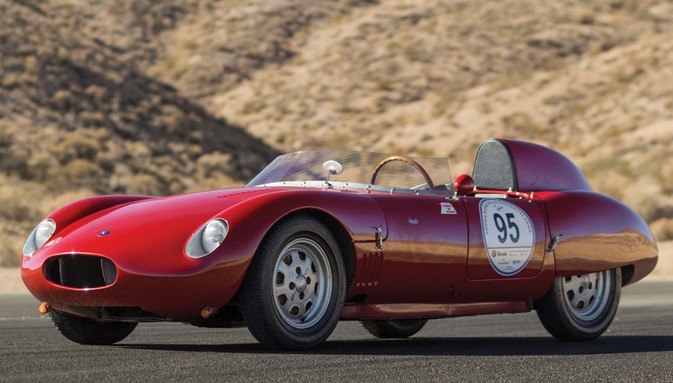
1960 OSCA 750 S

After the Maserati brothers had sold their stake in the company that bore their name, they set up shop just out of town as Officine Specializzate Costruzioni Automobili – Fratelli Maserati SpA. – or OSCA. The company built race cars and a few road cars until it closed up in 1967.

OSCA threw itself into the spotlight after Stirling Moss and Bill Lloyd won the 1954 12 Hours of Sebring in one of their cars. A few years later in 1957, OSCA would introduce the 750 S – a light and nimble little race car.

The engine in this car is an 850cc straight-four making 75 horsepower. This was the last one built and it was purchased by race car driver John Bentley. The competition history for this car includes:

  • 1960 12 Hours of Sebring – 12th (1st in class) with John Bentley and Jack Gordon
  • 1962 12 Hours of Sebring – 23rd (1st in class) with Bentley and Gordon
  • 1963 SCCA Northeast Division Championship

Bentley raced this thing at just about any track he could, piling on miles at SCCA events all over the East Coast. The restoration was completed in 1984 and the car has been cared for and used in historic events since. Yes, it’s an older restoration – but that just makes it easier to take it out on the track. This is one of 18 750 S models built and it is expected to sell for between $600,000-$800,000. You can read more here and check out more from RM here.

Update: Sold $660,000.
Chaparral 1

1961 Chaparral 1

Offered by RM Auctions | Phoenix, Arizona | January 17, 2014

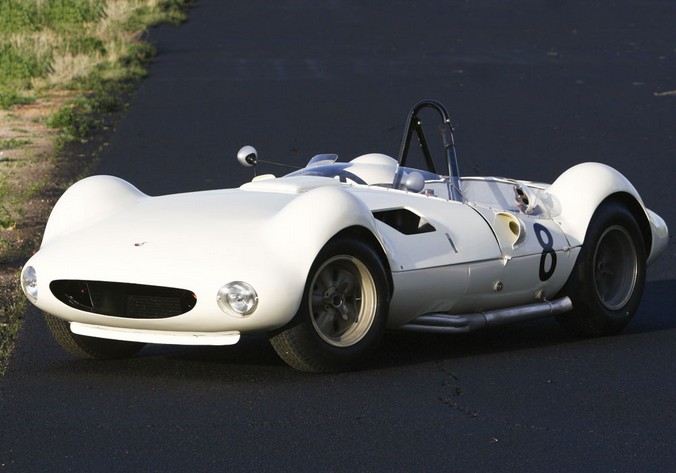
1961 Chaparral 1

Jim Hall’s Chaparral race cars are some of the most imaginative and forward-thinking cars ever built. A racing driver in his own right (he contested in the 1963 Formula One season), Hall had some money from his family’s oil business and paved his own path for racing success.

The Chaparral story starts with Dick Troutman and Tom Barnes, builders of racing cars in California (they were behind the Scarab) Jim Hall approached them and helped engineer a new race car called the Chaparral 1 that they were about to begin building. They built two for Hall and three for other customers. This car, serial #003, was the second car bought by Jim Hall. After success with this car, Hall would buy out the Chaparral name and make it his own, building cars under the Chaparral 2 name until 1980.

This car uses a 5.6-liter V-8 making 339 horsepower. The engine is housed in front of the driver, but behind the front axle, thus technically making it mid-engined. The competition history for this car includes:

  • 1962 12 Hours of Sebring – 6th (1st in class), with Hap Sharp, Ron Hissom, Chuck Daigh & Jim Hall
  • 1962 Road America 500 – 1st, Sharp & Hall
  • 1963 12 Hours of Sebring – 62nd (DNF), with Sharp & Hall

The car was sold to a privateer after the 1963 season and was raced through 1965. It was restored in 1997 and acquired by the present owner in 2004 who’s used it in historic races. Chaparrals aren’t generally cars you can buy – making this early example a rarity indeed. If a Chaparral is on your wish list, then now is the time. It is expected to sell for between $2,250,000-$2,750,000. Check here for more details and here for more from RM in Arizona.

Update: Did not sell, high bid of $1,750,000.

S/N: 003.

The Real McCoy

1956 Chevrolet Corvette SR Prototype

Offered by Mecum | Kissimmee, Florida | January 25, 2013

1956 Chevrolet Corvette SR Prototype

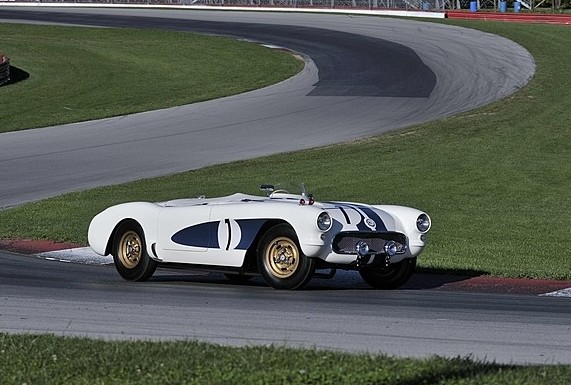
It seems like there’s always at least one more Corvette out there that will come along and smash price records for the model. This is one of those cars that has that opportunity. In all honesty though, I have no idea what it will bring – but it is a very important Corvette.

In 1955, Ford introduced the Thunderbird and it promptly walloped the Corvette, stealing a large portion of its sales. Zora Arkus-Duntov, the father of the Corvette, was afraid that GM was about to give it the axe and realized that the supposed sports car lacked any sort of sporting credentials.

So he and his team put together a special prototype – the car you see here – and fitted it with a 255 horsepower 5.0-liter V-8. He promptly took the car to Daytona Speed Week and set a world record for the Flying Mile at just a tick over 150 mph, obliterating the record. This happened just before the 1956 GM Motorama in New York City. It drew a lot of interest, but more had to be done.

Ed Cole, head of GM at the time, announced that Chevrolet would be attacking the 12 Hours of Sebring. Duntov felt strongly that the track was not safe and that the car would not be able to last, so Cole replaced him as a driver with John Fitch and partnered him with Walt Hansgen.

Ed Cole put three-time Indy 500 winner Mauri Rose in charge of the team and Rose selected legendary NASCAR mechanic Smokey Yunick to prepare the Corvettes for Sebring (there’s a lot of famous name dropping going on here, sorry). In all, Chevy entered four cars – three of which were 1955 bodies on 1956 chassis – and one special prototype – the car you see here.

Two of the Corvettes failed early in the race. Fitch had a clutch slipping on this car on the second lap but somehow this car managed to win its class and finish 9th overall. Corvettes never did much factory-backed racing (until the C5-R anyway) and this car was the first and it brought the brand its most important victory – one that would keep Corvette around for another 60 years.

When Chevrolet publicized the win, they referred to the car as “The Real McCoy” – which is what this car is known as today. It is full of one-off, custom-built-by-GM parts for racing and is one of the most important Corvettes in existence. And it is going to cross the block. Read more here and check out more from this sale here.

Update: Sold $2,300,000.

McKee Can-Am Racer

1965 McKee Mk IV

Offered by Russo & Steele | Scottsdale, Arizona | January 15-19, 2014

1965 McKee Mk IV

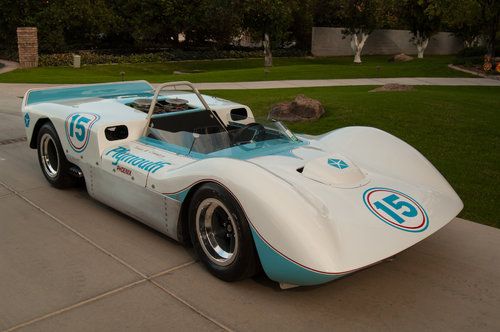
Can-Am was the coolest of race series. The rules were essentially: it must have two seats and four fenders. Other than that, anything goes. Unlike most racing series today, innovation was the key driver that bred some of the best race cars of all time (and ultimately killed the series).

McKee Engineering of Palantine, Illinois, was founded by Bob McKee. The company was one of very few in America producing road-racing sports prototypes in the 1960s. This car came about because NASCAR banned Chrysler’s Hemi engine for 1965 and Chrysler decided to sit Richard Petty out of NASCAR that year. They also figured that their Hemi would work well in a sports car, so they commissioned McKee to build this car for Petty to race in the coming Can-Am series.

Well the car was built but wasn’t ready to race until the end of 1965. Petty went back to NASCAR in ’66 and Phoenix, Arizona, Chrysler-dealer Bob Montana was given the responsibility to campaign this 7.0-liter V-8 powered monster. He raced it in USRRC and Can-Am between 1965 through 1967. In 1968, it competed in SCCA events and in 1969 it was retired.

It was parked for 35 years and restored in 2004 and the car has been invited to the Goodwood Festival of Speed and the Monterey Historics since. This is a really cool race car with a pretty interesting history. You can see more here and check out more from Russo & Steele here.

Update: Sold $260,000.

Jaguar C-Type

1952 Jaguar C-Type

Offered by Bonhams | London, U.K. | December 1, 2013

1952 Jaguar C-Type

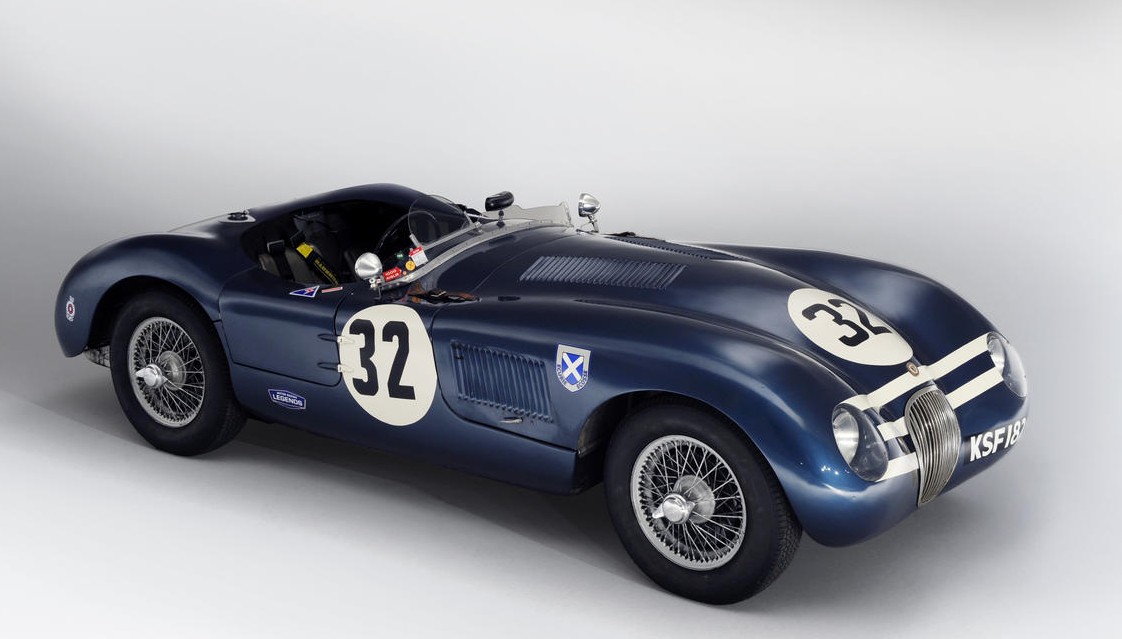
The C-Type was the first purpose-built racing car by Jaguar – although calling it a purpose-built racing car seems wrong, as these were entirely roadable as well. Jaguar did win Le Mans in 1951 with a C-Type (in its first attempt). It kind of set the tone for the next few decades of sports racing cars.

Based around the XK120s mechanicals, the C-Type uses a tuned version of the XK120s 3.4-liter straight-six. Horsepower output was around 205. The chassis and frame were different – this car used a lightweight frame and a sleek aluminium body.

This particular car was originally bought by the Scottish racing team Ecurie Ecosse – it was one of a handful of C-Types that the team would use. Highlights of its competition history include:

  • 1953 9 Hours of Goodwood – 5th (with Jock Lawrence & Frank Curtis)
  • 1953 1000km Nurburgring – 6th (with Lawrence & Jimmy Stewart)

After the 1953 season, David Murray, the founder and head of Ecurie Ecosse, sold the Jaguar to a privateer, who raced it around Europe. The car bounced between owners (and countries) for decades before becoming the backbone of this incredible Ecurie Ecosse collection in 1992.

It is being offered for sale by Bonhams, who call this (of all of the cars from this collection), the one that is “most pure” and “with the best provenance.” It can be yours for between $3,200,000-$4,800,000. Click here for more info and here for more from this sale.

S/N: XKC 042

Update: Sold $4,762,011.

Schumacher’s First Title Car

1994 Benetton B194 Ford

Offered by Bonhams | London, U.K. | December 1, 2013

1994 Benetton B194 Cosworth

The Benetton Formula One team began competing in the top tier of world motorsport in 1986. The team was founded by the Benetton family, owners of the Benetton fashion brand, when they purchased the Toleman team at the end of 1985. In 1991, they hired a young driver named Michael Schumacher who took the team to the pinnacle. Michael won his first two drivers championships with Benetton before departing for Ferrari.

Schumacher won his first title driving a B194 – winning eight races (half of them with this chassis), despite being disqualified from two races and banned from two more. It was a very controversial season to say the least. This car uses a Cosworth-built, Ford-badged 3.5-liter V-8. The race history of this car includes (but is not limited to):

  • 1994 San Marino Grand Prix – 1st (with Michael Schumacher)
  • 1994 Grand Prix of Monaco – 1st (with Schumacher)
  • 1994 Canadian Grand Prix – 1st (with Schumacher)
  • 1994 French Grand Prix – 1st (with Schumacher)

This car won four races with Michael en route to the season driver’s title. Benetton became Renault F1 for 2002 and Renault sold off many of the Benetton team cars that had been left behind. This one found its current home in 2008. A restoration was completed in 2010 and features the original 1994 Mild Seven livery. This is one important race car and it comes with a host of spares. No estimate is available, which is auction house code for “a lot.” You can read more here and check our more from Bonhams in London here.

S/N: B194-05

Update: Sold $1,009,281.

Tojeiro EE

1962 Tojeiro EE Buick Coupe

Offered by Bonhams | London, U.K. | December 1, 2013

1962 Tojeiro EE-Buick Coupe

Bonhams 2013 London sale has something amazing going for it: seven Ecuri Ecosse team cars and their famous team transporter are all being offered for sale. Let’s start with the team’s story…

Ecurie Ecosse – which is French for “Team Scotland” – was a Scottish racing team whose cars were always painted in this dark “Flag Blue Metallic” paint. The team was founded in 1952 by David Murray and Wilkie Wilkinson. They competed in Formula One, Formula Two and the 24 Hours of Le Mans – which they won, twice. The original team disbanded in the 1960s but their roster of former drivers is illustrious to say the least: Innes Ireland, Masten Gregory, Roy Salvadori, John Tojeiro and Jackie Stewart.

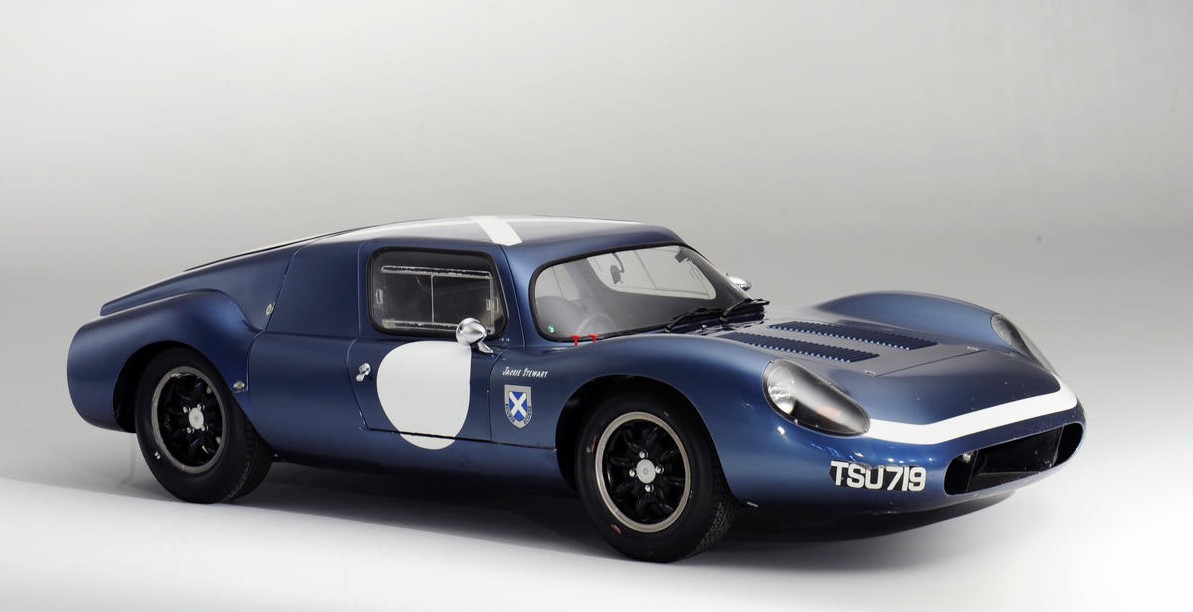
The last two have something in common: this car. The team had raced Jaguar D-Types in the 1950s and by 1962, they needed something new. So Murray met with Tojeiro, who had been designing his own sports racers for a few years, and had him build the team a new race car. The Tojeiro EE (for Ecurie Ecosse) was the result.

It was ready, literally, just in time for the 1962 24 Hours of Le Mans. It was Climax-powered for that race where it finished 38th (a DNF) with drivers Jack Fairman and Tom Dickson. For the 1963 British national sports car season, the team fitted a new aluminium-block 3.5-liter Buick V-8 making around 230 horesepower and hired a young man named Jackie Stewart to drive the car. He managed to win one race with it.

This car has been at Goodwood a few times in the past decade and is coming from an amazing Ecurie Ecosse collection. Only two of these cars were built (the other had a Ford V-8 the last time it was raced). This one should sell for between $290,000-$370,000. Click here for more info and here for more from this awesome sale.

Update: Sold $350,265.

Ferrari 250 LM

1964 Ferrari 250 LM by Scaglietti

Offered by RM Auctions | New York, New York | November 21, 2013

1964 Ferrari 250 LM by Scaglietti

The Ferrari 250 LM was the last Ferrari to win the 24 Hours of Le Mans. It was the car that Ford came along and knocked off the pedestal. The 250 LM, while built in the same era as the 250 GT road car, was unrelated and was more of a prototype race car than a variant of any road car.

This 250 LM is #24 of 32 built. It has been in a state of preservation for almost 40 years, following a “sympathetic” restoration in the mid-1970s. The car was sold new in California and used as a road car. The original owner sold it to the grandson of E.L. Cord in Beverly Hills. In 1968, it was purchased by some Ecuadorian racers who finally put this thing on the track. It’s competition history includes the following:

  • 1968 24 Hours of Daytona – 8th & 1st in class (with John Gunn, Guillermo Ortega, & Fausto Merello)
  • 1968 12 Hours of Sebring – c.59th, DNF (with Gunn, Ortega, & Merello)
  • 1969 24 Hours of Daytona – c.68th, DNF (with Merello, Edward Alvarez, & Umberto Maglioli)

After Daytona in 1968, the car went home with its owner to Ecuador where it competed in sports car races until 1974. The car was then sold and it went to England where it was lightly freshened after years on the circuit. In 1983, it moved to a collection in Japan. It is considered to be the most original 250 LM in existence.

The engine (which is behind the driver) is a 3.3-liter V-12 making 320 horsepower. This is a car worth millions of dollars (estimate $12,000,000-$15,000,000) and it’s one of the finest examples of its kind. Click here for more info and here for more from RM’s monster New York sale.

Update: Sold $14,300,000.

Ginetta G12

1965 Ginetta G12

Offered by Russo & Steele | Las Vegas, Nevada | September 26-28, 2013

1965 Ginetta G12

Ginetta has never sold cars in the U.S. They’re a British specialty that has been around since 1958 – and they’re still going strong making some really cool race cars. Most of their history has been split between road and race cars.

The G12 was a race-only car that debuted in 1965. It features a mid-engined layout and this one uses a Lotus-Ford 1.6-liter straight-four making 180 horsepower. This car was imported into the U.S. in 2001 as a rolling chassis. The engine has been added since.

The U.K. has a long history of lightweight cars that are very sporty on the track. My made-up comparison to this car is “picture a MG TC with the exhaust burble of a GT40.” That might be a tad bit extreme, but you may (or may not) get what I’m trying to say. These are just more hardcore than most British sports/road cars. And that’s probably because it’s a race car.

Only about 50 G12s were built. This car could bring in the $45,000-$75,000. Click here for more info and here for the rest of Russo & Steele’s auction lineup.

Update: Not sold.

A Scuderia Ferrari Alfa 8C-35 Grand Prix Car

1935 Alfa Romeo 8C-35 Grand Prix

Offered by Bonhams | Chichester, U.K. | September 14, 2013

1935 Alfa Romeo 8C-35 Grand Prix

Before Ferrari, Red Bull and McLaren there was Alfa Romeo, Mercedes-Benz, Maserati and Auto Union. The 1930s were a thrilling (and scary) time in Grand Prix racing and some of its all-time stars came from that era: Caracciola, Nuvolari, Rosemeyer, Varzi and more. And so did one other man: Enzo Ferrari. Scuderia Ferrari began as a race team in 1929 – becoming the Alfa Romeo factory team. It wasn’t until after the war that he started building his own cars.

This is a special, special car. It’s an 8C-35 – it uses a supercharged 3.8-liter straight-eight engine making 330 horsepower – quite a sum for 1935. This is an actual Scuderia Ferrari team car driven by Nuvolari (and more). The Ferrari-era history of this car is not known, but legend holds that Nuvolari won the 1936 Coppa Ciano with it. Toward the end of 1936, this car was sold to a privateer – Hans Ruesch, who raced it as often as possible. Some of his driving career in the car is as follows (including 3 European Championship – the precursor to Formula One – eligible races in 1937, as noted by asterisk*):

  • 1936 Donington Grand Prix – 1st (with Ruesch and Dick Seaman)
  • 1936 Mountain Championship at Brooklands – 2nd (with Ruesch)
  • 1937 South African Grand Prix – 4th (with Ruesch)
  • 1937 Grosvenor Grand Prix – 5th (with Ruesch)
  • 1937 Finnish Grand Prix – 1st (with Ruesch)
  • 1937 Grand Prix des Frontieres – 1st (with Ruesch)
  • 1937 Bucharest Grand Prix – 1st (with Ruesch)
  • 1937 German Grand Prix* – 8th (with Ruesch)
  • 1937 Monaco Grand Prix *- 8th (with Ruesch)
  • 1937 Swiss Grand Prix* – 15th, DNF (with Ruesch)
  • 1937 Mountain Championship at Brooklands – 1st (with Ruesch)

Ruesch sold the car in 1939 after much success (and a few major repairs). The car came into the hands of Dennis Poore during the war and he maintained the car for 40 years, using it in a fair number of events. It was sold at auction in 1988 and was restored to its 1930s-era look in the late-1990s. The current owner acquired it about 10 years ago and has used it in some historic events as well. This is the only surviving example of an 8C-35 and it should sell for between $8,600,000-$10,000,000. Click here for more info and here for more from Bonhams at Goodwood.

Update: Sold $9,511,542.

S/N: 50013