Offered by Bonhams | Chichester, U.K. | April 7, 2019
Photo – Bonhams
The Trumbull Motor Car Company of Bridgeport, Connecticut, was founded by brothers Alexander and Isaac Trumbull. They bought the rights to a cyclecar designed by Harry J. Stoops and put it into production in Connecticut in 1914.
Power is from an inline-four engine making 14/18 horsepower. Cyclecars gained a bad reputation in the US, so Trumbull found success overseas, selling 3/4 of their cars in Europe and Australia.
Sadly, Isaac Trumbull was aboard the Lusitania when it was torpedoed in 1915 – along with 20 Trumbull cars. After his death, the company was closed. This rare example should bring between $26,000-$33,000. Click here for more info and here for more from this sale.
Offered by Bonhams | Chichester, U.K. | April 7, 2019
Photo – Bonhams
There were a few Columbia-branded automobiles in the early days of motoring, including this car made by the Columbia Automobile Company of Hartford, Connecticut. Columbia was actually founded by Albert Pope, who built a number of other cars. They offered electric and gasoline-powered cars from 1903 through 1911, with a smattering of both available from 1897 and gasonline-only cars until 1913.
This 1908 model was wildly outdated by 1908 standards, carrying a body more appropriate for something from 1901. The Mark LXX Victoria Phaeton body was one of at least four body styles offered on Columbia’s electric motor-powered chassis in 1908.
Costing $1,600 when new, this car currently carries a pre-sale estimate of $39,000-$65,000. It’s a pretty rare example – and it sports white tires, which is always a plus. Click here for more info and here for more from this sale.
Offered by Osenat | Fontainebleau, France | March 23, 2019
Photo – Osenat
D’Yrsan was a manufacturer of small cyclecars that was founded in 1923 by Raymond Siran de Cavanac. The company built three and four-wheeled light cars and remained in business through 1930. They even entered a car in the 1929 24 Hours of Le Mans. It did not do well.
A 972cc Ruby inline-four is mounted up front and requires a hand-cranked start to get going. The car has chain drive powering the lone rear wheel. The bodywork is interesting, as the driver sits slightly forward of the passenger, and the rear of the car tapers to a nice point. Do not rear end this car, or you will be speared.
This example was sold new by the company’s British importer and was recently restored. Only 530 three-wheeled cars were built by D’Yrsan (and only 50 four-wheelers). This one actually looks really nice and should bring between $40,000-$50,000. Click here for more info and here for more from this sale.
Offered by RM Sotheby’s | Ft. Lauderdale, Florida | March 29-30, 2019
Photo Courtesy of RM Sotheby’s
This is the best Lotus. Okay, well it’s at least my favorite Lotus. And it’s in the best color, with the best wheels. The Esprit debuted in 1975 for the ’76 model year, and the above car is a Series 4 example – which was actually the fifth iteration of the model.
The S4 was built between 1993 and 2004, and damn if they aren’t just great-looking sports cars – especially in Yellow Pearl. In 1996, the company decided to stop screwing around with lousy four-cylinder engines and finally stuffed a 3.5-liter twin-turbocharged V8 in there. It was good for 350 horsepower. It could do 175 mph.
This 37,000-mile example carries a pre-sale estimate of $60,000-$70,000 – which seems steep – and it is one of 1,237 V8 models built. Click here for more info and here for more from this sale.
Offered by Osenat | Fontainebleau, France | March 23, 2019
Photo – Osenat
Emile Delahaye founded his car company in 1894 in Tours, France. The car we have here is one of the earliest Delahayes in existence and is believed to be one of the earliest Type 0 examples produced in 1898.
The Type 0 was available from 1898 through 1901, and 250 examples were produced. It is powered by a 1.4-liter single-cylinder engine making somewhere between five and seven horsepower. It was capable of 22 mph.
Only four examples of the Type 0 are known to exist, and this is the only one with this style of bodywork. Remarkably, the original owner is known, as is its history since, which included a long museum stay. That’s exactly what most cars of this era have become: museum pieces. It would be great if the next owner would get it out for vintage road rallies. It should cost between $115,000-$170,000. Click here for more info and here for more from this sale.
Offered by H&H Classics | Duxford, U.K. | March 20, 2019
Photo – H&H Classics
The Bristol 404 and 405 were a 2-door coupe or a 4-door sedan/2-door convertible, respectively. In 1958, they gave way to this, the 2-door 406 coupe. Naturally, it would be replaced by the 407 in 1961.
The 406 was the final Bristol to use the, by then, antiquated BMW-based 2.2-liter straight-six. While the engine was larger than in previous models, the power output was unchanged at 105 horsepower, which left the Bristol in the dust of most of its competitors. So the company had to make up for it in luxury and engineering. For instance, it was one of the first cars to receive 4-wheel disc brakes.
The 406 is not all that rare by Bristol standards, with a whopping 174 units produced in its short production run. This nice example is selling at no reserve. Click here for more info and here for more from H&H Classics.
Offered by Osenat | Fontainebleau, France | March 23, 2019
Photo – Osenat
Gardner-Serpollet was a car engineered by Leon Serpollet, an important figure in the pioneering days of the automobile. He invented the flash boiler and built steam cars under his name as well as under the Gardner-Serpollet name after joining forces with Frank Gardner, a wealthy American.
This early steam-powered Type F features a flat-four engine fed by a flash boiler running on kerosene. It has chain drive and will apparently cruise for 50-75 miles before… running out of steam. It looks remarkably ancient compared to this 1904 Gardner-Serpollet. A lot changed in terms of automotive design in only two years time.
Fun fact, Leon Serpollet was the first person to set a land speed record in a non-electric automobile. This particular car was not used for that feat, but it does have known history to 1959 and has been more recently restored. It should sell for between $225,000-$285,000. Click here for more info and here for more from this sale.
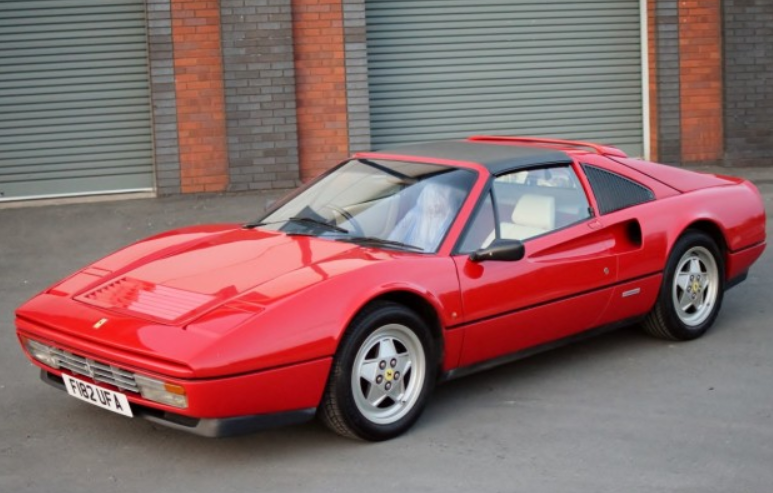
We stay in Britain for Brightwells’ Leominster sale where our lone feature car, the Jaguar XJS Monaco, failed to sell. The top seller was this 1989 Ferrari 328 GTS for $75,101. Click here for additional results.
Photo – Brightwells
Onward now to Amelia Island and Bonhams, where we featured a lot of interesting cars. Remarkably, only one of them didn’t sell according to Bonhams’ results: the 1910 Pope-Hartford that was supposed to be offered without reserve. Not sure what’s going on there.
Relative deals consisted of the $62,720 Columbus and the $60,480 Crow-Elkhart. A previously-featured 1904 Knox sold here for $252,000. Final results can be found here.
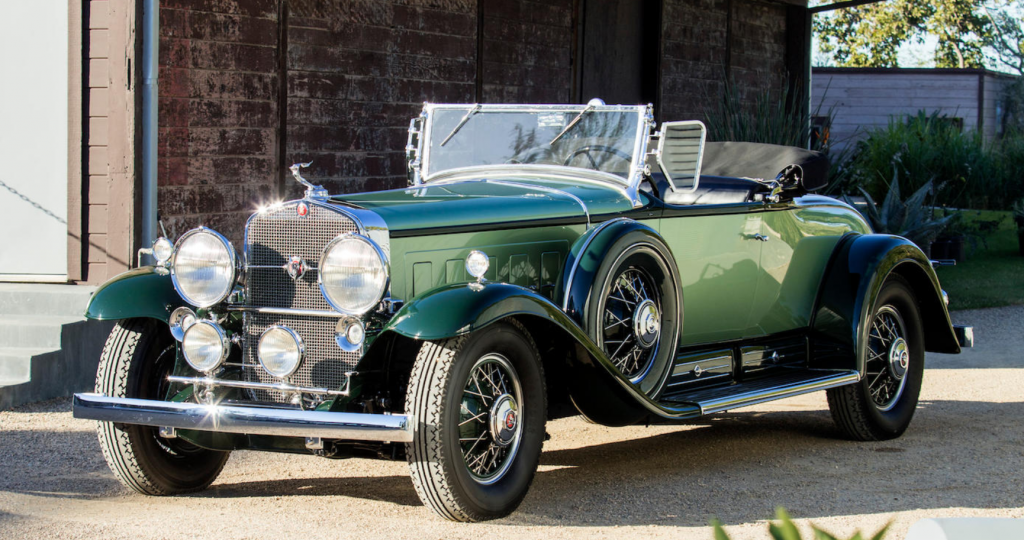
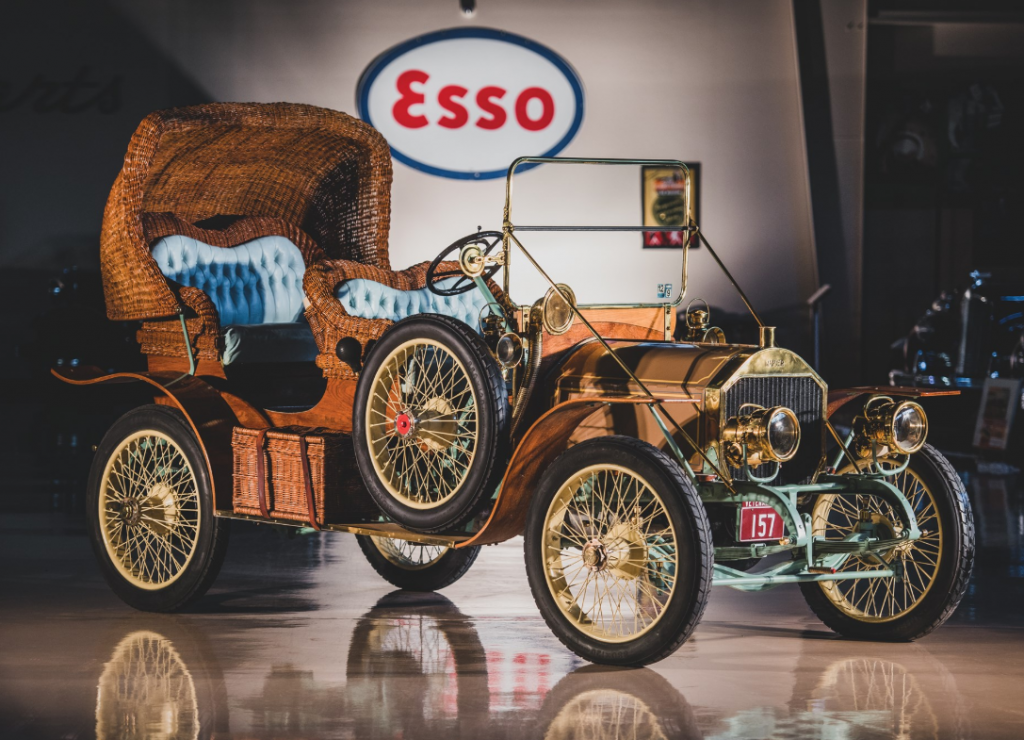
We also featured quite a few cars from the RM Sotheby’s sale in Amelia Island, including some we featured from past sales like this 1924 Isotta Fraschini, this V-12 Cadillac, this AAR Eagle – all three of which failed to sell. The big-dollar Bugatti failed to find a new home as well. The overall top sale was the 1930 Duesenberg we featured. It sold for $1,650,000. We will award Most Interesting to this wicker-bodied 1911 Napier 15HP Victoria that brought $156,800.
Of our feature cars, the OSCA 1600 GT sold for $489,000 and the Kurtis $263,200. A previously-featured Abarth 207/A went for $362,500. Click here for complete results.
Offered by H&H Classics | Duxford, U.K. | March 20, 2019
Photo – H&H Classics
The Imperial is one of Chrysler‘s classic nameplates. Last used on a kind-of-sad Y-body sedan in 1993, the name dates to 1926. Between 1931 and 1933, Imperials were the best product Chrysler had and rivaled the best from Cadillacand Lincoln. And for a little while, Imperial was a brand in its own right.
The 1937-1939 Imperial was produced in fairly limited numbers and in two distinct series. This five-passenger sedan model has an unknown production total, as sedan production between the Imperial, Saratoga, and New Yorker combined to total 10,536 units. It’s a C-23 series Imperial (the Custom Imperial C-24 cars were even more expensive and much rarer).
The 5.3-liter inline-six was good for 130 horsepower and a 95 mph top speed. This particular car was assembled as a knock-down kit in England and is said to be one of 16 right-hand drive examples built – and the only one remaining. It’s a big European version of a pre-war American sedan. It is being sold at no reserve. Click here for more info and here for more from this sale.
Offered by Bonhams | Goodwood, U.K. | April 7, 2019
Photo – Bonhams
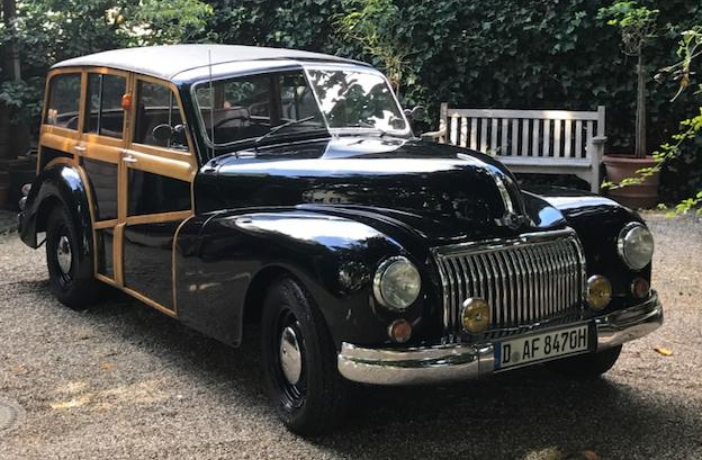
Geoffrey Miller of Cornwall, England was a craftsman who had earlier built his own motorcycle when he decided to build himself a station wagon. This is the result, and it is the only such example. Most homebuilt cars look, well, home-built. However, this has all of the look of a series production car from 1950s England.
Somewhat Allard-like in its appearance, the four-door woodie wagon is powered by a 2.9-liter Austin-Healey straight-six. He used some production parts that were readily available but is said to have actually done the body and woodwork by hand.
With only three owners since new – including its creator – this is the time to get it if you want a car that is an original design. It’s quite interesting and should bring between $59,000-$72,000. Click here for more info and here for more from Bonhams.