Peugeot Darl’Mat

1938 Peugeot 402 Darl’Mat Special Sport

Offered by Bonhams | Paris, France | March 3, 2021

Photo – Bonhams

Here’s a car I’ve wanted to feature for years. For a while, about a decade ago, these were popping up for sale right and left. And then the trail went cold. Spoiler alert: the current owner of this car bought it in 2012, which aligns with my timeline.

Let’s start with the 402, which was Peugeot’s large family car produced between 1935 and 1942. About 75,000 were built. Most were factory sedans, but there were plenty of aftermarket coachbuilt versions as well.

Some of those were cars built for Parisian Peugeot dealer Emile Darl’Mat. Darl’Mat obtained permission from Peugeot to commission a run of sports cars to celebrate Peugeot’s history at Le Mans. Marcel Pourtout’s company was brought in to body the cars, which were initially based on the smaller 302 chassis. Production shifted to the 402 before too long, which offered a larger, 2.0-liter inline-four rated at 55 horsepower. All of them were streamlined French masterpieces.

This car is one of 53 Darl’Mat roadsters built, and an additional 20 coupes and 32 convertibles were also made. Only about 30 survive. Darl’Mat’s vision of a sporty Peugeot really took off when his namesake cars ended up running well at Le Mans in 1937 and 1938.

The pre-sale estimate on this car (400233) is $430,000-$670,000. Click here for more info and here for more from this sale.

Update: Not sold.
Alpine GTA V6 Turbo

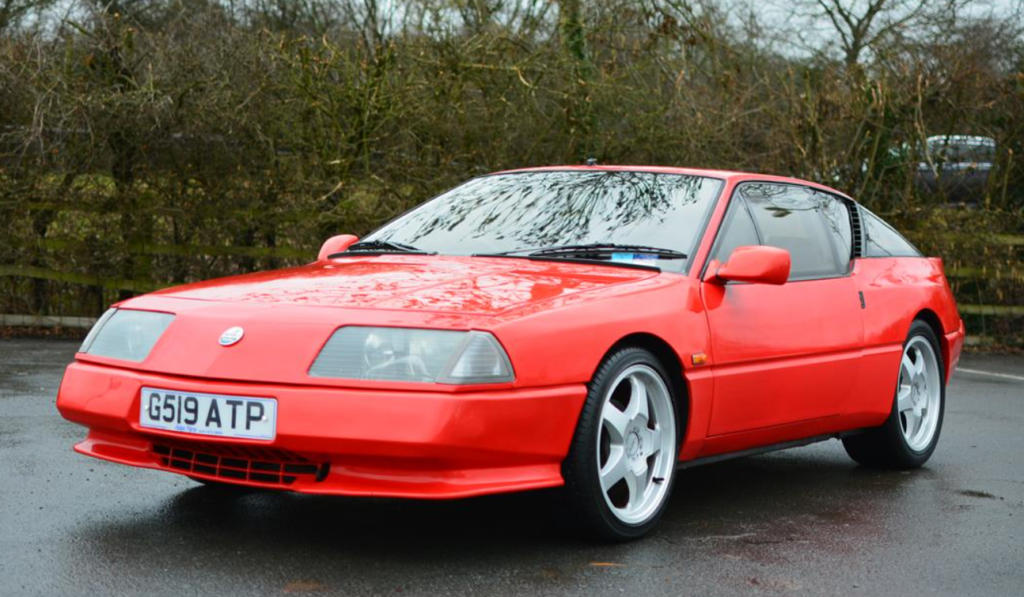
1990 Renault Alpine GTA V6 Turbo

Offered by Brightwells | Online | February 13-18, 2020

Photo – Brightwells

The GTA was the first “Alpine” that was technically branded as a Renault product. Alpine become the model, as this was the first new Alpine model launched after Renault acquired Jean Rédélé’s company in 1973. The GTA went on sale in 1985 and was built through 1991.

There were a number of different sub-models offered, including a base, naturally aspirated version. There was also a Le Mans model, an example of which we have featured before. By 1990, the car had been fitted with power-robbing emissions equipment, and this V6 Turbo model is powered by a, you guessed it, turbocharged 2.5-liter V6 rated 182 horsepower. Sixty arrived in seven seconds, and the car topped out at 151 mph.

This car has aftermarket wheels that make it look like a Venturi, and it is expected to sell for between $10,000-$13,000. Click here for more info and here for more from this sale.

Update: Sold $10,931.

De Sanctis Formula Junior

1958 De Sanctis Formula Junior

Offered by RM Sotheby’s | Online | February 19-26, 2021

Photo Courtesy of RM Sotheby’s

Gino De Sanctis was a Fiat dealer in Rome who decided in the late 1950s that he wanted to start building race cars. This decision coincided with the launch of the Formula Junior class in 1958. It was an entry-level open-wheel class using parts from regular production cars.

In this case, De Sanctis used a 1.1-liter Fiat inline-four from an 1100/103. Power was rated at 72 horsepower, and the engine was mounted behind the driver. The car features a tubular spaceframe, a four-speed manual gearbox, and a coil-sprung front suspension.

This is the fifth De Sanctis car built, and it was used by its first owner for two seasons of the Italian Junior Championship before heading to a racing school until 1973, when it was purchased by the current owner. The final De Sanctis cars were built in 1970. You can read more about this one here and see more from this auction here.

Update: Not sold.

Lancia 2000 Sedan

1972 Lancia 2000 Sedan

Offered by Anglia Car Auctions | Online | Feburary 27-28, 2021

Photo – Anglia Car Auctions

Today, the barely-alive Lancia only produces badge-engineered versions of cars from other manufacturers, namely, Fiat (they’ve only made one model since 2016). You might think that this car was the start of it all, but it isn’t. It was actually designed by Lancia before they were taken over by Fiat.

The car was production-ready in 1969, the same year Fiat took control of the brand. It was never supposed to go on sale because it was expensive to build, but once Fiat realized Lancia had nothing else in the hopper, they launched it anyway in 1971. Production would continue through 1974. Both sedans and coupes were offered.

I actually quite like the look of the sedan, which is powered by a 2.0-liter flat-four (weird, right?) that made 126 horsepower when fuel injected. The injected engine, which this car has, also got an extra speed in the gearbox for a total of five. Only 14,319 sedans were built, and this 66,000-mile example should sell for between $11,000-$14,000. Click here for more info and here for more from this sale.

Update: Sold $34,378.

Leyland Mini

1978 Leyland Mini

Offered by Shannons | Melbourne, Australia | February 23, 2021

Photo – Shannons

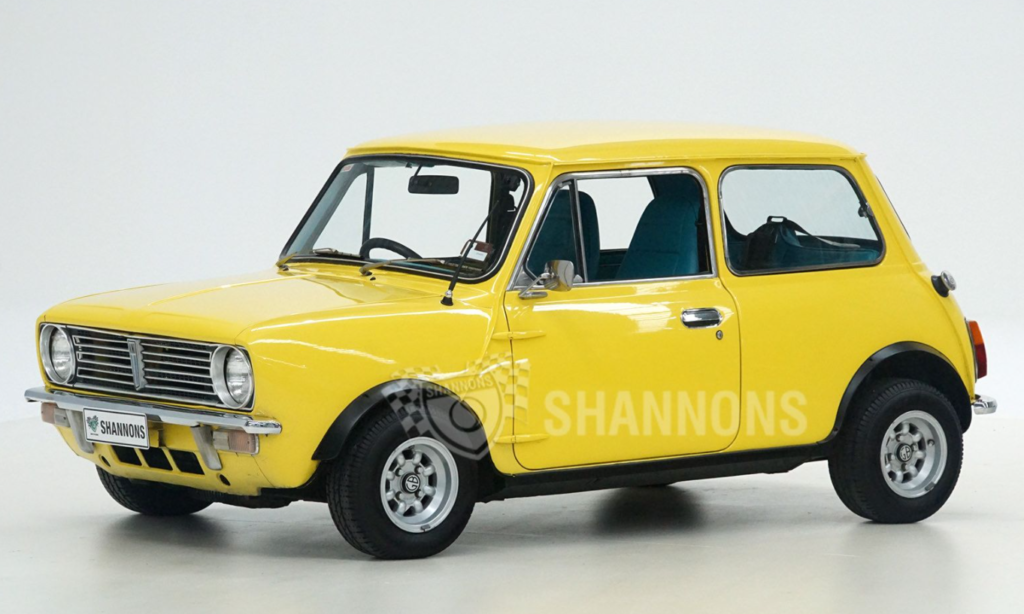
Dorky watermark alert. So what do we have here? First, Shannons’ write-up says that the Leyland Mini dropped the Clubman name after 1973. Yet they list this 1978 model as a Mini Clubman. I left it off.

What we do know for sure is that Leyland is the marque. The original Mini was sold under a number of different marques throughout the world, including Austin, Morris, Innocenti, Authi, Mini, and, down under, Leyland. The Leyland Mini was produced in Australia between 1973 and 1978.

This one is powered by a 1,275cc inline-four sourced from a European Cooper S model. This isn’t a version of the Mini seen very often, especially outside of Australia, where this one is located. It should sell for between $9,000-$11,000. Click here for more info and here for more from this sale.

Update: Sold $7,744.

Alfa 1600 Junior Zagato

1973 Alfa Romeo 1600 Junior Zagato

Offered by Mecum | Glendale, Arizona | March 18-20, 2021

Photo – Mecum

It may not look like it, but this is actually part of the same series of Giulia/Sprint/GTVs cars such as this one. But the styling is radically different, which is where the “Zagato” part comes in. Alfa’s 105/115 Series of coupes went on sale in 1963 with the Giulia Sprint GT, and the general styling would continue on through 1976’s GT 1300 Junior.

Zagato applied their boxy-yet-aerodynamic bodywork to two cars in the series, including the 1600 Junior Z seen here (there was also a 1300 version, although it was just called the “Junior Zagato”). This one is powered by a 1.6-liter Twin Cam inline-four rated at 108 horsepower. Top speed was 118 mph. The 1600 Junior Z was actually based on the floorplan of the Alfa Spider 1600, and it went on sale in 1972.

Only 402 were built through 1973, although sales continued through 1975. This is one of 12 known to be the U.S., and you can read more about it here. See more from Mecum here.

Update: Sold $52,800.

2002 Turbo

1974 BMW 2002 Turbo

Offered by Mecum | Glendale, Arizona | March 18-20, 2021

Photo – Mecum

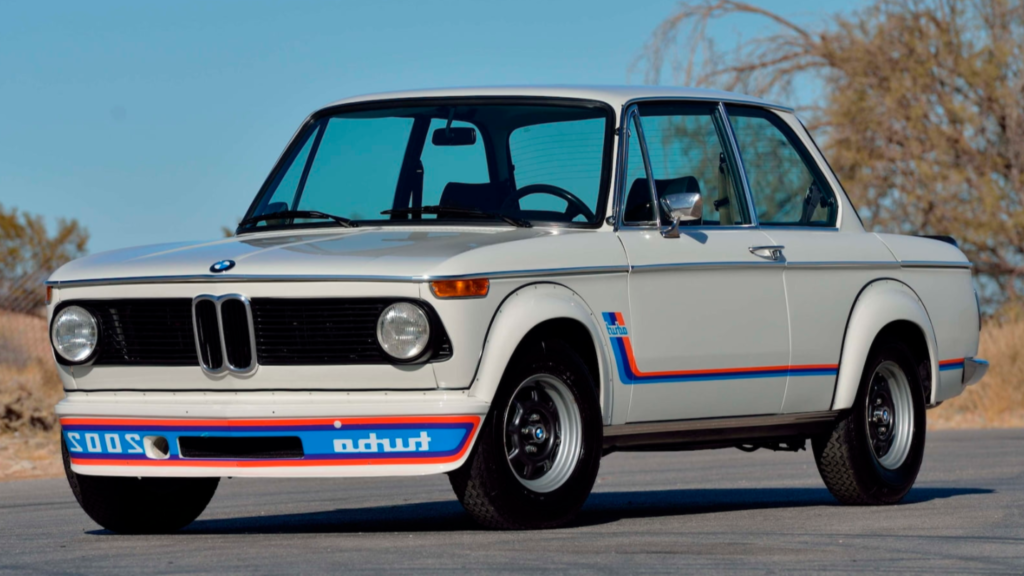
This site doesn’t feature too many post-war German cars, but people love BMW’s 2002. The name was a little short-sighted, but I guess they never imagined having to try and Google “BMW 2002” only to get a ton of results for 2002 325Cis.

The 2002 was mixed in with a number of other visually similar but mechanically different models, including the 1602, 1802, 1502, 1600, and 1800. The 2002 went on sale for the 1968 model year and would be offered in base, cabriolet, ti, and tii forms through 1976. There was one model that topped all of those, and it was the Turbo, which was sold between 1973 and 1975. Only 1,672 examples were produced.

It was BMW’s first turbocharged production car and features a turbocharged, fuel-injected 2.0-liter M10 inline-four rated at 168 horsepower. Top speed was 130 mph. The Turbo is easily the most sought-after 2002 variant, with prices that can easily climb into the six figures. Check out more on this one here, and see more from Mecum here.

Update: Sold $154,000.

Lamborghini Espada

1976 Lamborghini Espada Series III

Offered by Historics Auctioneers | Ascot Racecourse, U.K. | March 20, 2021

Photo – Historics Auctioneers

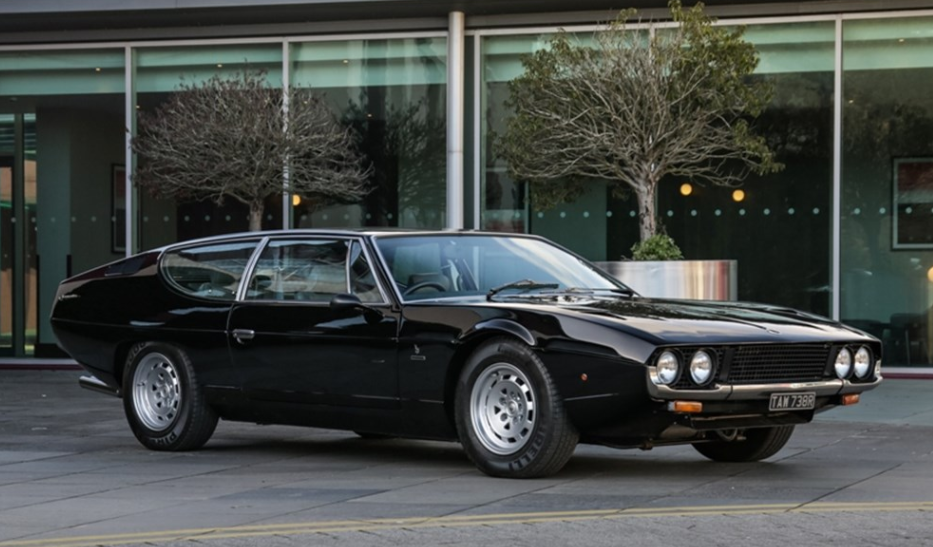
The Lamborghini Espada is an interesting car. They’ve never been as valuable as any other 1960s Lambo, and they feature a pretty polarizing design. It is kind of like someone smashed a Murena GT, an Iso Lele, and DeTomaso Mangusta into one four-seat, front-engine GT.

This rear-wheel-drive car is powered by a 3.9-liter V12 that was rated at 350 horsepower when new. The Espada was built in three different series between 1968 and 1978, with the Series 3 launching in 1972. Only 456 S3 cars were built, but they seem to be the ones that crop up most often (the S2 cars were actually more common).

This one has been restored and is finished in black. Some Espadas wear some pretty wild colors, so this one looks pretty restrained. The pre-sale estimate is $155,000-$175,000, which is expensive, but not Miura expensive. That said, this is not a cheap car to own. You can read more about it here and see more from this sale here.

Update: Sold $138,417.

Fiat 600 Rendez Vous

1959 Fiat 600 Rendez Vous by Vignale

Offered by RM Sotheby’s | Paris, France | February 13, 2021

Photo Courtesy of RM Sotheby’s

The Fiat 600 was introduced in 1955 and would remain in production until 1969. It was the basis for Fiat’s 500 and was available as a two-door fastback and a mini-MPV called the Multipla. They built over 2.5 million of them. But this example is no ordinary, somewhat-dumpy Fiat 600.

The famed Italian coachbuilder Vignale decided that they wanted to take this near-microcar and make it look like a fancy, two-door coupe. Its classy looks make it look a lot bigger than it is, and it isn’t made clear if this car has a 633cc inline-four or the 767cc version. In either case, the engine is mounted out back.

Fewer than 20 of these “Rendez Vous” cars are thought to have been produced, and this one was restored less than 300 miles ago. You can read more about it here and see more from this sale here.

Update: Not sold.

Pilgrim Family Tourer

1980 Pilgrim Family Tourer

Offered by Brightwells | Leominster, U.K. | February 13-18, 2021

Photo – Brightwells

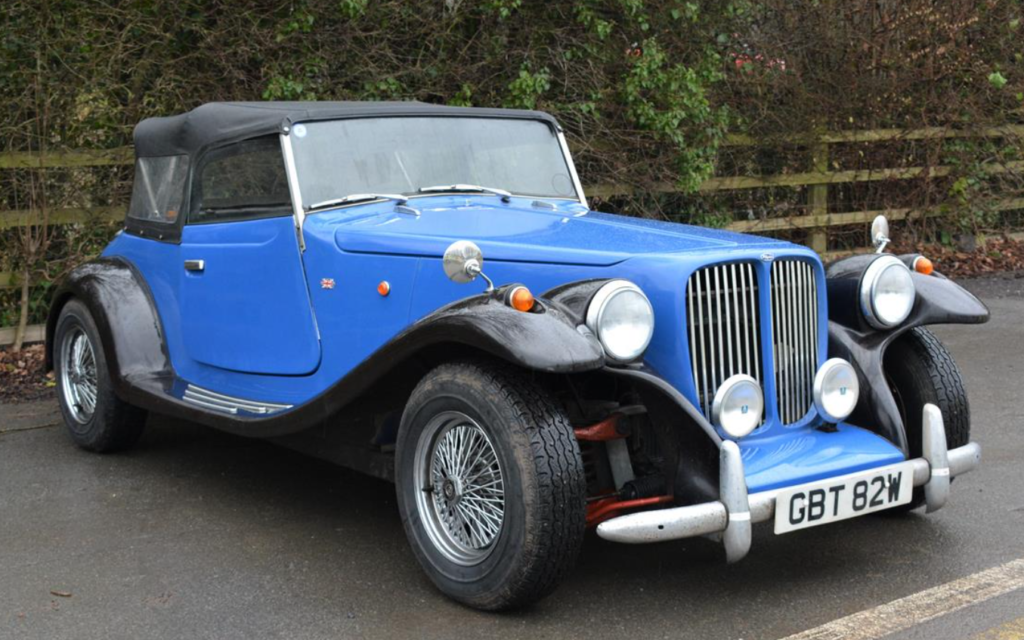
Pilgrim Fiberglass was founded in 1985 in Brighton, England, by Den Tanner and Bill Harling. The company is still around, having outlasted early models like this to become one of the most prolific Cobra kit car manufacturers in the world.

Their first two models were the Bulldog, which was introduced in 1985, and the Family Tourer, which went on sale in 1989. The Family Tourer was essentially a four-seat version of the Bulldog and largely shared its 1950s MG-inspired styling.

The basis for the car was actually the fifth-generation of the Ford Cortina. This is based on a 1980 model, hence the model year listed above, even though it was built in 1992. It’s powered by a 1.6-liter inline-four and features a steel backbone chassis. Only about 250 Family Tourers were built, and this one will sell at no reserve. Click here for more info and here for more from this sale.

Update: Sold $4,398.