Offered by Artcurial | Grezillac, France | September 27, 2020
Photo – Artcurial
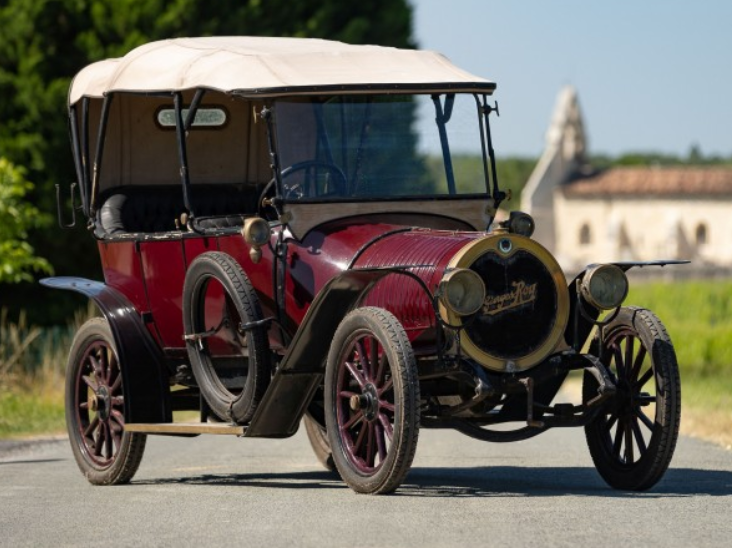
Automobiles Georges Roy was founded in Bordeaux in 1906. They started out with single-cylinder cars and steadily worked their way up to sixes. The company was popular enough locally that it was able to survive for a few decades.
Passenger car production wrapped in 1929, and truck production continued on through 1932. This Type O Torpedo features a cylindrical engine compartment and circular radiator grille. Power is from a 2.2-liter inline-four.
The car actually appears quite large from the angle shown above, but its side-profile proportions make it seem much smaller. This is a rare touring car from a company not often represented at public sale. Seldom used in the last few years of museum duty, this car is offered with an estimate of $16,000-$21,000. Click here for more info and here for more from this sale.
Offered by Brightwells | Online | September 21, 2020
Photo – Brightwells
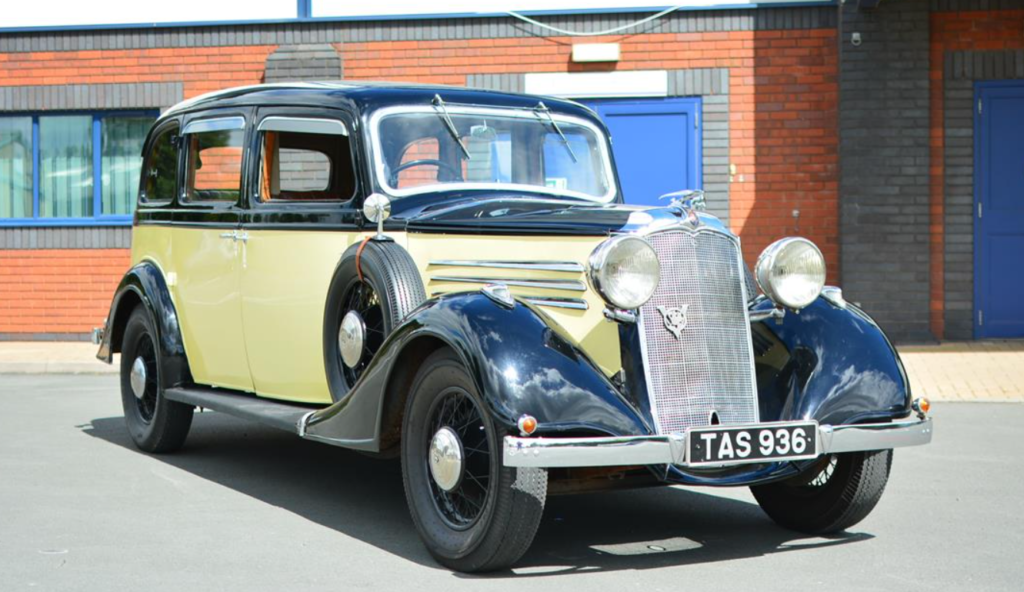
The creatively-named “Big Six” was Vauxhall’s big six-cylinder car that was offered between 1934 and 1940. The model was actually updated midway through its life cycle, and the second generation of the car went on sale in 1937.
The BX/BY, or first, series of the Big Six spawned a third variant: the long-wheelbase, coachbuilt BXL. This example carries a limousine body by the Grosvenor Carriage Company of London. Power is from a 3.2-liter inline-six that could push the large car to 72 mph.
Only 796 examples of the BXL were built, and this is one of nine known to still exist. It’s got suicide rear doors and a luxurious rear passenger compartment. The pre-sale estimate is $15,000-$18,000. Click here for more info and here for more from this sale.
Offered by Mecum | Las Vegas, Nevada | November 12-14, 2020
Photo – Bonhams
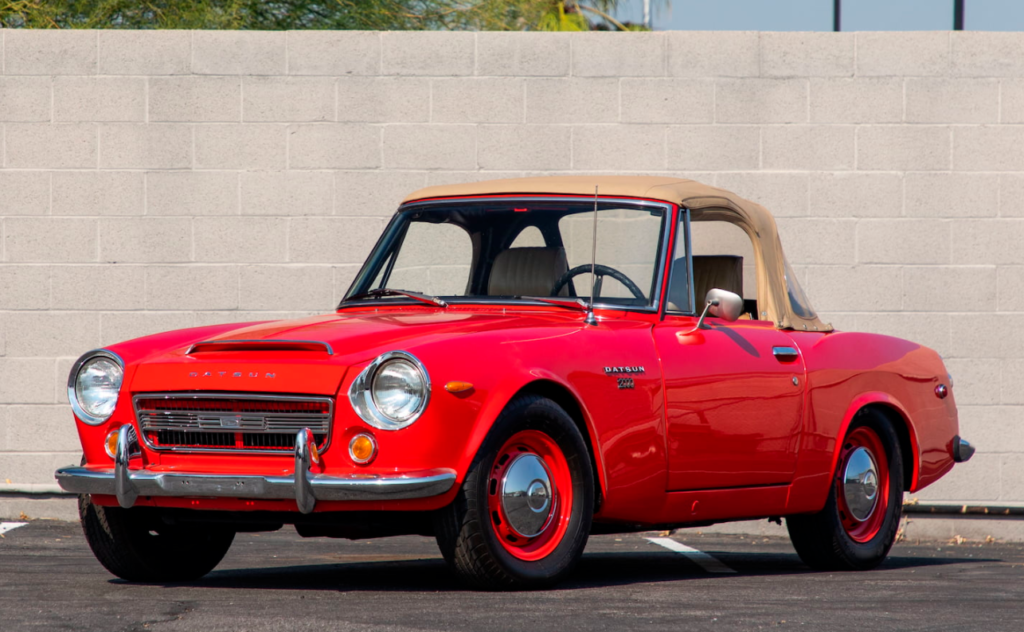
The Datsun Fairlady (or Sports) was a series of sports cars that preceded the “Z” line of cars that remains in production today. The series began in 1959 with the ultra-rare Sports 1000 and continued in rarefied form until the 1965 launch of the 1600 Roadster. This was when they started appearing in the United States.
In 1967, the 1600 was replaced with the 2000 Roadster, which was the pinnacle of this line of cars. It would eventually be dropped in favor of the 240Z in 1970. Power is from a 2.0-liter U20 inline-four generating 133 horsepower.
These are great little cars, and affordable too. I chose this one because I feel this is how they are supposed to look: with color-matched steel wheels wearing polished hubcaps. The tan soft top doesn’t hurt either. I feel like this one was transported here from a Yokohama back road from 50 years ago. Click here for more info and here for more from this sale.
It never even really occurred to me that sporting coupes were available on this relatively large chassis. But I guess since they could pull it off on Duesenbergs, so why not. The H6B is powered by a 6.6-liter inline-six good for 135 horsepower.
This car debuted at the Olympia Motor Show in 1926 carrying coupe bodywork from Hooper. It was a show winner at many early Concours events, and it was re-bodied later on with this Park Ward coupe body that was originally attached to a 6.5-Litre Bentley. It’s a great adaptation and is said to be similar to the original Hooper body. The pre-sale estimate is $450,000-$520,000. Click here for more info and here for more from this sale.
Offered by RM Sotheby’s | Online | September 16-25, 2020
Photo Courtesy of RM Sotheby’s
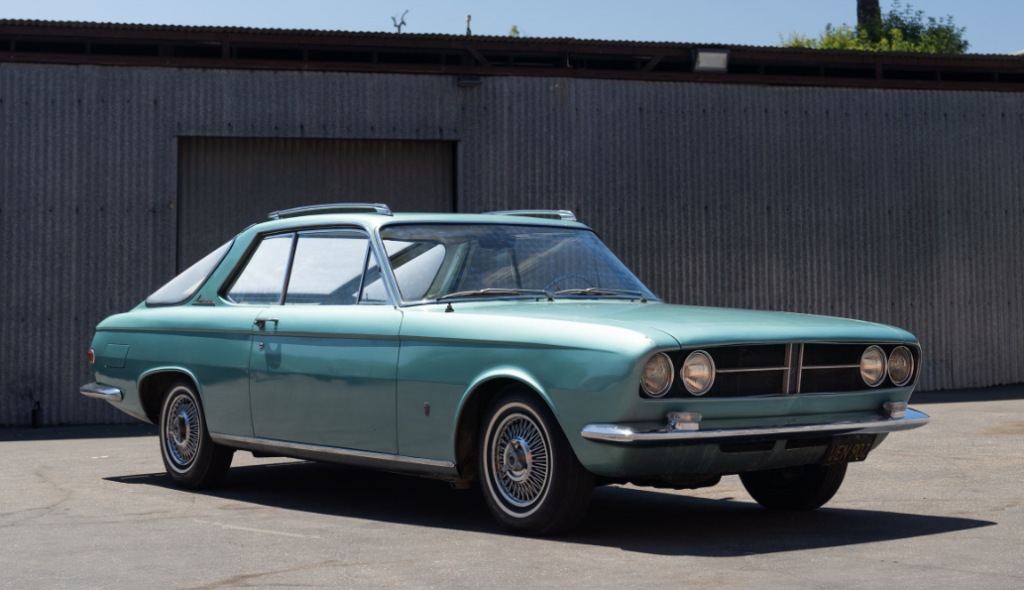
Here is another coachbuilt example of something American you wouldn’t expect to have landed in the hands of an Italian design house. Ford and Ghia have partnered on quite a few show cars over the years, and Ford has actually had a stake in Ghia since 1970. But in the 1950s, Ghia was Chrysler’s turf. That all started to change about the time that this fastback Falcon appeared in 1964.
The car was built on a 1963 Ford Falcon Sprint chassis. It retained the Sprint’s 164-horsepower, 4.3-liter (260ci) V8. Ghia added the fastback body style that RM correctly notes as sort of predicting the upcoming Plymouth Barracuda.
It’s a neat-looking thing, but it somehow makes the relatively ho-hum Falcon appear just as ho-hum, yet even more of the period. I would have totally believed this was a factory body style if I didn’t already know it was a one-off. It’s expected to fetch $40,000-$75,000 (in other words, they have no idea what it’s worth). Click here for more info and here for more from this sale.
We start near the end of August with Shannons where the Australia-only Statesman sold for $21,486. The top sale was this 1972 Porsche 911E coupe that brought $224,695… which seems like a lot. More results are available here.
Photo – Shannons
Mecum had a sort of Kissimmee bonus sale trying to make up for a bunch of canceled events (hey, you can do anything you want in Florida, pandemic or not). This 2018 Ford GT topped the charts at $935,000.
Photo – Mecum
The Nash Statesman (another Statesman, really?) we featured brought $19,800. Click here for complete results.
Finally, for August, was Dorotheum’s sale in Austria. The top sale here was this 1973 Dino 246 GTS for $521,053. We wrote up a few cars from this one, and the Austro-Adler led the way at $149,515.
Photo – Dorotheum
The Glas 1300 Cabriolet sold for $81,747, and the early BMW brought $23,843. The Tatra went for $20,436, and the Steyr-Fiat brought up the rear at $8,174. Click here for more results.
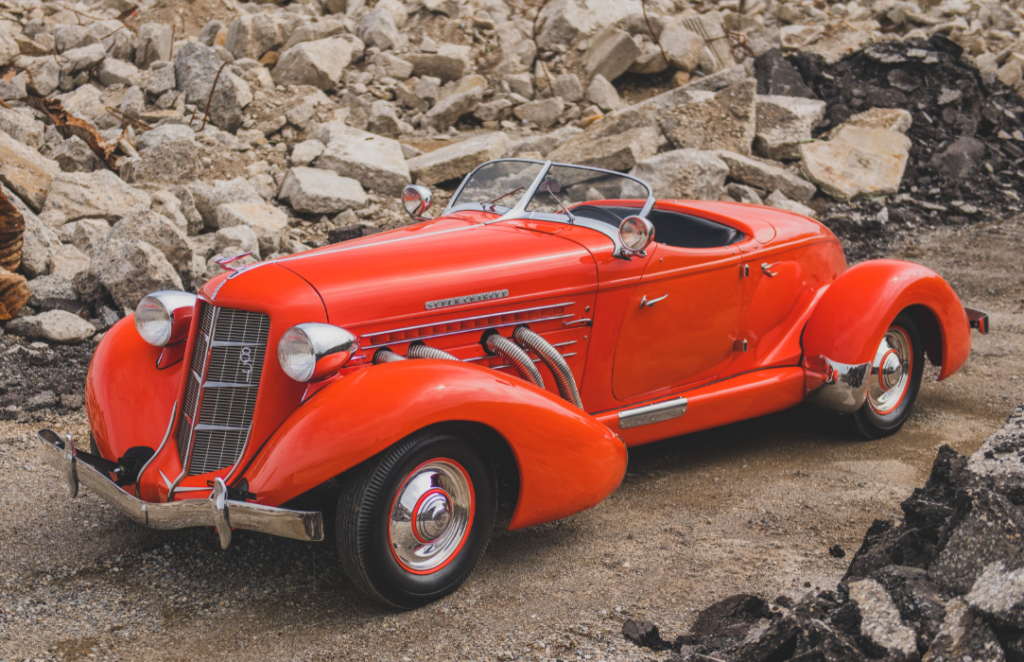
Another sale, this one in early September, that we featured quite a few lots from was RM’s Auburn sale. Three of those cars were among the top four highest sales: the Duesenberg ($632,500), the Kurtis 500B ($550,000), and the Epperly-Offy ($407,000), but the biggest money was reserved for this 1935 Auburn Eight Supercharged Speedster. It brought $770,000.
Photo Courtesy of RM Sotheby’s
The other Kurtis, the 500E, sold for $68,200, and the Murena GT went for $41,250, which, for its rarity, seems like a helluva deal. It was actually consigned to their Palm Beach sale, but the entire collection it came from got shifted to this sale instead.
$18,150 would’ve brought home a fairly original Franklin Airman sedan, while a check for $17,600 ended up being good enough for a 1922 Studebaker. The fact that I could’ve had this Chalmers for $10,725 is upsetting. The Moskvitch brought $5,225, and the CitiCar $2,200. Click here for final results.
To wrap up this rundown, we head down the street to Worldwide Auctioneers’ Auburn sale. The only car we featured from this one was the Faraday Future prototype, which appears to have been withdrawn. Womp womp. You can look at more from this sale here.
Offered by RM Sotheby’s | Online | September 16-25, 2020
Photo Courtesy of RM Sotheby’s
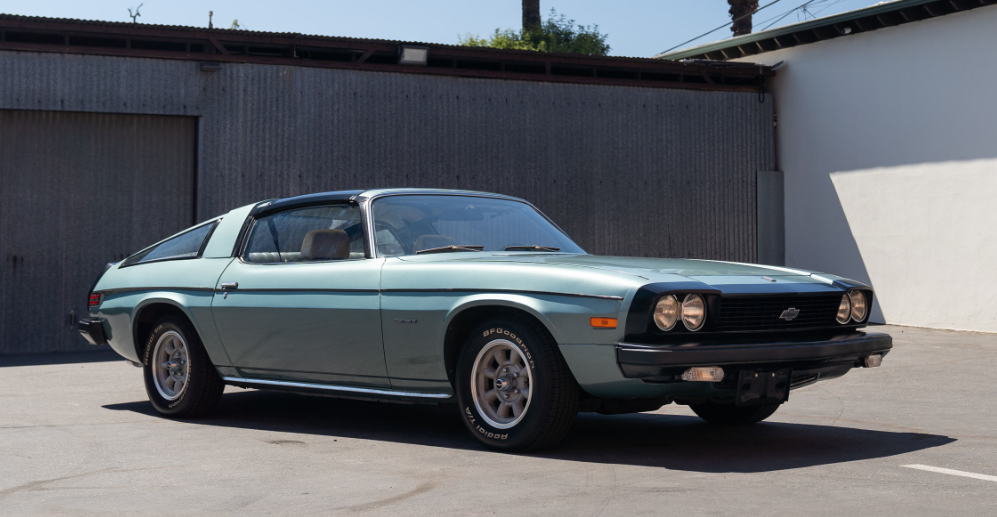
The second-generation Chevrolet Camaro was in production for an eternity: 11 years between 1970 and 1981. Even by 1976, it was kind of long-in-the-tooth. And it was weak. The most powerful ’76 Camaro had the same 165 horsepower, 5.7-liter V8 that this car has. It was a long way from the ZL-1 (from only seven years earlier!).
One way to spice things up would be to let an Italian coachbuilder get their hands on one. In this case, it was Pietro Frua, who debuted his take on the Camaro at the 1976 Turin Motor Show with this car. It was later shown at 1977’s New York show, where the company displaying it said they were going to offer conversions of standard Camaros to look like Frua’s. They were going to call them the “Europo Hurst.”
It is unclear if any were actually made. I think this is actually an okay-looking car, and it’s definitely something different compared to what else was on sale in 1976. It is expected to bring between $80,000-$120,000 when it sells at no reserve. Click here for more info and here for more from this sale.
For Sale by Dragone Classic Motorcars | Orange, Connecticut
Photo – Dragone Classic Motorcars
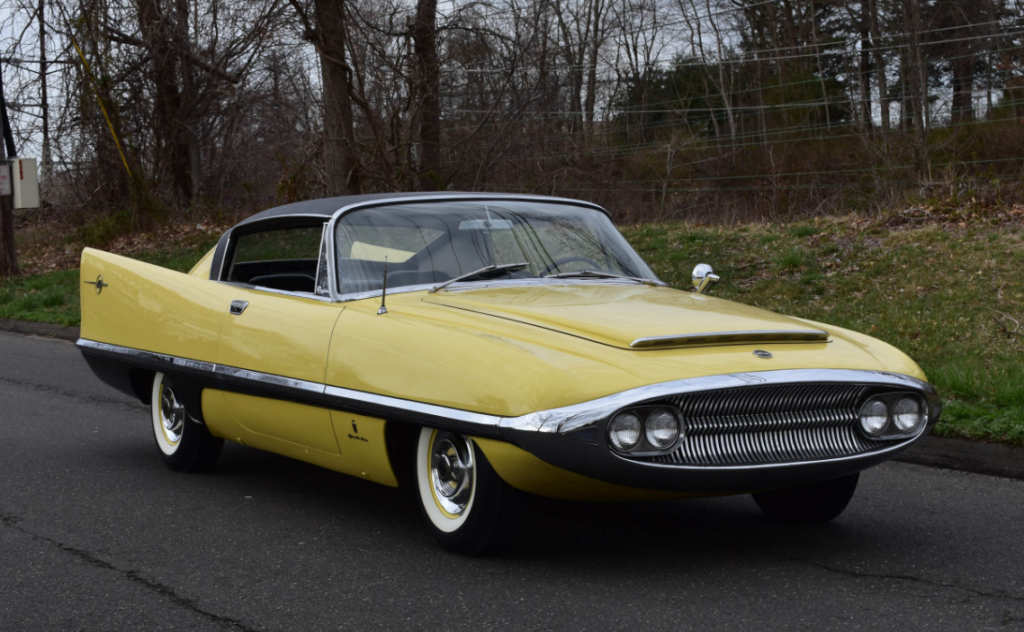
This is a car with quite a few names. I’ll start at the beginning, and you can draw your own conclusions as to what it should be called (I just went with what the dealership selling the car calls it). The Ghia and Chrysler connection of the 1950s is well documented. Chrysler spent a lot of money designing fanciful show cars in the ’50s, with styling done by Ghia (well, styling by Exner, execution by Ghia).
Ghia showed a prototype dubbed “Gilda” in 1955. Then there was Dart concept was styled by Exner in 1956, and a second version called the Diablo also appeared in ’56. Then, in 1957, Ghia showed another evolution, called the Superdart. It was reportedly created for Chrysler, but there doesn’t appear to be any Chrysler badging on this car.
Power is from a 400 horsepower Hemi V8, and the car rides on a Chrysler 300C chassis. It debuted at the 1957 Turin Motor Show and later ended up in the U.S., where it was purchased by Dual Motors, who showed the car as a Dual-Ghia prototype. Most of the internet seems to just call this car a 1958 Dual-Ghia Prototype. Which is what it was last shown as. But it’s not what it was called originally.
A private owner purchased it shortly after Dual-Ghia’s 1958 New York show appearance and actually put nearly 40,000 miles on it over nearly two decades. It’s said to be original and unrestored. Be it a Chrysler, a Ghia, or a Dual-Ghia, it remains as a fantastic piece of ’50s styling excellence. It’s for sale in Connecticut with no price listed. Click here for more info.
Offered by Bonhams | Bicester, U.K. | September 20, 2020
Photo – Bonhams
I credited Bonhams on the above photo, but I doubt they want to be associated with such terrible photography. This little blue blob was produced by Cico S.A. of France to take advantage of France’s sans permis laws enacted in the 1970s in response to the fuel crisis.
Basically, they were small, sub-50cc cars that could be driven without registration or a license. They had to hold two people and not have a top speed in excess of 45 kph. You just had to be 14 in order to drive it on the road.
These go by different names. Bonhams lists this as a “Matic 50” and elsewhere you’ll find it called an LCS. Power is from a 49.9cc (just under the law) two-stroke single from Motobecane that makes 3.2 horsepower. They were produced between 1971 and 1983, and the top speed was right at the legal max: just under 28 mph. This one is estimated to sell for between $1,300-$3,900, and if the reserve is even the lower end of that estimate, it will be a stretch for this car to sell. Click here for more info and here for more from this sale.
Offered by Bonhams | Brussels, Belgium | September 6, 2020
Photo – Bonhams
One of the grand French “Ds”, Delaunay-Belleville was one of the more expensive options when shopping for a French car, pretty much from their inception in 1904 on into the 1920s. The P4B was introduced in 1922 and would last until 1927, which was about the time the company started to fade away.
It is powered by a 2.6-liter inline-four, and the car retains the company’s signature circular grille, although by this point it was more of an oval. Though a two-door, this car is likely larger than it looks and has sort of a Bugatti-ish feel when looked at from the front.
Delaunay-Belleville cars were expensive when new and were not sold in the largest of numbers. They remain rare today – and expensive. This car carries an estimate of $71,000-$94,000, which is significantly cheaper than other cars from this marque that we’ve featured. Click here for more info and here for more from this sale.