Intermeccanica Omega

1967 Intermeccanica Omega

Offered by Bonhams | Scottsdale, Arizona | January 16, 2014

1967 Intermeccanica Omega

Intermeccanica is/was a sports car manufacturer from Italy. While they produce mainly replicas today (in Canada at that), back in the 1960s they built a number of American-powered, Italian-designed sports cars.

The car that preceded the Omega was not badged as an Intermeccanica. It was known as an Apollo and a Griffith. The Omega was a two-door coupe introduced in 1966 and used a 4.7-liter Ford V-8 making 271 horsepower. The steel bodies were designed and built in Italy and hammered by hand like cars of the old world should be.

The cars were then assembled by Holman-Moody in North Carolina (yes, the famous NASCAR team). This car was sold new to the Southwest and was recently restored. Only 33 Omegas were built. Cars like this from upstart sports car manufacturers of days past are very rare and seldom seen. This car should bring between $50,000-$70,000. Click here for more info and here for more from this sale.

Update: Sold $73,700.

1910 Thomas Flyer

1910 Thomas Flyer Model 6-40 Touring

Offered by Bonhams | Scottsdale, Arizona | January 16, 2014

1910 Thomas Flyer Model 6-40 Touring

Photo – Bonhams

The E.R. Thomas Motor Company was founded by Edwin Ross Thomas in 1896 in Buffalo, New York. He initially sold gas-powered conversions for bicycles before offering complete motorized-bicycles. In 1902, they built their first automobile.

1908 was a turning point for the company. It went from just another early American automobile manufacturer to one of legend. The company won the 1908 New York to Paris race – and the winning car survives today in the Harrah Collection in Reno. The very car you see here was also part of that collection at one point.

This Model 6-40 Touring uses a 7.2-liter straight-six making 64 horsepower. It has rear drum brakes only – so get on the pedal early if you want to stop! What’s cool about this car is that its ownership history is known from new. It was put away by its first owner in 1918 when he went off to war and was not started again until 1958. Bill Harrah bought it in the 1960s and repainted it. That is the only know restorative work done on the car in its history.

This car is mostly original – the leather, the brass, the drivetrain. Thomas Flyers are awesome cars. They are durable, quick, and powerful. A car like this deserves a great home. It should bring between $250,000-$350,000. Click here for more info and here for more from Bonhams in Arizona.

Update: Sold $275,000.

Here’s video of a similar car:

The Real McCoy

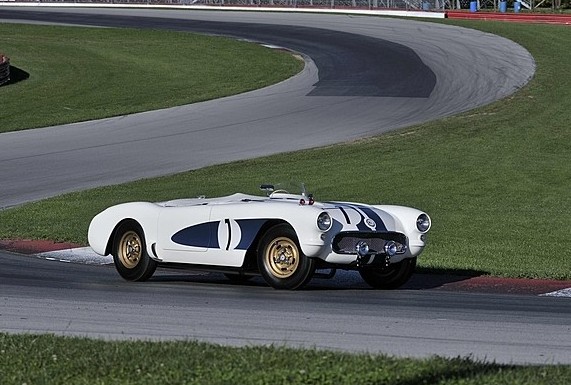
1956 Chevrolet Corvette SR Prototype

Offered by Mecum | Kissimmee, Florida | January 25, 2013

1956 Chevrolet Corvette SR Prototype

It seems like there’s always at least one more Corvette out there that will come along and smash price records for the model. This is one of those cars that has that opportunity. In all honesty though, I have no idea what it will bring – but it is a very important Corvette.

In 1955, Ford introduced the Thunderbird and it promptly walloped the Corvette, stealing a large portion of its sales. Zora Arkus-Duntov, the father of the Corvette, was afraid that GM was about to give it the axe and realized that the supposed sports car lacked any sort of sporting credentials.

So he and his team put together a special prototype – the car you see here – and fitted it with a 255 horsepower 5.0-liter V-8. He promptly took the car to Daytona Speed Week and set a world record for the Flying Mile at just a tick over 150 mph, obliterating the record. This happened just before the 1956 GM Motorama in New York City. It drew a lot of interest, but more had to be done.

Ed Cole, head of GM at the time, announced that Chevrolet would be attacking the 12 Hours of Sebring. Duntov felt strongly that the track was not safe and that the car would not be able to last, so Cole replaced him as a driver with John Fitch and partnered him with Walt Hansgen.

Ed Cole put three-time Indy 500 winner Mauri Rose in charge of the team and Rose selected legendary NASCAR mechanic Smokey Yunick to prepare the Corvettes for Sebring (there’s a lot of famous name dropping going on here, sorry). In all, Chevy entered four cars – three of which were 1955 bodies on 1956 chassis – and one special prototype – the car you see here.

Two of the Corvettes failed early in the race. Fitch had a clutch slipping on this car on the second lap but somehow this car managed to win its class and finish 9th overall. Corvettes never did much factory-backed racing (until the C5-R anyway) and this car was the first and it brought the brand its most important victory – one that would keep Corvette around for another 60 years.

When Chevrolet publicized the win, they referred to the car as “The Real McCoy” – which is what this car is known as today. It is full of one-off, custom-built-by-GM parts for racing and is one of the most important Corvettes in existence. And it is going to cross the block. Read more here and check out more from this sale here.

Update: Sold $2,300,000.

Duesenberg SJ-292

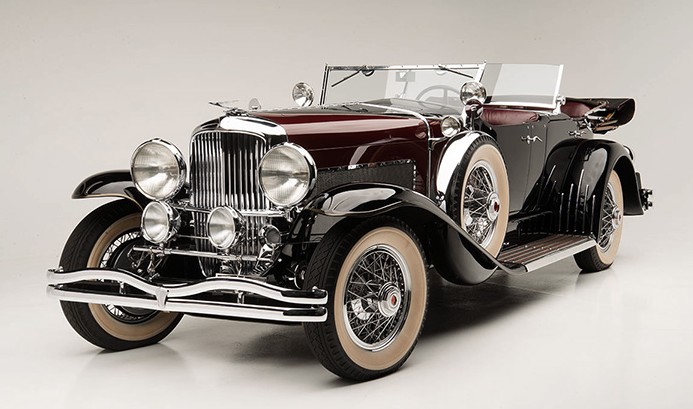
1929 Duesenberg Model SJ Dual-Cowl Phaeton by LeBaron

Offered by Barrett-Jackson | Scottsdale, Arizona | January 18, 2013

1929 Duesenberg Model SJ Dual-Cowl Phaeton by LeBaron

What’s a better way to start off the new year than with a Duesenberg? Well, actually, how about with a factory-supercharged Duesenberg? That’s right, this Duesey has a blower on it – and not one that was added later in life (well sort of).

The story on this car is that it was bought new by one-time Indianapolis 500 participant Martin de Alzaga in 1929. He took the car to Argentina and the supercharger was added around 1935 – when Duesenberg was still in business. Alzaga didn’t use the car much and had the body converted in Buenos Aires to a race car (although the famous LeBaron “sweep panel” was still evident running down the car’s side. There are pictures out there and it’s a pretty wild sight).

In 1965, the car made its way back to the U.S. When it was restored, the original engine was mounted on a different chassis (as the original was shortened when it became a race car). The body was more or less constructed form scratch (perhaps utilizing what was left of the LeBaron coachwork). It’s still a beautiful car carrying one of the best bodystyles that you could’ve ordered.

Does this car count toward the 36 SJ Duesenbergs built by the factory? Barrett-Jackson says so. I’d say so too, but someone might argue with that. In any case, it’s a fantastic, million-dollar automobile. You can read more about it here and check out more from Barrett-Jackson here.

Update: Sold $1,430,000.

December 2013 Auction Roundup

The first sale of December was Bonhams’ London Sale. Our featured Jaguar C-Type was the top seller at $4,762,011. The second top seller also came from the fabulous Ecurie Ecosse collection. It’s a 1956 Jaguar D-Type and it brought $4,212,831.
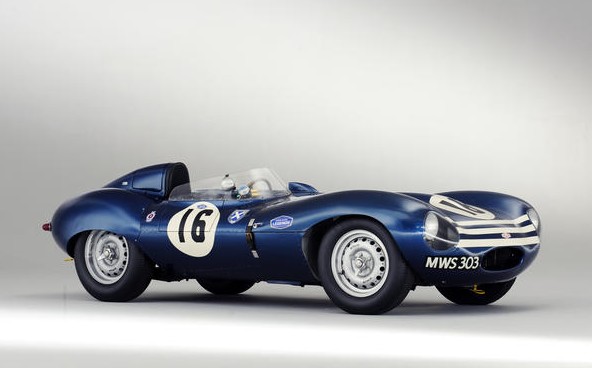
1956 Jaguar D-Type

The coolest car from this sale also came from that collection. It was the Ecurie Ecosse team transporter (technically it’s a 1960 Commer TS3) and it sold for a huge $2,931,441.

1960 Commer TS3

This 1934 Aston Martin Ulster Two-Seater looks awesome and downright mean. It sold for $2,125,947.
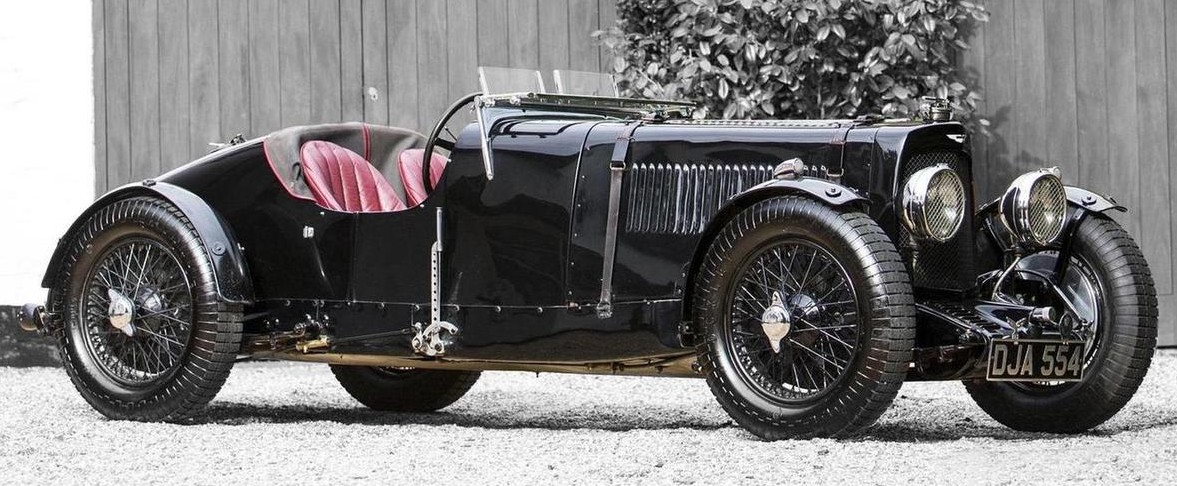
1934 Aston Martin Ulster Two-Seater

Our featured Frazer Nash Targa Florio sold for $441,795. The oldest car in the sale, our featured 1903 Clement brought $569,937. The other four Ecurie Ecosse team cars all sold. The 1951 Jaguar XK120 Roadster brought $1,155,729.
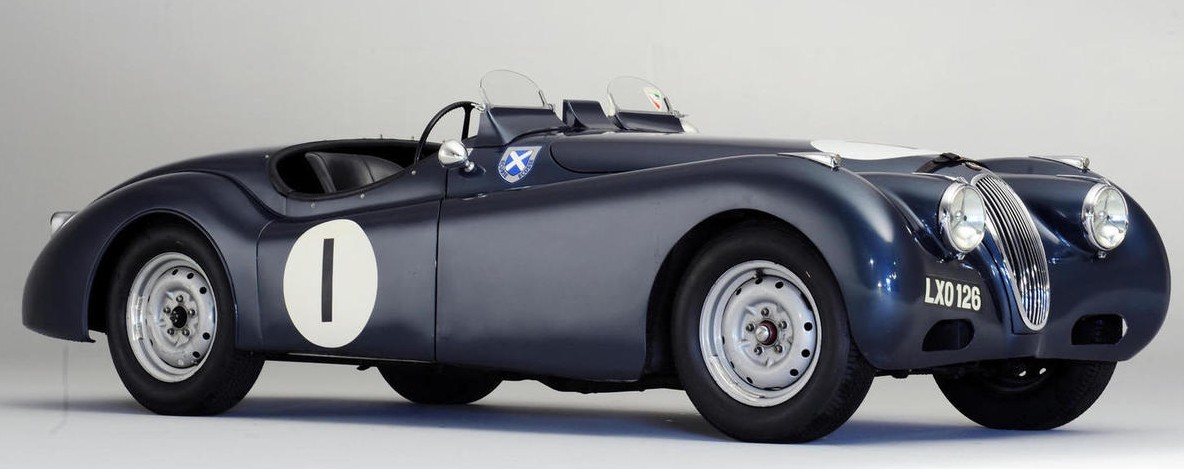
1951 Jaguar XK120 Roadster

Our featured Tojeiro EE-Buick Coupe brought $350,265. The other Tojeiro, this 1959 Tojeiro-Jaguar, sold for $624,855.
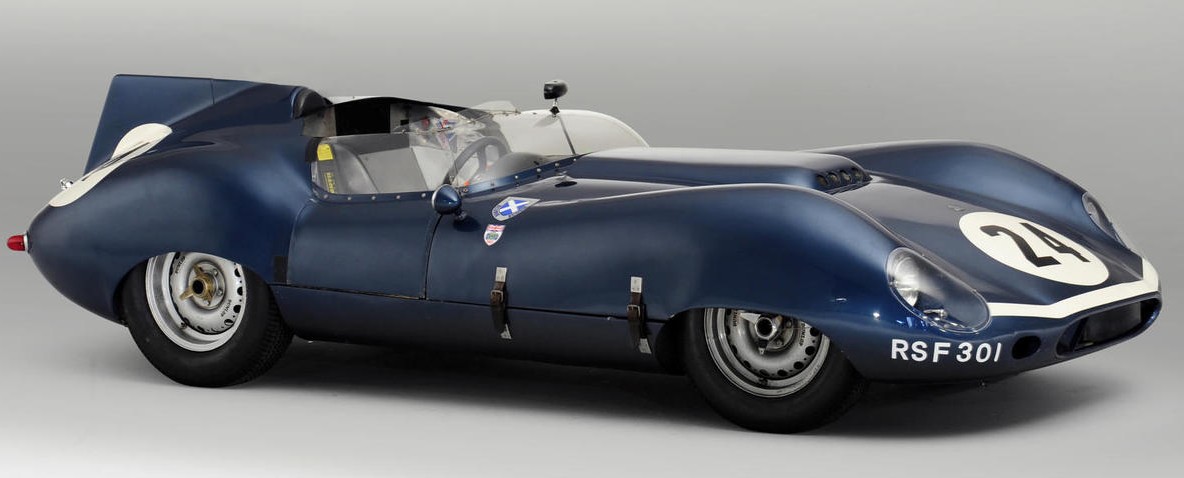
1959 Tojeiro-Jaguar

Another prototype race car was this 1960 Cooper Monaco-Climax Type 57 Mark II. It sold for $359,418.
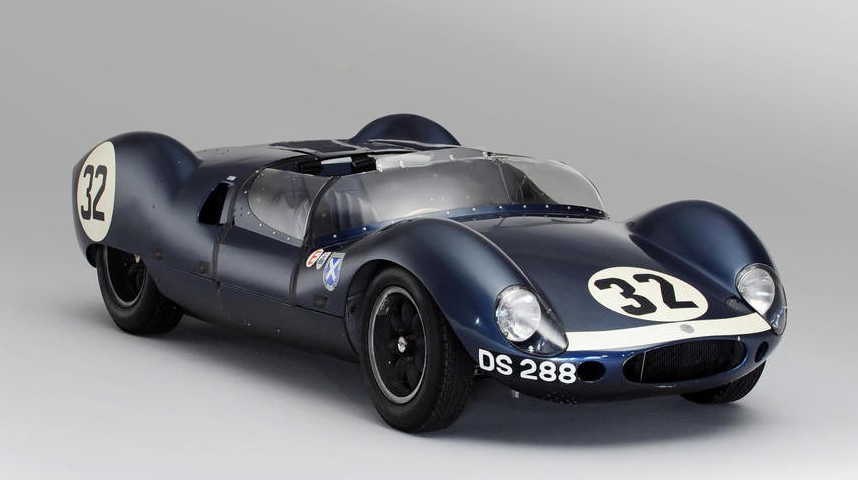
1960 Cooper Monaco-Climax Type 57 Mark II

And finally, the cheapest car of the bunch – a 1961 Austin-Healey Sprite. It went for a downright budgetary $101,304. And Schumacher’s Benetton sold for $1,009,281. Check out complete results here.

1961 Austin-Healey Sprite

Next up was H&H’s Chateau Impney sale where this 1939 Lagonda V12 Drophead Coupe was the top seller at $328,600.
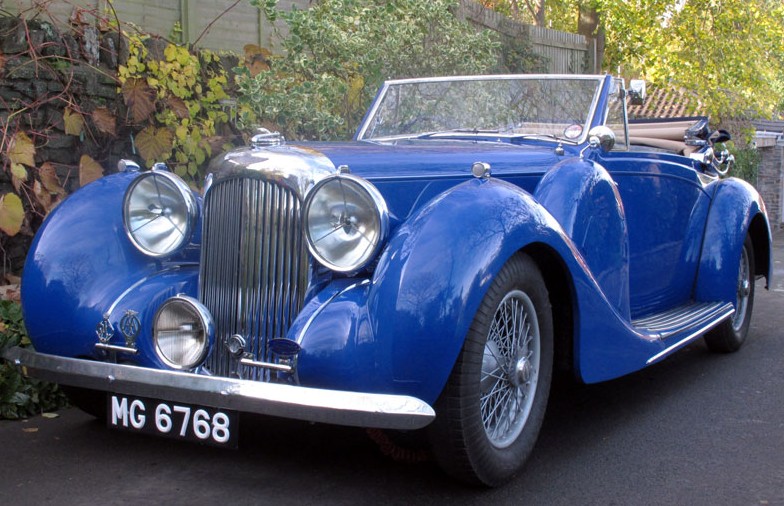
1939 Lagonda V12 Drophead Coupe

I didn’t get to feature any cars from this sale, but the first one I was going to feature was this beautiful 1938 Alvis 4.3-Litre Drophead Coupe. It sold for $125,900.

1938 Alvis 4.3-Litre Drophead Coupe

Other cars that were on my to-feature list included this 1919 Armstrong-Siddeley 30hp Open-Drive Limousine that ended up bringing $27,380.
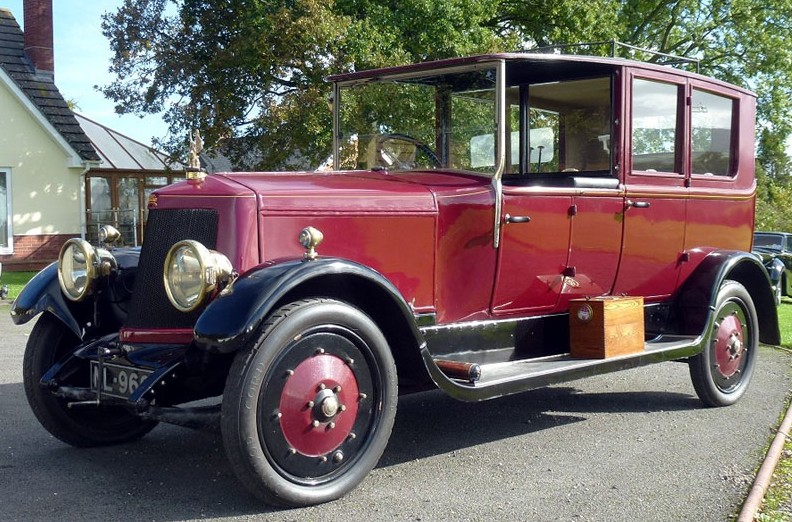
919 Armstrong-Siddeley 30hp Open-Drive Limousine

I would’ve featured this 1928 Falcon-Knight Six-Cylinder Tourer but it’s not in the best of shape and I know there are other Falcon-Knight’s out there. But it’s still interesting. It sold for $18,400.

1928 Falcon-Knight Six-Cylinder Tourer

And finally, one of only two F2 cars built by Gerald Smith. It’s a 1957 Smith Formula Two Single Seater and it sold for $61,700. You can check out full results here.

1957 Smith Formula Two Single Seater

We featured one car from Mecum’s Kansas City sale: this 1918 Cadillac. And it was stolen at a bargain price of only $29,000. The top sale went to another Cadillac from the same consignor. It was this 1931 Cadillac V12 Series 370 Convertible Coupe by Fleetwood. It sold for $175,000. You can check out full results from this sale here.

1931 Cadillac V12 Series 370 Convertible Coupe by Fleetwood

Coys got their December results posted in time for this recap. Our featured Victor Electric Highwheeler did not sell, but the Mercedes-Simplex brought an auction high of $1,174,900. You can see full results here. And the final sale covered this year is Bonhams’ Oxford sale, where this 1960 Bentley S2 Continental Flying Spur sold for a sale-high $178,843.
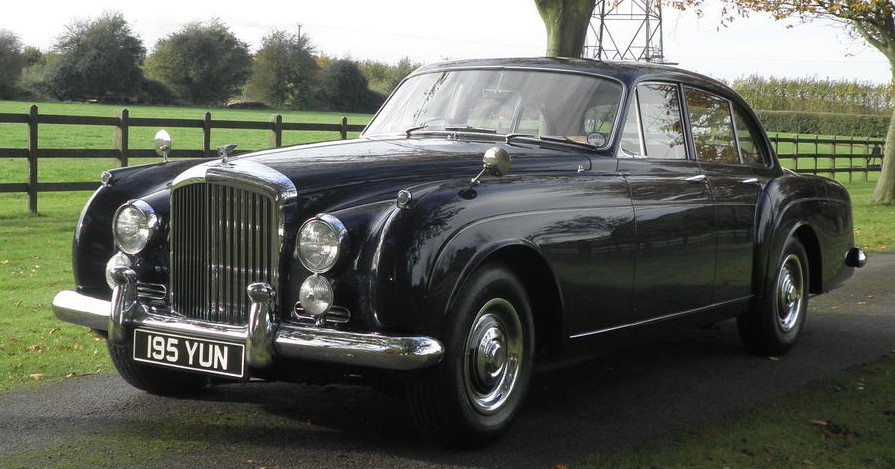
1960 Bentley S2 Continental Flying Spur

Our featured Frazer Nash-BMW failed to sell and the Sunbeam Tourer brought $60,369. I thought this 1924 Crossley 19.6HP Sports Tourer was pretty cool for $31,127.

1924 Crossley 19.6HP Sports Tourer

And finally, our featured Vulcan Touring car brought an impressive $126,479 – bettering the upper end of its estimate. You can check our full results here.
McKee Can-Am Racer

1965 McKee Mk IV

Offered by Russo & Steele | Scottsdale, Arizona | January 15-19, 2014

1965 McKee Mk IV

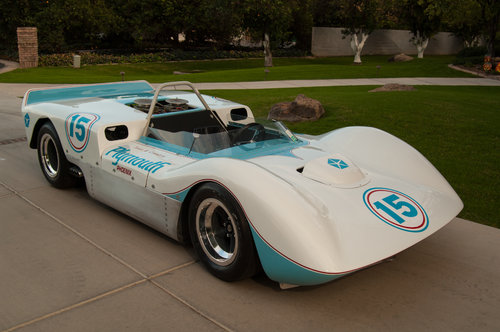
Can-Am was the coolest of race series. The rules were essentially: it must have two seats and four fenders. Other than that, anything goes. Unlike most racing series today, innovation was the key driver that bred some of the best race cars of all time (and ultimately killed the series).

McKee Engineering of Palantine, Illinois, was founded by Bob McKee. The company was one of very few in America producing road-racing sports prototypes in the 1960s. This car came about because NASCAR banned Chrysler’s Hemi engine for 1965 and Chrysler decided to sit Richard Petty out of NASCAR that year. They also figured that their Hemi would work well in a sports car, so they commissioned McKee to build this car for Petty to race in the coming Can-Am series.

Well the car was built but wasn’t ready to race until the end of 1965. Petty went back to NASCAR in ’66 and Phoenix, Arizona, Chrysler-dealer Bob Montana was given the responsibility to campaign this 7.0-liter V-8 powered monster. He raced it in USRRC and Can-Am between 1965 through 1967. In 1968, it competed in SCCA events and in 1969 it was retired.

It was parked for 35 years and restored in 2004 and the car has been invited to the Goodwood Festival of Speed and the Monterey Historics since. This is a really cool race car with a pretty interesting history. You can see more here and check out more from Russo & Steele here.

Update: Sold $260,000.

L88 Corvette

1967 Chevrolet Corvette L88 Coupe

Offered by Barrett-Jackson | Scottsdale, Arizona | January 18, 2013

1967 Chevrolet Corvette L88 Coupe

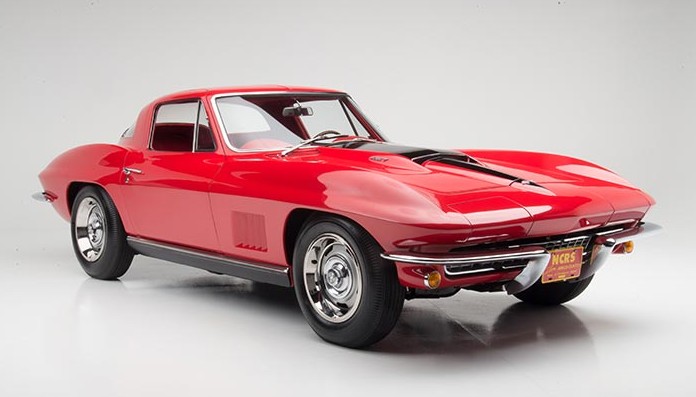
The L88 Corvette is one of the most sought after Corvettes. It was only offered for three years (1967-1969) and 1967 was the only year for the second-generation bodystyle to receive this monstrous engine.

The L88 was a 427 cubic inch (7.0-liter) V-8 that was all aluminium. You could get other 427 Corvettes, but this package had lightweight everything and a really high compression ratio which required 103 octane (!) fuel. Chevrolet tacked on some additional required goodies like Positraction, heavy-duty suspension and brakes, and they graciously deleted the radio and air conditioner (so people would be less tempted to drive it on the road – it was supposed to be a street-legal race car).

All of these extras (or deletions) tacked on about an extra 35% to the purchase price. Which might explain why only 20 were sold in 1967. That makes this one of 20 C2 Corvettes with this outrageous engine and option package. Horsepower was rated at 430 but dyno’d at 560. 1968 and 1969 L88 models trade for about $500,000. 1967 models are significantly more expensive and this one should bring around $1 million. Click here for more info and here for more from Barrett-Jackson in Arizona.

Update: Sold $3,850,000.

Kelsey Motorette

1911 Kelsey Motorette

For sale at Hyman Ltd | St. Louis, Missouri

1911 Kelsey Motorette

Carl Kelsey started selling cars off-and-on while in college in the early 1900s. Between 1910 and 1912 he built this, the Motorette. After spending a few years as a salesman for Maxwell, he started up the company again in 1920 and sold more traditional (read: four-wheeled) cars until 1924.

The car uses a mid-mounted flat-twin making 10 horsepower. The convertible top folds down, which gives this car a very strange appearance from behind. In all, about 200 Motorettes were built. This one has a meticulous restoration and is likely in nicer shape than when it was new.

I’ve posted prices for cars from this dealership before and got yelled at (by them). So I won’t tell you what they’re asking, but I will say it is right between $70,000-$80,000. In any event, I think you should buy it because it is very cool and looks like it would be a lot of fun to putter around in. You can find more here.

Plymouth Belmont Concept

1954 Plymouth Belmont Concept

Offered by Barrett-Jackson | Scottsdale, Arizona | January 18, 2013

1954 Plymouth Belmont Concept

Photo – Barrett-Jackson

In 1953, Chevrolet introduced the Corvette. Ford was working furiously trying to get the Thunderbird launched and Chrysler was wondering what they were supposed to be doing. There were a number of fabulous concept cars from Chrysler in the 1950s, but just about zero of them ever made it to production.

The Belmont was a one-off concept introduced at the 1954 Chicago Auto Show. Styling was by Virgil Exner and the body was made out of fiberglass – a first for Chrysler. The engine is a 3.9-liter V-8 making 150 horsepower. With only two seats, this would have been a perfect car to battle the Corvette and Thunderbird. But perhaps as a DeSoto and not necessarily a Plymouth. But it was not to be and this was the only one built.

It was originally a very nice light blue color but whenever it was restored, it was repainted red. It recently made appearances at Amelia Island and Pebble Beach and is currently looking for a good home – which, with a car of this caliber, shouldn’t be too hard to find. Look for it to bring between $750,000-$1,250,000. Click here for more info and here for more from Barrett-Jackson.

Update: Not sold, high bid of $1,200,000.

Update II: Not sold, Barrett-Jackson Scottsdale 2018.

America’s First Post-War Sports Car

1947 Kurtis-Omohundro Comet

For sale at Vintage Motors of Sarasota | Sarasota, Florida

1947 Kurtis-Omohundro Comet

Frank Kurtis is an important name in the history of American sports cars. In the late-1930s he built his first midget dirt-track car. Just prior to WWII, he designed a car that would eventually go into (short-lived) production as the Davis Divan.

Kurtis Kraft would be he racing car business. He built five Indianapolis 500 winning cars and nearly 2,000 Kurtis Kraft cars would be built, 120 of which would actually compete in The Greatest Spectacle in Racing. He even built a short run of sports cars for the road (and those were also produced as the Muntz Jet).

The car you see here is often billed as “America’s first Post-War sports car.” It was designed by Frank Kurtis and Paul Omohundro, a man who had worked for Kurtis fabricating race car bodies. The Comet was built around a 1940 Ford chassis and the two men planned to put the car into limited production on donor Ford chassis (it never happened).

The engine was a 1946 Mercury flathead V-8 making about 100 horsepower (it was swapped out years later for a 1949 engine). Omohundro was able to build a lightweight aluminium body that made the car capable of over 100 mph. The car bounced around between owners, garnering little use until it was parked in 1986 and forgotten.

When it was finally rediscovered, a restoration was undertaken and completed in 2007. It has been shown and won awards at multiple prestigious concours’ and while its claim of America’s “first Post-War sports car” can be disputed, it is considered the first documented American “coachbuilt car after the war.”

This isn’t a car that you can find a duplicate of – as it was the only one built. It’s also in the best shape it has ever been in. You can buy it from one of America’s coolest car dealerships in Sarasota, Florida for $390,000. Click here for more info.